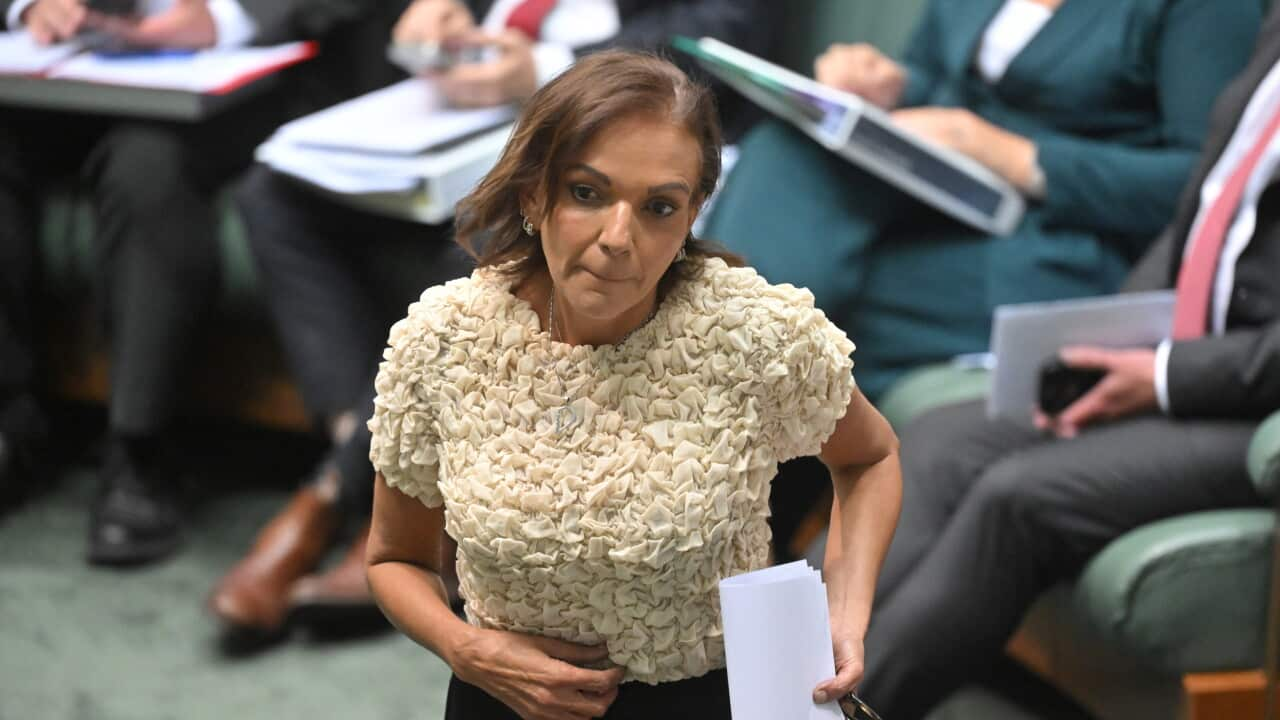
Labor cabinet minister Anne Aly's WhatsApp account was hacked after she "inadvertently opened a scam link" on her personal phone.
Aly received the link from "a trusted friend, which resulted in an unauthorised message being sent to her WhatsApp contacts", a spokesperson for the minister for multicultural affairs, small business and international development said.
"The minister acted promptly to secure her account and report the incident to the relevant authorities."
The text message, seen by SBS News, read: "Could you do me a quick favour? Please cast a vote for Nota — she's a friend's child, and the main prize is a scholarship for her studies. Every single vote makes a difference. Thanks!"
SBS understands the link directs people to a dancing competition.
Your trusted source for staying up-to-date with the world around you. Get free daily news updates and analysis, straight to your inbox.
Others who have accessed the URL have also been hacked. The message appears to be personalised and references each recipient's name.
"This serves as an important reminder that anyone can be targeted by scams, and we encourage Australians to remain vigilant about suspicious messages," Aly's spokesperson said.
Independent MP Zali Steggall's WhatsApp account was hacked in March this year on both her personal and government-provided devices, in what was suspected to be a part of a broader phishing scheme.
The FBI had issued a warning that month about phishing activity targeting individuals "of high intelligence value, such as current and former US government officials, military personnel, political figures, and journalists".
The Australian Signals Directorate warned in its latest annual cyber security report, released in October, of malicious cyber actors amplifying their techniques through artificial intelligence "to make their communication seem legitimate and trustworthy".
"To achieve their goals, malicious cyber actors have weaponised empathy, urgency, and trust to trick individuals or staff into circumventing regular processes to achieve their goals," the federal agency responsible for foreign intelligence and cybersecurity wrote.
"These communications may appear to come from someone known to the victim, such as a relative, colleague, or senior manager, or an authoritative part of their organisation.
"Malicious cyber actors often prioritise individuals who have access to sensitive information, the ability to make changes to systems, the authority to perform financial transactions, or those whose roles require regular interaction with unknown or external parties."
SBS News has contacted Home Affairs and Cyber Security Minister Tony Burke for comment.