You have reached your maximum number of saved items.
Remove items from your saved list to add more.
You've used all of your gift articles. 3 more will become available on the 1st of every month.
In Jim Chalmers’ home state of Queensland, electoral boundaries are being redrawn. An event usually reserved for political nerds instead set the hares running in Canberra a few weeks ago.
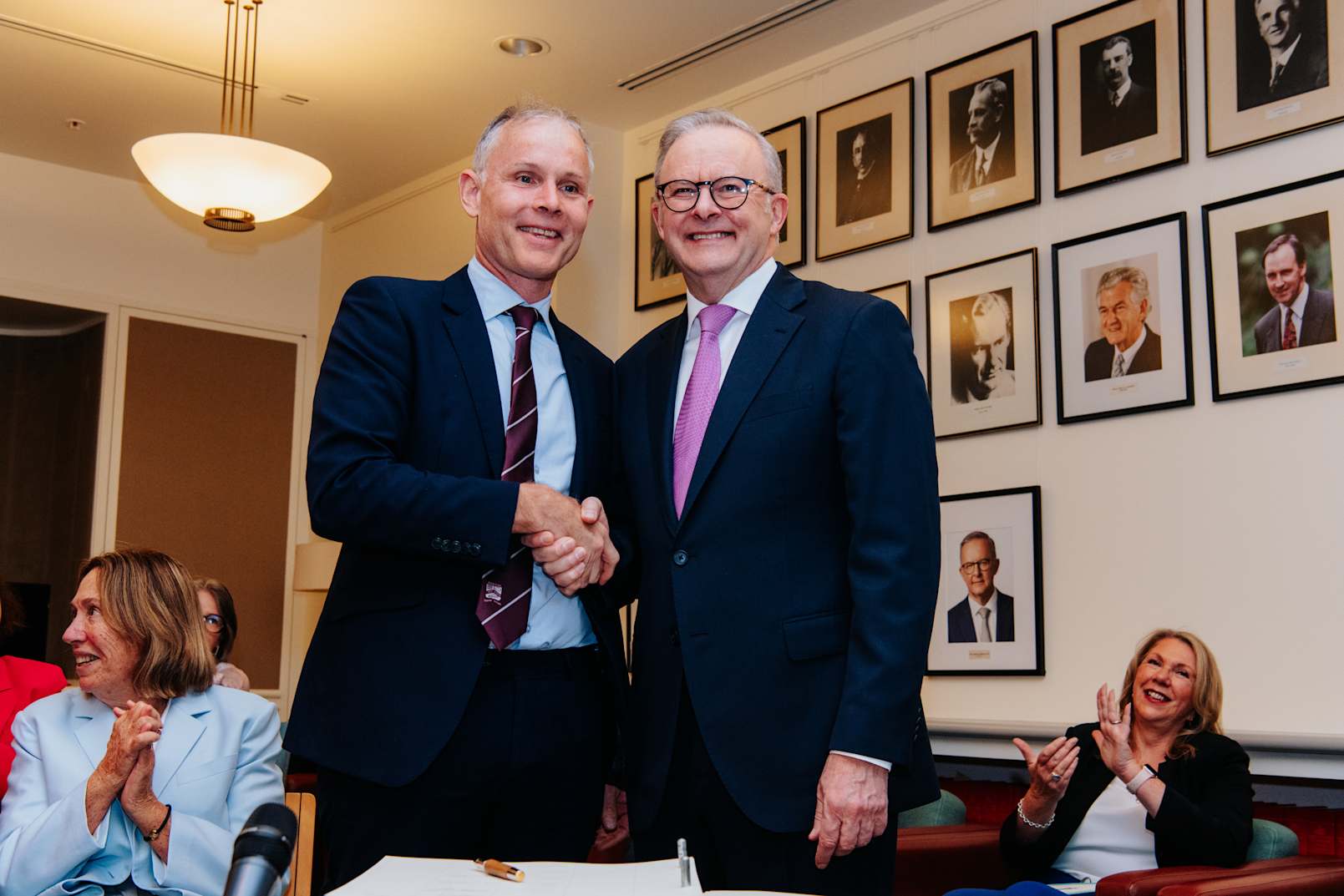
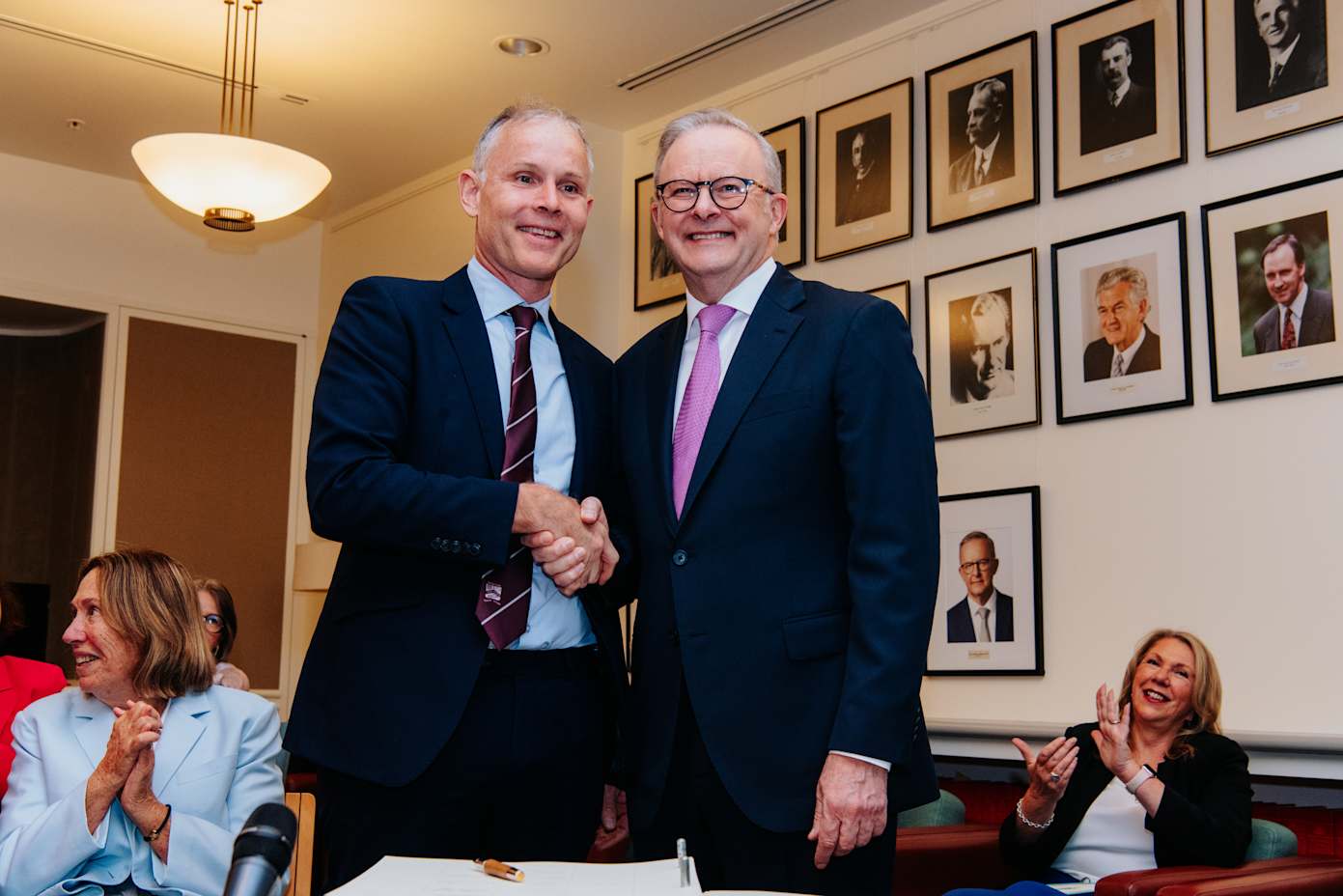
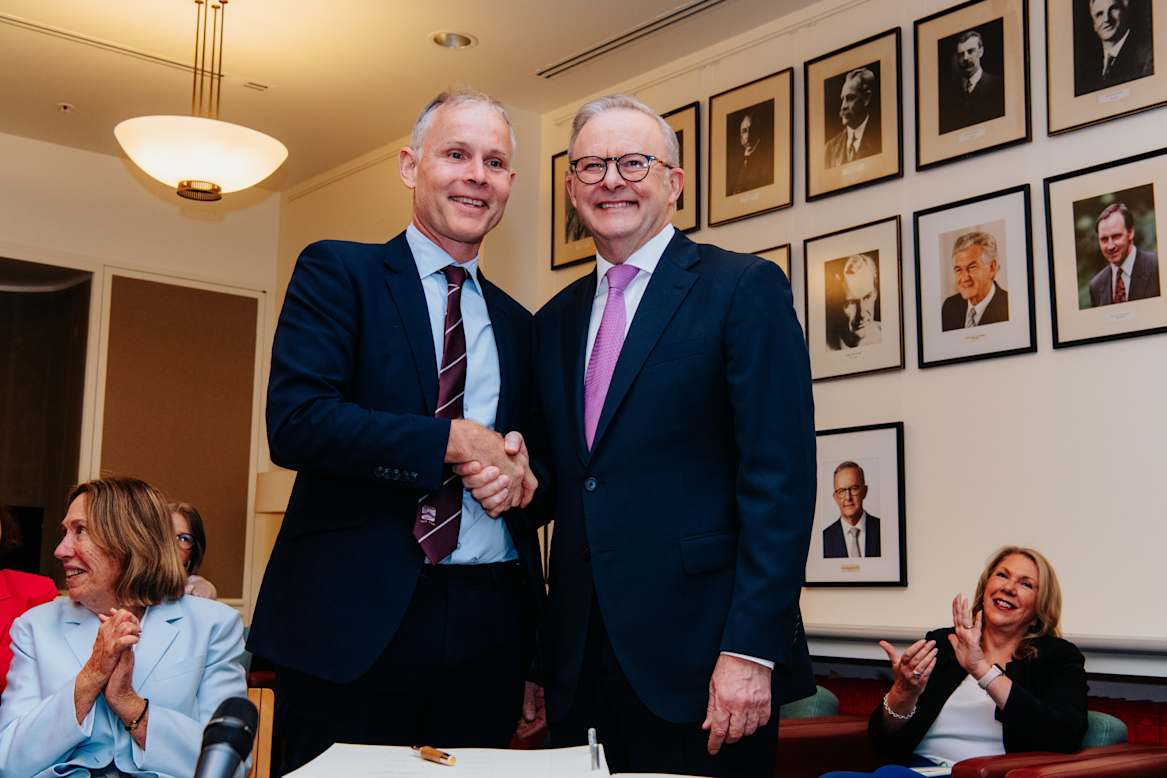
Figures from Anthony Albanese’s left faction were pushing for changes that would put more Labor-voting swathes of suburban Brisbane into the seat of little-known backbencher Rowan Holzberger, who snared an upset win during the Coalition’s Queensland wipeout.
The catch was that the proposed changes would make Chalmers’ nearby safe Labor seat a bit less safe. Adding intrigue was that Holzberger is a childhood friend of the prime minister.
It’s not abnormal for parties to protect marginal seat MPs in these complex redraws. Chalmers’ people were not particularly annoyed.
Yet the squabbling between Albanese’s left grouping and the right faction, from which Chalmers hails, got tongues wagging in Canberra . Some MPs were surprised that the left, ultimately answerable to Albanese, would even allow the perception that they were compromising the treasurer in his own backyard.
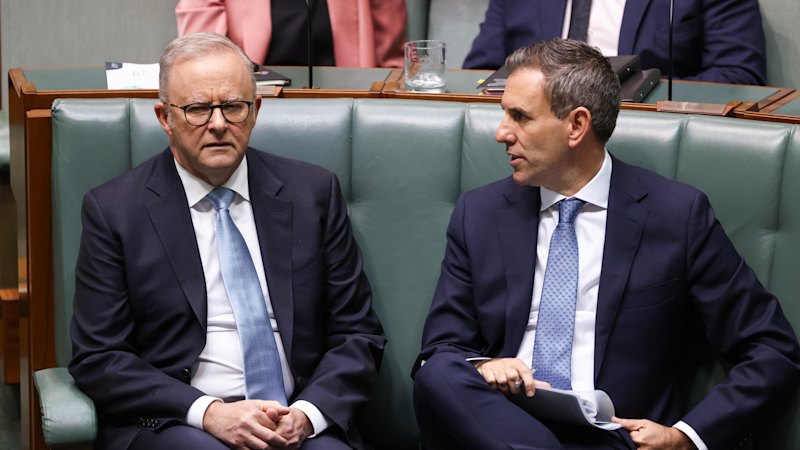
Minor tensions about boundaries would normally pass unnoticed. But a treacherous economic picture has put MPs on alert to any sign of friction. It has turned the Albanese-Chalmers dynamic and the cost of living into the only story in town . But this is also a story of factions and personality clashes in Labor’s top brass.
Albanese’s four years of relative stability, which set him apart from his predecessors, have rested on his control of Labor’s factions, while Chalmers is exposed without a power base. As ministers try to navigate treacherous economic conditions and a more unstable world, any sign of tension is interpreted as a verdict on the treasurer.
Albanese has mastered factional dominance, holding a firm grip on the left faction and most of the right. Sitting outside that protective inner circle – and lacking the strong factional base usually held by leadership aspirants – makes Chalmers more of an open target for internal criticism and puts him at odds with a prime minister who puts a premium on his own political judgement.
The fragmentation of the once-mighty right faction hasn’t helped. The more economically moderate wing of the party produced most Labor leaders of the past. After the last election, the Victorian and NSW elements of the right went to war over the future of ministers Ed Husic and Mark Dreyfus, both of whom were dumped.
It created a rift within the right, weakening the faction and giving Albanese even more breathing space as leader without a strong check on his power. Moves are under way to heal the tensions in the right. But senior right-wing figures including Richard Marles, Don Farrell and Tony Burke are all tied to Albanese, leaving the non-Albanese right with little leverage.
The midterm breakout of disunity is the first stretch of internal messiness since Albanese came to power in 2022. As press gallery veteran Michelle Grattan observed on Wednesday, Chalmers has become the object of “something of a media feeding frenzy”, in which “rumour and reality can become increasingly blurred”. Chalmers has described himself as the “lightning rod” for discontent within Labor and in voter land.
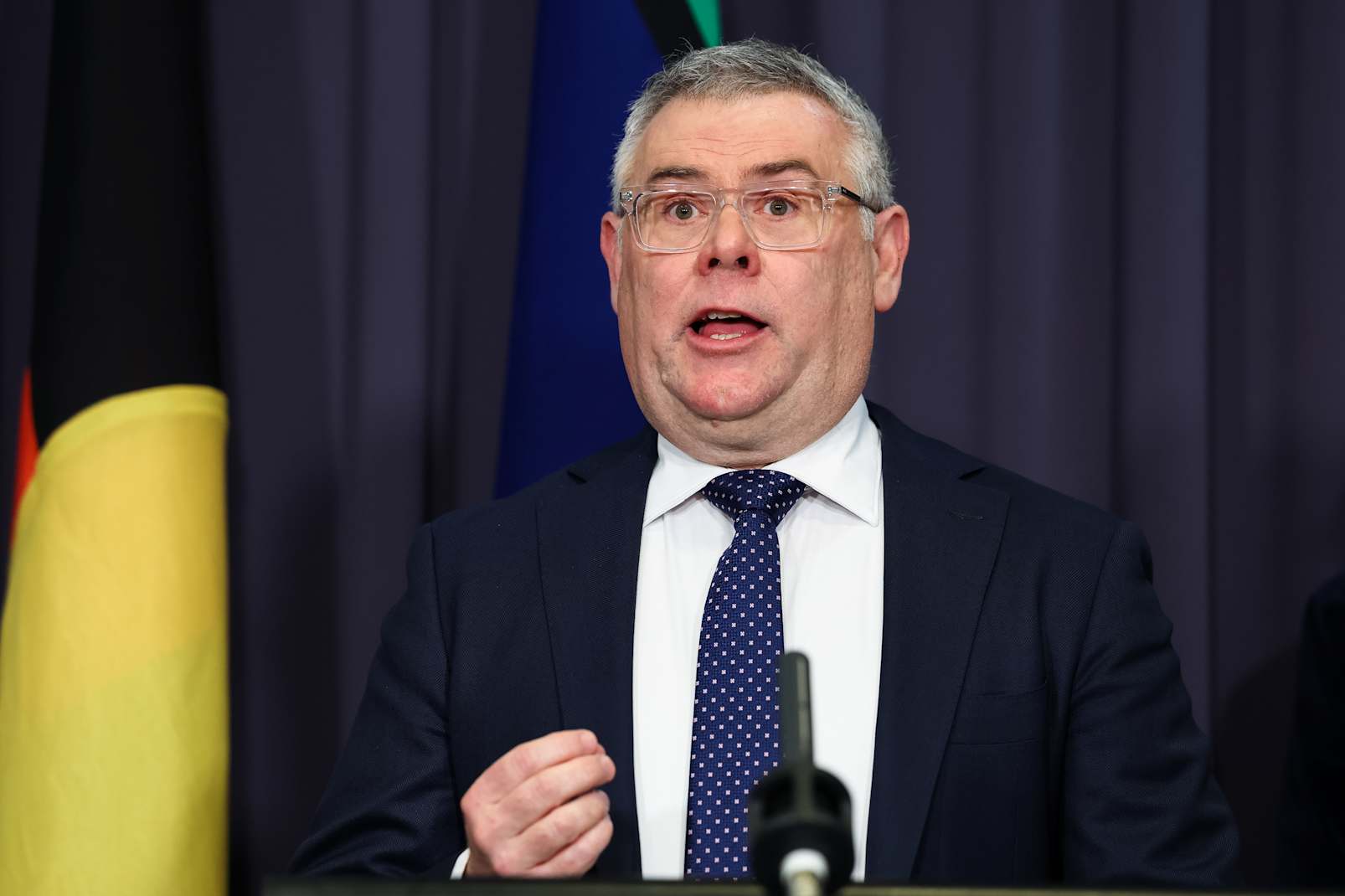
Asked on Monday if his colleagues should stop undermining Chalmers, Environment Minister Murray Watt said: “Yes, I would.”
“I think it’s pretty obvious that there’s all sorts of people making all sorts of comments,” the Albanese ally added.
There’s hope among the many Labor ministers, MPs and insiders spoken to for this story that Watt’s unscripted acknowledgement of the obvious will act as a circuit breaker and take heat out of melodrama.
But his answer may have created the impression there’s a concerted campaign to oust the treasurer. Insiders say this isn’t quite accurate.
Albanese’s inner circle – including Marles, Penny Wong, Mark Butler, Katy Gallagher, Tim Ayres, Pat Conroy and Andrew Giles – want Chalmers to regain his momentum. They know he has performed well in the media for much of the last 4½ years. Demoting the 48-year-old in a reshuffle is viewed as unthinkable, as it would effectively concede that Labor’s economic agenda has failed.
Chalmers’ personal style also makes him vulnerable. He freely admits he has been grumpy of late. According to one colleague, the supremely hard-working treasurer has adopted his former boss Wayne Swan’s “us against them” mentality, leaving him and his staff increasingly isolated in the blue-carpeted ministerial wing. Chalmers’ isolation from cabinet colleagues has added to the internal gripes within a party whose ethos is collectivist and tribal. Budget U-turns have opened him up to criticism, even though Albanese’s allies tried to give the PM credit for the reforms before they became radioactive.
Policy differences between Albanese and Chalmers have emerged over the years, as Albanese exercises his role as guardian of Labor’s overall political agenda. Chalmers pushed Albanese to overhaul the stage three tax cuts . Albanese embarrassed Chalmers over a superannuation tax backdown . Chalmers tells colleagues that he has pushed for more savings than the expenditure review committee approved. Albanese has been cold on a landmark new road user charge that Chalmers and many experts described as a key priority after last year’s productivity roundtable.
Albanese has also complained to trusted colleagues about Chalmers’ reforms to the RBA . One key change allowed its governor to hold a press conference after each board meeting, giving the independent bank a platform to comment on the pressures on the economy and set the agenda in the media. Albanese subtly distanced himself from the bank before its fifth rate hike of the year . For the first time, he used the term “ blunt instrument ” to describe interest rates as a monetary policy that hurts households.
Responding to weeks of reporting on Labor MPs’ worries about the party’s economic agenda, Chalmers took to this masthead’s Inside Politics podcast to perform a mea culpa. Accused of being closed off to feedback, Chalmers said he “should make more time for my colleagues” and acknowledged the budget’s tax measures were causing political pain.
It was his comments about blame for the government’s fortunes that angered some of Albanese’s allies. “It’s up to other ministers and the prime minister, how they describe their part in that,” he said.
Grumblings inside Labor extend beyond the tensions between Chalmers and Albanese.
Even some of the prime minister’s close allies acknowledge growing pressure from backbenchers and junior ministers to promote new talent into the cabinet. One senior minister described the current frontbench as talented, loyal, and “a bit stale”.
Of the 23 members of cabinet, 13 served in Bill Shorten’s shadow executive right after Tony Abbott won the 2013 election, meaning they have held frontbench roles for 13 years. By way of contrast, nearly half of all Labor MPs were elected in the 2022 election or the 2025 triumph.
About half a dozen of these MPs, including from the NSW Right and Victorian Left, are viewed by colleagues as deserving of promotion. Some fear they cannot wait much longer to get their chance.
“The PM knows there is a lot of appetite to create openings and fix the bottlenecks of promotion. He is loyal to a fault, though, and some ministers don’t want to feel like they are being pushed out,” one MP said.
Catherine King, Jason Clare, Tanya Plibersek, Chris Bowen, Farrell and Julie Collins have all been subject of retirement speculation, though several have said publicly that they plan to stay on. As ever, predicting departures is fraught. Plibersek is a prominent MP popular with Labor faithful, Farrell was recently preselected again, while Gallagher and Wong would probably only depart alongside Albanese. Whenever the bulk of this group leaves, the face of the government will change.
Some in the caucus want to go beyond a narrative reset. Husic has been calling for major policy shifts on economics and foreign policy, with some ideas far-fetched. He floated the prospect of leadership change, telling this masthead last month that grassroots members should choose Albanese’s successor – rather than allow a neat handover – if he steps down before the next election.
These standard factional tensions are all tested by intense economic pressures.
Labor is battling daily headlines on household stress and struggling to shift the conversation into its comfort zones while war, the AI boom , high federal and state spending , and dismal productivity combine to push up interest rates.
Structural economic weakness and falling real wages mean scrutiny will remain on Labor to act decisively. At stake is the goal of lifting the nation out of a slump that threatens Australia’s status as a beacon for rising living standards across the Western world.
Now the conversation has shifted to the prospects of a reset over summer. The ability to course-correct is a pivotal test for the cabinet’s policy creativity and ability to act under severe pressure.
After a lull at the same point of his first term, Albanese recovered from the Voice referendum defeat by unveiling a successful rejig of the stage 3 tax cuts in January 2024. But this time, the budget is in a worse position and popular policies would probably add to inflation.
Budget analyst Chris Richardson has accused Labor of misleading the public by claiming it had found $180 billion in savings when in fact its decisions have made the budget $103 billion worse since coming to power.
Stephen Smith of Deloitte Access Economics says Labor made the mistake of over-spending in previous years when the economy required no stimulus. But with economists Saul Eslake and HSBC’s Paul Bloxham saying a recession is in sight next year , Smith said the current moment may not be the right time to slash too hard, even with the drumbeat of calls to slow spending.
“The government risks getting the timing wrong twice on spending by adding to inflation pressures while the economy was running short of capacity, then cutting spending as growth weakens,” he says.
Emma Dawson, who leads Labor’s official think-tank, the Chifley Research Centre, pushes back on the criticism of Labor’s policy settings. She posits that Labor’s investments in health, skills, student debt relief, green energy and industrial relations meant it had “delivered more for working and middle-class Australians than any government since Hawke and Keating”.
“To reset its relationship with the electorate over summer, Labor needs to sharpen its narrative and tell a compelling story about what kind of country we want to be,” Dawson said, pointing to the unpredictable global environment.
She argues the party needs to prove that “only Labor, as the party that has always reformed our economic structures and institutions at times of turmoil and disruption”, could deliver security and opportunity for working people, contrasted with the offerings of a fractured right flank.
The reset will decide if the Albanese era cements its legacy with a rare third election win or succumbs to an economic shock and sliding polls. Should Albanese’s poor approval ratings slip further and Labor’s primary vote continue to drop, some internal critics wonder if he can last until the election.
Albanese shows no sign of leaving. But Husic noted last month that the prime minister’s standing as a successful post-war Labor leader gives him the authority to exit on his own terms, much like Robert Menzies.
More MPs are starting to quietly talk among themselves and with journalists about whether Albanese may contemplate his position should his personal approval ratings continue to trend downwards next year as the economy struggles. His personal standing has eroded since the Bondi massacre and a budget containing several broken promises. Albanese has not helped with several political missteps such as the Bush Deep “melons” podcast and the Marrickville golf club saga , dragged on by his stubborn refusal to acknowledge mistakes, and the normal wear-and-tear of governing.
One senior party figure said: “The staffer class [of government advisers] has started to talk about Albo and whether he should hang around. What that tells me is their social networks have started to talk about it. Staff are sometimes closer to community sentiment than MPs.”
Such speculation may prove silly in hindsight if Albanese prevails a third time, and one ally told this masthead he was “going nowhere”.
Albanese has not yet campaigned alongside Victorian Premier Ben Carroll ahead of Labor’s likely loss later this month . In NSW, Labor figures have been telling reporters that Albanese is a drag on the vote of Premier Chris Minns ahead of his election in March.
Nowhere is voter grumpiness more acute than in the housing market, where a promise meant to define Labor’s second term is being challenged.
Property market analyst Cameron Kusher describes a perfect storm of higher interest rates and lower house prices that have made housing construction “incredibly difficult”.
The RBA recently forecast dwelling investment to grow substantially this year before declining by about 3 per cent from the back end of next year as property developers struggle to make new developments profitable.
Kusher expects Labor will now miss its 1.2 million housing target by up to 350,000 – a political and social nightmare for Labor.
Data this week showed the biggest collapse in home lending since 2002 , with investor loans down 30 per cent and first-home buyer loans down 9 per cent.
“This is not a moment to panic,” says Bruce Hawker, a veteran Labor strategist of the Rudd era, who argues Labor is in part hostage to international events beyond its control.
“We’re 18 months from an election. Labor has 94 seats and the circumstances are worse for the opposition. They’ve got to stay the course.”
He believes Labor should stick with reforms such as negative gearing and capital gains tax changes, which could help boost productivity over time by reducing savings directed towards passive assets such as housing.
But he says Labor should shed barnacles such as its tax hike on discretionary trusts, which he argues is not worth the political pain at a time when businesses are doing it tough.
Hawker recalls that Albanese benefited from an interest rate cut only a few months before the 2025 election, a scenario that could repeat in 2028.
“I’m not trying to be Pollyannaish,” he said. “It is going to be very challenging for the government.
“But once rates come down, people can start to think differently. What was a miserable six months before can actually turn into, ‘Oh, this government’s doing the right thing’.”
Cut through the noise of federal politics with news, views and expert analysis. Subscribers can sign up to our weekly Inside Politics newsletter .