In this extract from Kathryn Franco’s recent book on Sydney homebuilders Pettit and Sevitt, she explores Ironbark Architecture’s contemporary renovation to a 1967 home originally designed by Ken Woolley.
Find out more on the topic of Victoria’s Big Housing Build through expert insights, podcasts and more.
Scaling up the lessons of jewellery making, Anna Varendorff produces composed works that blur the line between utility and beauty.
Our ever-growing global population demands millions of new homes, workplaces and community spaces. But to truly tackle climate change, we must find better ways to balance society’s need for new space with a commitment to curb emissions.
How do we recognise professional design expertise in a largely unregulated profession increasingly shaped by AI? Simone LeAmon, CEO of the Design Institute of Australia, makes the case for accreditation as a recognised standard of competence and accountability.
Responding to Elizabeth Farrelly’s September column on architectural literalism, Melbourne architect Eli Giannini argues that while sustainability is often reduced to tokenistic gestures, its architectural symbolism remains crucial to advancing a more environmentally responsible building agenda.
Jayson Blight, James Wilson and Isabelle Toland discuss the nature of collaboration between architectural practices, unpacking how fee and service agreements, as well as workflows, are managed to deliver projects of various scales and typologies.
A new monthly series exploring the inner workings of design studios around Australia
Emeritus professor Mads Gaardboe refects on the life and career of Canberran architect Roger Pegrum, who he describes as “a man of quality and grace and … one of the national capital’s most influential architects.”
Find out more on the topic of regenerating Country through expert insights, podcasts and more.
Each month we ask an Australian designer our twelve burning questions about design. We call it The Design Dozen. This month we sit down with the founder and director of Davidov Architects, Robert Davidov.
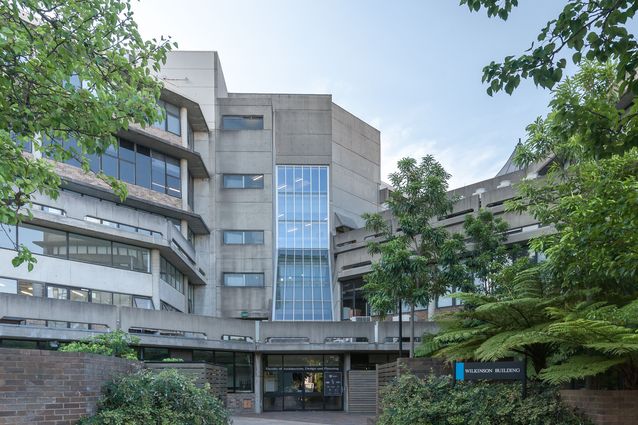
Successive eras of building and campus planning have reflected the changing needs and aspirations of Australia’s universities. They clearly display the layers of architectural and landscape styles that have also shaped our cities and suburbs.
Founder and principal of Singapore-based L Architects Lim Shing Hui shares her firm’s forensic approach to existing building fabric – a methodology that challenges what might conventionally be deemed worthy heritage, while revealing unfamiliar qualities and latent opportunities.
The way we experience biological sex in cities is real and significant. According to Elizabeth Farrelly, our legacy of modernist urban planning has left us with a masculinist myopia: a fixation with towering phallic forms, which ignores the surrounding context that makes a city liveable.
Without careful design, data centres could increase power bills, put pressure on water supplies, and slow the transition to net zero. With it, they can do the opposite, stabilising the electricity grid, attracting investment to regions, and creating economic growth.
Norman Day pays tribute to the Victorian architect Paul Couch, who he describes as an “architect [that] had paired down life’s needs to an almost abstract sense of a continuity in space.”
In this extract from Paul Couch, Field Studies , architect James Mugavin reflects on one of Couch’s characteristically robust and layered homes in western Victoria.
Trained as a silversmith, this Melbourne-based designer now makes furniture and objects that are intuitive and tactile.
Cal Swann died on 19 July 2026 at the age of 91 in Western Australia. He was a typographer, author, design educator and DIA Hall of Fame recipient.
There’s no shortage of demand for new homes. What we lack is a construction system capable of delivering them reliably, sustainably and at scale.
Facing an urgent climate crisis and increasing professional demands, the profession can no longer afford the divide between classroom theory and real-world practice, Liz Brogden argues.
In this extract from the newly published book Riverside Modern , author Jake Taylor reflects on one of the last mid-century houses designed in Melbourne’s Studley Park, whose functional planning, richly textured materials and confident geometric arrangements make it still a wonderful example of a suburban family home.
How do you translate the great Harry Seidler’s architectural ideas into an exhibition environment? Youssofzay Hart’s Belqis Youssofzay tells us how they did it.
Jeremy McLeod, Nic Brunsdon and Lee Hillam unpack the value of gaining sustainability credentials, such as B Corp certification – weighing the benefits against the costs to businesses, and discussing the right timing for practices looking to get accredited.
The federal government has softened its initial renewables-only stance.
Ken Maher pays tribute to former New South Wales Government Architect Peter Mould, observing, “For those of us who believe in the value of architecture in enriching our lives and serving community interests, Mould was an inspiration through his absolute dedication to this agenda.”
A new monthly series exploring the inner workings of design studios around Australia
Sydney-based artist Mike Hewson has produced a series of collectible tables and chairs.
Elizabeth Farrelly takes aim at architecture’s “tendency to grab and debauch whatever idea present[s] itself, however daft,” which she says “stands to make architecture the class clown.”
Each month we ask an Australian designer our twelve burning questions about design. We call it The Design Dozen. This month we sit down with Sydney-based interior designer Anna-Carin McNamara of Anna-Carin.
On a societal level, improving insulation in walls, floors and ceilings is one of the most effective ways to reduce peak energy demand – and this is increasingly important, as Australia faces a surge in electricity demand from data centres, electric vehicles and electric household appliances.
Research has shown the significant hidden toll of poor office design on productivity, health and employee retention – better design at work should be seen as a necessity.
The evolution of architecture presents opportunities that the industry must build upon. Where to from here?
Non-Indigenous practitioners have a vital part to play in challenging inequitable systems to support Indigenous colleagues and communities.
Built environment professionals have reported increasing interest and confidence in engaging with Country – but challenges remain.
First Nations Performance Criteria are now mandatory in the curricula of all nationally accredited architecture programs. How are students and educators responding?
Racism and discrimination are deeply embedded in the systems of Australian society, often enacted without awareness of their consequences. The architecture and design industries are no different.
The 2021 integration of First Nations-focused performance criteria into architecture competency standards has created the opportunity to directly recalibrate cultural understandings and create more enriching, impactful built environments. But what effect has this had on the industry, and what more needs to be done?
As part of their forthcoming book on the role of the architect after climate disaster, titled Adapt , founders of Melbourne architecture practice Card Jimi Connor and Tahj Rosmarin interview Victorian architect Christy Bryar on her experience rebuilding her home after the 2019–20 Black Summer bushfires.
As compared with other serious climate events, such as storms and wildfires, heatwaves pass with less visible impact, with their consequences counted only long after the event is over.