Inflation continues to rise, with the Australian Bureau of Statistics (ABS) recording an unexpected spike in September.
According to the ABS' Consumer Price Index (CPI), Australia's annual inflation rate sits at 4.3 per cent — up from 4 per cent in August.
The CPI rose to 0.8 per cent in September, doubling the 0.4 per cent rate recorded in August.
Amongst the largest contributors to rising inflation were housing, which rose 5.2 per cent; alcohol and tobacco, which rose 4.3 per cent; health, which rose 3.7 per cent; and food and non-alcoholic beverages, which rose 3.2 per cent.
Your trusted source for staying up-to-date with the world around you. Get free daily news updates and analysis, straight to your inbox.
Retail Expert at the University of Sydney Business School, Lisa Asher, said the CPI has to "adequately reflect" what people are "actually spending" their money on.
"Some of the key changes or movements that we saw last year and this year focus much more on the increase in food and non-alcoholic beverages, as a larger percentage, as well as health costs and transport," she said.
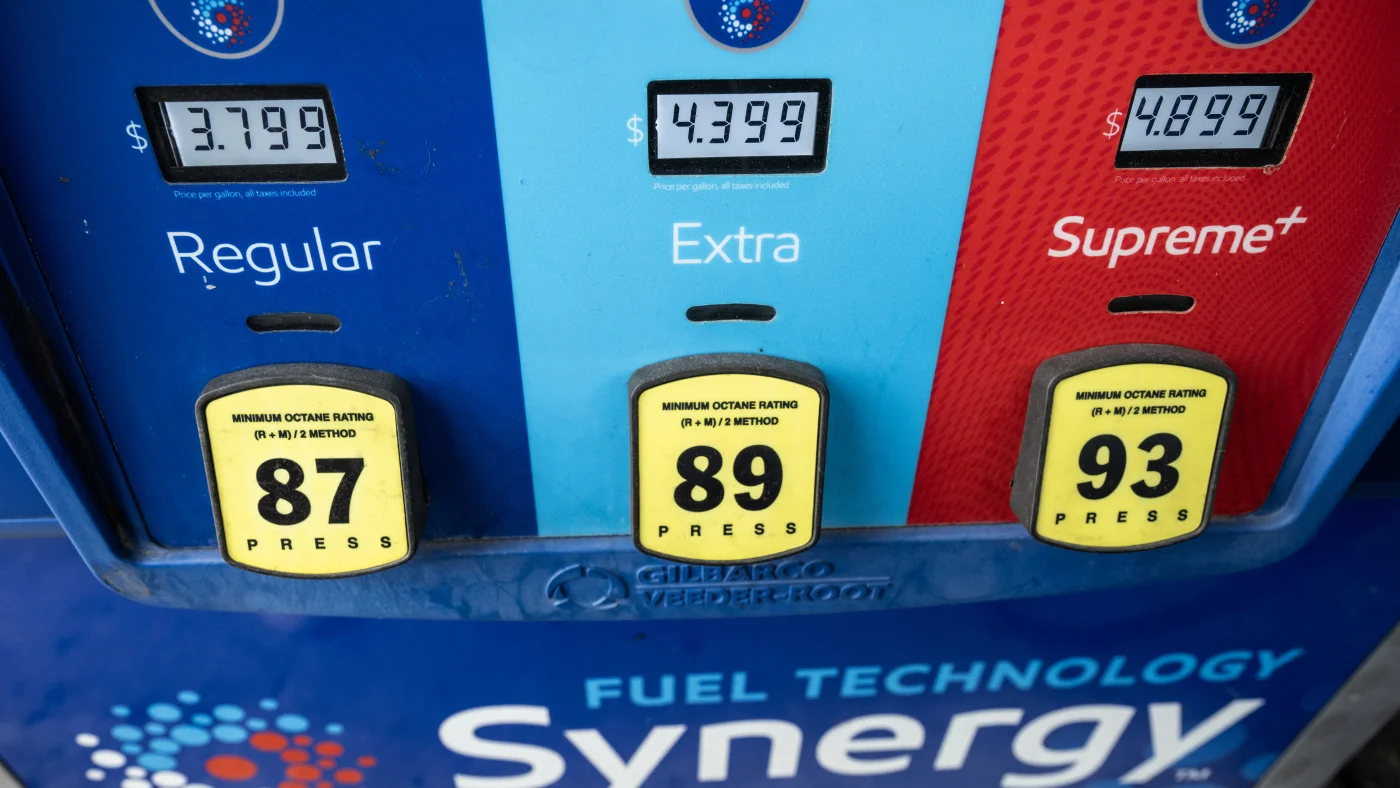
The largest increase was transport, at 8.7 per cent — with petrol being the main contributor, increasing at a rate of 23.6 per cent.
Transport rose 9.4 per cent from August to September alone.
Asher believes it's due to the conflict in the Middle East and rising oil prices.
Head of price statistics at the ABS, Rachael McCririck, said the CPI is "really a measure of inflation" or "price changes in the economy".
"We base it on a representative basket of goods and services for Australian households."
The CPI provides a "sense of the underlying price pressures in the economy" but isn't a good measure for how the cost of living crisis is impacting individual households, McCririck said.
"The CPI is really an aggregate measure that informs policymakers and decision-makers about aggregate trends, it informs things like monetary and fiscal policy settings," she said.
"When we talk about the cost of living, we're really talking about an individual household and what pressures they're facing in their day-to-day lives — so to get a sense of that you have to look at the individual consumption basket."
A knitter and an EV owner, McCririck said her basket would differ from the "average household's basket".
"But the weights that we give to the basket for the CPI are based on the average household experience," she said.
"It's not just a straight comparison to an individual; it's actually a very aggregate measure."
Australia's 'basket' has been reweighed each year since 2018.
McCririck said the reweight is based on the ABS' household expenditure survey.
"We've grown forward the CPI weights by looking ... at how trends in the household expenditure change — we've grown the weight forward each year manually."
The next reweight is scheduled for January 2027. However, the ABS has introduced monthly CPI updates.
McCririck said the organisation is "invested" in having a "frequent indicator of the CPI".
"Prices can move quite rapidly at different points in the economic cycle," she said.
"It's really useful for people to be able to get a sense in real time of how key prices in the economy are evolving and how that might be affecting economic decisions by individuals all across the economy."
Asher told SBS News that rising inflation is a trend that is likely to continue.
"The wars will continue, which means that fuel prices will continue to be high and that has a flow-on effect on goods, logistics and transport systems — which flows onto anything that's imported," she said.
"Many materials, even if they are locally produced here, will increase."
She said inflationary pressures have seen Australians reduce their spending — a habit she hopes can continue into the Christmas period.
"As we move into the Christmas period, people are worse off now than they were at the beginning of the year with inflation — wage growth hasn't kept up," Asher said.
"Some people will be inclined to still spend at Christmas because they feel obliged to do so. I really think that people should be okay to pull back and not overdo it or put things on credit.
"As we move into next year, it's still going to be incredibly tough. Many of the challenges we're seeing are going to persist."
She said Australians should "spend within their means" as "things are quite uncertain".
"Putting things on credit, you're extending that issue into the future, and you're going to pay a higher interest rate," she said.
"We're still seeing the tightening of spending; the last interest rate rise hurt, but I don't think more will be off the table because of these global issues."
Asher hopes that Australians realise that the cost of living crisis is not a household problem, but the result of a "global issue".
"We've got rising inequality, and it's a global issue. We need a number of reforms in Australia including the prevention of offshore profit without paying adequate tax," she said.
"It's sad that people believe that it has something to do with them when the factors that are going on, like the economic indicators, are not them.
She said it's a "widespread problem".
"The system isn't working for the majority of Australians," she said.
"We need more people to be interested in what positive changes can be made from a regulation perspective, to ensure that the wealth of our nation isn't offshore in tax havens, and that it circulates in our economy."