First published 9 Nov 2026, 11:50am
AI could increase spending faster than Australia can produce goods and services, potentially making inflation worse, the Reserve Bank has warned.
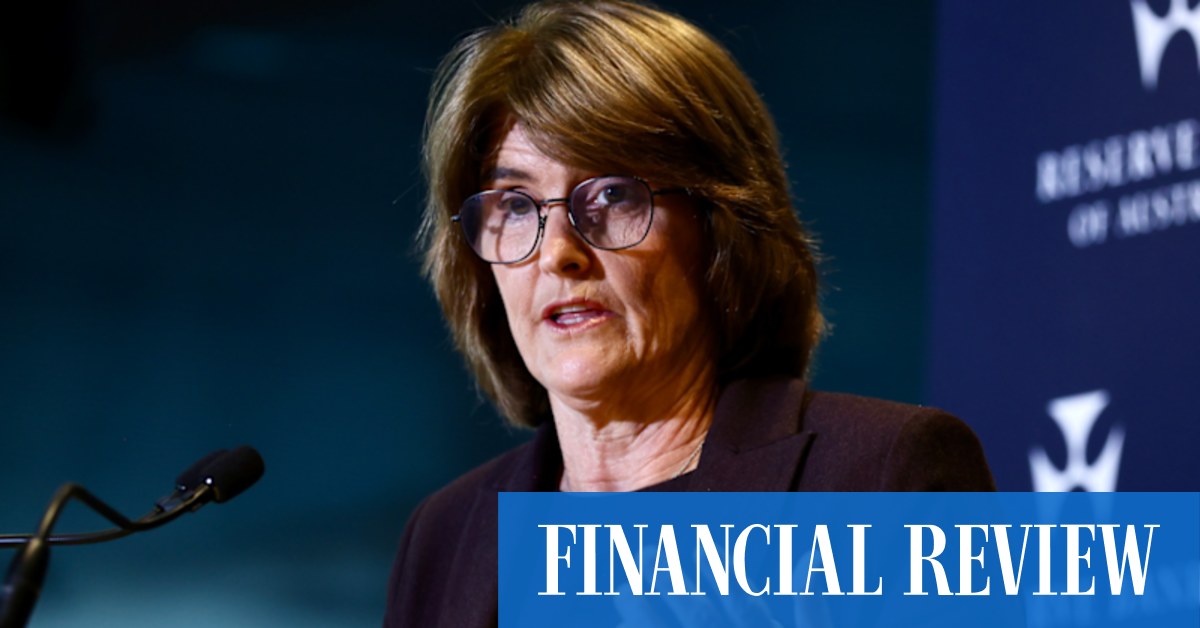
Speaking in Sydney on Monday, assistant governor Sarah Hunter said inflation is expected to put more upwards pressure on inflation in the near term, further compounding cost of living concerns .
It comes after RBA governor Michele Bullock identified AI investment as a key concern for the bank following interest rate hikes in September and November which have taken the cash rate to an 18-year high of 4.85%.
Dr Hunter said markets are becoming increasingly invested in AI despite the challenging economic environment, increasing the negative effect if investment does not meet high expected returns.
“Share and bond prices could fall sharply, potentially causing major disruption to financial markets,” she warned.
“It’s important to note that AI may also be increasing risks to financial stability.”
RBA assistant governor Sarah Hunter warns AI is set to put pressure on inflation in the near term. Picture: NewsWire / Martin Ollman
After more than 12 months of elevated inflation in Australia, the Reserve Bank has been clear in its recent communications that Australians should be looking inwards rather than outwards.
The Middle East conflict has driven up headline inflation significantly since March, though the bank has warned that managing domestic issues are a more pressing concern amid high public and government spending .
Dr Hunter said public discussion generally centred around whether AI will replace jobs, but added the effects of the boom “are likely to be more complex”.
“AI will automate some tasks, complement workers in others and create new roles as the economy adapts. It may also impact on peoples’ consumption, through increases in productivity and national income, which could lift aggregate consumer spending,” she explained.
The RBA says Australia's inflation problems are domestic. Picture: Hu Jingchen/Xinhua
“Anticipating this, some households may start consuming more today or in the near future, before the impact of AI on the economy’s potential growth is fully realised.”
Saving less and borrowing more to bring forward spending is likely to increase pressure on the economy and inflation at a significantly challenging time for Australia, she added.
“AI will become embedded in all parts of the economy and our day-to-day lives. These changes will affect our future productive capacity, the jobs that we do and ultimately our living standards.
“The increase in demand for investment, potentially at the same time as global savings falls, could push up the neutral rate of interest – the rate that balances demand and supply of savings globally.”
Dr Hunter said businesses are also looking to experiment with new technology in a big to expand capacity and position themselves well for future growth.
Costs of this can filter through to higher day to day prices for consumers at the same time price pressures are also compounding due to war-related supply issues internationally.
“[Firms] will be competing for scarce savings, pushing up interest rates,” Dr Hunter warned.
Australia’s largest investment related to AI at the moment is the rapid expansion of data centres.
An existing data centre in the Canberra suburb of Bruce. Picture: Zhang Na/Xinhua
These buildings, some planned to be over 100,000 square metres, host the computers and servers necessary to meet public demand for tech services like chatbot usage, streaming services and search engines.
Dr Hunter confirmed the RBA’s estimates for data centre investment have increased 10-fold in the past three years.
“Much of the spending is on imported machinery and equipment, particularly IT equipment manufactured overseas, which dampens the net contribution to GDP,” she said.
Government figures showed there were 162 data centres in Australia as of March 2026, largely concentrated across Sydney and Melbourne.
A data centre under construction in the Sydney suburb of Artarmon. Picture: Steve Christo-Corbis.
While the short-term impacts to meet and maintain technology is expected to drive up inflation, Dr Hunter said the longer-term impact is likely to vary overtime.
The RBA is retaining a neutral outlook for now, largely thanks to expectations AI could help address productivity issues that having been dogging Australia in recent times.
“To begin grappling with this, the RBA is pursuing a broad research agenda to deepen our understanding of AI’s implications for financial markets, productivity, labour markets, inflation, financial stability and ultimately monetary policy, ensuring we’re well placed to navigate the changes ahead,” Dr Hunter concluded.
The RBA's monetary policy board will meet for its final interest rates decision of the year on 8 December, with economist and market expectations for the outcome mixed.
Help us improve your reading experience
Got a minute? Your feedback will help us build a better experience for you.