Published 22 November 2026 12:20 pm
A mathematician at Anthropic says he has used the company's AI tool, Claude, to crack one of the world's most famous unsolved maths problems.
Levent Alpöge, a member of the company's technical staff, announced on his website on Friday that he believes he has found a proof of the Riemann Hypothesis.
Formulated by German mathematician Bernhard Riemann in 1859, the hypothesis relates to the distribution of prime numbers — numbers greater than one that can only be divided evenly by one and themselves. Many experts consider it the most important open question in pure mathematics.
Brian Conrey, a leading specialist on the Riemann Hypothesis said while he had yet to review the manuscript, he "really did not see this coming at all".
"It's a monumental moment in human history. It's really the biggest thing I think that's ever happened in mathematics," he told the Agence France-Presse news agency.
Your trusted source for staying up-to-date with the world around you. Get free daily news updates and analysis, straight to your inbox.
"It looks like it's seriously complicated. I don't think any human was about to find this."
The Riemann Hypothesis is one of seven Millennium Prize Problems selected by the Clay Mathematics Institute in 2000. It offers a $1 million reward for a solution to each problem.
Associate professor Melissa Humphries, research lead at Adelaide University's School of Mathematical Sciences, told SBS News it will be "massive" deal if the hypothesis has in fact been solved.
"People would not be giving away a million dollars to solve it unless it was extremely important, and it is really important," she said.
"It underpins so much of the technology that we use in our everyday lives, including AI."
Proving the Riemann Hypothesis could have far-reaching implications for technologies, including cryptography, which relies on complex maths problems to keep digital information secure.
Proving a hypothesis can provide a firmer foundation for hundreds of existing mathematical proofs that already rely on the assumption that it is true, according to Humphries.
"A whole bunch of people have just been doing that for a long time, assuming that the Riemann Hypothesis is true," she said.
"That means that their proofs and their systems are kind of on shaky ground because they've made assumptions about something that we suspected was true but didn't know.
"And so once this proof is actually proven, then all of those proofs — of which there are many, many hundreds — will all be much more concrete and can then be used more efficiently and effectively because we know they are real."
It could mean building computing systems and cryptography that are faster, better and more robust, she explained.
Under the Clay Mathematics Institute's rules, a solution must be published in a peer-reviewed journal and withstand two years of scrutiny before it is eligible for the $1 million prize.
On Saturday, two organisations said they had independently checked the computer code Alpöge shared and found it to be valid.
However, Humphries said the underlying mathematical argument still needs to be written out in a conventional proof — not code — and verified by humans, a process that could take some time.
"Most respected pure mathematicians that I know of and know that have started looking at this are all kind of saying we suspect that it's real, and we suspect that it's going to be verified, but they need some more information to be able to do that properly," she said.
Alpöge said a full written argument would be extremely long and he had not yet mastered all of the mathematics involved, though he planned to write it up properly.
The president of the Clay Mathematics Institute, Martin Bridson, said a lot of work lay ahead to fully understand the finding.
"This is an announcement of historic significance, which holds the promise of a dramatic transformation in the perception of what is possible in the struggle to extend the human understanding of mathematics," he said in a statement.
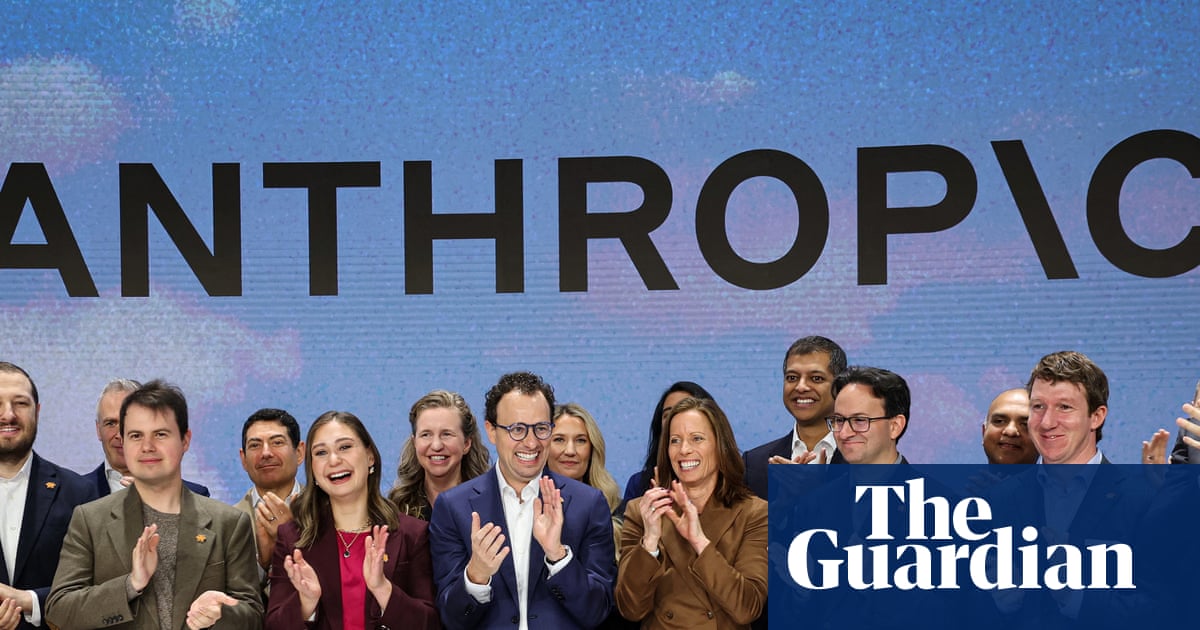
Alpöge's announcement came one day after Anthropic's record stock market debut. It raised US$81 billion ($122 billion) at a US$1.5 trillion ($2.2 trillion) valuation.
He said he had consulted the company's chief executive, Dario Amodei, before announcing the result, and acknowledged that its timing could be viewed cynically.
In September, rival AI company OpenAI said one of its tools had solved another Millennium Prize Problem, Navier-Stokes, a set of equations that govern how fluids move.
Mathematicians say that proof appears correct but it hasn't been fully vetted yet.
Alex Kontorovich, distinguished professor and department chair of mathematics at Rutgers University in the US, was stunned by the developments.
"Navier-Stokes fell and now the Riemann Hypothesis," he said. "There's some kind of out-of-body experience where I’m looking at myself saying, 'Yes, the Riemann Hypothesis has been solved,' and kind of trying to comprehend what the hell these words are coming out of my mouth."
While Humphries believes AI could help solve many major mathematical and scientific mysteries, she says it's important to remember the crucial role of humans in validating those findings.
"This Anthropic solution was done alongside a really highly accomplished mathematician who was using the AI to dig deeply into all of the literature that it has access to that we as humans find harder to compile," she said.
While AI provides search power and depth of understanding that can help humans do better and more, she says it requires just as much scrutiny as any other researcher.
"And so here starts the process of us validating and verifying with hope that this is actually you know the amazing proof that it claims to be."
— With additional reporting by Agence France-Presse and Associated Press news agencies.