Whenever it rains, Rachana, who likes to be identified only by her first name, feels the ache of what the army did to her two-and-a-half decades ago.
In January 2002, soldiers surrounded her rented room in Maitidevi, Kathmandu, where she was staying with her sister while being treated for a fractured hand. She was 18 and had been active in the “Akhil Krantikari” student union since she was 13. The army took her that night, along with her brother-in-law and others. While some were released, she was not.
She was held for sixteen months, blindfolded. Unable to tell day from night, she was driven around under threats that she was going to be killed. “They did not commit outright rape but they spared no part of my body,”she shared her trauma.
A Supreme Court habeas corpus petition, filed by her sister, secured her release as peace talks finally began.
After all these years, Rachana says the state has given her little in reparation. A friend filed a complaint on her behalf with the Truth and Reconciliation Commission last year. She has heard nothing since. The only relief she has received for what happened to her in detention is Rs25,000, paid years ago in a general distribution to listed conflict victims. Her detention of 16 months has left her with teeth that no longer function and a body that aches all over.
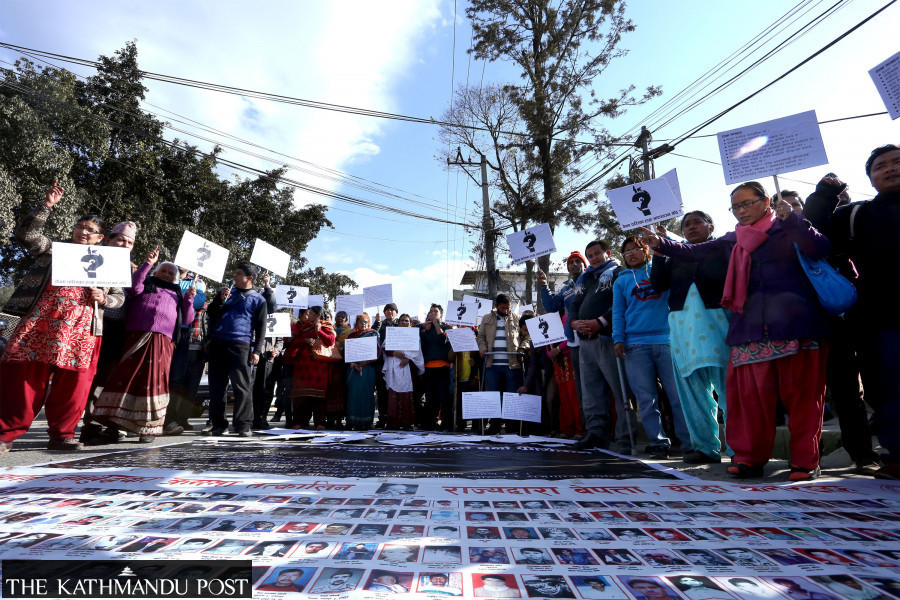
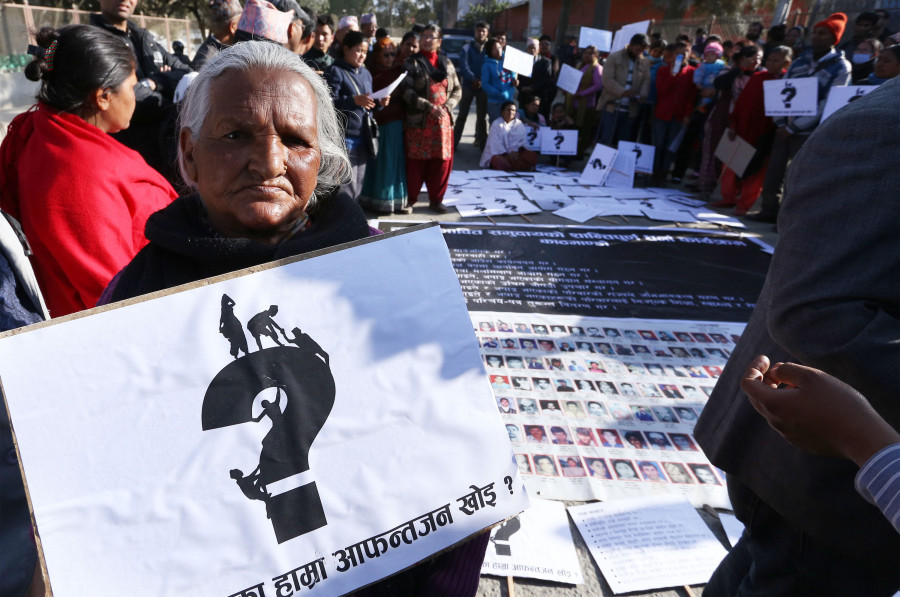
The wait is not hers alone. As Nepal marks 20 years since the Comprehensive Peace Accord on Saturday, survivors of conflict-related sexual violence have not yet received any form of justice even after filing complaints with the commission. It has had no commissioners since May, and its secretary says not one of those complaints has been investigated.
Lawyers and survivors’ advocates say the delay is the latest in a series of gaps: short filing windows, relief schemes that left survivors out, and a state that has been slow to recognise them as victims.
As of September 2025, 4,226 people had filed such complaints, up from 314 in the commission’s first decade.
Adriana (name changed), 38, is another survivor. She was 12 in 2000 when, she says, security personnel repeatedly surrounded her family’s home in Kailali in search of a relative.
“All the women in the family, including my sisters and sisters-in-law, were subjected to strip searches,” she said. “But we were not just stripped naked. Groups of security personnel would rape us.”
She has no count of how many times it happened or how many men were involved.
She is married with a child and has never told her husband about it.
“Governments have changed time and again since the armed conflict ended, but women like me, who experienced violence during that period, have still not received any relief,” she says. “Even today, when everyone says the police are our friends, the fear of what happened in the past has not left me.”
Luise (name changed), 53, from Surkhet, says armed security personnel surrounded her house during the conflict, blindfolded and beat her, before taking her to the nearby barracks.
“They kept me there for 26 days,” she said. “Four men repeatedly raped me.”
The violence left her with injuries to her right hand and leg, as well as depression and post-traumatic stress disorder. “Even now, I have several health problems. I am taking regular medication for mental health issues and also suffer from uterine-related problems.” She was unable to work afterwards and now lives alone.
She reported the incident to the authorities in 2006, she said, but could not even register a police complaint, because the law then required rape complaints to be filed within 35 days.
The short 35-day statute of limitations was one of the legal barriers that kept conflict-era sexual-violence survivors outside the formal justice system. Although Nepal later extended reporting periods in its criminal law, it did not remove the limitation for conflict-era cases. International bodies, including the Committee on the Elimination of Discrimination against Women (CEDAW) and states during the Universal Periodic Review, have repeatedly urged Nepal to remove these time limits.
In 2012, with support from Advocacy Forum Nepal and REDRESS, a complaint was filed on her behalf with the UN Human Rights Committee. In 2017 , the committee found that she had been subjected to torture, arbitrary detention, inhuman treatment and discrimination. It directed the government to investigate, prosecute those responsible and compensate her.
Nine years on, she says she has received nothing. “When the decision came directing the government to provide compensation, I thought I would no longer have to depend on others for my medical treatments,” she said. “But I have received nothing so far.”
She struggles to meet daily household expenses and pay for medical care.
The complaints sit with a commission that cannot act on them. Nirmala Adhikari, the commission’s secretary, said the complaints from sexual violence survivors were collected across 77 districts and registered, but nothing has moved beyond registration. “We haven’t been able to initiate an investigation into even one case,” she said.
The commission’s officials had barely taken office when the Gen Z movement erupted, she said, followed by elections and an election code of conduct that froze work. Then the new government took office and revoked the appointments by ordinance in May.
Under the law, all executive authority rests with the commission, Adhikari said and staff cannot proceed on their own. Secretariat staff have drafted guidelines on how to meet survivors, record testimony and protect confidentiality, but there is no commission to approve them. Even the committee that would recommend new commissioners has not been formed. Nothing has happened with the Rs1 billion the government set aside for investigations, relief and compensation, she said.
About the delay, law ministry spokesperson Dal Bahadur Adhikari said the ministry had no specific information to give.
On November 7 , Bernard Duhaime, the UN Special Rapporteur on truth, justice and reparation, urged the government to swiftly appoint commissioners to the Truth and Reconciliation Commission and the Commission of Investigation on Enforced Disappeared Persons. Both have been without office-bearers since May.
Sabina Kafle, a human rights lawyer, said survivors were excluded from the state’s relief from the start, when the government first published the list for victim relief. The second National Action Plan on women, peace and security focused on conflict-related sexual violence, she says, but ran for only three years without follow-through. The main obstacle, she said, has been a lack of political will, and the current government is “still unclear”.
The most urgent step, Kafle said, is appointing commissioners through a transparent, merit-based process in consultation with victims. Reparation must also go beyond cash to livelihood support, formal acknowledgment by the state, apologies where survivors want them, rehabilitation and memorialisation.
Devi Khadka, chairperson of the Aparijat Foundation, said the government did not have to wait for the commission to act. “Even when the transitional justice process was stalled, the government could and should have worked to ensure the basic rights of these women,” she said.
It could have ensured healthcare for survivors and worked to reduce the stigma attached to sexual violence, she said.
She added, a credible recommendation committee must come first, before the commission is formed.
What Rachana wants is not what the state has offered. “Beyond financial compensation the state should have provided dignity, recognition, and livelihood support,” she said. “The state leadership today acts as if the conflict did not even happen.”
Aarya Chand is a reporter at The Kathmandu Post covering social issues. Before moving to the social beat, Chand was an intern covering culture and lifestyle for the Post.
Paudel is a reporter with the Kantipur daily.