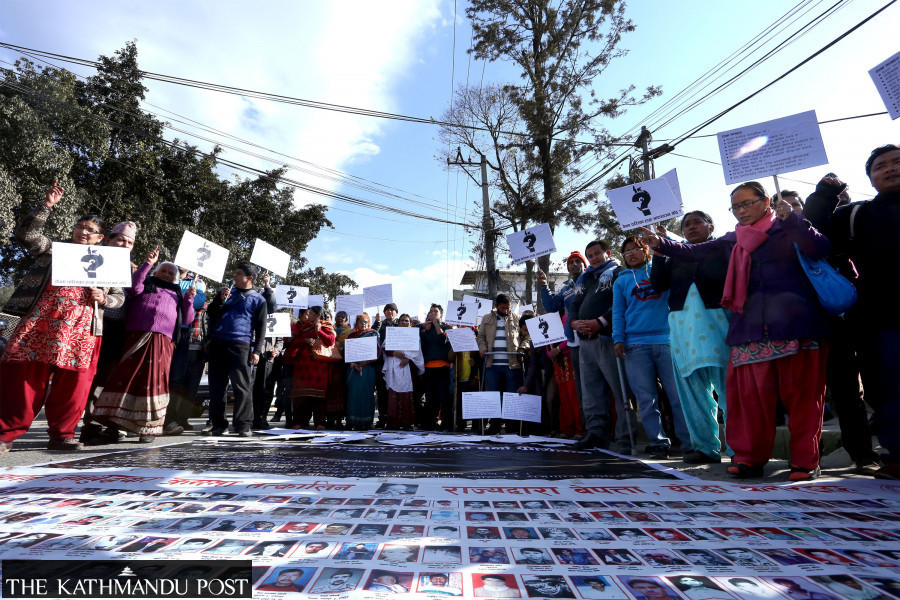
Two decades after Nepal signed the Comprehensive Peace Agreement (CPA) that ended its decade-long armed conflict, thousands of victims and survivors are still waiting for justice, reparations and answers about the fate of their missing relatives, according to the International Commission of Jurists (ICJ).
In a statement issued ahead of the 20th anniversary of the agreement on November 21, 2006, the international human rights organisation called on the government to fulfil its commitments under the peace deal, particularly its obligations to victims of human rights violations and abuses committed by both sides during the 1996-2006 conflict.
The CPA had laid the foundation for a democratic state governed by the rule of law and promised measures to address serious violations committed during the war. However, thousands of victims and their families have yet to receive effective remedies or reparations, while many are still seeking information about their missing relatives and accountability for serious crimes.
“Twenty years after the peace agreement, conflict victims continue to bear the burden of the State’s failure to deliver justice,” said Mandira Sharma, ICJ regional director for the Asia and Pacific Programme.
“The prolonged denial of truth, accountability and reparation not only harms victims and survivors, but also undermines public confidence in the justice system and government, and weakens the rule of law.”
The ICJ said successive governments had failed to make meaningful progress on transitional justice, citing prolonged delays, political interference and inadequate compliance with Nepal’s international human rights obligations.
It said the failure to investigate and prosecute serious violations committed during the conflict had entrenched impunity. Enforced disappearances, unlawful killings, torture, ill-treatment and sexual violence continue to go unaccounted for, sending a message that grave human rights violations can go unpunished, the organisation said.
Such failures undermine the credibility of public institutions and weaken Nepal’s commitment to democratic governance and the rule of law, it added.
Sharma said victims and survivors had repeatedly shown patience and a willingness to engage in the transitional justice process, but had yet to see concrete results.
“However, twenty years after the CPA, they continue to await concrete progress, including the operationalisation of a credible and independent truth-seeking process and effective investigations into enforced disappearances,” she said.
The ICJ urged the government to urgently establish the Truth and Reconciliation Commission (TRC) and the Commission of Investigation on Enforced Disappeared Persons (CIEDP), as provided for under the Commission of Inquiry, Truth and Reconciliation Act.
It called for transparent, merit-based and victim-centred appointments to ensure the independence, competence and integrity of the commissions and restore public confidence in their work.
“The current Government came to office with commitments to reform, accountability, constitutional governance and the strengthening of democratic institutions,” Sharma said.
“Twenty years after the CPA, it is high time that the Government seizes this opportunity to honour its commitments, deliver justice to victims, and strengthen the rule of law for future generations,” she added.
The ICJ acknowledged that amendments to Nepal’s transitional justice legislation in 2024 marked progress after years of political deadlock. However, it said significant gaps remained that could undermine victims’ rights and Nepal’s obligations under international law.
It reiterated that any transitional justice framework must comply with international human rights law and guarantee victims’ rights to truth, justice, reparation and assurances that such violations will not recur.
The organisation called on the government to take five key steps: promptly establish the TRC and CIEDP through independent, transparent and merit-based appointment processes; bring transitional justice legislation fully into line with Nepal’s international human rights obligations and address its remaining shortcomings; ensure effective investigations and, where warranted, prosecutions of serious human rights violations and crimes under international law; guarantee meaningful participation of victims and survivors at every stage of the process; and provide comprehensive and effective reparations to victims and their families.
A two-decade failure to deliver justice
Nepal’s transitional justice process originates in the commitments made under the CPA, which ended the 1996-2006 armed conflict and called for truth, justice, reparations and guarantees of non-recurrence for victims of serious human rights violations.
Following years of campaigning by victims’ groups, civil society organisations, international bodies, including the ICJ, and political parties, Parliament enacted the Commission on Investigation of Disappeared Persons, Truth and Reconciliation Commission Act in 2014. The law established the TRC and the CIEDP.
Victims’ groups, human rights organisations and international bodies, including the United Nations Office of the High Commissioner for Human Rights (OHCHR), raised serious concerns that the legislation could allow amnesties for grave human rights violations and crimes under international law. They also warned that it failed to guarantee accountability and adequately protect victims’ rights to truth, justice and reparations.
In February 2015, Nepal’s Supreme Court struck down several provisions of the law and directed the government to amend it to bring it into line with the Constitution and international human rights obligations. The court called for amnesties for serious violations to be excluded and victims’ participation in the process to be guaranteed.
Although the TRC and CIEDP were established and reconstituted several times over the following years, their work was repeatedly obstructed by political interference, inadequate legal and institutional frameworks and a lack of resources.
Despite receiving tens of thousands of complaints, neither commission delivered meaningful accountability, truth-seeking or reparations to victims.
After years of political deadlock, Parliament amended the transitional justice law in 2024. While the changes addressed some longstanding concerns, national and international human rights organisations, including the ICJ, said important shortcomings remained, including provisions that could still undermine accountability and victims’ rights under international law.
Subsequent efforts to appoint commissioners to the two bodies became contentious, with victims’ groups and civil society organisations questioning the transparency, independence and credibility of the selection process.
In May 2026, the new government decided to cancel the appointment process, clearing the way for a fresh selection of commissioners.
The ICJ said the government now had an opportunity to amend the outstanding provisions of the law and establish credible, independent and victim-centred transitional justice institutions capable of delivering the truth, justice, reparations and guarantees of non-recurrence promised two decades ago.


