


You have reached your maximum number of saved items.
Remove items from your saved list to add more.
You've used all of your gift articles. 3 more will become available on the 1st of every month.
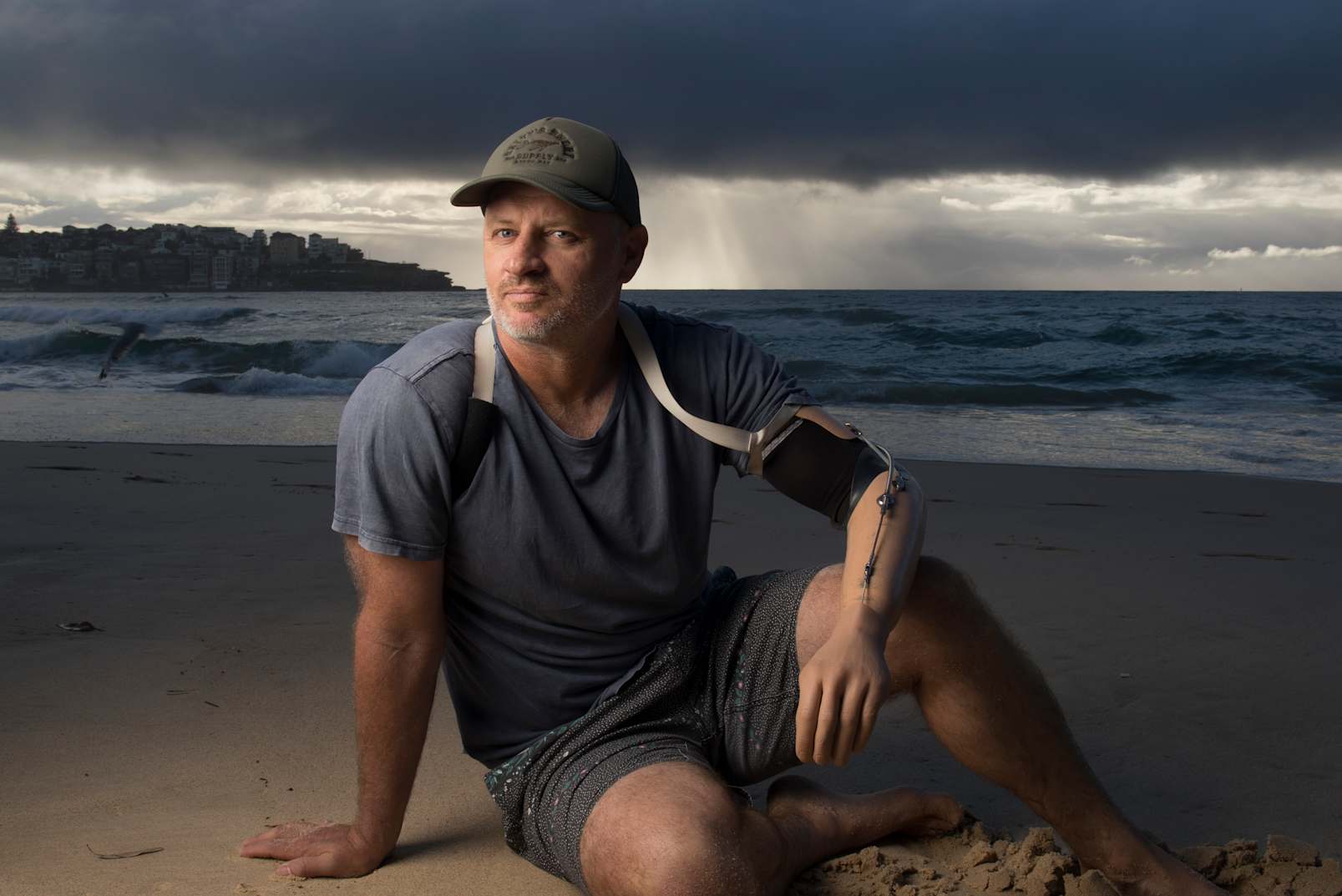
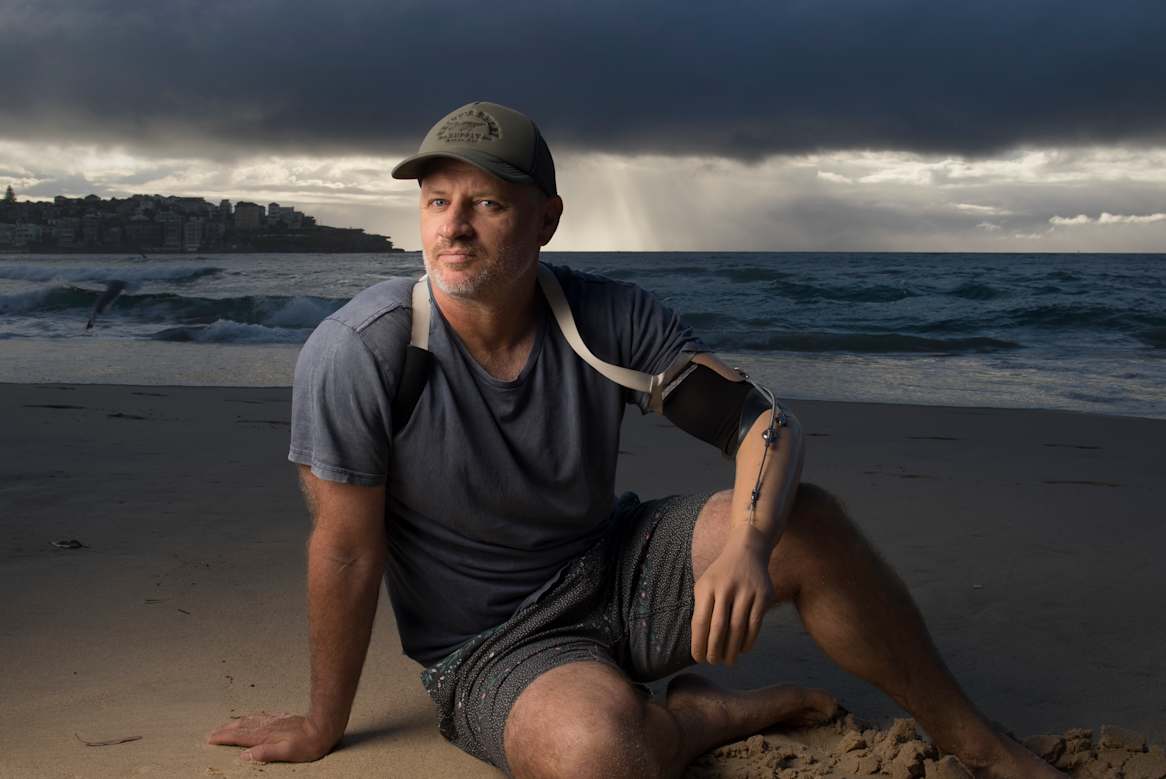
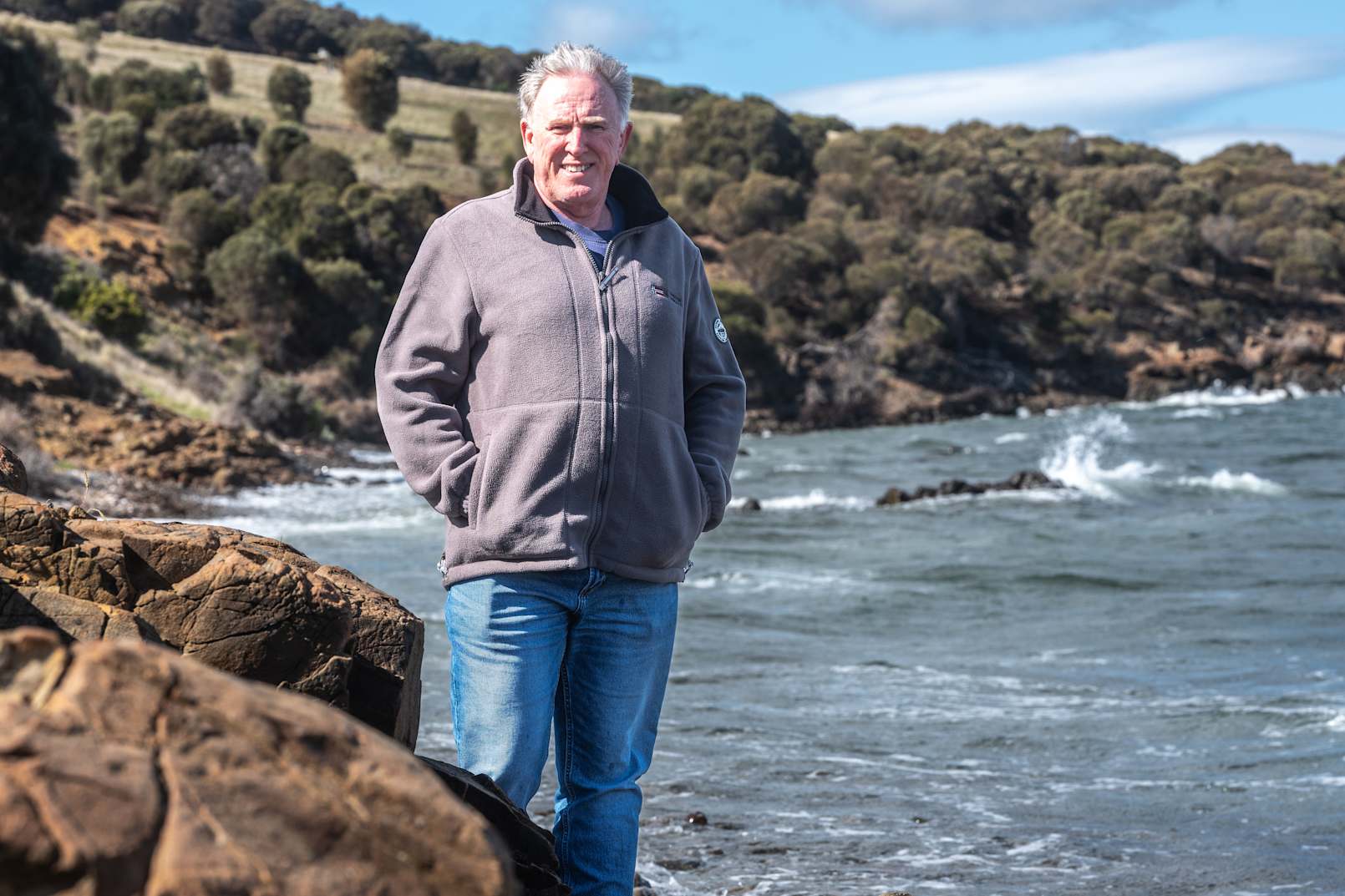
G LENN ORGIAS, 51, is an energy trader and writer who lives in Bondi, Sydney. On February 12, 2009, he was bitten by a shark while surfing at Bondi Beach. He spent 10 days in ICU, more than five weeks in hospital, and lost his hand and part of his forearm. Since his attack, he’s written two books – a memoir called Man in a Grey Suit , and Teeth Kicker , a crime novel about – well, a loan shark.
“There was a lot going on the night I was attacked. Paul [de Gelder, a navy diver] was attacked the day before [by a bull shark in Sydney Harbour]; there’d been a huge amount of flooding in Queensland, which had pushed a lot of fresh water into the ocean; and it was really stormy here in Sydney, so the water was reasonably murky. It was dusk, and the light was getting low.
There would’ve been 20 or 30 guys out that night. It was big surf – very lumpy, not very nice – but it had been flat for two weeks, so no one had surfed for ages and everyone was keen to get out there. It was breaking a fair way offshore. I’d just got a wave and was paddling back towards the pack – about 80 metres from shore, 20 metres from the lineup – when I was attacked.
The shark just slammed into me from below. It knocked me right off my board and pulled me under by my left arm. I didn’t know what was happening. I couldn’t see anything – I never actually saw it – but I remember it shook me really aggressively, sort of ran me through the water. The whole thing was so quick – less than a minute, maybe less than 30 seconds – I didn’t really know what was going on. Then it suddenly let me go and I popped up.
The other surfers didn’t come for me. It was a difficult situation – they initially scattered, as you would, because I was screaming. I managed to get back on my board and got my arm – what was left of it – back onto the board. I just started paddling. I was very fearful it was going to circle back and come again. I felt like a sitting duck. I just went hell-for-leather and paddled really hard one-handed and caught a wave. Just on my stomach. It was the best wave of my life – the wave that saved my life, absolutely.
When I got in [to the shallows], my board got sucked back out behind me, dragging on my leash, and I couldn’t get out. I was there in the shallows, holding my arm, just stuck up to my thighs in the water. And then one of the local guys here who I know quite well grabbed me and helped me up onto the sand.
There were a lot of people on the beach that night. Someone called the ambulance, which took about 45 minutes to come. But Bondi’s one of the best places in Australia to be attacked by a shark: there were three doctors literally right there. I’d lost a fair bit of blood, and later on one of them – an emergency doctor from Prince of Wales [Hospital in Randwick] – told me that when he looked at me, he thought it was 50-50 I’d have a cardiac arrest on the sand and not make it.
Straight after the attack, when I woke up in hospital, I thought I’d never surf again. I remember my wife, Lisa – who was six months pregnant – saying, “I want to move away from the beach.” And I was the same – I didn’t want to even see the ocean. But by the next day, we’d both calmed down; we both decided we wanted to stay. And I knew I wanted to surf again.
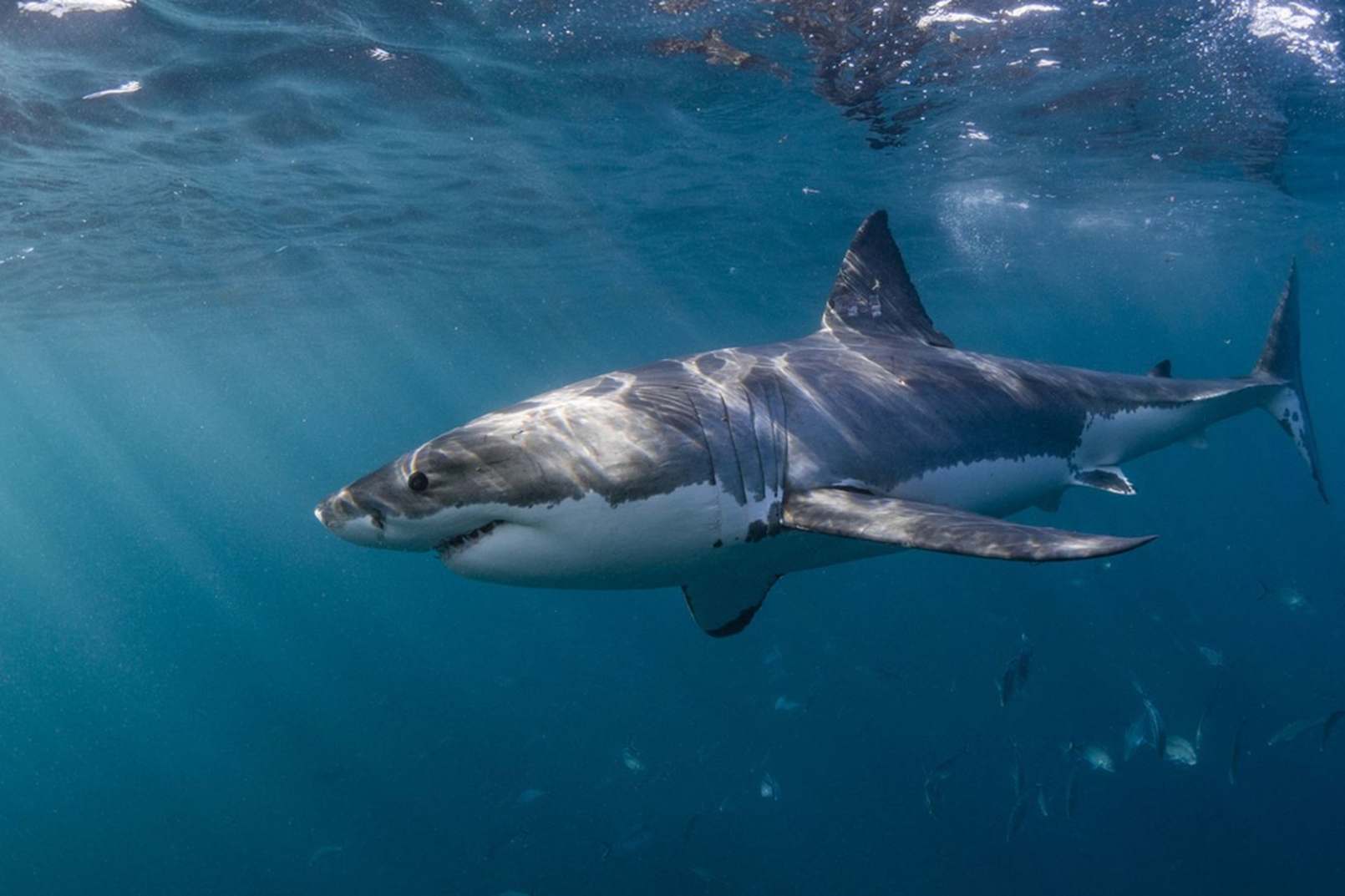
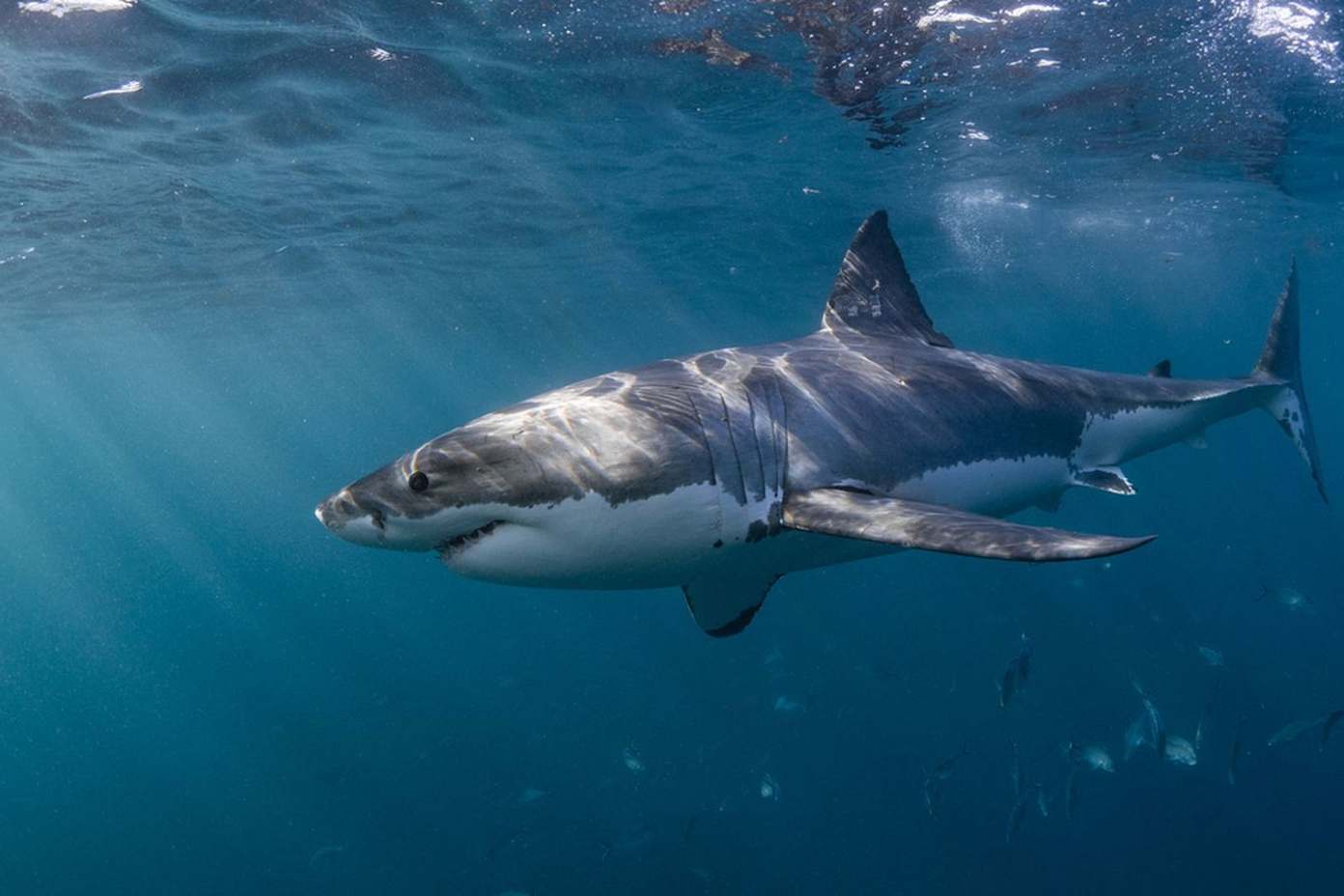
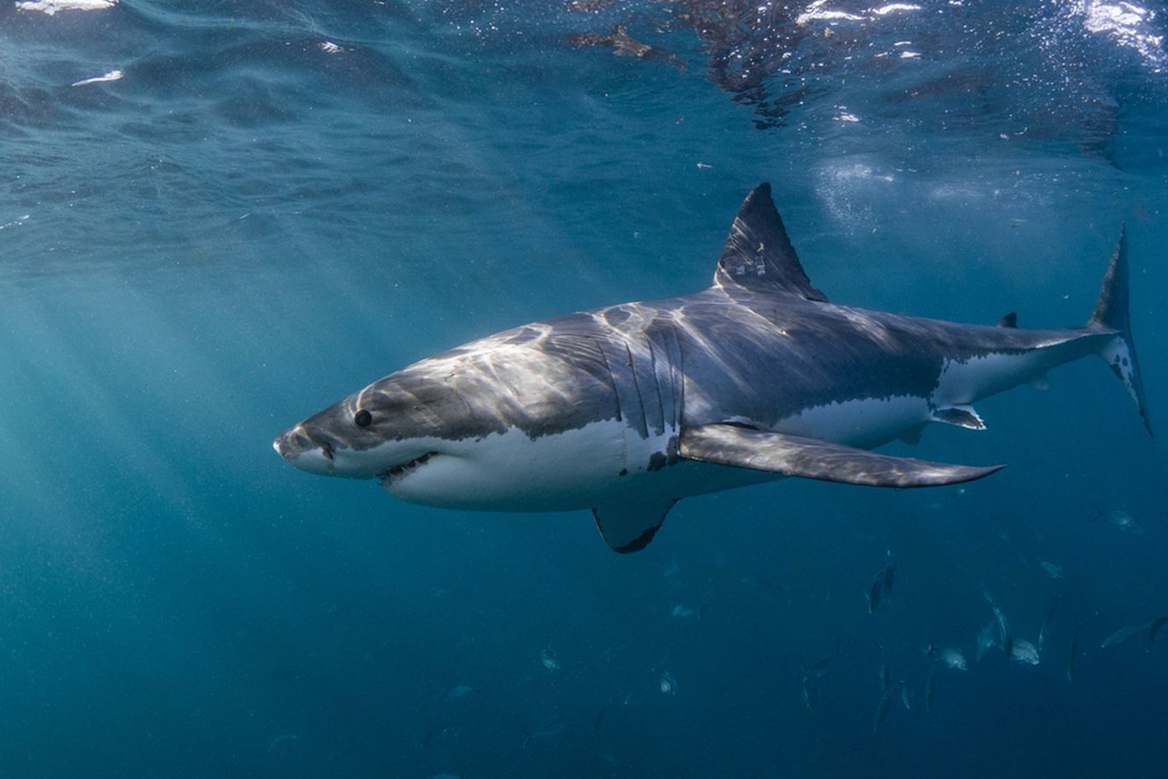
Since the attack, I’ve learnt a bit about what happened, though of course you can’t be sure. I think it was a test bite from the shark. Another guy in the water that day got bumped just before I was bitten, and – I’m speculating – I think it was the same shark: I think it was noticing a lot of surfers, trying to figure it out. The teeth marks from my bite, and my wetsuit, suggest it was a juvenile white shark, maybe about four years old, about 200 kilograms – around the age where they transfer from eating finned fish to mammals, like seals. So they’re just learning, and with something big, they want to test it out. They’re looking for fat and meat. So when it got my arm it gave it a bit of a go, then it was like, “Yeah, feeling a bit weird … not worth my time”. So it let go.
I only learnt all that later, of course. When I think back, I think our understanding of sharks now is at a completely different scientific level than when I was attacked; and I didn’t understand the contributing factors towards shark attack the way I do now. For instance, the night I was attacked, there were the floodwaters and the runoff; it was dusk; it was overcast and cloudy and not easy for sharks to see. There were a lot of bait fish around; and it was February, which is a very common month for shark attacks. So there were lots of risk factors which the average Joe – including me – didn’t really know at the time.
Now there are drones and tagging and tracking and just a lot more information to help you. When I decide to go out these days, I think I recognise that I’m making an actual decision, consciously, based on a whole lot of factors. For myself, my basic rules are: if a beach is closed, I don’t go. I don’t surf at sunset or sunrise – basically, if the sun isn’t on the water, I don’t go. If it’s really murky after rain, I’ll give it a couple of days. I do sometimes feel fearful, but fear’s not something that will stop me doing it. It’s just a feeling, and I just try to manage it, accept it and let it pass. And usually it does. Often I’ll go out and I don’t feel any fear at all.
I’m not an expert and I’m not really capable of offering anyone advice. But my personal feeling is that what’s most valuable is the continuing development of scientific knowledge and education around sharks: their habits, behaviours, biology. Just in the past year, the drones have started putting out a lot of information, which I think is useful. I don’t love shark nets : they didn’t save me, and I think they trap a lot of wildlife. I’m not 100 per cent against them, but I’ve always questioned their value. I feel the same about drum lines. My major thing is I don’t really want a whole lot of wildlife getting killed unnecessarily when it’s not really having a very big impact on shark attacks. I think the biggest impact will come with people really understanding that “today is a potentially dangerous day”, based on the science. I think the scientists are doing a good job.
These days, sometimes I’ll surf every day of the week; sometimes, if it’s flat for a while, I won’t go at all. But I guess I average a couple of times a week. [Last summer, at the peak of the attacks] I stayed out of the surf for two weeks, probably longer than most people. I probably do take a more cautious approach than others. I certainly don’t feel immune. And if I did get attacked again, people are going to think I’m a real idiot! Like getting struck twice by lightning.
Chris Pepin-Neff is an associate professor in public policy at the University of Sydney. For the past 20 years, they have worked in the sub-specialty of “human-shark studies”, looking at media coverage, policymaking, and public opinion and emotion surrounding sharks. They have worked on human-shark risk assessment and safety measures all over the world, including Australia, South Africa, Réunion Island and the United States.
“I always look at three things: shark activity, human activity, environmental conditions. Last summer was a perfect storm: warm water temperatures, record summer rain, superabundance of bait fish. It was a singularity – totally incomparable to any other time. And I’d suggest we’re not going to have another year like we’ve just had. But that said, there’s going to be extraordinary levels of unpredictability this year: we’ve got El Niño, it’s going to be hot – we just don’t know what’s going to happen.
It can be helpful to think in terms of attractants and deterrents. Attractants are things that attract sharks. So, say you have a harbour beach, with a jetty nearby. You’ve got boats, with sewage that attracts small fish: attractant. You’ve got fishermen gutting fish off the jetty: attractant. Then you’ve got high water temperature and low water clarity, environmental conditions that raise the level of bait fish: attractant. So a lot of attractants, which equals high risk. My mum’s passed now, but she was a big swimmer. Would I let her go swimming between the boats in that sort of scenario? No way. To me, it’s a disaster waiting to happen.
What you want is to remove attractants and add deterrents – things that trigger avoidant behaviour in sharks. So one thing I always recommend is that if you’re swimming at an unprotected beach, you should be swimming in pairs or groups. That’s particularly true for children: everybody needs a buddy. And that’s because we want to trigger sharks’ avoidance response by being more intimidating. Big multiple splashes, like swimmers between the flags – a great big mess in the water – that’s intimidating, because sharks don’t know what that is: it doesn’t read like potential prey. One swimmer is not intimidating. A surfer on a surfboard is not intimidating. So sharks come up and they’re curious, maybe defensive. That’s when they might take a bite.
You can also do a few things to make yourself less inviting. Don’t wear jewellery – your watch, your necklace – because it could look flashy, like fish gills that are moving. Don’t wear yellow: in the shark-bite community – and I’ve not seen a scientific study on this, but dear god, I know it’s true – it’s referred to as “yum yum yellow”. Don’t wear flesh-coloured clothes. You don’t want to look like a seal, but I’d rather be black than look like flesh. Or a fish. Don’t wear silvery, bluey things.
I’ve done assessments on Réunion Island, in Florida; the same rules apply. You just have to be mindful that the ocean is an active ecosystem. It’s wrong to assume that the ocean is like a resort pool that’s always safe, and the shark is always dangerous. The fact is, the shark isn’t always dangerous and the beach is really never safe. The ocean is the wild. We do ourselves a disservice when we pretend otherwise.
This is why the research on culling has shown that it doesn’t work. Because if the attractant is never removed, you have to kill every single shark in the ecosystem. And then you’ve got to kill every shark under that, and under that, all the way down. Apex predator, meso-predator, on and on: white sharks and bull sharks, then dusky sharks and bronze whalers. It would never end.
Netting is difficult. Not all nets are created equal. Enclosure nets in the right context work very well. I’ve seen them in operation in Capetown; I recommended one at Cottesloe in Western Australia. An enclosure net doesn’t kill anything, doesn’t catch anything. It’s not an environmental disaster. It comes right in to the beach – water on three sides, sand on the fourth. You put it out for three hours on a Sunday morning for Nippers or whatever, then you pull it back in. It’s completely safe – nothing can get in, nothing can get out.
I think other kinds of nets [such as the gill nets at many beaches, which sit off-shore in the middle of a water column as partial barriers, while leaving the majority of the area un-netted] are insane and dangerous. The reality is that when fish get caught in those nets, they struggle. Those struggles send out low-frequency vibrations that sharks can sense over long distances: it’s one of the ways they detect prey. So those vibrations are literally like ringing a dinner bell for sharks to come in toward the nets – and the beach. They are literally the last thing you should put in front of the flags.
The irony is that people don’t actually want [gill] nets. I’ve gone all over the world – and remember, I only go to beaches after clusters of fatal shark bites – looking for people who want them, and the highest number I can get is between seven and nine per cent. I did a survey here at Waverley at Bondi. The question was: “If a shark net was taken out and there was a fatal shark attack at Bondi afterwards, would you hold the politician responsible?” Six hundred people, scientific study; 70 per cent of people said, “No, we wouldn’t.” We also asked, “Would you go back to that beach if the net was taken out?” And three out of four people said, “Yes.”
But for politicians, that 30 per cent is too much of a risk. Politicians are trying to manage the public holding them accountable for shark bites – not the occurrence of shark bites themselves. What’s the threshold of risk and courage a politician would need to take shark nets out, pray to God there are no incidents, and if there is, be able to sustain nine weeks of front page coverage blaming them? That’s a very, very hard question. I’ve seen it asked all over the world, but never more than in Australia. And the fact is, no politician is courageous enough to take that risk.
And so the state government has been entirely disingenuous on the subject of shark nets in NSW. There were shark nets in the water when at least three of the last shark attacks here occurred, and yet the government has doubled down on the effectiveness of shark nets. I’m not talking about my friends at the DPI [Department of Primary Industries] or my scientist colleagues, I’m talking about the politicians who said, “Oh, well, this cluster goes to prove that we need more shark nets.” It has not proven that. It has proven that shark nets are less effective and potentially more dangerous even than we thought. They’ve had 100 years to find one study that says they work and they can’t. And I can find five studies that say that gill nets catch sharks and other marine life, and attract sharks closer to the beach. And not only studies: DPI pictures and videos show that 40 per cent of sharks are caught on the inside of the nets. The fact is, shark nets don’t protect beachgoers. Shark nets protect politicians.
One of the major political off-ramps for governments wanting to stop using nets is drumlines. The old kind are baited buoys that basically drown the shark. The new kind, smart drumlines, have a pinger that alerts people, who come and drag the shark out to sea. The response has to be quick, otherwise there’s an 80 per cent mortality rate – but it’s potentially an excellent resource for tagging and other scientific data collection; and the research shows that dragging a shark away is traumatic enough for the animal that it stays out of the area for between three and six months. So it’s a very effective non-lethal measure. Although there is some bycatch, it’s very low – far lower than nets.
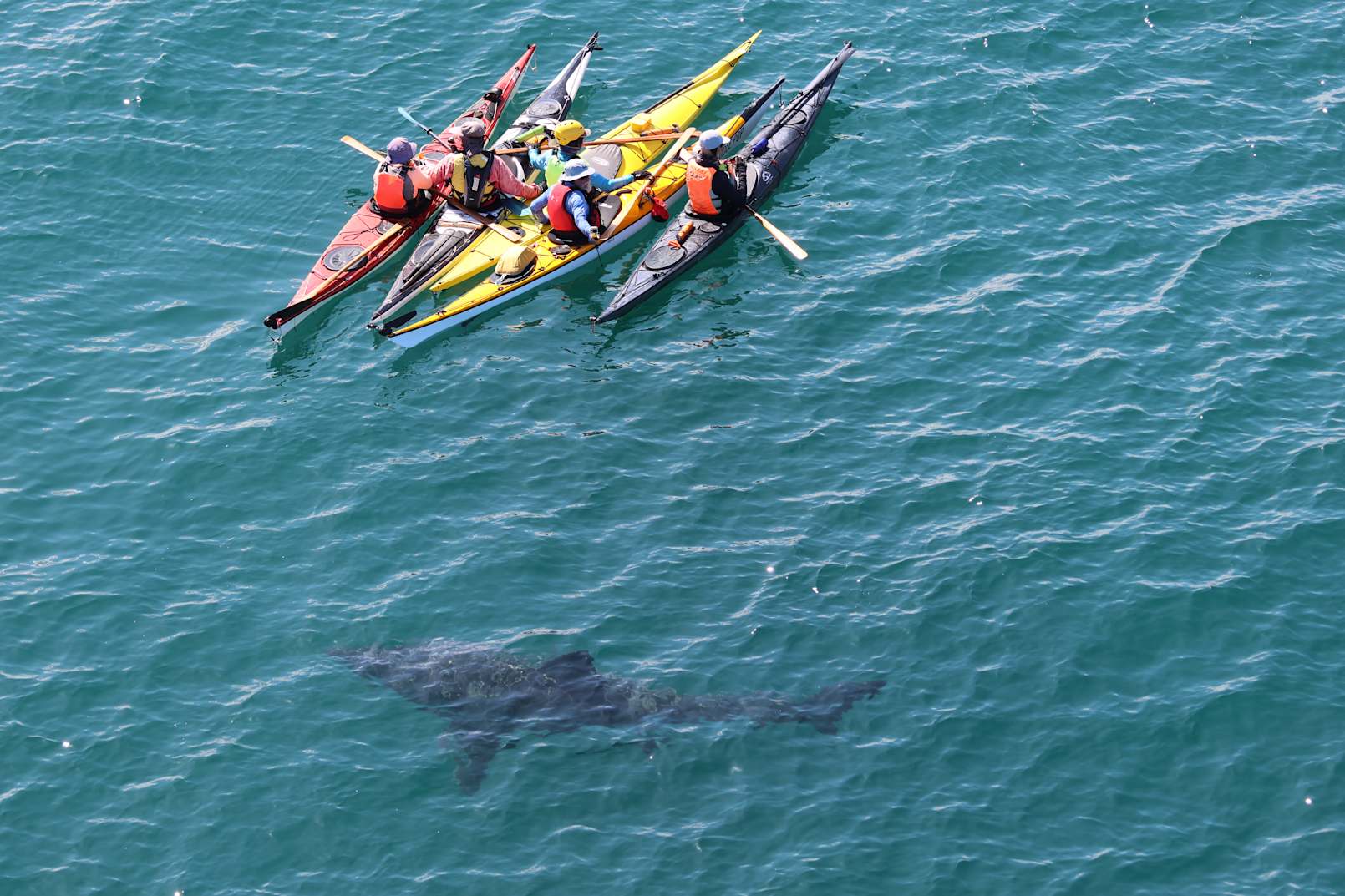
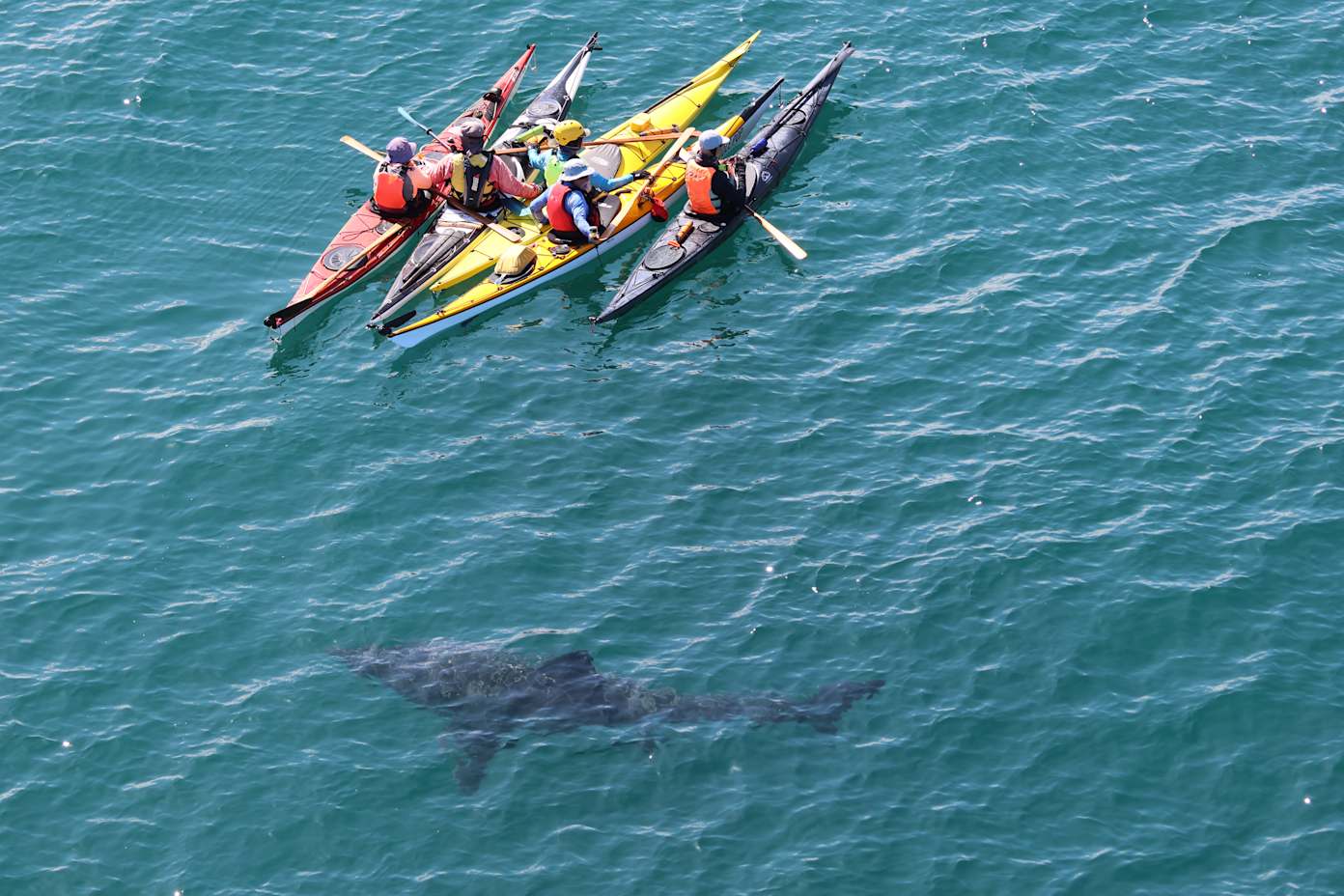
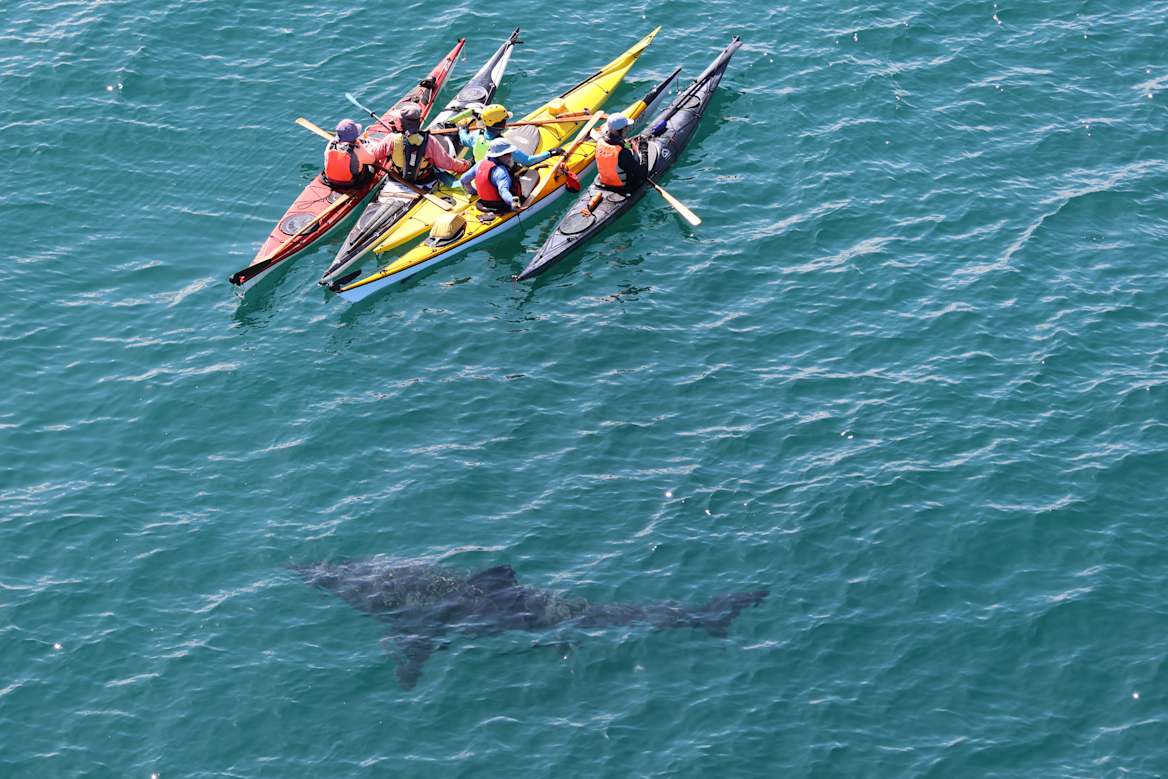
Drones are another effective measure – in the right context, they allow us to see what’s really happening in the water. Drones show shark nets don’t work: you can see the sharks swimming over and under and around the nets. So the government’s investment in drones is, in fact, funding the largest study ever proving that the government’s investment in nets is ineffective.
Colin Simpfendorfer is an adjunct professor of Marine Biology at James Cook University. He is one of the world’s foremost scientific experts on sharks. From 2012 to 2020, he was co-chair of the International Union for the Conservation of Nature Species Survival Commission Shark Specialist Group – the leading global authority on the conservation, management and extinction risk assessments of sharks, rays and chimaeras.
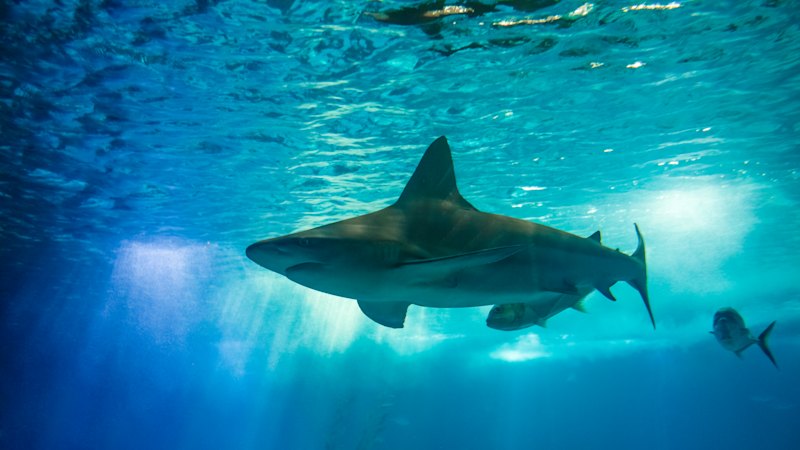
“When we talk about shark-human interactions in Australia, we’re really talking about three species: white sharks, bull sharks and, to a lesser degree, tiger sharks. But mostly bull sharks and white sharks.
So for bull sharks, at this time of year they’re coming south from places like Queensland into NSW, sometimes even Victorian waters. The females are going into rivers – always the same river, often the place they were born – to give birth to their young. And the young bull sharks will live in those rivers for several years before they leave.
White sharks are a bit less predictable. This is a roaming species, and so the adults in particular can be anywhere between here and New Zealand, or all the way down to Tasmania. We’re talking about an apex predator: one of their characteristics is they have a massive range they travel over. There’s no point staying somewhere for a long period because they’d eat out all the food resources.
Australia works very hard to identify and manage our shark populations and our fisheries, and we do an extremely good job. And that’s important, because sharks are intensively fished in many parts of the world, including many of our immediate neighbours. This idea that “Oh, there are way more sharks now than there were” – that’s simply not the case for these species. White sharks, for example, are long-lived and have few young: we certainly haven’t seen a sudden explosion in their numbers. On the other hand, there are certainly more people in the water now than there have ever been – especially with things like sea-changers in northern NSW, where there are a lot of juvenile white sharks.
When it comes to shark-human interactions, the most fundamental thing for people to understand is that even in bad years, a shark biting a person is an extremely rare event. Given the millions of hours people spend in the water, and the fact that there are always sharks in the water, bites are really extraordinarily unusual. So the fluctuation of numbers we see – as with NSW last year, for instance – can actually be just random chance.
The number of encounters do seem to go through cycles – and we don’t fully understand what drives those cycles. Certainly things like temperature, food, water quality do play a role for sharks; for people, the numbers of swimmers, their behaviour, and their location may be factors. The “rogue shark” idea [of individual sharks that repeatedly bite humans] has had very little science done on it, which makes it hard to dispel scientifically. My take is that it developed from this observation that shark bites sometimes occur in groups. But that’s more likely due to local conditions making sharks more common in a particular area than a single shark biting lots of people. The idea itself first emerged a long time ago, when abattoirs were discharging offal directly into the ocean and rivers in places like Cairns and Townsville. Those conditions attracted many sharks, and groups of bites occurred.
Being conscious of conditions is one of the ways we, as individuals, can mitigate our risk. Swimming at dawn and dusk is probably a bad idea: sharks’ vision isn’t necessarily always great, and it’s worse in low light. Don’t swim in the middle of the school of fish. Don’t swim alone.
There are also a number of technologies that can help, at least theoretically. Many of them are snake oil, but there’s very good scientific evidence that some types of electrical devices reduce your risk. Not eliminate it altogether – but significantly reduce it. [ A study in Nature in 2024 found that two such devices reduced the probability of bites by 54 per cent across bull, white and tiger sharks.] The idea of those devices is to interfere with the shark’s electrical sense. Sharks have seven senses to our five: they have cells that can detect changes in water pressure along their bodies; and they can detect very small electrical voltages from the muscle movements of their prey. If we interfere with that electrical sensitivity, it confuses them, so they pull out of [potential] bites, swim away, avoid the scenario.
So that’s all personal stuff we can do. Then there’s the question of deterrents at community or government levels. The first possibility is fully netted enclosures: keeping sharks and people separated by a physical barrier. Enclosures don’t catch or trap sharks – or anything else – they just provide a barrier in the water. They work well in calm water, but not in high-energy environments where you’ve got storms or waves.
Then you’ve got measures like [gill] nets or drumlines. If we take netting, the obvious question is, is it successful? That’s a good question. It depends on what your metric of success is. Does success mean nobody getting bitten by a shark, ever? In that case, it’s clearly not working. Has it reduced risk? Maybe. The science is very hard to do. What we have known for a long time that these nets will also catch turtles, dolphins, a whole range of different fish. They don’t catch necessarily a lot of them, but they can still have very big impacts on what are relatively small populations of some of these species.
The third type of protection is the shark cull approach. Is that effective? It certainly isn’t a panacea. What we do know is that you can never get rid of all the sharks; and the consequences to the environment would be devastating. You’re going to kill a whole lot of other things along the way, impact a complex ecosystem, and affect things you can’t even begin to predict – including things like commercial fisheries.
So in the end, the benefits of these deterrents are very hard to quantify, and the costs are clear. That being said, I think governments are starting to wake up to the fact that just going out and killing sharks isn’t the answer; many people don’t see that as the answer. What we’ve seen over the last decade or so are some changes towards lower environmental impacts, still with appropriate risk mitigation. Are those changes happening fast enough? Hard to say. People think science will provide the answer. Actually, science can advise, but it can’t make the decision. It would be nice to see some real, consistently science-based decision-making.
The reality is that, at the beach, there’s always a shark somewhere not too far away. It’s their environment. It’s where they live. It’s not that they’re coming to stalk you. They’re just going about their normal daily lives. So they swim along beaches. They hang out wherever. Ultimately, you can never eliminate risk 100 per cent if you’re in the water. Everyone has to reach their own accommodation of these very small risks. People will do the things they love, and they should. Ultimately, we all have to take responsibility for what we do.
Read more from Good Weekend magazine: