You have reached your maximum number of saved items.
Remove items from your saved list to add more.
You've used all of your gift articles. 3 more will become available on the 1st of every month.
It’s not a state secret. But with many distractions and few explanations, it’s easy to overlook an important fact of Australia’s success in surviving in a chaotic world. Australia has been cut adrift from its twin moorings of the postwar era – a steady US and a benign China. And it’s navigating pretty well.
“We need to reduce our reliance on the US,” says Susannah Patton, an expert who has worked in Australian intelligence, ran the Lowy Institute’s Asia Power Index for some years and is now a non-resident fellow at the think tank.
“The direction of travel is very solid.” But: “There’s room for improvement in the government’s communication, especially by the prime minister”, she tells me. “His storytelling is quite weak.”
Weak is a diplomatic description. Anthony Albanese can take credit for many of the government’s successes, yet he’s also one of the biggest distractions. Schoolboy jokes about “melons” and dicks, anyone?
Yet consider this. Australia has just broken a century of precedents by refusing to fight alongside the US in a major war. This had long been considered unthinkable. In Canberra convention, refusal to help America in its war on Iran is tantamount to a breach of the alliance. Australia’s instinct on this was captured in the title of a 2017 book by the late foreign policy thinker and diplomat Allan Gyngell: Fear of Abandonment .
Australia joined America’s most misconceived wars because of this fear, even Vietnam and Iraq. Until now.
Albanese’s choice “was an exercise in autonomy in that we made a decision that this was a pretty dumb war to start with and we weren’t interested in getting involved,” remarks Peter Varghese, a former head of the Department of Foreign Affairs and Trade.
The US president complained bitterly: “We no longer ‘need’ or desire, the NATO Countries’ assistance – WE NEVER DID! Likewise, Japan, Australia, or South Korea.”
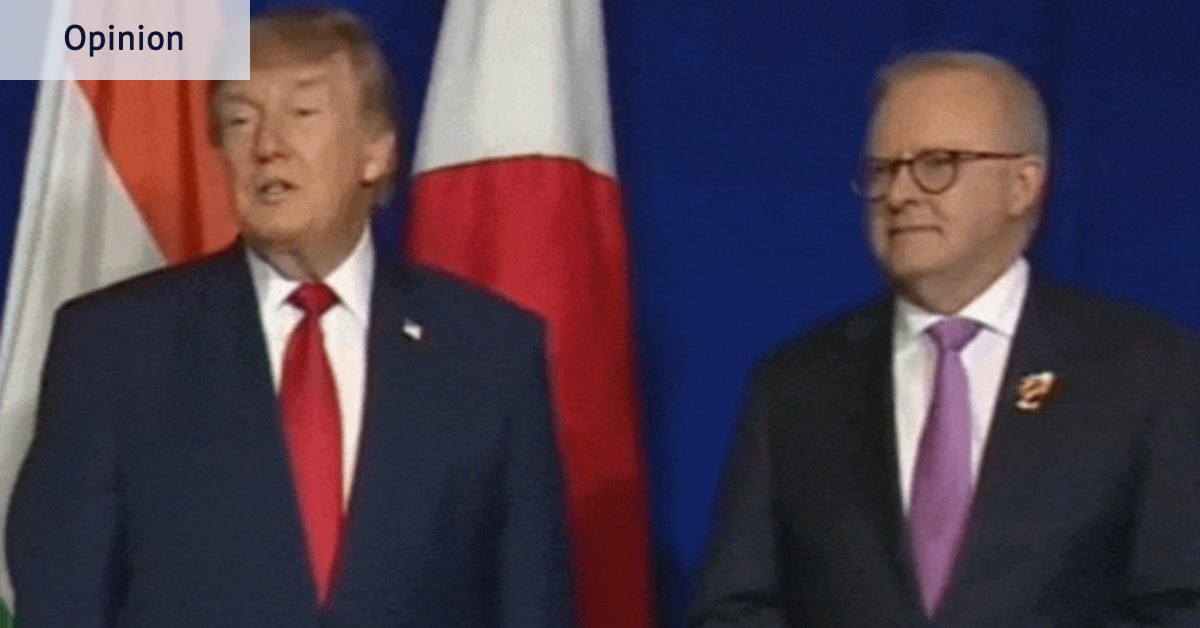
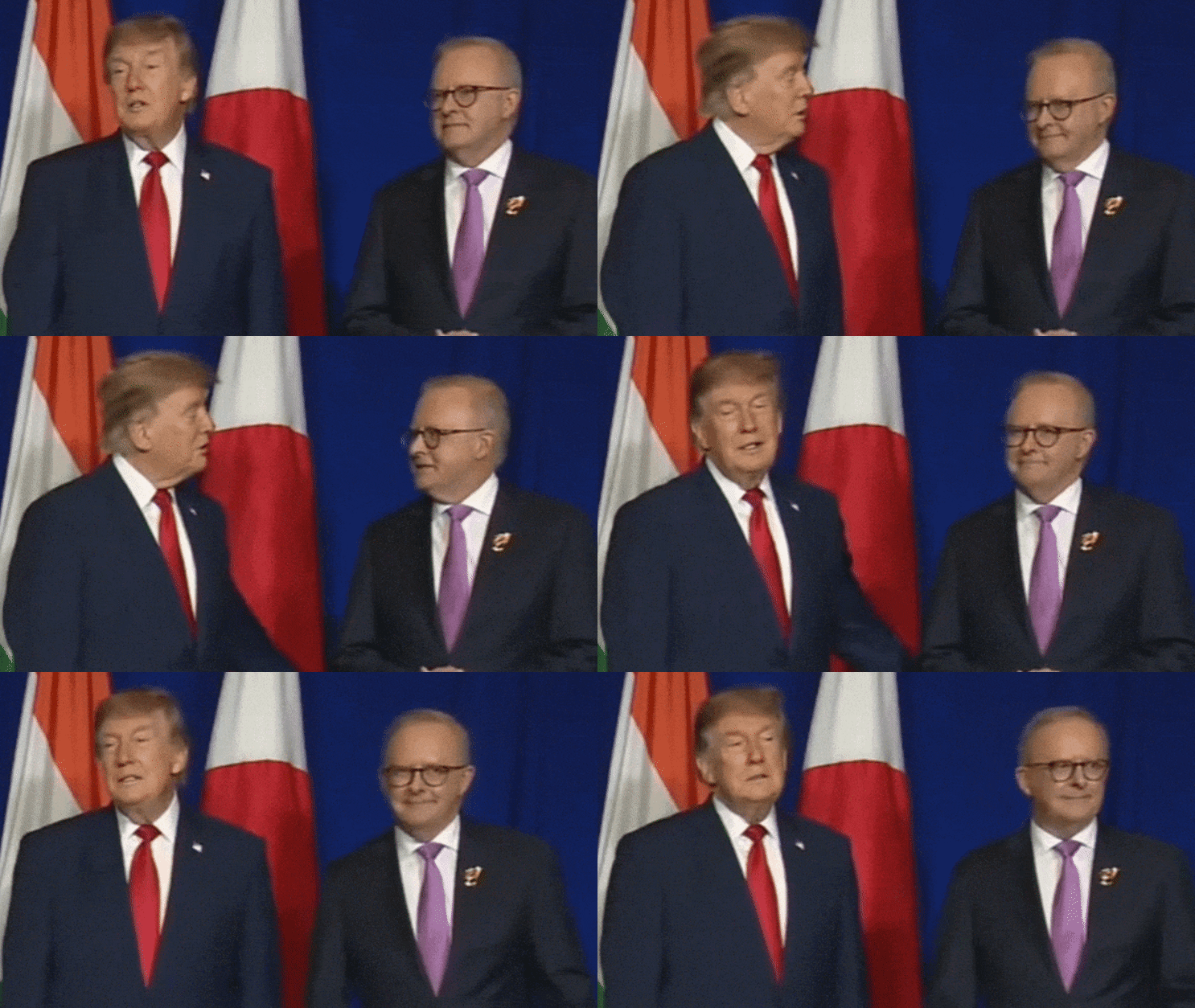
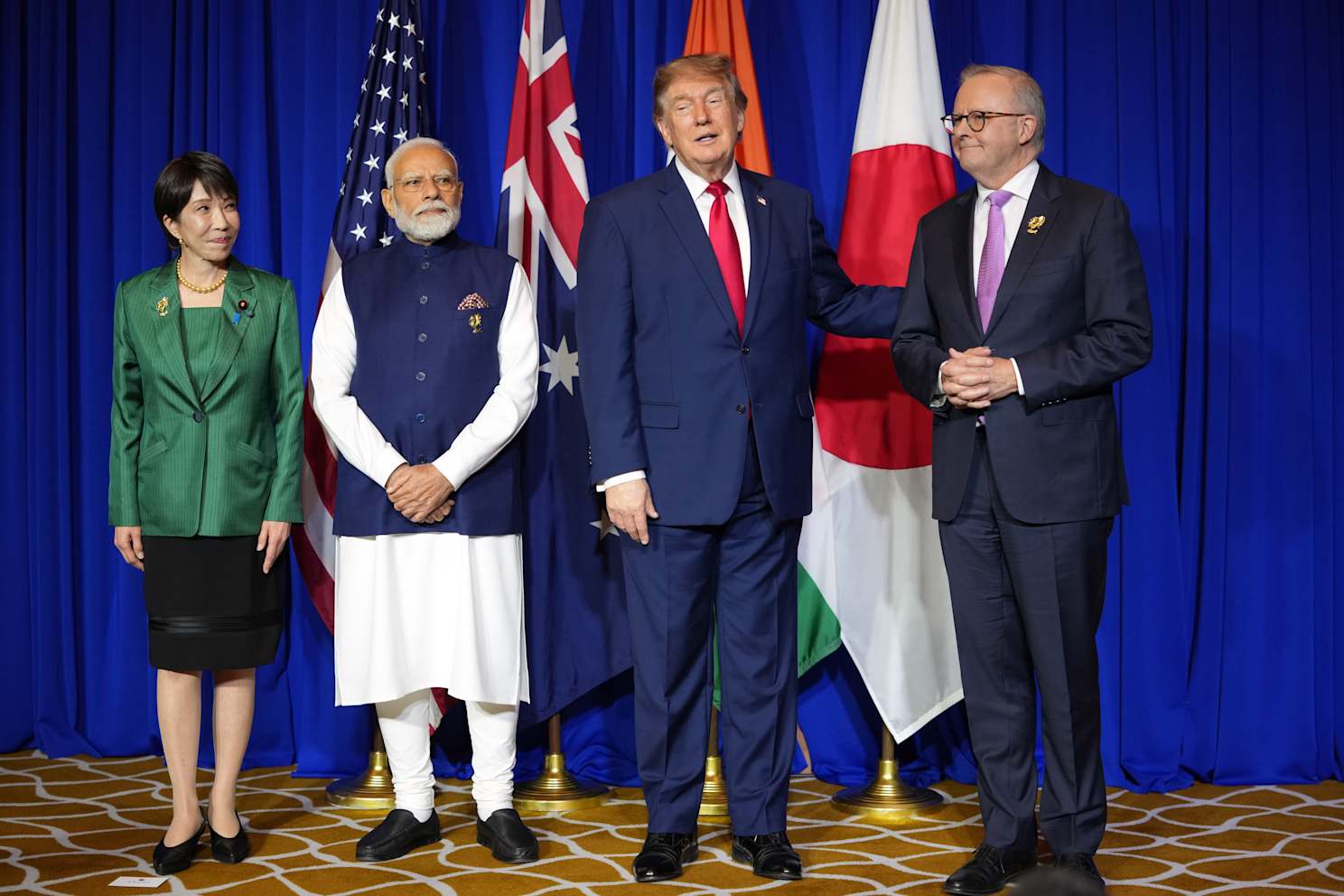
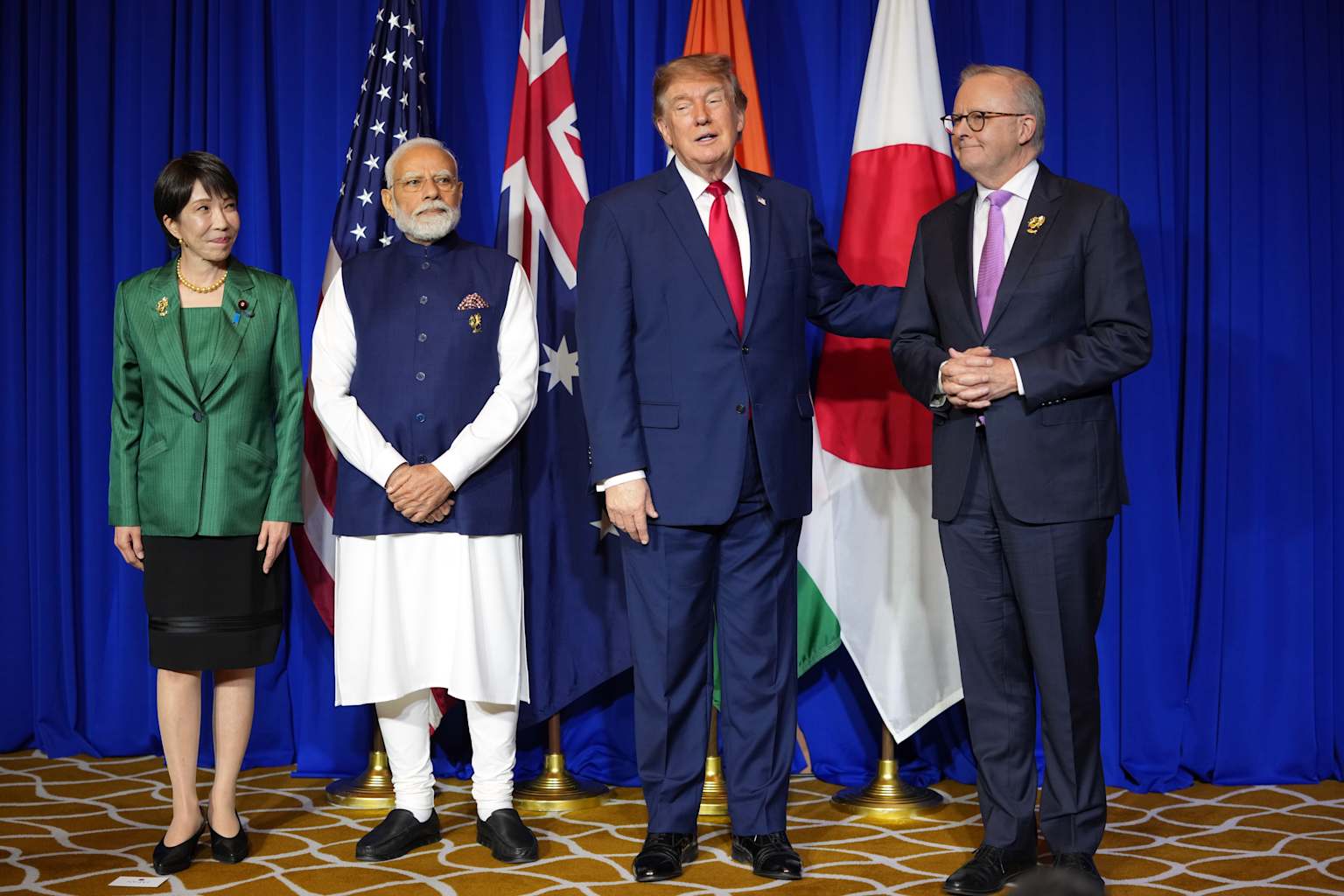
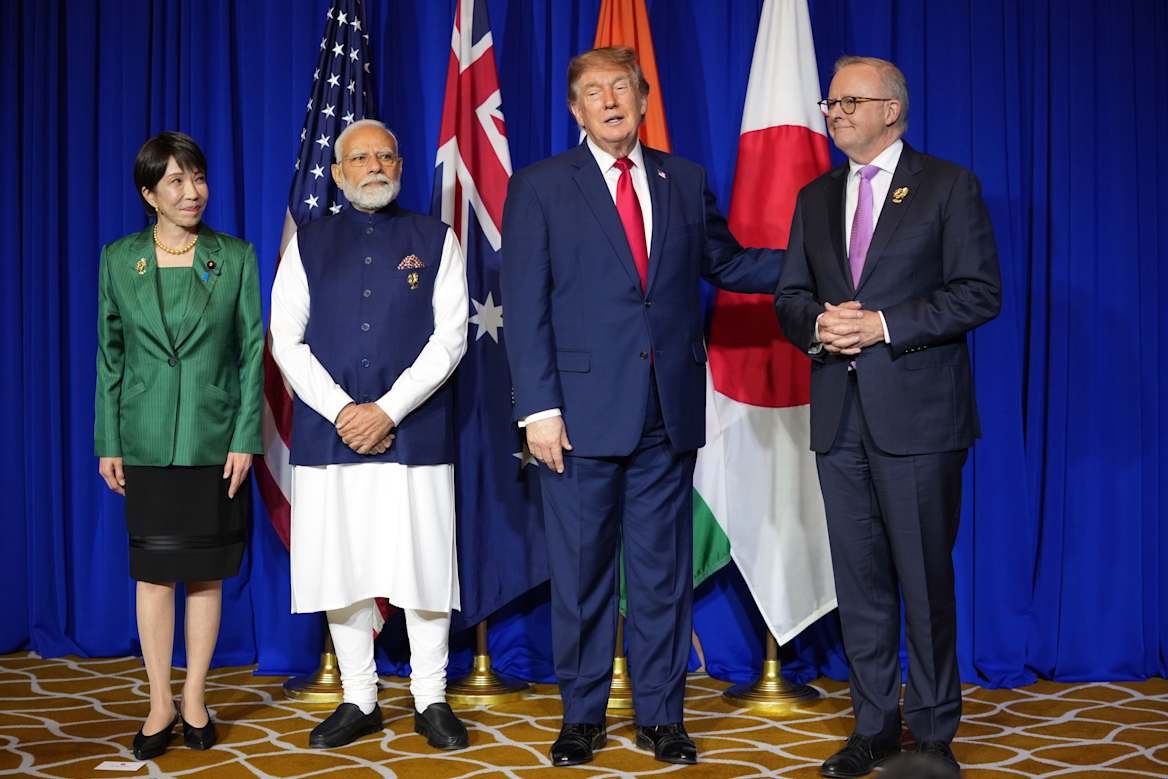
Yet Australia got away with it. While Trump took spiteful action against many other US allies, Australia managed to hold on to the advantages and benefits of its US alliance. Including AUKUS. Donald Trump even revived the dormant Quad grouping this week, an important event for Australia. Why? Because it’s key to the aim of developing a regional balance of power against China.
Strikingly, the four Indo-Pacific democracies – Australia, India, Japan and the US – this week announced the Quad’s first joint military operation. It’s to be coordinated maritime surveillance by the four nations’ air forces.
“The leaders have lost a bit of their squeamishness about the Quad,” says Patton, putting aside their concerns about whether a military element might create ructions with China. Beijing likes to complain bitterly about the Quad, almost as much as it complains about AUKUS. But, she adds, “it’s still the truth about the Quad being on life support – it works best because it’s all about China, and that can never be the case while Trump is president because he prioritises his own relationship with Xi Jinping”.
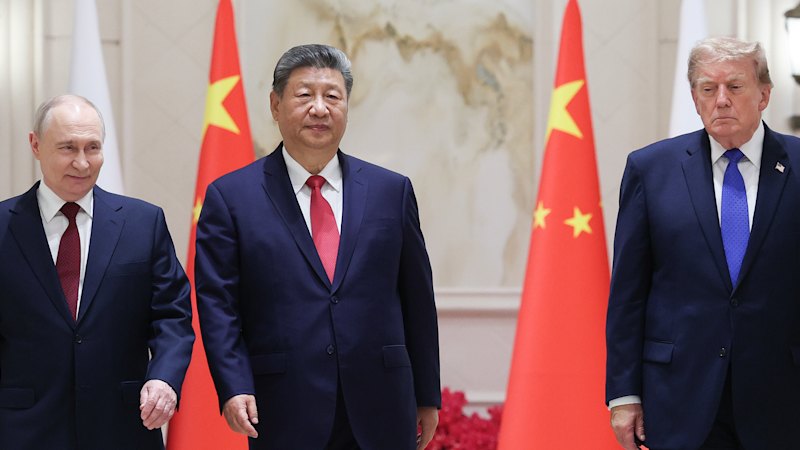
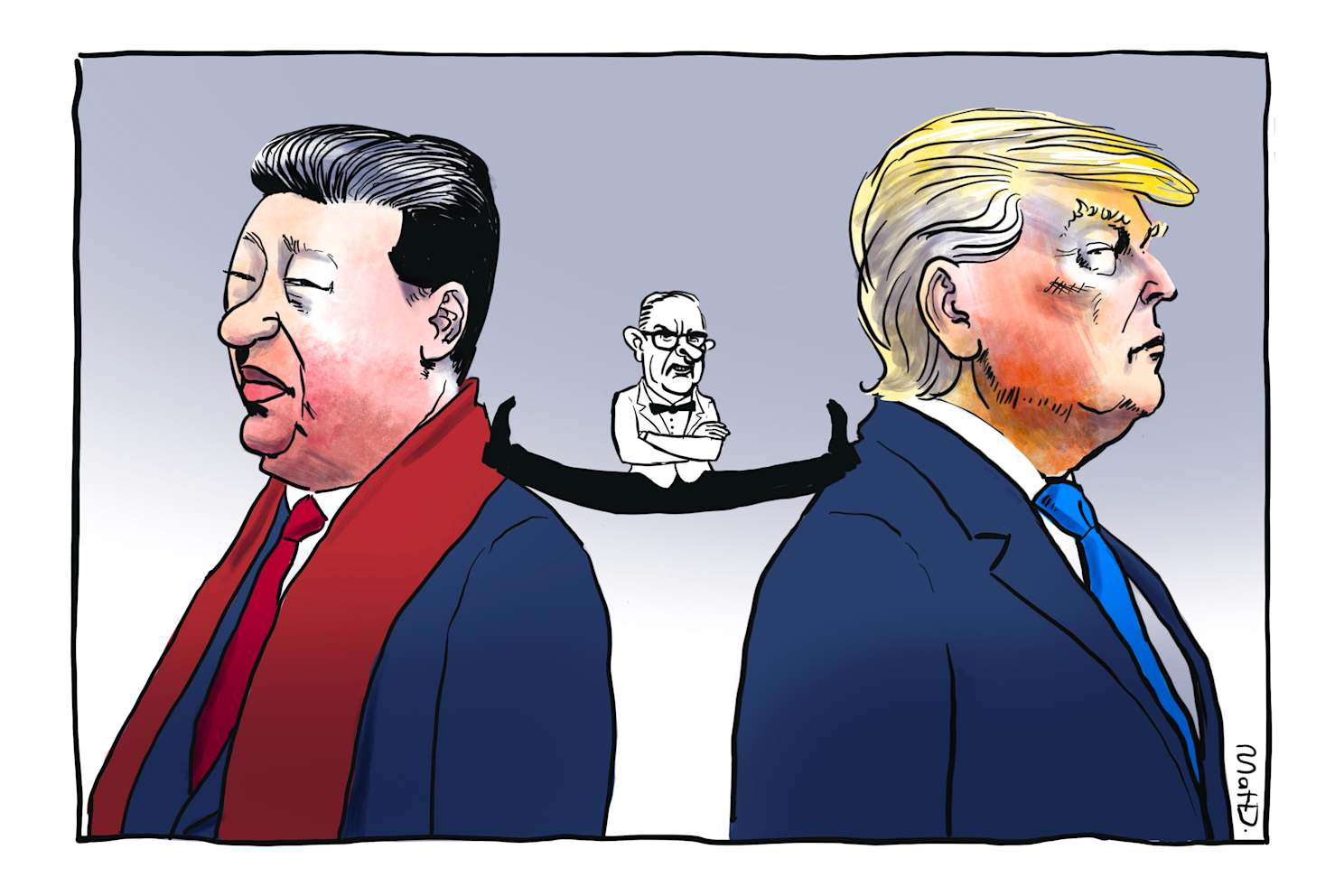
Which the world has just witnessed again. The first trilateral summit this week between the US, China and Russia was a triumph for China and Russia. But what did America gain?
Trump’s stated priorities: to negotiate nuclear arms controls; to negotiate an end to the Russian war on Ukraine; and to ask the other leaders for help in getting an end to his own pointless war on Iran. The three leaders’ joint statement offers nothing more than the prospect of a “dialogue” on nuclear arms, not a negotiation. And the two wars didn’t even rate a mention.
Trump won nothing. As usual, he was played by the dictators whom he imagines to be his dear friends. When they’re not hugging him, they’re laughing up their sleeves at him.
Yet even this particular US president was prepared to sign a Quad agreement bound to displease Beijing, an indicator that others in his system, especially Secretary of State Marco Rubio and the Pentagon, have a clearer view of US strategic interests.
Allan Gyngell also had a formula for describing Australian foreign policy generally: “We’ll have what the Americans are having, maybe a bit less, maybe a bit more.”
Is this still valid today? Australia has started doing something it’s never truly done since British colonisation – started feeling its own way in the world. Penny Wong once described Gyngell as “the finest mind in Australian foreign policy”. Today she says: “I hope he would see that we are doing what he said we should do, which is to use all arms of national power to protect and advance our interests.”
The Albanese government has forged new security agreements with a cascade of countries from Japan in the north to Indonesia and Papua New Guinea in the south and, this week, in the middle, the Philippines. It’s struck new agreements with six Pacific Island nations and two further Pacific security pacts are in the works, with the Solomons and Tonga. These are designed to deny Beijing the ability to set up military bases in the region.
Says Michael Fullilove, executive director of the Lowy Institute: “I applaud the government’s energetic diplomacy in the Pacific and South-East Asia. We need to devise a cat’s cradle of agreements that links our security to those of our neighbours. This will make it harder for any of us to be isolated or coerced.”
Of all these, Varghese nominates the Tokyo relationship first. As a highly capable industrial nation locked in a quietly grim existential struggle with China, Japan is proving to be Australia’s most vital new ally.
And then there’s Trump’s energetic job of wrecking the global trade system that the US built. Australia has responded with new trade liberalisation deals with India, Britain, the UAE and, now pending in the parliament, with the EU.
The verdict of Varghese, a former chancellor and current adjunct professor in the School of Political Science and International Studies at the University of Queensland: “I think we are handling it quite adroitly.”
But this time of American wantonness, Chinese ambition and Russian adventurism is not a passing phase. Much more is to come. Even after Trump.
“Trump’s legacy will be US unreliability,” Varghese foretells. “Beyond Trump, we are likely to see a structural oscillation in US foreign policy. The US no longer has a consensus on grand strategy. The Republicans will likely continue to be influenced by the America First mindset, while the Democrats will hold on to some elements of a liberal internationalist instinct. So policy will shift more dramatically between Republican and Democratic presidencies.”
The People’s Republic of China probably won’t be as convulsive as the US, but it will be more relentless. The government touts its policy for a “stable” relationship with Beijing, despite destabilising acts such as China’s repeated dangerous interceptions of Australian military craft in international air and sea space.
Challenged on this misnomer, Wong tells me: “It depends what you mean by stable. It’s a stable state of cooperation and disagreement, isn’t it? They’re not going to change who they are, their interests or how they perceive them, and neither are we. So inevitably there will be things they do that we don’t agree with. The question is how you manage those differences in a way that doesn’t, if possible, disrupt the totality of the relationship.”
All Australian governments henceforth must walk a fine line between restraint and appeasement. The weaker Australian power, the fewer options it will enjoy. Varghese advocates much more work to develop “Australian strategic autonomy within the alliance”.
Says Fullilove: “Defence spending has inched up under this government, but given the seriousness of our international circumstances, this is not enough. We need a defence force with greater reach and firepower, in order to deter adventurism and aggression by others. After the geopolitical shocks of the last decade, many like-minded countries in Europe and Asia have announced significant increases to their defence budgets. There is no similar sense of urgency here in Australia.”
It’s true. Australia is cannibalising other areas of defence capability to feed AUKUS, while it needs both. One of the glaring disconnects in Australia’s deliberations about its future is between the staunch majority support for AUKUS and the endless agonising over it in our media, even after five years’ work on it.
The pact has bipartisan support in parliament and unwavering support in the electorate; seven out of 10 voters support it, according to this year’s Lowy poll.
Penny Wong vents her frustration: “What really concerns me about the Greens and that inquiry is that fundamentally there’s no engagement with the strategic rationale, which is that if you want to live in a region where there is strategic balance, you need a capability that contributes to that. And absent any long-range submarine capability, what is your capability?”
The Australian debate is so self-absorbed that we overlook the fact that China’s shipyards have launched 10 nuclear-powered submarines in the past five years.
“China has rapidly expanded its nuclear-powered submarine production, surpassing US launch numbers and tonnage in the period 2021–25,” the London-based International Institute of Strategic Studies reported in February.
Australia is responding pretty well to the new world order so far, but there is no time for complacency. “Just because you’re not interested in the jungle,” says Fullilove, “doesn’t mean the jungle isn’t interested in you.”
Peter Hartcher is political editor and international editor of The Herald and The Age .
You have reached your maximum number of saved items.
Remove items from your saved list to add more.
You've used all of your gift articles. 3 more will become available on the 1st of every month.