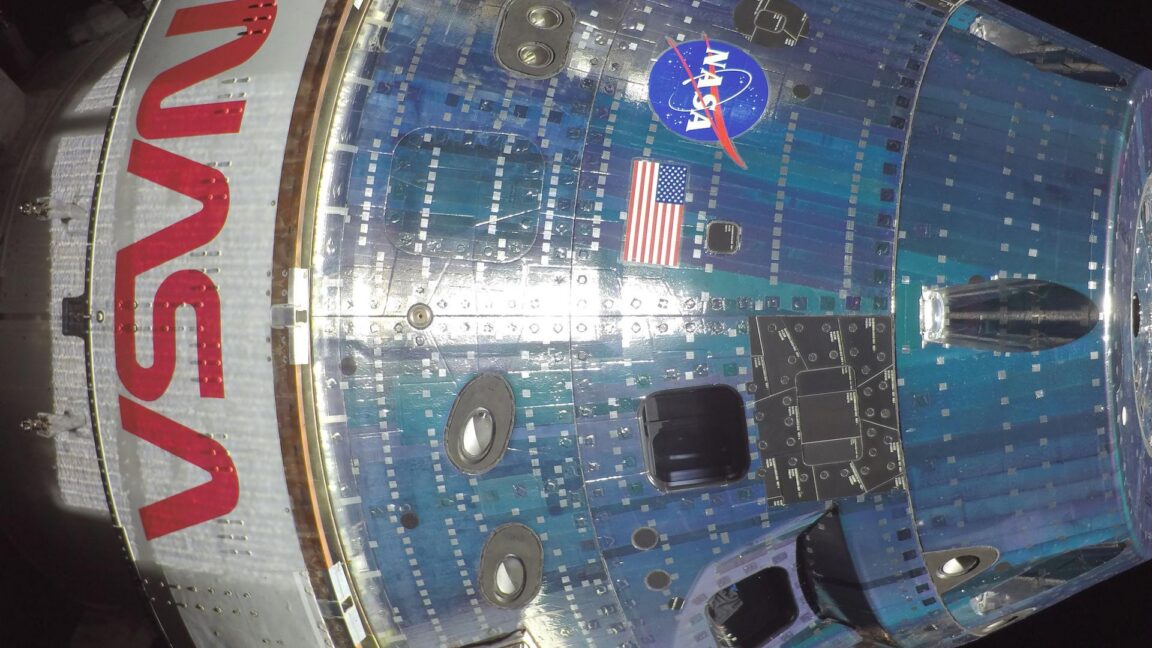
NASA recently announced a significant shakeup to the Artemis program that will land humans on the Moon.
The moves were designed to give the agency’s lunar lander providers—SpaceX with its Starship vehicle, and Blue Origin with Blue Moon—more flexibility in reaching the Moon. For Starship, this means docking with Orion in Earth orbit, and then traveling to the Moon in tandem. For Blue Moon, it shifts the rendezvous with Orion all the way to low-lunar orbit.
These changes benefit the lunar landers, but in turn impose more of a burden on the Orion spacecraft, which is built for NASA by Lockheed Martin. To understand the implications for the spacecraft, Ars spoke with Kirk Shireman, Human Spaceflight Exploration and Orion program manager at Lockheed.
For Starship, the evolved plan has SpaceX fueling a Starship lunar lander in low-Earth orbit before docking with Orion in high-Earth orbit. The crew will fly to the Moon on board Orion before two of the four astronauts transfer into Starship for a landing on the Moon.
Due to the docking configuration with Starship, Orion must now fly backward to the Moon, with its Service Module at the top of the stack. This is a fundamentally different flying posture than Orion was designed for, Shireman said, and creates issues for Orion’s propulsion system.
As a result, the Service Module, which is provided by the European Space Agency, will require modifications to its propellant tanks. This is because liquid propellant would move toward the gas inlet side of the tanks, rather than settling in the direction expected during normal operation.
“When you push it the other way, the liquid goes to the gas end of the tank, and you don’t want the liquid in the gas part,” Shireman said. “Bad things can happen to you.” To address this, he said, the European Space Agency and its main contractor, Airbus, are modifying the vehicle’s tanks for Starship lunar missions.