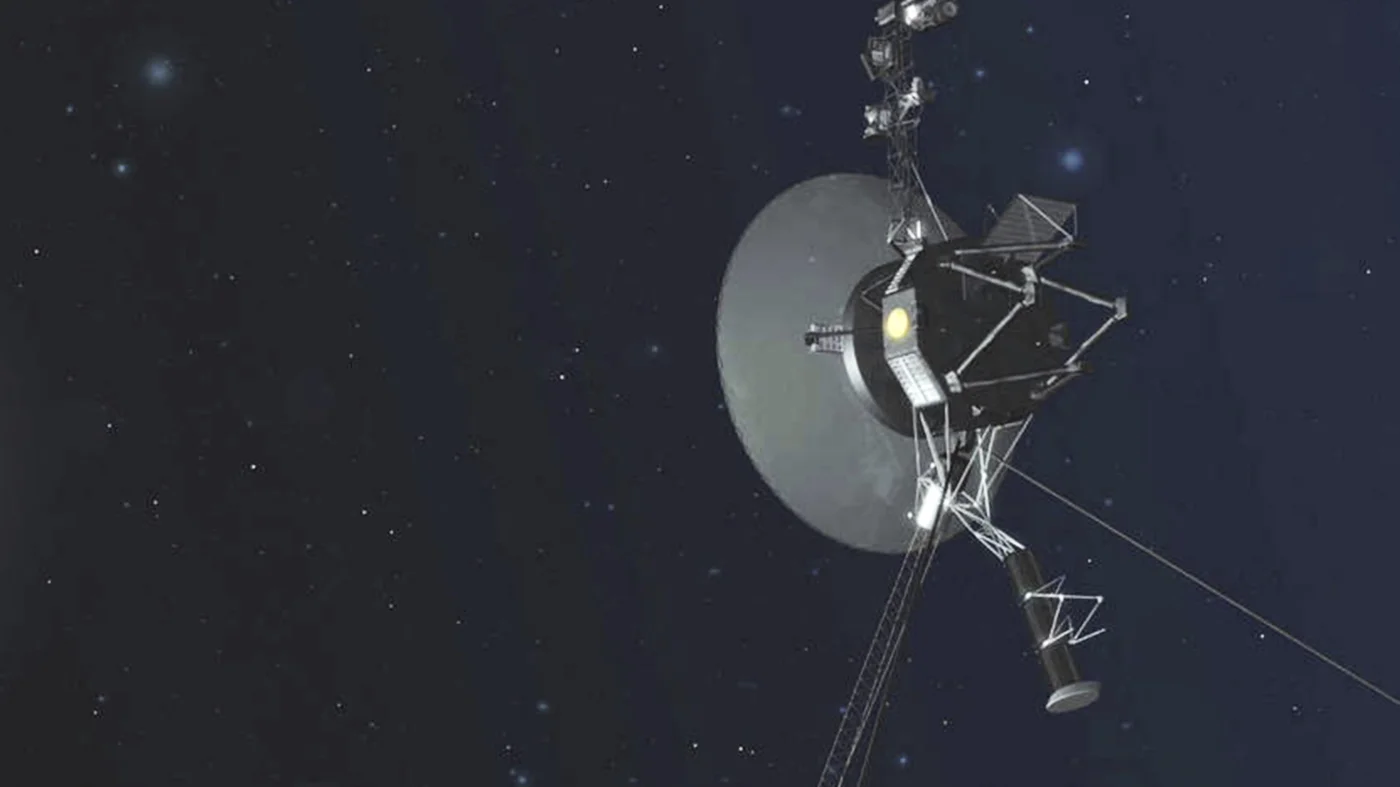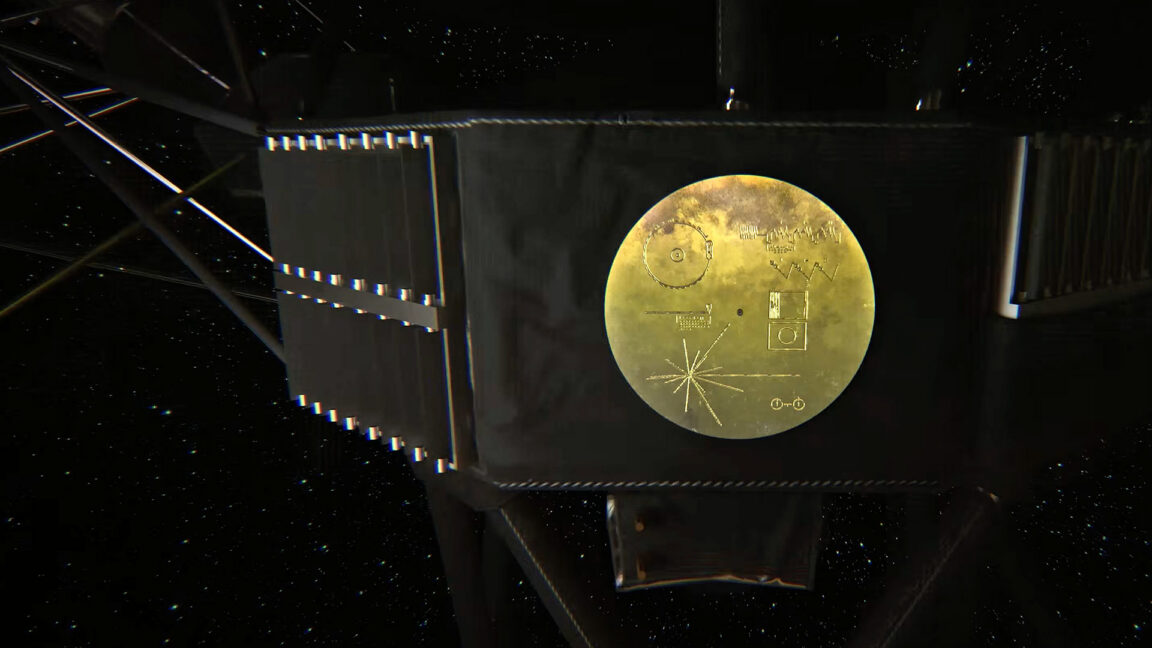

In the one light-day that humanity’s most distant object has now traveled from Earth, there has been enough time for details about its creation—and what it left behind—to be discovered again.
Voyager 1, which left Earth in 1977 on an initial mission to fly by Jupiter and Saturn (as well as the latter’s moon Titan), crossed into interstellar space in 2012. Like its twin (Voyager 2), Voyager 1 carries a “commemorative phonograph record,” in part as a nod to the 100th anniversary of the recording medium and as a message from humanity to whomever (or whatever) encounters the spacecraft on its journey through outer space.
About those forgotten bits, ask Glen Swanson . While researching the history of the Golden Record, he uncovered the discs’ overlooked second set of operating directions and located the duplicates that were made and distributed almost five decades ago.
“So much has been written about the contents of the record —the message in the bottle, so to speak—whereas I was more interested in the hardware, the bottle itself, because so very little is known about that,” Swanson, former chief historian for NASA’s Johnson Space Center in Houston and founding editor of “Quest: The History of Spaceflight Quarterly,” said in an interview.
With the 50th anniversaries looming for the launches of both Voyager probes, Swanson and Jon Lomberg, the design director of the Golden Record, recently set about writing Voyager’s Golden Record: An Enduring Reflection , which will be released by the University of Chicago Press in August 2027.
“There isn’t a whole lot of information, and some of the information is somewhat contradictory,” said Swanson of the existing resources and publications. “So it is kind of refreshing to look back and see what exactly went on.”