

L ynn Novick’s new film for PBS is an epic, an eight-hour examination of Crime & Punishment in America . Beginning with justice in tribal societies, the documentary follows the arc of US history and ends in today’s troubled prison system, with the story of a podcast produced by prisoners in San Quentin and scenes from Rikers Island .
“I’ve been working with Ken Burns on films about American history for all of my career, basically, and looked at the story of America through many different perspectives,” Novick said. “And honestly, I had never paid that much attention to the question of the justice system until 14 years ago, I had the opportunity to teach, to do a guest lecture in a college class inside a prison.”
That experience produced 2019’s College Behind Bars , Novick’s first solo project, about the Bard Prison Initiative in New York state. Her first work with Burns was as an associate producer on The Civil War , his groundbreaking series from 1990. Directing credits include The War, The Vietnam War , Hemingway and The US and the Holocaust .
Visually, Crime & Punishment in America is Novick’s evolution of the form Burns made famous, still and moving images of history coupled with a vivid script, co-written by Novick and read by Keith David, famous voices including Laura Linney, David Hyde-Pierce, Matthew Rhys and Samuel L Jackson reading contemporary texts, historians and other experts commenting.
The development of the American prison system is a central theme. Another, the place of class in crime and punishment, is given particularly vivid voice by Larry Krasner, the self-described “ progressive prosecutor ” who has been district attorney of Philadelphia since 2018.
“Broke people get screwed,” Krasner says. “Would you like more? I mean, that’s how it works. Broke people get screwed.”
“Our senior producer Lucas Frank did that interview,” Novick said. “And that is one of my favorite moments in the film because it is so honest and just real. It resonated for me with a quote from [the great trial lawyer] Clarence Darrow back in 1900, where he is talking about how poverty is the cause of crime, and everyone in jail is basically someone who is poor. There’s no rich people in jail; they don’t go to jail. I mean, we know that some rich people go to jail, but for the most part, our jails and prisons are filled with the poorest people in this country.”
“People of color are disproportionately poor and disproportionately live in neighborhoods that are very under-resourced and are disproportionately represented in the justice system to a very significant degree, and that has always been true since the end of Reconstruction in the 1870s,” Novick said.
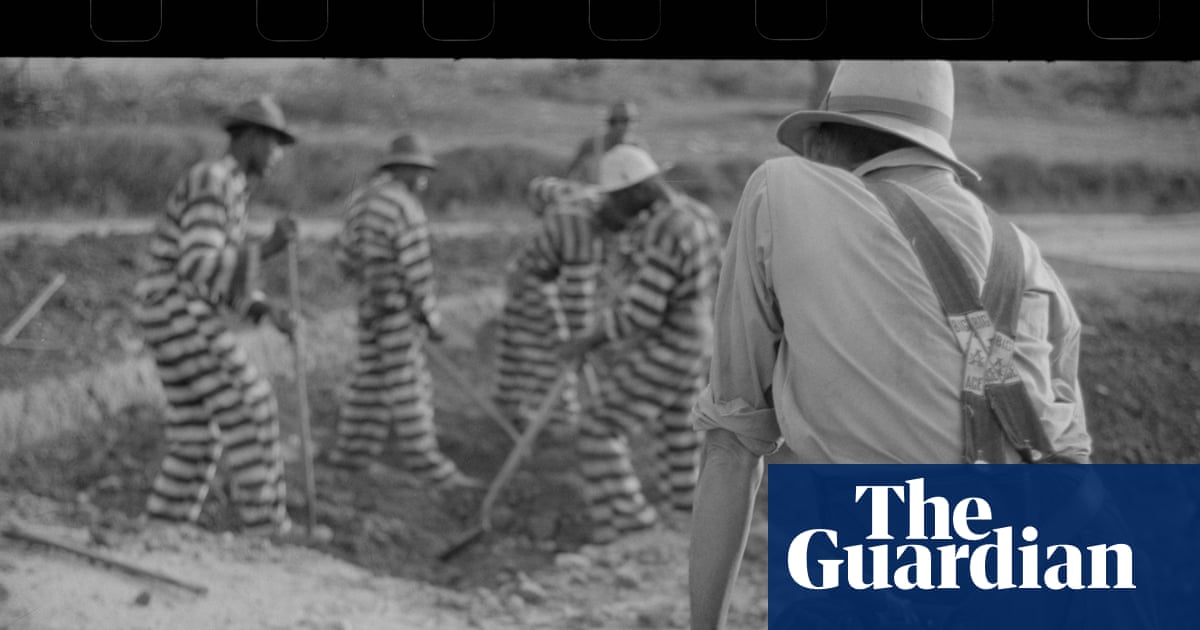
“The Jim Crow South, which existed until the 1960s with legal segregation and disenfranchisement, was a place where Black people didn’t have rights, were second-class citizens, and were abused and exploited by the justice system, right and left. Sadly, when people move out of the Jim Crow South into the north and the west, the disproportionality continues and the racism and the structural problems that are baked into the society are not unique to the Jim Crow South.”
Ossian Sweet suffered in the north, in Detroit in the 1920s. Sweet, a Black doctor, bought a house in a new suburb. A white mob tried to force him out. Sweet’s family defended their home . Shots were fired, one of the mob was killed. Sensational trials followed. Ultimately, Darrow helped win an acquittal, but Sweet was shadowed the rest of his life.
Infamous southern cases examined by Novick include the lynching of Henry Smith in Paris, Texas, in 1893. Accused of murdering a white child, Smith was tortured and burned to death at the stake. An account by the great Black journalist Ida B Wells is almost unbearable. The role of the white population, and the national press , is appalling.
Novick said: “We don’t need to describe every single lynching. They’re all awful and unspeakable in their own particular ways. But there is a pattern, and so we chose that story because we wanted to explain the role Ida B Wells played in the culture at the time, the role photography played in the culture at the time, why people were lynched, and so I think the existence of lynching photographs, in particular, and the way they were marketed afterwards, drew us to that story.
“It is hard to comprehend, even given our discussion recently about a livestream of an execution [of Fort Hood shooter Nidal Hasan, proposed by Pete Hegseth, the defense secretary ], which didn’t happen … how could so many people show up to watch that [lynching], and how could the press be there to cover it, just kind of matter-of-factly.”
So is the case of the Groveland Four , Black youths accused in Florida in 1949 of a rape that did not happen. One victim was lynched, one killed and another wounded by a sheriff who never faced justice, the other spent years in jail. Throughout her film, initially with flash-forwards from 18th-century jails to modern equivalents, later with footage and voices, Novick reaches into the present day. For the Groveland Four, there is footage of a 2019 hearing on the way to posthumous exoneration . The white woman who leveled the false claim in 1949, Norma Padgett , attended the hearing and spoke. Aged 90, she insisted the attack happened. It did not.
Referring to a Groveland victim’s daughter, Novick said: “Carol Greenlee saying that she can’t hold onto hate and she wants to forgive because it destroys her, it’s bad for her to hate, even though this woman lied and caused the death and torture and miscarriage of justice for four people and their families, and the collateral damage of all of that – even after all that, Carol is embracing hope and forgiveness? I think that’s kind of astonishing.”
Mass incarceration is another major theme. The last 50 years have seen the prison population explode. Novick examines causes and busts myths. She tells the story of the 1994 crime bill, of “three strikes and you’re out” and the case that inspired it, the horrible murder in California of 12-year-old Polly Klaas , its exploitation by politicians, Bill Clinton and Joe Biden among them. And yet Novick shows that the 1994 bill was not the cause of all woes. The prison population rocketed before it, states largely to blame. Two modern-day case studies allow Novick to illustrate the costs of incarceration but also provide cause for hope.
Angelica Zaragoza, from Dallas, got caught up with drugs. Long in and out of jail, separated from her children, she ultimately founded Janie’s Angels , a non-profit supporting prisoners, seeking reform, dedicated to “disrupting the cycle of maternal incarceration”.
“We wanted to showcase or highlight a woman’s experience in the contemporary system,” Novick said, “and we wanted to find someone who was a mother, because so many women who are incarcerated are mothers, and through Angelica’s non-profit work we had become aware of her … my colleague Prisca Pointdujour, one of our producers, did the interview with her, and it was very intense and just painful and devastating to hear some of her story. And she, through the process of telling her story, worked her way to where she is now, which is a very positive place.”
Rahsaan Thomas’s story is more widely known. Imprisoned for murder committed when young, in San Quentin in California, he worked on the Ear Hustle podcast , a groundbreaking project, of prisoners telling their stories.
“He had his sentence commuted and was released while we were working on the film,” Novick said. “I love Ear Hustle … I was listening, and they introduced this guy, New York Rahsaan, New York Thomas, and he was doing the reporting inside, and then at one point he told his own story a little bit. He talked about his mom who was an officer on Rikers Island [the jail in the East River, in New York City], and I remember thinking, ‘Wow, that’s really powerful and hard to even imagine what that’s like for the mom that you’re working on Rikers, and one day you get a call that your son’s been brought in.’
“We didn’t get into all of that in the way he told his story in our film, but … we were looking for people who had direct experience of incarceration and we also wanted to bring on people who really wanted to get into the documentary, film, storytelling, narrative work space, and had some experience but could really benefit from the opportunity to work with us. Rahsaan actually made a documentary [Friendly Signs] in prison, which is powerful, and so we … asked if he would be a consulting producer, and we were very grateful that he said yes. He came to screenings, he came on shoots sometimes, he came to consultants’ meetings. He was very much integral to the whole process.”
Novick, who is taking the finished film to those imprisoned, screened it at Rikers last month , which was attended by Stanley Richards , commissioner of the New York City department of corrections, a former prisoner himself. Crime and punishment remains a difficult subject. Reform is fragile, cruelties persist. It is a problem as old as America. Novick hopes to help the drive for solutions.
Crime & Punishment in America is now available on PBS