
Across the Tasman, New Zealanders are preparing to head to the polls in what is shaping up to be a tightly contested election.
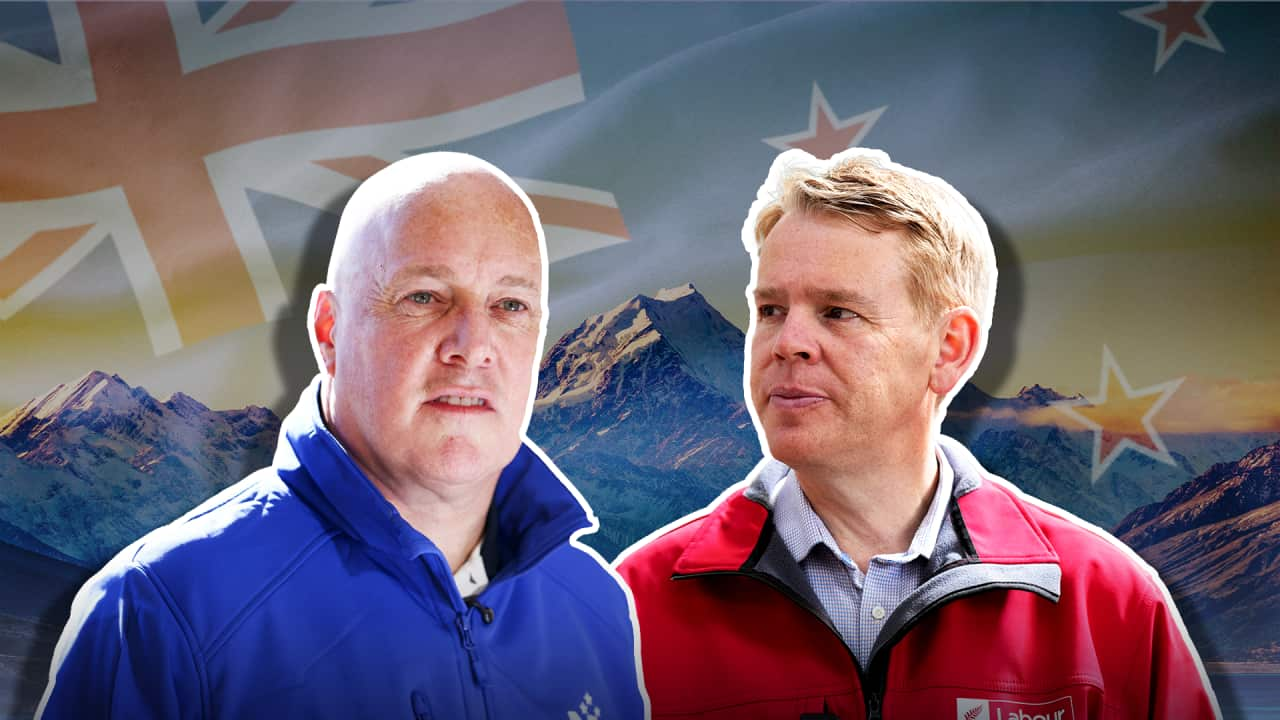
It will be a battle of two Chrises.
In one corner is Christopher Luxon, the current prime minister and leader of the centre-right National Party, who is seeking a second term leading his coalition government.
In the other is Chris Hipkins, the leader of the centre-left Labour Party, who briefly served as prime minister after Jacinda Ardern resigned in 2023 before losing office later that year.
With campaigning now wrapped up, New Zealanders will vote on Saturday 7 November to decide who forms the country's next government.
Your trusted source for staying up-to-date with the world around you. Get free daily news updates and analysis, straight to your inbox.
Luxon is New Zealand's current prime minister and has led the country since 2023.
The former Air New Zealand chief executive led the centre-right National Party back into government after defeating Labour three years ago.
His campaign has focused heavily on the economy, including plans to return the budget to surplus and expand New Zealand's KiwiSaver retirement scheme.
But his first term has been turbulent. Luxon survived two confidence votes from National MPs this year amid weak polling, economic pressure and tensions within his governing coalition.
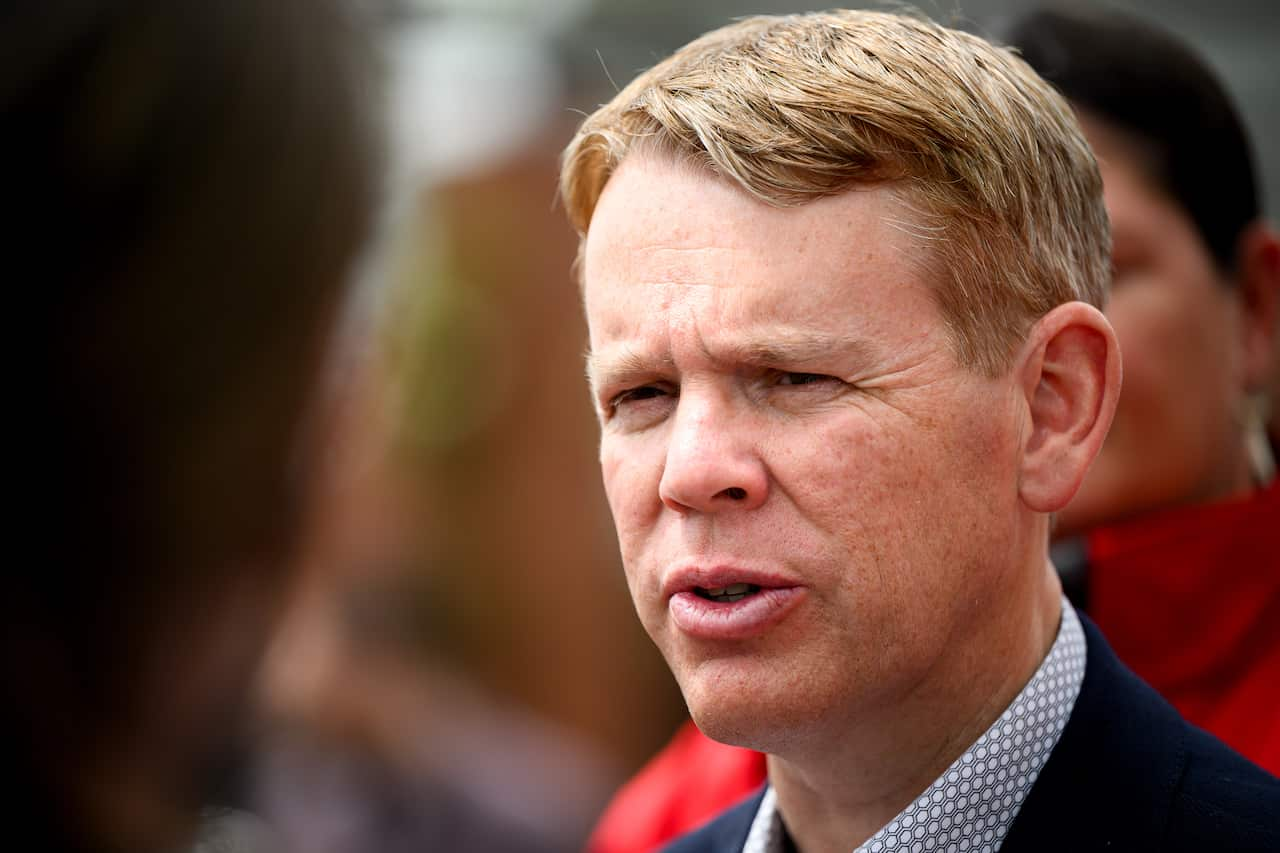
Hipkins is seeking to return Labour to government three years after its election defeat.
The 48-year-old became prime minister in January 2023 following Jacinda Ardern's resignation, but served for less than a year before losing office at the October election.
Since then, he has campaigned on cost of living relief, stronger public services and investment in housing, infrastructure and healthcare.
New Zealand uses what's known as a mixed-member proportional (MMP) electoral system.
Voters cast two votes: one for their local electorate representative and one for the political party they want to govern.
People of Māori descent can choose whether to enrol on the general electoral roll or the Māori electoral roll.
Parliament is usually made up of 120 seats. Seventy-one are elected from geographic electorates, including seven Māori electorates, while the remainder are allocated according to each party's share of the nationwide vote.
A party generally needs at least 5 per cent of the party vote, or to win an electorate seat, to enter parliament.
Because seats are allocated proportionally, it is uncommon for a single party to win an outright majority.
That means coalition governments are the norm.
Every government since MMP was introduced in 1996 has relied on support from smaller parties, with the exception of Jacinda Ardern's Labour government in 2020.
While much of the attention has focused on Luxon and Hipkins, smaller parties could ultimately determine who forms the next government.
Polling suggests neither National nor Labour is likely to win enough seats to govern alone, making coalition negotiations crucial.
These are the parties likely to play a major role:
Like many countries around the world, the cost of living remains New Zealand's top election issue.
Inflation has eased from earlier highs, but households continue to face pressure from petrol prices, housing costs and everyday expenses.
The country's unemployment rate has risen to 5.7 per cent, its highest level in 11 years, while economic growth has remained sluggish following a prolonged downturn.
Healthcare has also emerged as a major campaign issue amid concerns about strained hospitals, staffing shortages and long waiting times for treatment.
Housing affordability remains a longstanding problem, particularly for younger New Zealanders trying to enter the property market.
Immigration, government spending, climate policy and Māori issues have also featured prominently throughout the campaign.
The election comes after years of heated debate about Māori rights and representation, particularly around the Treaty of Waitangi , New Zealand's founding agreement between Māori leaders and the British Crown.
The coalition government has rolled back several policies designed to give Māori greater representation in public decision-making, while ACT has campaigned against what it calls "race-based" policies and has proposed abolishing the Waitangi Tribunal.
Meanwhile, Te Pāti Māori has sought to mobilise Indigenous voters and frame the election as a pivotal moment for Māori representation.
Because the overall contest is so close, the outcome in the seven Māori electorates could also influence coalition negotiations after election day.
Most polls suggest the race is too close to call.
The latest poll from Post-Freshwater Strategy, released on Friday, placed the opposition Labour Party slightly ahead, but still with no clear outcome for the election.
But it also placed the Opportunity Party at 5.1 per cent — just above the threshold for representation in parliament. If it crosses that line, it could emerge as a kingmaker in coalition talks.
Another October poll from Roy Morgan placed the centre-right bloc of National, ACT and NZ First as holding a narrow lead over Labour, the Greens and Te Pāti Māori.
Another poll by Infrastructure New Zealand, an industry association, released on Friday, put Labour at 30.7 per cent and National at 26.4 per cent.
Analysts have also noted growing support for smaller parties, reflecting frustration among some voters with New Zealand's two major parties.
New Zealanders will head to the polls on Saturday 7 November, with voting closing at 7pm local time (5pm AEDT).
More than 1.4 million votes had already been cast during advance voting by the middle of election week.
Early results are expected to start emerging shortly after polls close, but New Zealand may not know who will form government on election night.
If no party wins enough seats to govern outright, major parties will need to negotiate coalition or support agreements with smaller parties, a process that can take days or even weeks.
That places the centrist Opportunity Party in a unique position. The party says it is willing to work with either side of politics and, if it enters parliament, could have significant influence over who forms New Zealand's next government.
What is clear, however, is that whichever major party wins the most votes is likely to need support from at least one smaller party, meaning coalition negotiations could ultimately decide who becomes New Zealand's next prime minister.
— With additional reporting by Australian Associated Press and Reuters.