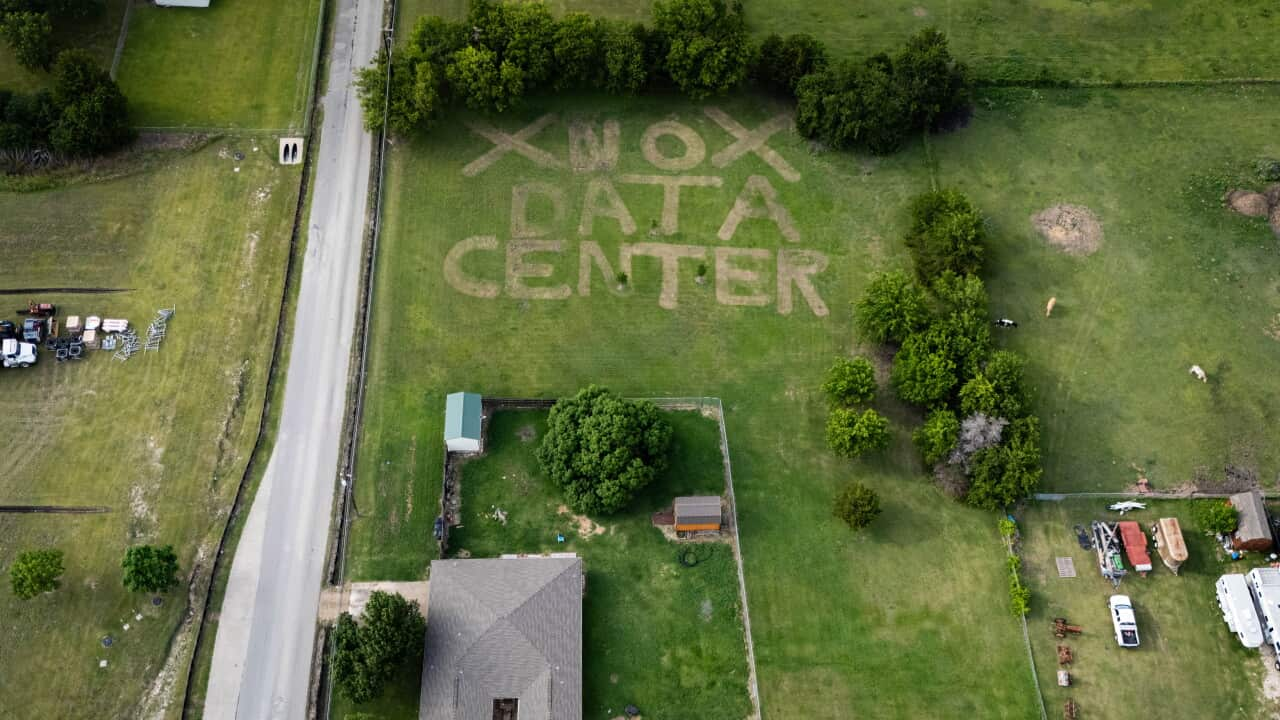
This week, voters in 13 US states were asked more than just who they wanted to represent them in Congress — they were also asked about a controversial new fixture in their neighbourhood: data centres.
According to analysis by Ballotpedia, at least 50 local ballot measures related to data centres.
The non-profit, which provides ballot information to voters around the country, tracked propositions put to voters across Arkansas, California, Florida, Illinois, Kansas, Maine, Michigan, Nevada, New Hampshire, New Jersey, North Dakota, Ohio and Wisconsin.
With three measures left to be decided later in the year, voters in the United States overwhelmingly rejected the development of data centres in their area.
All but one of the ballot measures failed.
Your trusted source for staying up-to-date with the world around you. Get free daily news updates and analysis, straight to your inbox.
The exception was in the small town of Harwood, North Dakota, where voters rejected an additional review of industrial projects, including data centres.
The largest proportion of motions were put to voters in Ohio, with 21 measures rejected across 18 jurisdictions.
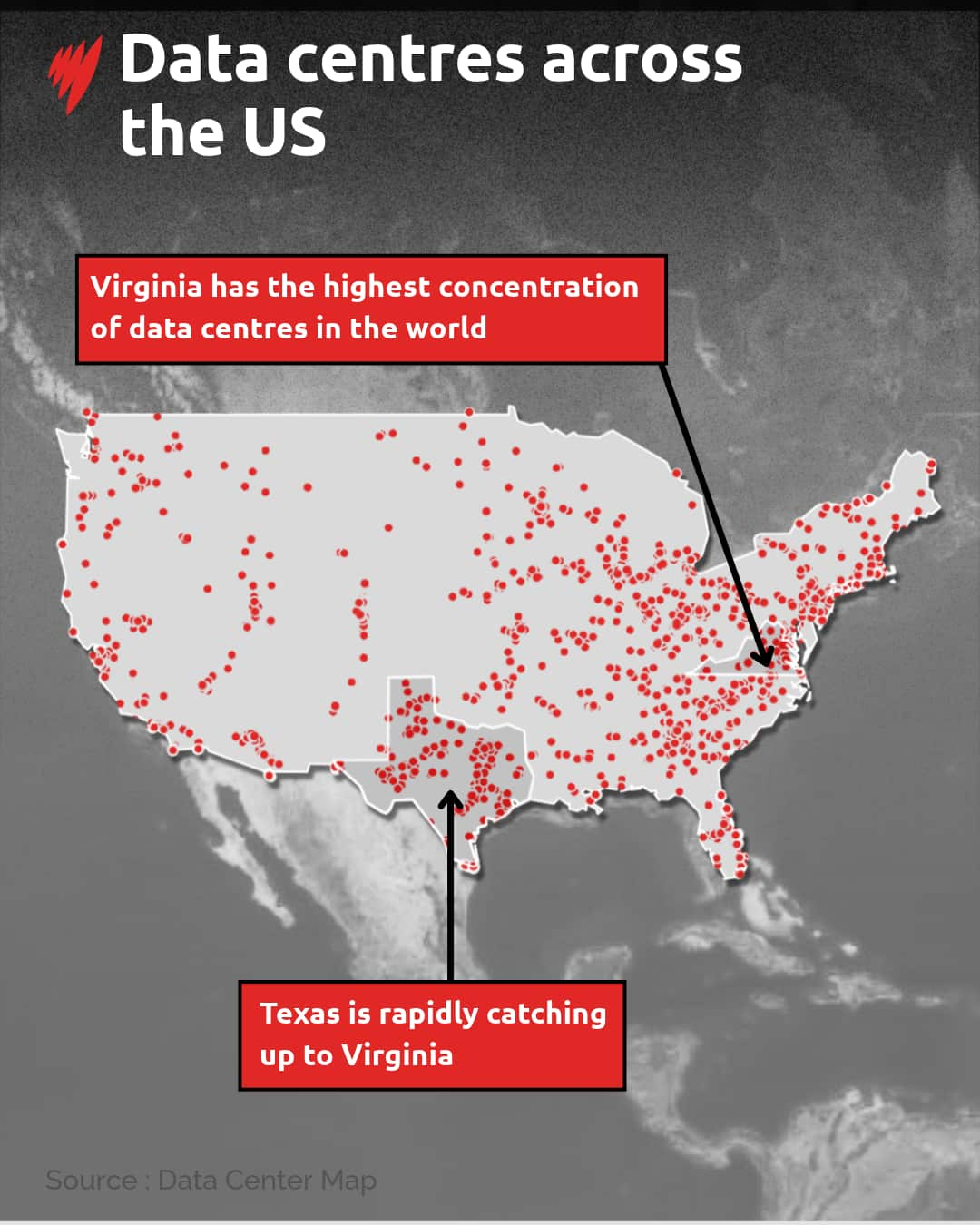
It's one of several key states for data centre development, including Virginia, Texas, Georgia, California and Illinois.
Texas Democrat governor-elect Gina Hinojosa campaigned to increase regulation and promised a moratorium on data centre construction. She is one of many pro-regulation candidates elected.
The trend has started to concern analysts, as shares in AI companies and tech-heavy stock indexes fell sharply on Thursday.
The US has far more data centres than any other country in the world following explosive growth in the past year.
The midterm results came as US stock markets had their worst day in 19 months amid fears of an AI slowdown as sellers shift stock that now carries risk.
Chipmaker Nvidia's shares dropped by at least 9 per cent, reducing its market value by US$400 billion ($580 billion). Shares in AMD and Micron, which also produce parts needed for AI computing, dropped more than 17 per cent.
The tech-heavy Nasdaq finished at least 5.5 per cent lower, according to Dow Jones data, while Japan's Nikkei 225 also fell as Asian chipmakers suffered.
Brad Conger, chief investment officer at investment firm Hirtle & Co, said the sell-off was the result of several factors, including concerns about ongoing financing and regulation of data centres.
"Some investors have reached the limit where they just have to liquidate risk entirely," he told Reuters.
Australia's markets largely avoided the global rout, with the ASX much more bank than tech-focused.
Chief investment officer at Opal Capital Management, Omkar Joshi, told SBS News' On the Money podcast the major falls in the US, Japan and South Korean exchanges are likely a symptom of reality setting in after overspend on AI, but he said it's not necessarily a case of the bubble popping.
"Funding costs have been blowing out for a while now, and it's really more just a reset of that reality rather than anything else that's coming through now.
"There was a lot of investor optimism in (the AI) space, and there wasn't always a lot of rationality on certain elements of the market."
He said the market reaction has created a "difficult" environment for Anthropic, which is preparing to launch the world's biggest public offering.
Trump has blamed the crash on the Democrats, only a day after celebrating what he called "another record high" for the stock market.
"The stock market suffered one of the worst days in history based on the results of the election," he said in a post on his Truth Social platform.
"Such a sad thing to watch! It took so much work to get us to a level that no one has ever seen before, and then this."
For some investors, it's been a clear sign of public sentiment.
"In our view, the significance of these midterm elections is more like a referendum on AI than a referendum on (Donald) Trump," Aidan Yao, a senior investment strategist at the Amundi Investment Institute, told Reuters.
Tapas Strickland, CEO of share trading platform Moomoo Australia, warned the governor's races in Texas and Georgia could significantly slow infrastructure rollout.
"Those two states effectively make up about a third of all AI data centre spend and projects," he told Reuters.
"If both of those go Democrat at the governor level, the potential for it to slow is very much there, and that would obviously cascade through to the rest of the AI sector."
Hinojosa and fellow Democrat Keisha Lance Bottoms both won their seats with considerable margins. Bottoms and Amy Acton, governor-elect of Ohio, have also supported moratoriums on large data centre construction.
A slowdown in data-centre infrastructure could further impact not only the financial stability of operators, but also energy producers, chipmakers and cloud companies.
The impact could extend beyond the US, as operators look to more advantageous jurisdictions.
One potential result, according to analysts at HSBC, is that data centre operators move to more lenient states or countries should incoming leaders increase regulation.