Jeremy Warner October 22, 2026 — 5:30pm
You have reached your maximum number of saved items.
Remove items from your saved list to add more.
You've used all of your gift articles. 3 more will become available on the 1st of every month.
The word “polycrisis” was first popularised in a speech in Athens by Jean-Claude Juncker , the former European Commission president, about 10 years ago.
Juncker was referring to the growing number of challenges facing the EU – from security threats on Europe’s borders and internally, to the then-acute refugee crisis and the still-raw-in-memory eurozone and Greek debt crisis. Each one seemed to reinforce and feed off the other, compounding the sense of gathering chaos. A few days after his speech, the UK seemed to confirm his worst fears by voting for Brexit.
Yet if he thought there was a polycrisis back then, it had nothing on today’s increasingly toxic cocktail of negatives. It stretches way beyond Europe’s borders and is now global in reach.
Almost everywhere there is a deepening sense of things falling apart, most obviously on the streets of Paris and beyond, but also in sovereign debt markets; in rising interest and mortgage rates; in soaring energy costs.
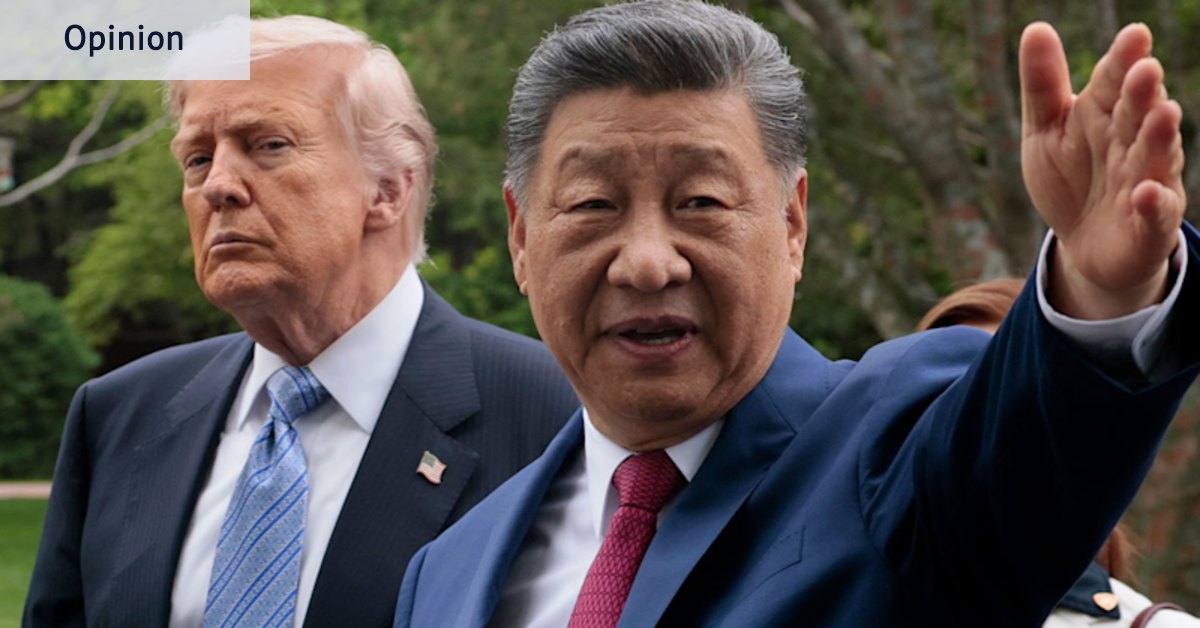
It’s in a seemingly unhinged White House more willing to side with Vladimir Putin’s Russia over Ukraine than with its European allies; in mushrooming trade imbalances and rampant deindustrialisation at the hands of Chinese mercantilism ; in stagnant or falling real wages; in an apparently escalating war in the Gulf, now encompassing the Houthis on the Red Sea ; in unsustainable welfare spending; and common to almost all countries, a socially sapping cost-of-living crisis ... I could go on and on.
With its history of sometimes violent protest, France is in some respects a special case. At more than 50 per cent of GDP – according to the International Monetary Fund’s last Fiscal Monitor – the tax burden is already incredibly high, leaving little if any scope for dealing with deepening fiscal deficits by further increasing taxes.
What’s more, the political situation is almost uniquely unstable among major economies. The last budget had to be rammed through without a vote, using oppressive article 49.3 constitutional powers, and the coming budget aimed at trimming spending and raising taxes is irrecoverably mired in political stalemate.
The choice in next year’s presidential elections looks at this stage as being between the hard-Right Marine Le Pen and the hard-Left Jean-Luc Mélenchon, both of whom are committed to reversing the present government’s plan to increase the retirement age to 64. Both Le Pen and Mélenchon would be anathema to bond markets , and either would pose a significant threat to the future of the EU itself if elected.
France is, in other words, suffering a crisis in liberal democracy on top of everything else. The stabilising centre ground is vanishing fast.
But other aspects of France’s crisis, in particular out-of-control immigration, failing public services and growing cost-of-living pressures, are common to virtually all major advanced economies.
As I say, most of these crises are in some way linked, a defining feature of a major polycrisis.
Trump’s catastrophic error of judgment in starting a war in the Gulf has, through rocketing fuel prices, added to cost-of-living pressures and put sustained upward pressure on interest rates.
It has also very likely doomed the Republican vote in next month’s midterm elections. There is no telling how Trump will choose to govern if voters turn against him, but increasingly erratically would seem a reasonable bet.
The chaotic nature of Trump’s White House detailed in Regime Change, a recent book by reporters from The New York Times , though shocking enough, is widely said to be an understatement of the true state of political dysfunction at the heart of the world’s largest economy.
Higher interest rates have in turn further compounded the fiscal challenge facing heavily indebted major economies. In the US, for instance, debt servicing costs are approaching a fifth of all federal spending.
The US is also an extreme case, but similar pressures are apparent almost everywhere, eating deep into other forms of public spending and limiting the ability of governments to respond to future shocks.
Europe, meanwhile, would appear to be on its own in dealing with the threat posed by Vladimir Putin’s Russia. If Trump succeeds in selling Ukraine down the river, it would only further embolden Putin’s murderous regime and supercharge the security threat it poses to a fast-fragmenting Europe.
Things could scarcely look more dangerous. Trump seems to be impervious to European lobbying. There is no “whisperer” potent enough to break Trump’s bizarre bromance with Putin.
These security concerns coincide with a period of intense change and social upheaval in the European economy, with Chinese competition laying waste to great swathes of its industrial heartlands. Germany alone has shed close to half a million industrial jobs in the past six years, according to recent analysis by the Ifo Institute in Dresden, mostly because of increased competition from Chinese imports. The security threat is as much economic as it is geopolitical.
Still, at least we have the artificial intelligence boom to help keep the economy ticking over, right?
It may be no more than a mid-cycle squall of the kind that is relatively common in a prolonged economic expansion, but even the AI capital expenditure arms race shows unnerving signs of running out of steam, with increasingly fierce public opposition to data centre build-out, growing calls for a regulatory crackdown and mounting signs of distress in AI-related debt markets.
We are also seeing early signs of a reckoning in stock prices, where hyperscalers are under intense pressure to demonstrate the returns needed to justify the jaw-dropping sums being invested in enabling infrastructure.
Growth in the US economy would grind to a halt if either one of its current props – the boom in AI and federal deficit spending – were to falter.
Of course, there is the possibility that an AI bust could provide a degree of interest rate relief by removing some of the competition in credit markets, but it is a pretty desperate state of affairs if you have to rely on an investment boom coming to an end to help ease mortgage rates and other cost-of-living pressures.
By taking the heat out of growth, moreover, such a bust might cause already widespread doubts about fiscal sustainability to further intensify. Remove the AI boom from the growth equation, and far from falling, long-term interest rates might even rise.
Juncker thought there was an emerging polycrisis 10 years ago, but except for investment spending on AI, virtually everything has deteriorated further still since then.
Geopolitical tension is up, sovereign debt is far higher and so are the costs of servicing that debt. Immigration, much of it largely unskilled, has reached epidemic proportions, putting further strain on welfare and public services, and China has responded to its own property bust by flooding Europe with subsidised imports at prices European producers cannot match.
It’s ever harder to know how governments should respond, and harder still to imagine happy endings.
The Market Recap newsletter is a wrap of the day’s trading. Get it each weekday afternoon .
You have reached your maximum number of saved items.
Remove items from your saved list to add more.
You've used all of your gift articles. 3 more will become available on the 1st of every month.