Australia's sunscreen regulator is planning tougher rules after concerns some products failed to deliver the sun protection promised on their labels.
But experts say more reliable testing is only part of the solution, with boosting awareness on how Australians need to apply and reapply sunscreen also critical to preventing skin cancer.
In a report published last year, consumer group CHOICE tested 20 popular sunscreens and found that only four met their labelled sun protection factor (SPF), raising questions about the reliability of products Australians rely on to protect themselves from UV radiation.
The Therapeutic Goods Administration (TGA) later recalled several sunscreen products after identifying batches that didn't deliver their advertised SPF protection.
The regulator is now developing reforms to strengthen sunscreen testing, improve ingredient-quality requirements, and clarify the SPF claims cosmetic products can make.
Your trusted source for staying up-to-date with the world around you. Get free daily news updates and analysis, straight to your inbox.
The TGA is proposing several reforms to address sunscreen quality, with the goal of reducing instances of skin cancer.
Australia has the highest rate of melanoma incidence in the world, with an estimated 17,443 new cases diagnosed in 2025 according to Cancer Australia.
Professor Terry Slevin, CEO of the Public Health Association of Australia, told SBS News that treating skin cancers costs the country more than $1 billion each year.
"We need to invest more in preventing those cancers rather than having to treat them at the tail end," he said.
The TGA told SBS News: "The proposed reforms are intended to provide greater assurance through stronger testing requirements, increased oversight of testing laboratories, testing of finished products and periodic testing over a product’s lifecycle, and improved access by the TGA to SPF testing evidence."
Improving how sunscreen is tested is one way the TGA wants to improve quality and reliability of SPF claims.
Slevin explained that a small number of labs in Australia produce the nation's sunscreen, supplying multiple brands.
Sunscreens can then be tested on volunteers who use the formula and are then exposed to UV radiation; the rate at which skin reddens can then be used to determine the product's quality.
While this method is common, it can also be imprecise.
"People have different skin types, and the amount of product being applied can vary a lot. So having consistent SPF levels relies on a lot of unpredictable variables," Slevin said.
These variations can lead to inconsistent product application and to sunscreens having marginally different SPF than advertised on their packaging.
The TGA reforms are looking to ensure that sunscreen manufacturers have clearer guidance and expectations, but SPF levels could still slightly vary from bottle to bottle according to Slevin.
However, variations would be minimal and would have little impact on the sunscreen's efficacy.
"The difference between SPF 50 and SPF 30 may sound significant, but the difference in the amount of UV that’s filtered out is only 3 per cent, a small change," he said.
"The vast majority of sunscreens serve a very useful and effective purpose; these reforms will only strengthen this."
But the main way to achieve the TGA's goal may not be reforming testing, but educating people on how to use sunscreen products best.
Anna Wang, an associate professor in the School of Chemistry at UNSW Sydney, said that improving consumer understanding and behaviour is the best way to improve sun safety.
"What is going to make a bigger impact isn’t whether a sunscreen tests SPF45 using one method and SPF40 using another, but how often we reapply, and whether we put the recommended amount on," she told SBS News.
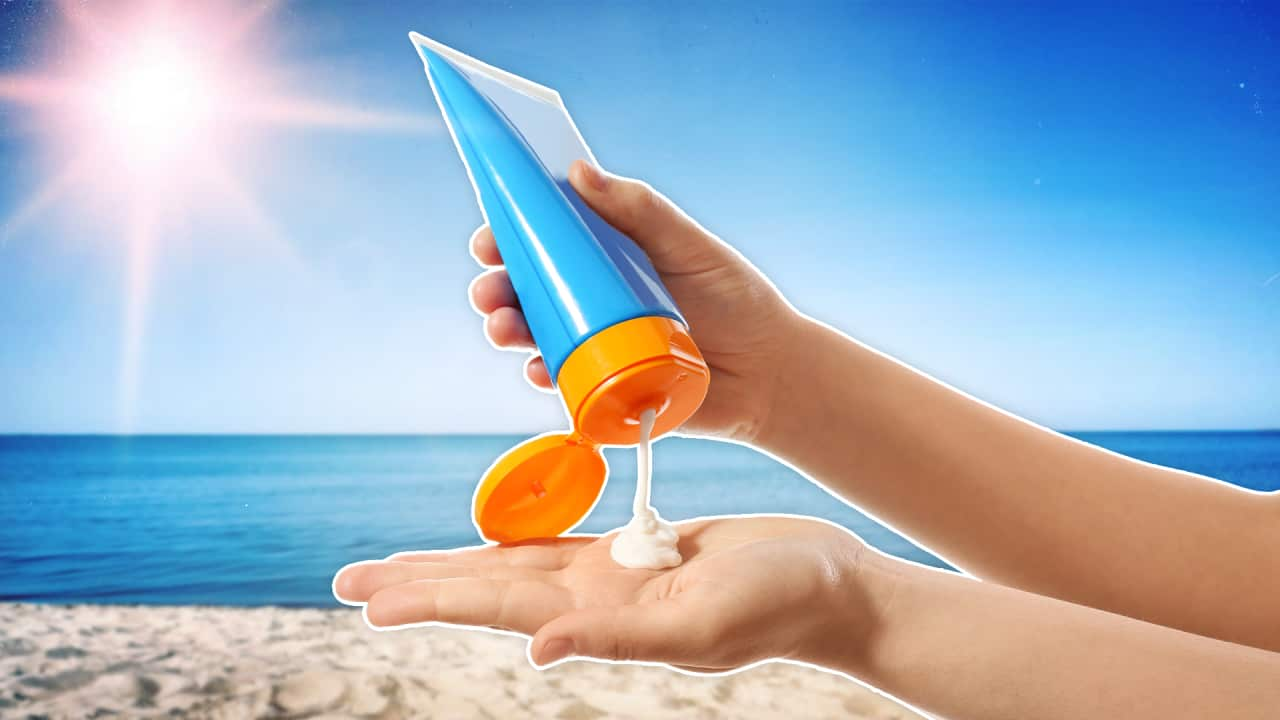
Experts recommended applying sunscreen generously to all exposed skin every two hours, seeking shade, and wearing a hat and sunglasses.
Toweling off after a swim, or wiping water or sweat off your body, can also remove some sunscreen.
Some cosmetic products, including foundations and moisturisers, also advertise SPF protection.
The TGA is considering a consistent limit on the SPF ratings these secondary sunscreens can claim, aiming to make it easier for consumers to distinguish products designed primarily for sun protection from those intended mainly for cosmetic use.
"In Australia, we have several hundred formulations to choose from so it can be confusing," Wang said.
She supported the TGA's reforms to clarify the distinction between primary and secondary sunscreens.
In the meantime, the TGA confirmed to SBS News its investigation into sunscreens with disputed SPF results is ongoing.
"The TGA is considering the available evidence and providing sponsors with an opportunity to provide additional data or evidence before regulatory decisions are made," it told SBS News.
The regulator said it will issue product recalls or cancellations as needed while it develops the new reforms.
"The TGA intends to publish its findings and learnings and provide further guidance to sponsors and manufacturers to clarify expectations around SPF evidence and testing," it concluded.