Polls have closed in Israel, and vote counting has begun. But the most complicated part of the process may still be to come, as parties jockey for alliances that could allow them to govern.
"Anything can happen in Israeli politics," as affiliate research associate at Monash University's Australian Centre for Jewish Civilisation, Ran Porat, puts it.
Voter turnout was the highest in decades as Israelis cast ballots for the first time since the Hamas-led 7 October 2023 attacks and subsequent war in Gaza.
But it may be weeks before a clear result can be announced.
Exit polls suggest an opposition bloc has a slight edge over Prime Minister Benjamin Netanyahu's coalition. Meanwhile, Arab parties gained ground after record turnout among Arab citizens of Israel.
Your trusted source for staying up-to-date with the world around you. Get free daily news updates and analysis, straight to your inbox.
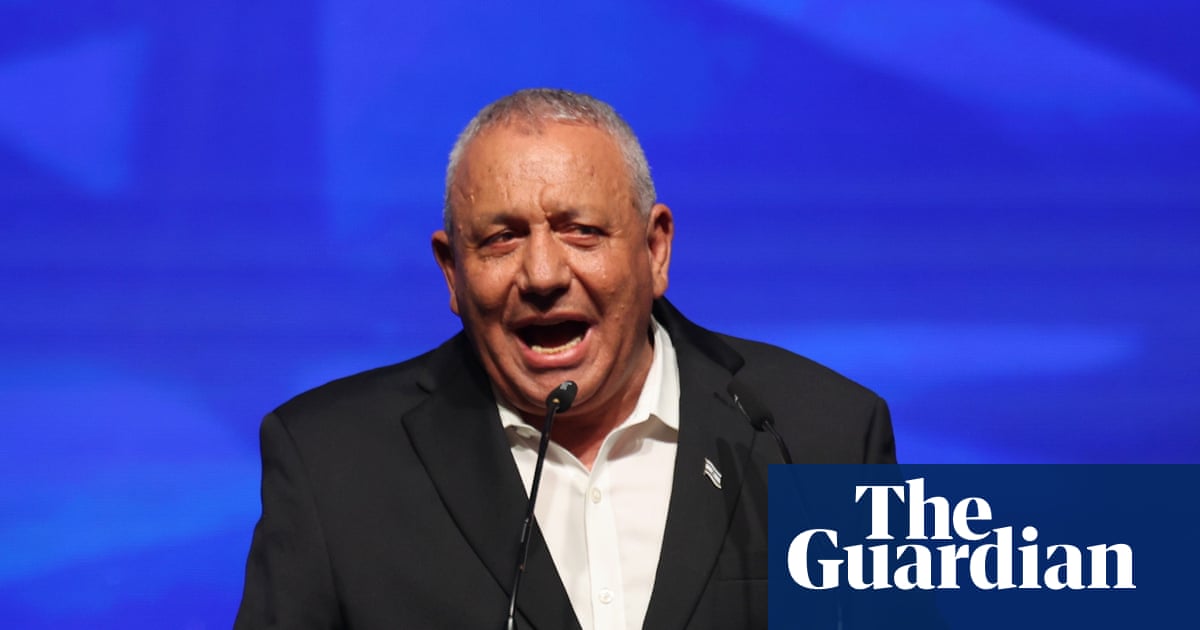
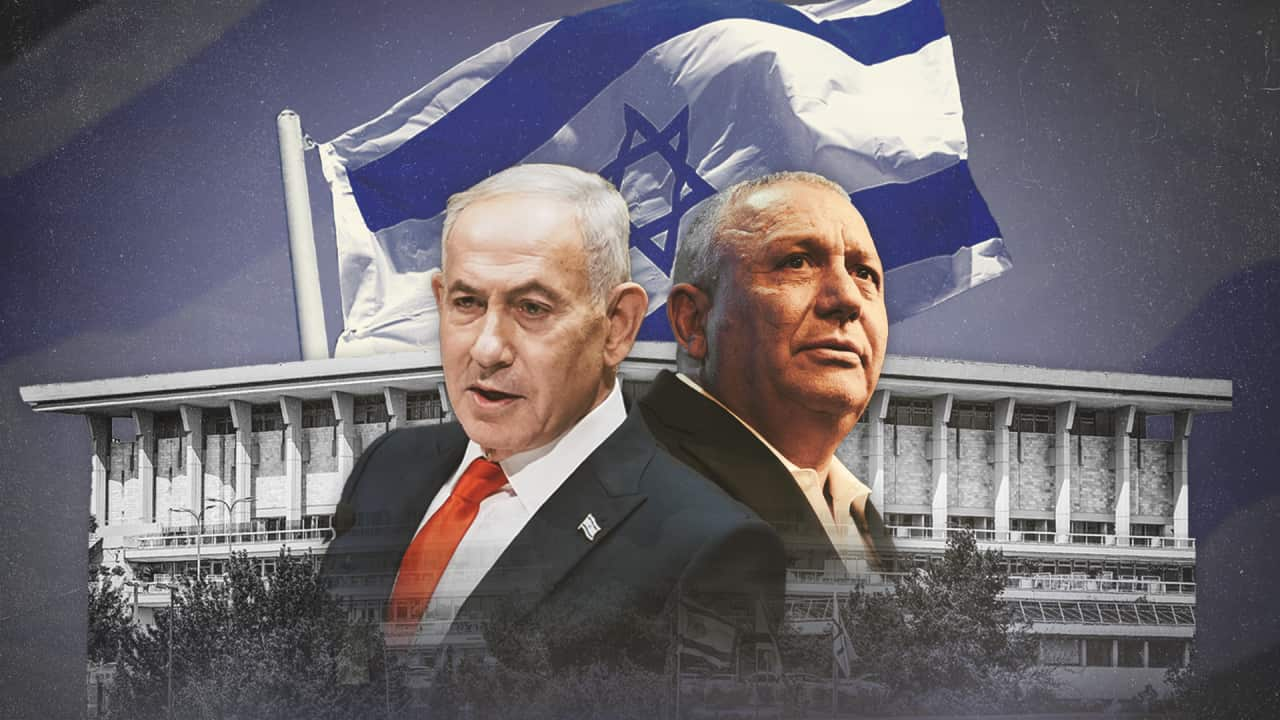
The incumbent coalition government, made up of a group of conservative and far-right parties, is considered Israel's most right-wing in history. The opposition bloc, which would likely be led by Yashar party leader Gadi Eisenkot, is composed of parties across the political spectrum that oppose Netanyahu.
Exit polls suggest Netanyahu's Likud party is on track to secure the most seats in the the Knesset, Israel's 120-seat parliament, with 24-25 seats. Eisenkot's party is projected to win between 21-23 seats.
A minimum of 61 seats is required to form government; no party in the country's history has won enough seats to govern alone. That means negotiations and alliances are crucial to forming government.
Exit polls indicate Eisenkot's broader bloc could secure 52-53 seats, while Netanyahu's is projected to take 50.
Two Arab parties, Ra'am and the Joint List, are projected to win seven and 10-11 seats respectively.
The Arab parties, opposed to Netanyahu, could shift the balance of power and give Eisenkot the support he needs to lead. But prior to the election, Eisenkot had ruled out working with them.
Eisenkot has several potential routes to government, but each comes with political complications. Netanyahu has fewer apparent options, though experts caution against ruling him out.
What are some of the paths to victory from here?
Parties will immediately start negotiations to try to reach 61 seats.
In the coming days, Israeli President Isaac Herzog will name a candidate with the best chance of forming a government. That is expected to be Eisenkot.
The Arab parties have expressed openness to working with Eisenkot.
In 2021, Ra'am joined a government led by the right-wing Naftali Bennett, who had earlier pledged not to work with the Arab party.
That could happen again under Eisenkot, according to Porat.
Eisenkot could also benefit from Likud "deserters" defecting to his camp, or from Arab parties supporting his government without formally joining the coalition, Porat said.
Eisenkot may also be able to form a minority government if his coalition manages to get closer to 60 seats.
But for Netanyahu to do the same would be a "big stretch", Porat said.
Netanyahu's bloc appears to have fewer options for securing the additional seats it needs to govern.
But Ian Parmeter, from the Centre for Arab and Islamic Studies at Australian National University, says it's "too soon to write Netanyahu off".
"He's a remarkably successful politician and very good at at making the Israeli electoral system work for him," he told SBS News.
A poll published on 16 October found that 55 per cent of Israelis would prefer a national unity government over new elections if the vote did not produce a clear majority.
Under a potential unity government scenario, Netanyahu could shed his far-right and ultra-Orthodox allies, and team his Likud party up with Eisenkot.
This has precedent in recent history. In 2020, Netanyahu and Benny Gantz — like Eisenkot, a retired military chief appealing to the political centre — reached a power-sharing agreement after three elections in less than a year.
The agreement was supposed to rotate the prime ministership, but the partnership fell apart after a year and triggered yet another election.
A deal of this kind would almost certainly face strong backlash, particularly for Eisenkot, who has campaigned on bringing change and ousting Netanyahu.
Porat said he views this scenario as possible but unlikely. Eisenkot may be more open to joining forces with Likud if Netanyahu were to step down as its leader, he said.
Netanyahu continues to serve as caretaker prime minister in the interim.
That means he has "all the options of being prime minister at his disposal", Parmeter said, including restarting the war with Iran.
"Which of course would be a big distraction in terms of just how the electoral process would pan out."
If no candidate manages to form a government, the country will be forced to hold another election.
Between 2019 and 2022, Israel voted five times as politicians repeatedly failed to build lasting coalitions.
The candidate designated by the president will, in principle, have 28 days to form a coalition with a possible 14-day extension, although other procedural measures can prevent an immediate call for new elections.
— With additional reporting by Agence France-Presse.