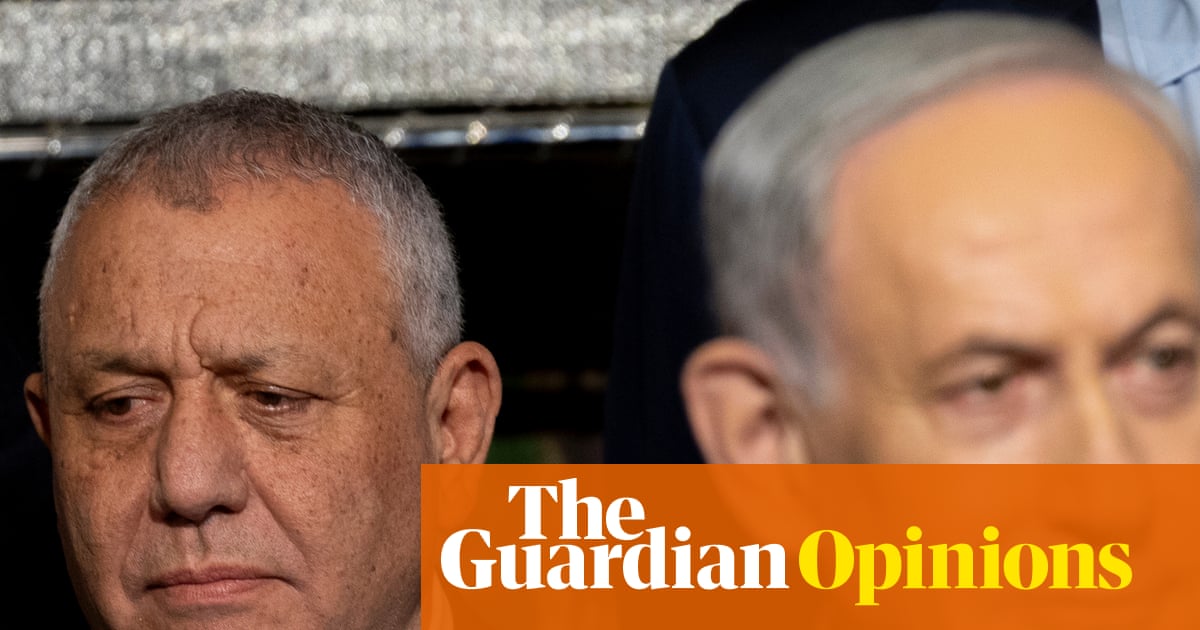
Despite losing its majority in last month’s parliamentary elections, Israeli Prime Minister Benjamin Netanyahu’s government is still in power in a caretaker capacity.
That will continue until a new governing majority is formed – a process that could take months as Israel’s opposition struggles to form a coalition.
And while he may be politically weakened, Netanyahu is reported to be weighing new military action against Iran , despite a lack of enthusiasm from the United States, his own military establishment, and the politicians vying to replace him.
But does Netanyahu’s caretaker government actually have the authority to send Israel back to war, and how would such a move be received at home?
Officially, Israel’s caretaker government has the same authority as a regular government. Article 30 of the country’s Basic Law states that an interim government continues to carry out the same duties until a new one takes its place.
However, Israel’s Supreme Court has previously ruled that an outgoing government must avoid irreversible policy moves unless they are urgent – a principle known as the “duty of restraint”.
In practice, Netanyahu can still initiate military action with the approval of his caretaker government, which he could present as “urgent and in the national interest”, Neve Gordon, a professor of international law at Queen Mary University, London, and the author of “Israel’s Occupation”, told Al Jazeera.
Or Asher, a researcher at the Tel Aviv-based Tachlith Institute, told the Reuters news agency that security issues generally are “the clearest exception” to a caretaker government’s duty of restraint.
“The Supreme Court has historically avoided intervening in decisions to go to war, and parliamentary oversight is at its thinnest in the weeks after the new Knesset [parliament] convenes and before its committees are formed,” said Asher.
“A caretaker prime minister can legally take Israel to war, including against Iran,” he added.
Ehab Jabareen, an analyst and Palestinian citizen of Israel, told Al Jazeera the government’s caretaker status raises the “political burden of proof”.
“Netanyahu would be asking the country to accept the consequences of a decision that could outlast his government,” he said.
On Wednesday, Israeli media reported that the security cabinet chaired by Netanyahu had ordered the military to step up preparations for an attack on Iran.
“The directives issued by the security cabinet to the Israeli military could lead it to carry out activities that could trigger a war,” public broadcaster KAN reported.
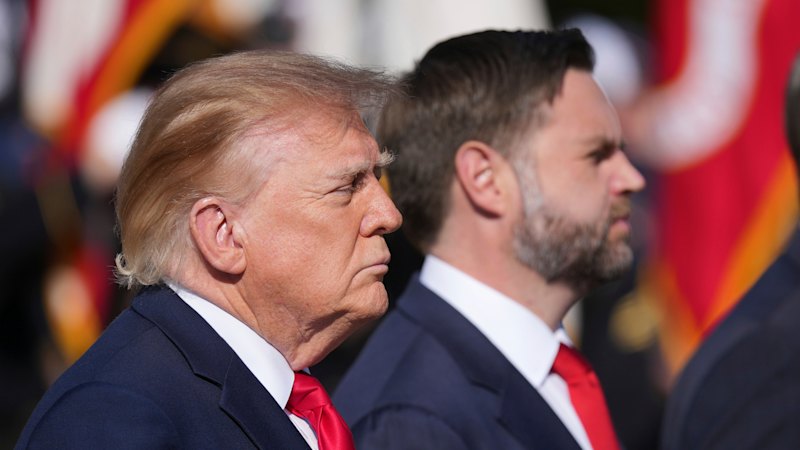
That followed reports that Netanyahu has been repeatedly calling US President Donald Trump to press for a new military campaign against Iran, conversations that on at least one occasion became heated, according to Israel’s Ynet News site.
On Thursday, a US military official was quoted by KAN as saying that Washington had told Israel to get ready for a potential new round of confrontation. But the US military’s Central Command (CENTCOM) later dismissed the reports, telling Al Jazeera they were “mere speculation”.
According to Israel’s Channel 13, the Israeli military establishment sees no urgent need to attack Iran. It said that assessment had been presented to Netanyahu and opposition leader Gadi Eisenkot, who has been tasked with forming the next government, during a briefing on Wednesday.
The opposition has demanded that Netanyahu avoid any military action unless it is critical.
Yisrael Beytenu leader Avigdor Lieberman, a member of the opposition bloc, said the prime minister’s caretaker government must not “make decisions that could drag Israel into war without parliamentary oversight and without the full agreement of all security officials”.
Eisenkot echoed this sentiment in a letter to Netanyahu on Wednesday, saying that deploying Israeli forces “without a direct and immediate threat that cannot wait could have devastating consequences for Israeli democracy and public trust in the institutions of government”.
The Israeli premier responded by insisting the government makes all decisions based only on “security considerations”.
“Obviously, those who voted for Netanyahu and parties from his coalition would be in favour, while most of those who supported the so-called change bloc would be upset at Netanyahu’s use of the war to try to remain in power and block their electoral success,” said Gordon.
But ultimately, he said, most people who voted against Netanyahu’s bloc would “rally around the flag” if he resumes hostilities.
Jabareen agreed that Israelis would likely rally if a new war breaks out and missiles are incoming. But he said that “tells you very little about whether they think Netanyahu was right to start another round [of conflict]”.
“And the harder test comes when reservists are called up again, families are back in shelters and the government has to explain what the campaign can achieve that the previous one didn’t,” he added.
Jabareen said the debate in Israel over any new confrontation on Iran would likely centre on “why now?”
“If the case for urgency is weak, especially if Washington is opposed and senior Israeli commanders have reservations, the decision could be seen as an attempt to change the political agenda while Eisenkot is trying to form a government,” he said.
Beyond domestic considerations, an obstacle to Netanyahu restarting attacks may be the position of Israel’s main ally, the US, which has said it is doubling down on its economic pressure campaign against Iran rather than pursuing more large-scale military action.
“Netanyahu’s problem … is not the Israeli public, but what seems to be a loss of appetite in the US,” said Gordon.
Anders Persson, a political scientist specialising in the Israeli-Palestinian conflict, said it would be easier for Netanyahu to pull off a new military campaign if it is undertaken jointly with the US.
But “the more openly Netanyahu provokes Iran, and the less support he receives from Trump, the harder it will be for him to get away with it – and for the Israeli public to accept it”, Persson told Al Jazeera.
Yes. And in one case, the government was led by Netanyahu himself.
In May 2021, weeks after his party lost seats in legislative elections and while negotiations for a new government were under way, the prime minister launched an 11-day war in Gaza that killed at least 260 people in the Palestinian enclave. Thirteen people also died in Israel.
While that conflict temporarily stalled efforts to replace Netanyahu, a new government, led by Naftali Bennett and Yair Lapid, was formed the following month, ending a 12-year run as prime minister .
Former Israeli prime ministers Ehud Olmert and Yair Lapid also ordered military action in Gaza while serving in a caretaker capacity. The 2008 war directed by Olmert was by far the most deadly , killing about 1,400 Palestinians.