Israelis will head to the polls on 28 October for their first election since the Middle East was plunged into crisis following the October 7 attacks.
Incumbent Prime Minister Benjamin Netanyahu's government is predicted to be defeated, which could be the end of nearly 30 years as one of the most powerful figures in the Middle East and a tenure hit with corruption allegations.
While polling has shifted constantly in the leadup, polls published on Friday put the ruling coalition and opposition bloc almost level, the BBC reported.
But Israel's complex political system means a result may not be known for weeks.
Here's what you need to know about the major parties, how the system works and what's at stake in an election widely seen as the most consequential in recent history.
Your trusted source for staying up-to-date with the world around you. Get free daily news updates and analysis, straight to your inbox.
The Knesset is Israel's parliament. It has 120 seats, meaning a government must hold at least 61 seats to hold a majority. Elections are held every four years.
No single party has ever held an outright majority, meaning governments are formed by a coalition of parties.
There are 38 parties contesting this election, however most won't reach the 3.25 per cent voting threshold to enter the Knesset.
Israel uses proportional representation, meaning citizens vote for a party rather than individual candidates. There is just one chamber of parliament, unlike Australia which has the House of Representatives and the Senate.
Netanyahu, who has served as prime minister for 18 years over three separate periods since 1996, is the leader of the right-wing Likud party.
There are five parties in Netanyahu's coalition, including ultra-Orthodox Jewish parties which he has had to rely on for political survival.
Among them is the far-right ultra-nationalist Otzma Yehudit, led by national security minister Itamar Ben-Gvir. He is a controversial figure sanctioned by the Australian government and lives in an occupied West Bank settlement.
Another coalition partner is Religious Zionism, another far-right, ultra-nationalist party run by Bezalel Smotrich, the current finance minister and also a sanctioned settler.
Netanyahu's main rival is former Israel Defense Forces chief Gadi Eisenkot, who formed Yashar, a centrist party, only last year.
Eisenkot's son, a soldier, was killed early in the Israel-Hamas war. He is seen as a political outsider whose humble background and family sacrifices stand in contrast to Netanyahu's decades in office and lingering corruption cases.
Most polls suggest Yashar will be largest party in the Knesset, followed by Likud.
But who forms government could take weeks or even months to decide as parties battle to build coalitions.
Eisenkot's campaign has called for accountability for the security failures that led to the October 7 attacks, an end to religious exemptions to military service and strengthening of the military.
Other opponents include former prime ministers Naftali Bennett and Yair Lapid who combined parties to form Beyachad (Together) despite being on opposite sides of the political spectrum.
Bennett, the party's leader, is religiously observant but socially liberal and positions himself as part of the "new right" focused on rebuilding trust in Israel's establishment.
The Democrats were founded in 2024 in an attempt to rebrand some of Israel's struggling left-wing parties.
It merged with the centre-left Labor party, which ruled Israel for its first two decades, and the far-left Meretz. Party leader Yair Golan supports bringing Israel's Arab-led parties into the coalition.
Palestinian citizens of Israel make up about 20 per cent of the population but have low voter turnout due to discrimination and disillusionment.
Netanyahu and his main opponents have said they will not sit in a coalition with Arab-led parties, fearing that a potential alliance would alienate right-wing voters.
But if the vote is close, they may ultimately compromise, giving Arab parties the chance to play a decisive role in choosing the next prime minister.
Ra'am, an Islamist conservative party led by Mansour Abbas, is considered the more moderate of the Arab-led parties in Israel. Abbas created an unprecedented political partnership with Jewish-Israeli politician Yoav Segalovitz, the first time Ra'am has included a Jewish candidate.
The party supports the establishment of a Palestinian state with Jerusalem as its capital, but has also focused on local issues such as crime and the economy.
The election is widely viewed as a referendum on Netanyahu's leadership and his government's response to the October 7 attacks, and the ensuing wars in Gaza, Lebanon and Iran.
Many opposition parties are promising to establish inquiries into the security failures leading up to the October 7 attacks, which saw about 1,200 Israelis killed.
Israel's growing international isolation over its conduct in Gaza is another issue hanging over the election.
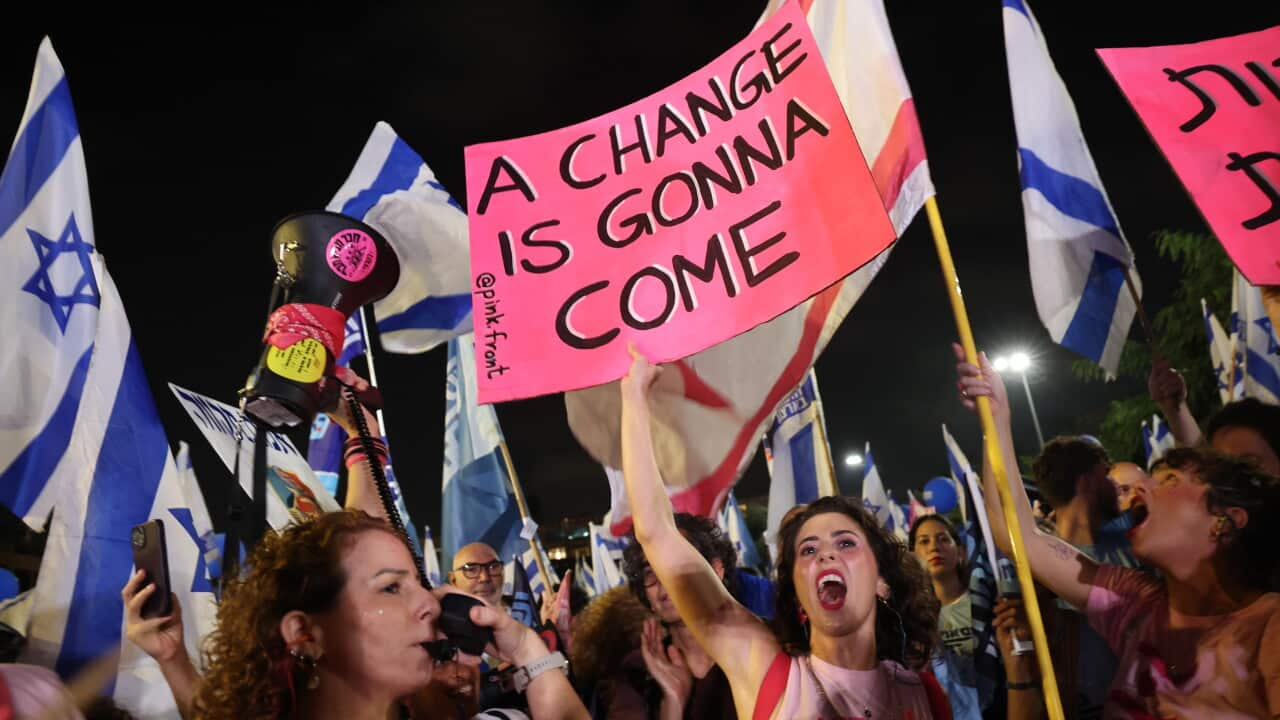
Netanyahu is also facing an ongoing trial over corruption allegations. His government's efforts to overhaul the judiciary, which opponents say would weaken checks on executive power, sparked mass protests in 2023.
The creation of a Palestinian state has largely fallen off the agenda among Israel's major Jewish-led parties since the October 7 attacks.
Netanyahu and the Israeli right reject Palestinian statehood, while most centrist opponents have stopped short of campaigning for an immediate two-state solution.
The left-wing Democrats support an eventual Palestinian state as part of a broader regional settlement.
Israeli settlements in the occupied West Bank are considered illegal under international law, but few major parties are promising significant curbs on settlement expansion.
However, some of Netanyahu's opponents have promised stronger law enforcement against violent settlers and other extremists.
— With additional reporting by Associated Press and Reuters.