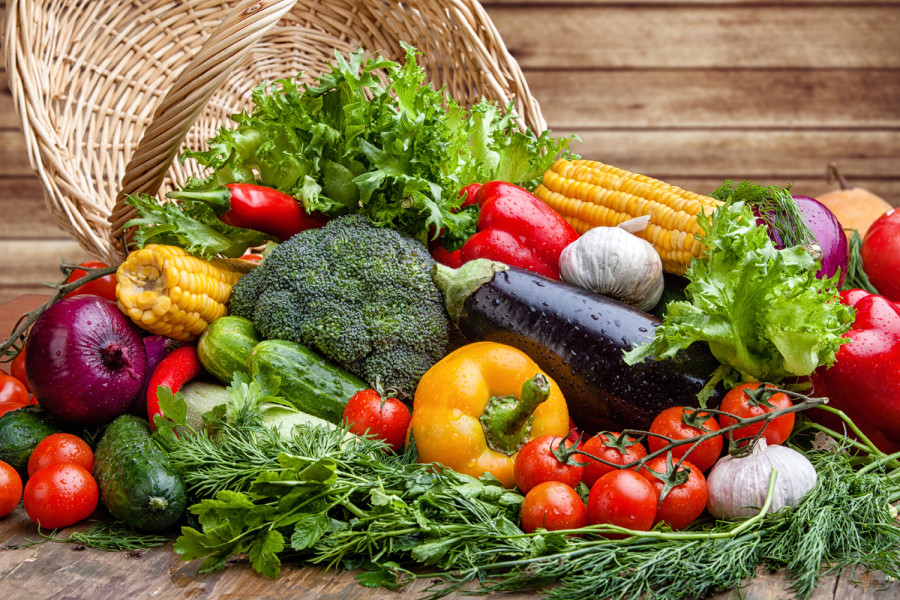
Walk through farms, local markets and online marketplaces, and you will hear a familiar word: ‘organic’. Vegetables are organic, rice is organic, honey is organic and traditional products from remote regions of Nepal, or locally sourced from hard-working farmers, are often marketed as organic. Inadvertently, the word has become ubiquitous in the marketing realm of agri-food products. Often sold at premium prices, these products promise environmentally friendly and pesticide-free production methods.
Unfortunately, in Nepal, organic has been used rampantly as a marketing expression rather than a trusted verification method. This raises deeper questions about consumer rights, the protection of authentic farmers undergoing stringent evaluation of their production, and the larger credibility of how Nepal’s sustainable food concept has been evolving.
Organic farming is not simply conventional farming without chemical inputs. For organic farming, farmers must follow defined production standards covering soil management, seeds, pest and disease control, livestock management, post-harvest handling, processing and storage, and an independent control body must verify claims to confirm whether the pre-defined compliances are met.
Therefore, organic products need to be understood as a process that involves documentation, inspection, assessment of farming practices and verification of compliance. Depending on the applicable standard, farmers may also need to undergo a prescribed conversion period before their produce can be marketed as organic. Organic certification embedded on a product is therefore not a decorative logo, but rather a medium of assurance that fosters trust between producers and consumers.
Perhaps the most important, persistent misconception to demystify in Nepal’s food market is the assumption that local or indigenous food is automatically organic. These two concepts are fundamentally different.
Local products describe the geographical origin of the product and communicate that the products were produced in remote regions of Nepal. It tells us where the food was produced, harvested or processed. Meanwhile, organic describes the production system and the standards followed in producing it by farmers or other actors in the value chain.
Consider two farmers in Jumla. One produces local Marshi rice using synthetic fertilisers and pesticides and has higher productivity, while another follows organic production standards and has undergone the required verification process set out by the national regulating authorities and appraisal by the competent control bodies. Both produce local Jumla rice, but only the second can substantiate an organic claim under the relevant certification requirements. Now, understand: if the products of the first farmer are also mistaken as organic and used as marketing tactics, would it be fair to the second producer, given his respect for environmental and social conditions, if both can easily leverage the same economic value from the market? Would this practice encourage responsible organic growers to follow organic production methods?
This distinction matters because local food has its own enormous value. It supports local economies, preserves agricultural biodiversity, maintains traditional knowledge, strengthens rural livelihoods, and connects consumers with the landscapes. We should not diminish these qualities by incorrectly equating them with organic certification. Nepal needs to recognise and promote both, but it must stop treating them as interchangeable.
It would be incorrect to say that Nepal doesn’t have any legal frameworks around organic agriculture. The Government of Nepal developed the National Standards of Organic Agriculture Production and Processing, initially endorsed in 2008 (2064 BS), alongside subsequent procedures and guidelines for certification, accreditation and collective certification through Internal Control Systems. These are strong starting points to regulate organic products, certification, and the term organic itself. Collective certification and the Internal Control System are particularly important for the domestic market, where third-party certification or stringent audits are out of reach for smallholder farmers.
High certification costs, often running Rs 60,000 to 150,000 through Organic Certification Nepal, are effectively pushing smallholder farmers out of the organic market. The government needs to revive and enforce the Department of Agriculture’s 2079 guideline , which subsidised these fees for high-value exports like tea, coffee and herbs. Expanding this financial backing to cover cooperative group certifications and shared Internal Control Systems is a necessary stopgap until our local policies align with global standards. Ultimately, if Nepal wants its organic goods to succeed internationally, making credible certification affordable for everyday farmers is non-negotiable.
Due to this mismanagement, in the domestic market, the problem has become particularly serious as traders, retailers and individual sellers use the word organic without providing evidence of certification or demonstrating compliance with recognised standards. Consumers are asked to pay a premium, but the basis for that premium is often unclear. Therefore, having standards and procedures is not enough; active plans and strategies need to be drafted and implemented to ensure the term organic is regulated. Also, the registration of companies, brands and trademarks with the name ‘organics’ further exacerbates the situation and indicates why government agencies responsible for agriculture, food quality, certification, standards, commerce and consumer protection must work together to strengthen market surveillance, verify certification claims, and take action against misleading labelling.
Nepal’s traditional agricultural systems and indigenous products are an extraordinary asset and part of Nepal’s identity. Our mountain farming practices, indigenous crop varieties, community knowledge, forest-based food systems and locally adapted production methods deserve recognition and investment. Many of these systems provide a strong foundation for transitioning towards organic and regenerative agriculture.
However, we should not interlink the potential of these agricultural systems as proof of organic compliance as things stand presently. If we let the situation normalise and continue the misappropriation of the term organic, we risk discouraging genuine organic growers, misleading consumers and undermining the agricultural values that we collectively drive to promote.
Mainali is co-founder of Bhumi Sewa Networks, a company envisioning a regenerative agriculture transition in Nepal.
Poudel is co-founder of Bhumi Sewa Networks, a company envisioning a regenerative agriculture transition in Nepal.