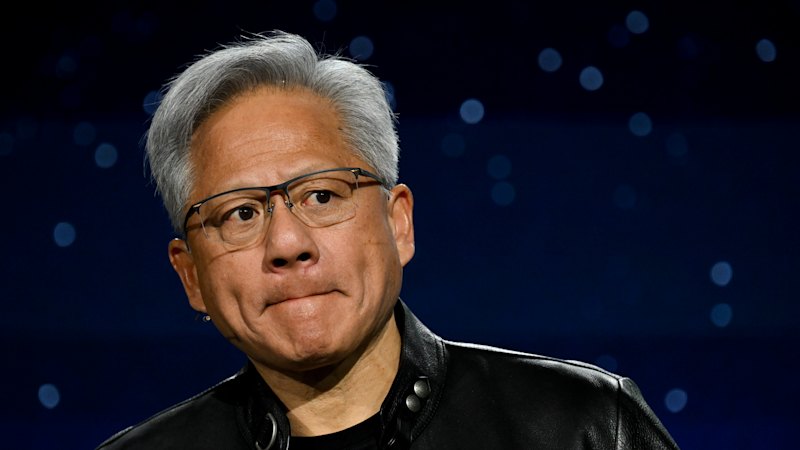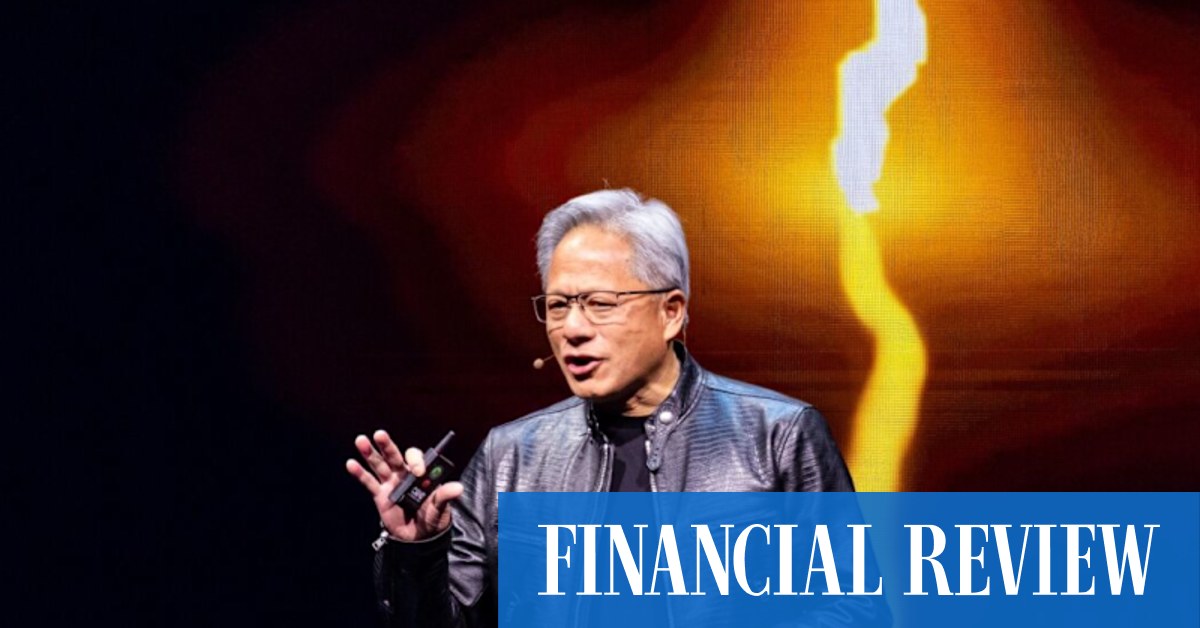

Jensen Huang at Village Global’s The Grove event in November 2023
The US Securities and Exchange Commission is examining Nvidia’s accounting, Reuters reported on Friday, citing two people briefed on the matter. SEC enforcement staff are scrutinising potential accounting issues at the company, they said. Nvidia’s shares fell 14% by the close.
The New York Times confirmed the investigation with its own sources. One said it is at an early stage, and it may not lead to civil charges. The Wall Street Journal broke the news of the civil probe on Tuesday. Its scope includes whether Nvidia’s disclosures misled investors, the paper said.
The SEC declined to comment to Reuters, and Nvidia did not respond to either outlet. Neither could say exactly which accounting issues are under review. Investigations are not evidence of wrongdoing, Reuters noted, and many close without any enforcement action.
Both reports point to a change Nvidia made last year. It began reporting revenue by each customer’s headquarters instead of its billing address, and Singapore disappeared from its geographic breakdown.
The NYT says Nvidia made the change after its October 2025 report on Megaspeed, the Singapore company where Alice Huang was an executive. Revenue booked through Singapore had surged 70% to $104bn when Nvidia stopped disclosing it, the Financial Times reported on Tuesday.
US authorities suspect Alice Huang is a Chinese spy, and China has denied it. Megaspeed says she left in August 2025 and that it conducted lawful business.
Friday was Nvidia’s seventh straight day of losses and its seventh straight weekly decline, the longest weekly losing streak since 2008, CNBC reported . The stock is down 46% over those seven weeks, about $2.6tn in market value. At roughly $3tn, Nvidia is now the world’s fourth most valuable company, behind Apple, Microsoft, and Alphabet.
About $1tn of that has gone since Jensen Huang left. Nvidia was worth $4.19tn at the close on 11 November, the day before it announced his departure. By Friday afternoon it had lost $1.04tn, Business Insider calculated from Bloomberg data.
The slide began before the scandal, though, amid worries about AI spending and new chip competition from Google and AMD, CNBC noted. Not even Tuesday’s raised forecast stopped it.
The wider market fell too. The S&P 500 dropped 3.7%, which left it in a correction, more than 10% below its 6 October record. The Nasdaq Composite lost 5.3% and turned negative for the year. The PHLX Semiconductor Index fell 10.7%, The Associated Press reported. Anthropic, a day after its record listing, gave back 8.5% .
The affairs started the scandal, but Huang’s “lack of candor” and “lying” were what moved Nvidia’s board, WIRED reported on Friday. It cited two people familiar with private discussions between the chair and other directors.
Board chair Harvey Jones has said the board does not intend to reinstate Huang. It has hired the law firm Wachtell, Lipton, Rosen & Katz to investigate the circumstances of his resignation, the NYT reported.
A separate NYT investigation describes decades of abuse of staff. It draws on more than a dozen current and former employees and court records spanning over 20 years.
As Nvidia grew richer, Huang told groups of subordinates that money no longer motivated them, three people told the NYT. Humiliation, he said, was the only way to get more work out of them. He told one executive that his mother should have aborted him, a witness said. He told another employee he would rip off the top of their head and “pee on your brain”.
“I’d rather torture you into greatness, because I believe in you,” Huang once said in public, the NYT reported.
Nvidia settled with at least two former senior leaders who had raised concerns about his conduct in the mid-2000s. Michael Winston, a former head of human resources, threatened to sue in 2005 after he was fired. Nvidia reached a confidential settlement with him worth more than $1m, the NYT reported.
Huang’s conduct was “the most verbally abusive, threatening and intimidating behavior” he had witnessed in his career, Winston said when he threatened to sue.
A former company lawyer, Stephen Pettigrew, sued in 2007; Nvidia denied wrongdoing, and the case settled in 2009.
Huang’s spokesman, John Fisher, told the NYT that Winston’s allegations were “fabrications” from a fired employee. Nvidia declined to comment. Many staff still revere Huang, the NYT added, and thousands have signed a letter backing his return .
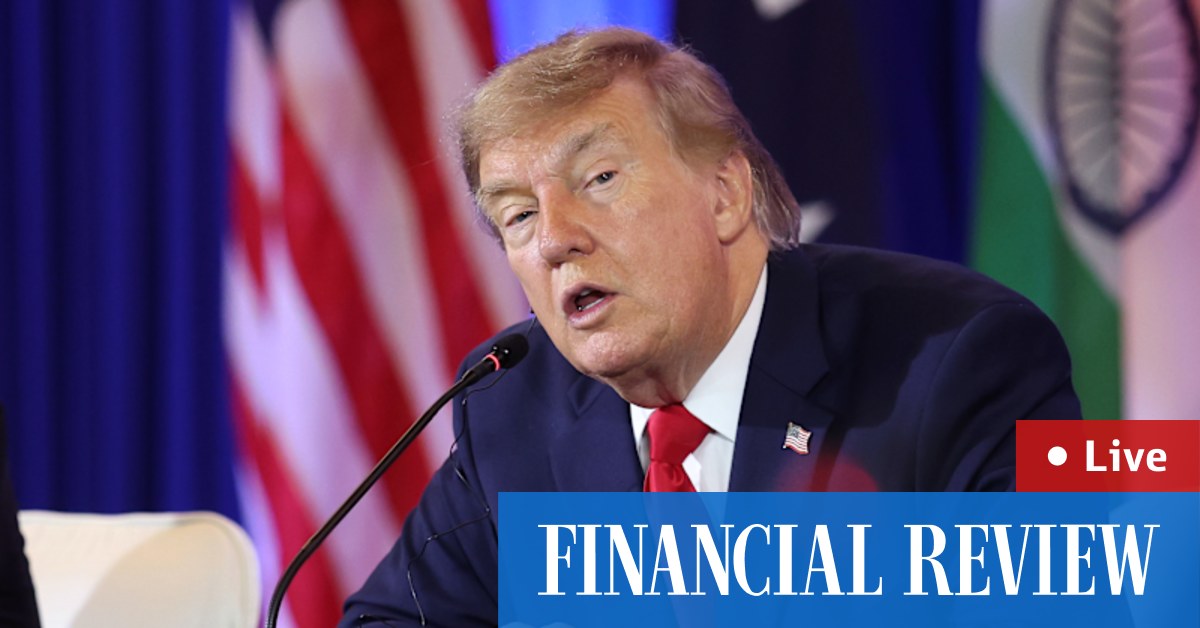
So does Donald Trump. At a press conference on Friday, the US president urged Nvidia to reinstate Huang.
“I’d like to see Jensen make a big apology and go back,” Trump said.
Treasury Secretary Scott Bessent said on Sunday that he wanted more information about how Nvidia worked inside, the NYT reported.
“Were they pressing these seemingly illicit sales to goose their revenues and their earnings?” Bessent said.
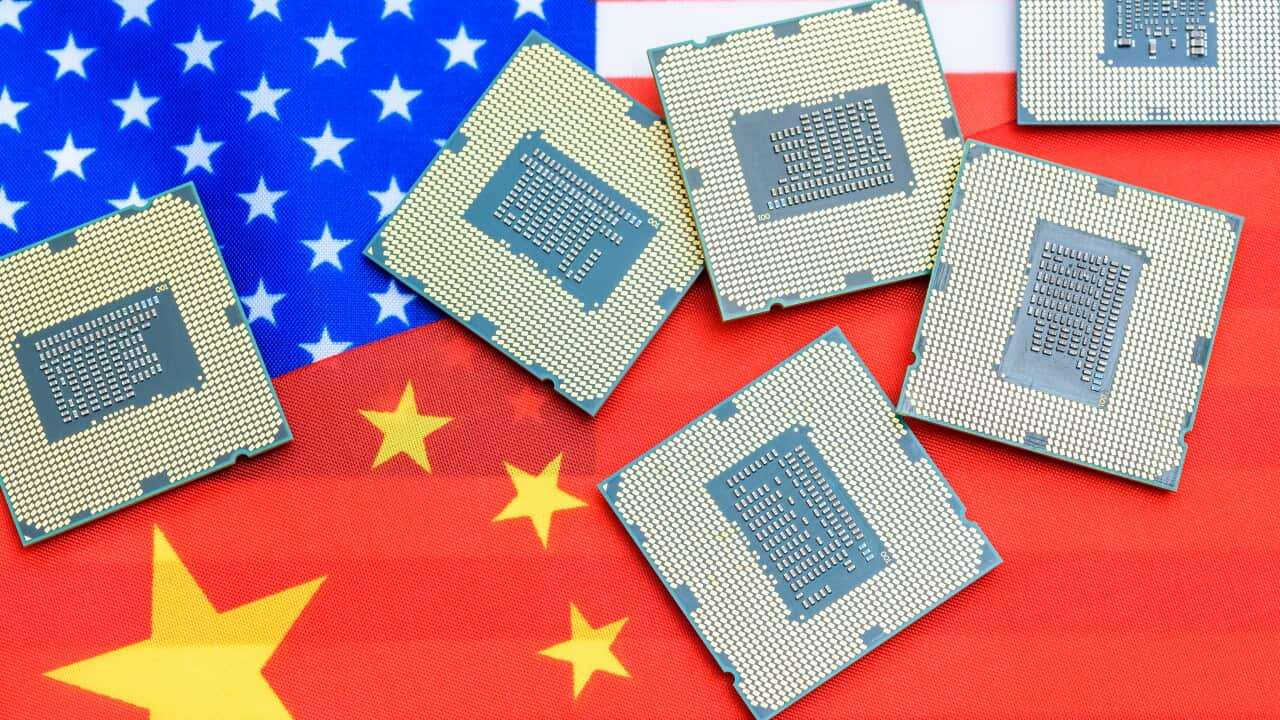
On Thursday, the House Foreign Affairs Committee’s Republican chair, Brian Mast, used export law to release licence data for Nvidia and AMD sales to China. Companies asked to sell 3.4 million AI chips there between December 2025 and May 2026. The Commerce Department’s Bureau of Industry and Security approved more than 879,000, including sales to firms the Pentagon lists as Chinese military companies.
The approvals covered 75,000 chips for Alibaba, 150,000 for Tencent, 43,000 for Baidu, and 4,000 for BYD, Reuters reported . It is not clear how many of the approved chips were shipped. The chips were Nvidia’s H200 and AMD’s equivalent, the MI325X.
Mast called two firms named in Nvidia’s applications, Maginfra and New Matrix, “fake companies”, CNBC reported . Nvidia said the approvals came with strict conditions and limited volumes, and that it has since stopped shipping H200s to China. Bernstein analyst Stacy Rasgon told CNBC that Commerce appeared to approve about one request in four.
The data follows reports that a senior Commerce official rushed H200 approvals , and a congressional commission’s finding that China’s military is seeking Nvidia’s chips .
Three House Democrats, Jamie Raskin, Gregory Meeks, and Sydney Kamlager-Dove, are asking whether Commerce Secretary Howard Lutnick blocked efforts to stop suspected chip smuggling while his family’s firm held Nvidia shares. Their letter to Cantor Fitzgerald’s chair, Brandon Lutnick, demands records of every Nvidia trade since January 2024.
Cantor held more than 3.5 million Nvidia shares before Lutnick became secretary, the lawmakers wrote. It later cut that holding by nearly half, and still held about $310m in Nvidia stock at the end of March. They also point to Bessent’s claim that four agencies backed blacklisting Megaspeed for months while Commerce held out.
A Cantor spokesperson called the claims inaccurate, Politico reported . The firm’s Nvidia holdings arise mainly from equity swaps it hedges for clients, she said. Democrats cannot compel the records yet, but Raskin and Meeks will gain subpoena power when their party takes the House majority in January.
The Jen-Hsun & Lori Huang Foundation plans to spend $350m renting computing time from CoreWeave, in which Nvidia is a major shareholder, Bloomberg reported , citing tax filings. It had already spent $108.3m.
The foundation held $12.7bn at the end of 2025, almost 90% of it in Nvidia stock. CoreWeave said the computing goes to the foundation’s grant recipients for research. Bloomberg said the deal shows how even tech billionaires’ charities are caught up in the AI industry’s circular financing. Nvidia’s own web of stakes and guarantees in its customers already runs to billions .
Huang is due to face three House committees in a closed-door interview on 1 December, as TNW reported . Nvidia’s general counsel, Tim Teter, follows on 2 December.
Get the most important tech news in your inbox each week.