Before we dive in, a modest ask: if you know someone who would enjoy this newsletter, please encourage them to subscribe here . And if you want to support in-depth storytelling on Nepal, please consider becoming a member of Kantipur One .
My six-year-old daughter lost her voice this week. Not because of air quality but because of excessive cheering. We moved to Kathmandu earlier this summer from New York, a city with two baseball teams. She still couldn’t tell you what an “over” is, but she knows the Kathmandu Gorkhas. She has seen them in the ads in the newspapers, and she sings along when the Walla Walla anthem comes on the radio. During a match last Sunday, she shouted “Kathmandu!” regularly throughout the match, and waited for the strangers around her to shout “Gorkhas!” back.
Full disclosure: Although born and raised in Pokhara, I’ve adopted Kathmandu Gorkhas as my team. The owner of Kantipur Publications is among the three promoters of the franchise.
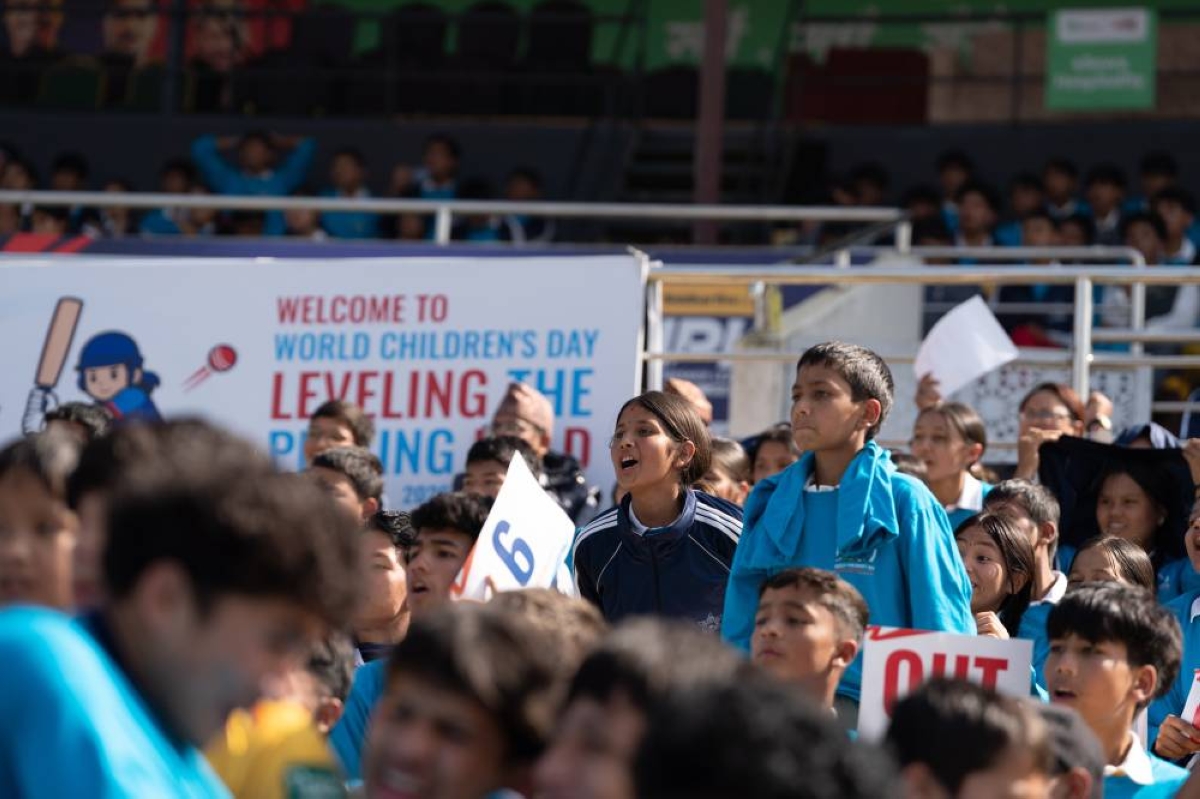
At the four matches I went to this season, the most engaged people in the stands were the youngest, including children who had come with their parents. They waved franchise flags, chanted the names of players they had discovered a few weeks earlier, and danced to the music between overs. The Nepal Premier League has made a generation of children into fans.
That alone would have seemed unlikely four years ago. Nepal’s first official franchise league, the Nepal T20 League, fell apart in its only season. In January 2023, players refused to take the field over unpaid salaries. The NPL replaced it in 2024, and tomorrow, it is holding its third final without major controversies. Revenue rose from Rs 276.9 million in the first season to Rs 473.6 million in the second. This season, 59 overseas players from 16 countries signed up, among them David Warner, Andre Russell and Moeen Ali.
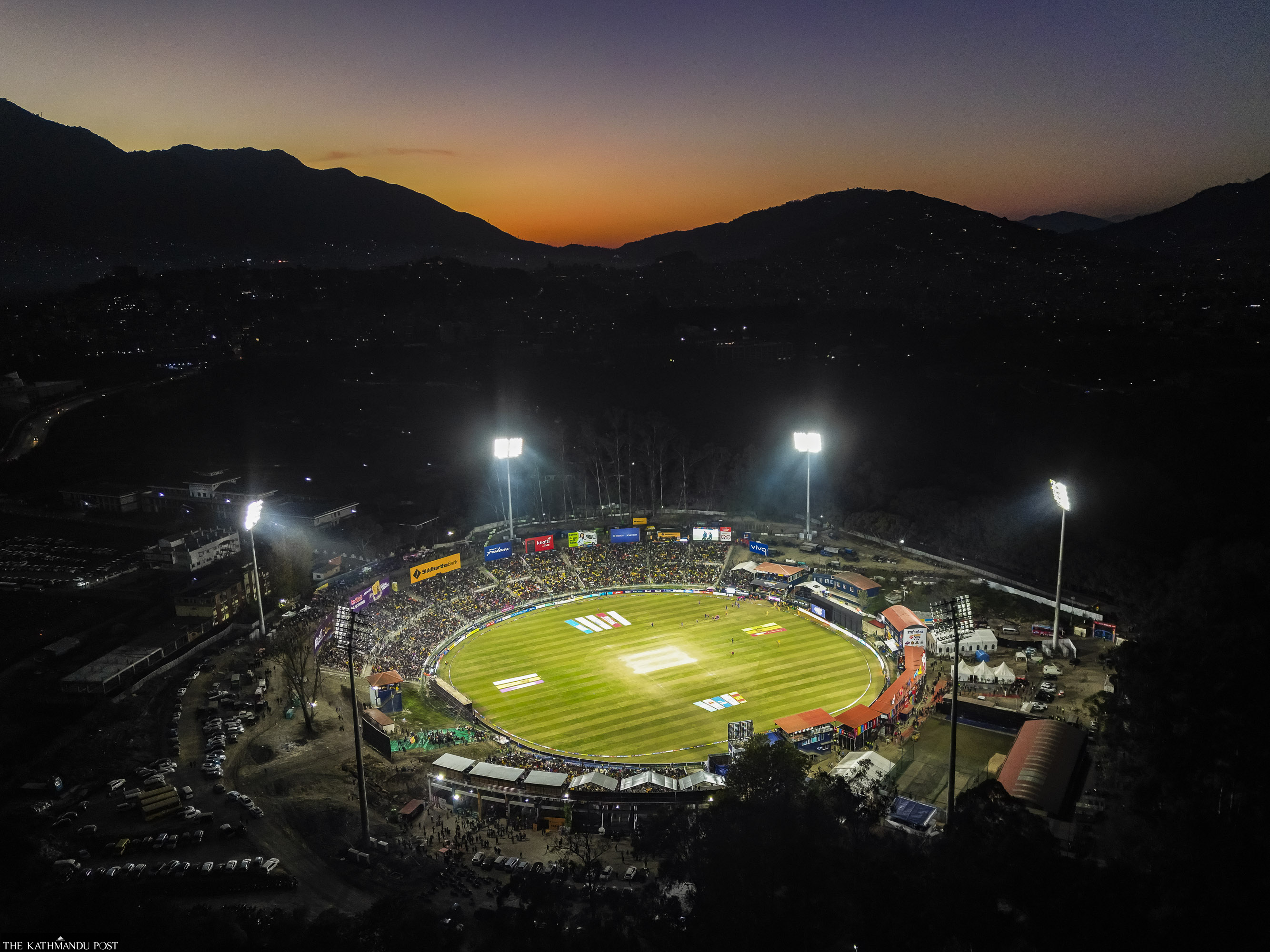
But pause for a second and look at the team names — Sudurpaschim, Karnali, Lumbini, Janakpur, Biratnagar — and something starts to feel amiss. Every match of every season has been played in Kirtipur, on the outskirts of Kathmandu, for the last three years. Last season, Sudurpaschim Royals supporters came from Mahendranagar by a reserved bus to watch their team play a “home” game in someone else’s city.
If there’s been one upgrade this year, it is the ground they travel to. A first phase of upgrades added 10,000 seats and floodlights, and the government has approved a Rs 10 billion master plan to take seating capacity to 30,000 — a sea change from just a few years ago when spectators were climbing trees around the ground to watch the games. But it is still university land, and the lease has run out. Tribhuvan University, citing disruption to classes, refused this spring to renew it with CAN, and a new arrangement is still being negotiated.
Elsewhere, five stadiums are listed as under construction: in Morang, in Chitwan, two in Dang and at Fapla in Kailali, home of the Royals’ supporters. Mulpani, just across the Valley, has been under construction for years. CAN has asked the government to hand that ground over, saying private investors are ready to build it out. But the administration hasn’t made a move yet.
Without home grounds, there are no home games and few local sponsors. Each franchise received Rs 20.23 million as its share of Season 2 profits, while this season’s average spend per team is projected at about Rs 150 million.
To be sure, a stadium alone does not make a venue ready to host the NPL. Equally important are transportation access, accommodation, reliable power and connectivity, broadcast infrastructure, practice facilities, and logistics of moving teams, officials, and equipment. Nepal’s roads, air connectivity, and weather-related disruptions will make moving a tournament around the country difficult, particularly if matches are scheduled across distant venues. Decentralising the league is not a matter of simply taking cricket to provinces; it would require investing in infrastructure and logistics to make it work.
The lack of ground options has shown in the matches, too. People who buy a ticket for a T20 night want boundaries and high scores, and this year, Kirtipur rarely gave them. As of last week, the average first-innings powerplay was 43 runs, in the six overs when fielding restrictions are meant to make scoring easiest. CAN has overhauled the surfaces, with eight pitches now at Kirtipur, but those pitches still carry more than 30 matches in four weeks, often two a day. An ability to play the matches in the provinces the teams are named for would help the pitches as much as the fans.
It wouldn’t be fair to compare with the Indian league, so I looked at South Africa and the Caribbean to find lessons for Nepal. South Africa had grounds, but after two failed T20 competitions, it had no league worth filling them. SA20, which was launched in 2023, sold its six teams to owners of IPL franchises and gave each a home ground, from the Wanderers in Johannesburg to Newlands in Cape Town. Crowds came back to domestic cricket.
The Caribbean Premier League shows what Nepal could do before every province has a stadium. The league changed its format so that all six teams, the TV crew and tournament staff travel around the region together, staying longer in each host country.
Although neither model can be transplanted wholesale to Nepal, both offer useful lessons if the NPL can adapt them to local context. The league need not wait for every province to have a fully developed stadium before taking matches beyond Kathmandu. A phased approach could help build both the infrastructure and audience for provincial cricket. The Dhangadhi and Pokhara Premier League s have already shown that franchise cricket draws crowds outside the Valley.
Nepal does not need to invent the tools for this. The Public-Private Partnership and Investment Act of 2019 is already on the books. In April, the new government committed to modern sports facilities at the provincial level and to developing sports as an industry.
Here’s how it could work: a province leases public land in the provincial capital to a franchise, or to a franchise with local businesses, and a concessional loan from the government covers part of the construction. In return, the franchise commits to a fixed number of home matches each season as facilities and logistical capacity allow, and opens the ground to school and district cricket for the rest of the year.
The Caribbean already shows the public side of that deal. In Guyana, the Providence Stadium was built by the government for the 2007 World Cup, with financial help from India. Now Caribbean governments compete to host CPL matches there. Trinidad agreed to pay USD 3 million for three finals, with half in kind. Guyana’s finals reportedly generated USD 101.6 million in 2023.
On Saturday, the Nepal Premier League final will be played in Kirtipur, and fans of Lumbini Lions and Sudurpaschim Royals will pack the stands to cheer them on, many of them after a long journey from home. Here’s hoping the next final is played somewhere other than Kathmandu. Unless the Gorkhas make it, of course.
Anup Kaphle is the Group Editorial Director of Kantipur Media Group. He previously served as the editor-in-chief of Rest of World in New York, where he led award-winning coverage of technology's impact in the emerging markets. He has spent nearly two decades in U.S. newsrooms covering international affairs and national security, including roles at The Washington Post, BuzzFeed News and The Atlantic.