

Good morning. It’s a judgment of historic significance – one of the most consequential ever delivered by the International Court of Justice. Yesterday, it ruled Myanmar was guilty of committing genocide against the country’s Rohingya minority. It’s the first time a state, rather than individuals, has been found culpable of this most grave crime against humanity.
For survivors, bereaved families, and more than one million exiled Rohingya refugees, this offers the first semblance of justice. The result is final: the findings, punishments and restitutions determined cannot be appealed against. And the ramifications for others who face persecution around the world could be vast, as the exact wording of the verdict is carefully dissected.
In today’s First Edition, we unpack this landmark case, and ask what precedents it could set. That’s after this morning’s headlines.
UK news | A woman who was raped by strangers after being drugged by her husband has warned of “serious questions about how the law deals with consent”, as four men who abused her were convicted.
World news | China, Russia and the US say they have agreed a peace statement after an unprecedented trilateral summit, but the declaration made no mention of the wars in Ukraine and Iran caused by two of the participants.
Europe news | The UK-EU reset talks will go “down to the wire” as the British government battles to have a say in shaping future European food and farming rules.
Climate crisis | Every mention of fossil fuels has been expunged from the draft outcome of global climate talks , which were approaching their final hours on Thursday night, threatening to turn the UN summit into what campaigners called a “ghost Cop”.
AI | Anthropic closed its first day of trading on the US stock market about 17% higher than its initial public offering price.
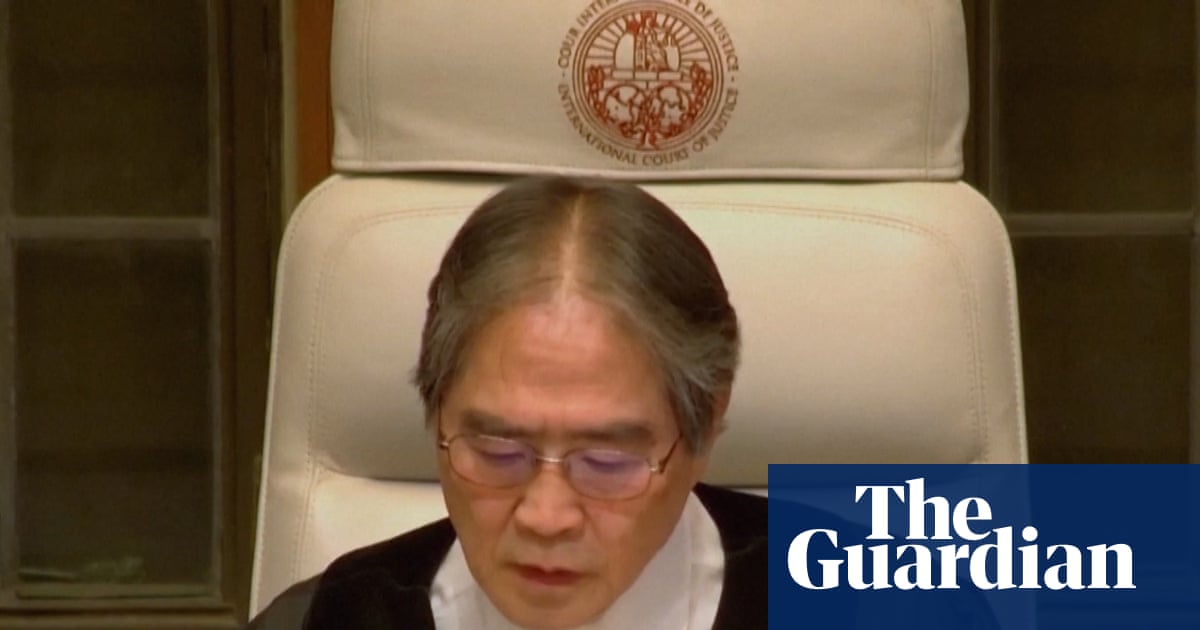
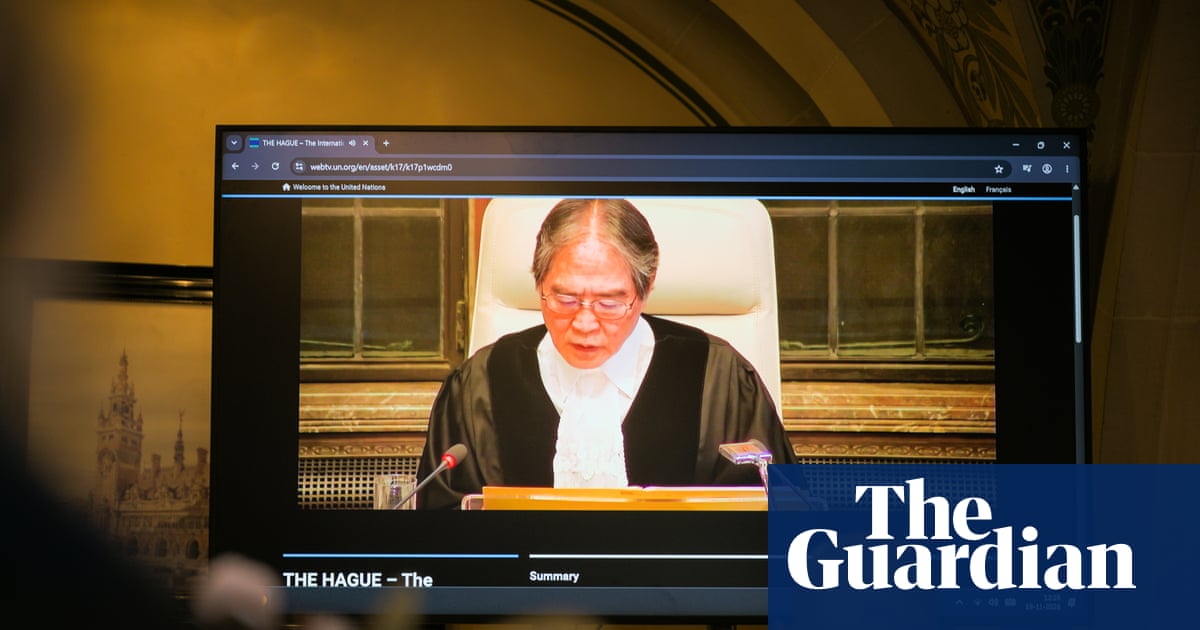
The International Court of Justice (ICJ) in The Hague was packed yesterday morning, as its president delivered its milestone verdict. It took seven years for the case, raised by the Gambia, to reach this closing stage, and almost three hours for Judge Yuji Iwasawa to read through the final judgment.
In 2017, Myanmar’s military engaged in “indiscriminate killing”, “widespread sexual violence” and “executions”, the ruling declared. Villages were destroyed. Measures were introduced to limit the number of children Rohingya could have. Those fleeing were attacked. A “hate speech campaign” painted the Rohingya as “subhuman”.
Eventually, Yuji Iwasawa reached the pivotal line: “All evidence supports reasonable inference Myanmar’s security forces acted with genocidal intent”, adding a majority of nine judges on the 15-seat court agreed Myanmar “committed genocide against the Rohingya”.
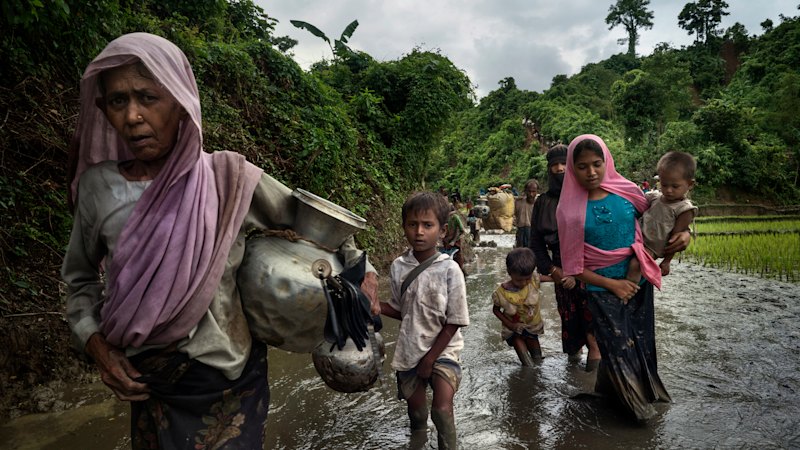
Persecution of the Muslim Rohingya minority in majority Buddhist Myanmar can be traced back decades. In 1978, they were expelled from the country en masse. The government stripped Rohingya of their citizenship in the early 1980s – mass arrests and widespread violence followed. This volatile situation reached an apex in 2017: after Rohingya rebels attacked military posts, Myanmar’s response was genocidal. Yesterday, the court found more than 10,000 Rohingya were killed, including between 730 and 2000 children under five. Hundreds of thousands fled across the border to Bangladesh. Today, 1.2 million Rohingya remain displaced, many in Cox’s Bazar, the world’s largest refugee camp.
Guardian reporter Kaamil Ahmed was in the courtroom yesterday. His book, I Feel No Peace , documented the experiences of Rohingyas living in exile. Kaamil was in Cox’s Bazar in 2019, when the case was announced, where few believed this result would ever be realised.
“For many years, there’s been hope among community leaders,” Kaamil told me. “But still, they were prepared for disappointment.”
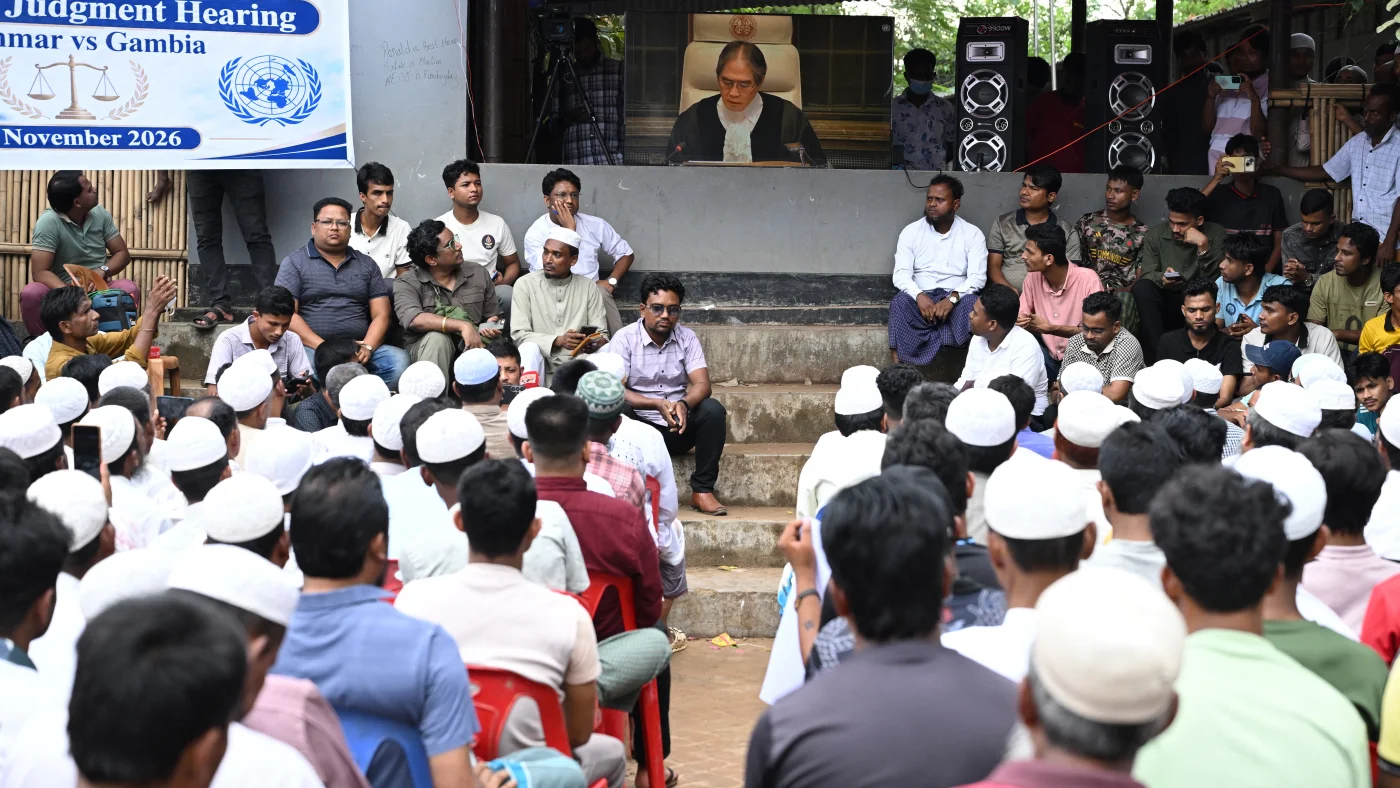
Once the verdict was returned, celebrations erupted around the building. Tinsel-like scarves were hung around the necks of the Gambia’s legal team. Outside, a Rohingya campaigner on a megaphone declared solidarity with other persecuted peoples.
The Rohingya can now think about the future. The ruling stipulated Myanmar must provide reparations and restitution: the safe return of Rohingya to their homes, the return or replacement of their property, and physical and mental rehabilitation.
“I’ve spoken to people living in refugee camps who are at last feeling hopeful,” Kaamil said. “Finally, they’re able to think about what’s next and how they might go home to Myanmar and rebuild their lives there.”
The ICJ was established in 1945, in the wake of the second world war, in efforts to re-establish a peacetime international order. It’s the United Nations’ highest court for legal disputes between states, though its caseload in recent years has increasingly focused on allegations of human rights violations.
In 1948, as the world grappled with the aftermath of the Holocaust, the Genocide Convention was passed by the UN general assembly. It formally made genocide a crime under international law. It is defined as the committing of any of five acts – killing, causing serious bodily or mental harm, imposing living conditions intended to, preventing births, or forcibly transferring children – if committed with “intent to destroy, in whole or in part, a national, ethnic, racial or religious group”. The ICJ found Myanmar guilty of four of these charges.
Until now, only individuals had been successfully convicted of genocide in international courts: Rwandans including former prime minister Jean Kambanda; senior military figures in the former Yugoslavia and Cambodia. But no state had been found guilty of genocide until yesterday.
Nehal Bhuta is a Professor of International Law at the University of Edinburgh, and a member of Matrix Chambers. The ICJ’s conclusion that an entity, rather than a person, has committed genocide, Bhuta tells me, will have major repercussions. The bar to prove genocidal intent is high. “The court has found it’s not necessary to have evidence of individual intent by any particular leader or general or commander,” he says. “It changes our expectation of the conditions under which a court might reach a genocide conclusion.”
This case was also the first time the ICJ has made a final ruling on a genocide case brought by a third country. During its early stages, questions were raised as to whether the Gambia even had the right to take this case to court, given it is thousands of miles from Myanmar, and wasn’t directly affected. The ICJ found the Gambia was, in fact, eligible. “It’s the principle of erga omnes standing ,” Bhuta says. Upholding the Genocide Convention is so important, that “any party to it has an interest in holding other states accountable.”
Across the world, lawyers are today combing through the dense 186 page judgment. Officially, the ICJ’s judgments each stand alone – they don’t formally set binding legal precedents for future cases. Still, its judges factor in previous decisions. “It’s actually very rare that they radically diverge from a legal conclusion that they’ve reached from case-to-case,” Bhuta says.
Four genocide-related cases remain pending at the ICJ, two related to Israel’s war on Gaza. South Africa has agued Israel is “engaging in and risks further engaging in genocidal acts against the Palestinian people in Gaza”. Separately, Nicaragua has lodged a case against Germany, accusing it of violating the Genocide Convention through its “political, financial and military support” of Israel, and for “defunding Unrwa.”
Certain conclusions will already have garnered the attention of the respective legal teams. One of the most dramatic conclusions reached by the court was in how a decision on genocidal intent was reached. Myanmar had argued it wasn’t committing genocide, but an operation of counter-insurgency, or even ethnic cleansing.
“The court found that a state being involved in ongoing armed conflict doesn’t mean it can’t also be qualified as a genocide,” says Bhuta. “Even if you say you are attacking military targets or engaging in other legitimate acts of warfare, the court has found it is still possible to conclude that a genocidal intent exists when you take into account the totality of the circumstances, such as the systematic killing of adults and children or mass displacement.” Claiming self-defence isn’t a catch-all defence strategy.
“Israel’s lawyers, until this stage, had relied on a very narrow interpretation of the Genocide Convention.” says Bhuya. Previous ICJ cases had suggested that to conclude genocide, it could be the only possible explanation for a state’s behaviour. “This led some people to conclude that explicit statements of genocidal intent, perhaps accompanied by specific plans, would be required to satisfy the legal thresholds,” says Bhuta. Much like the actions of, say, Nazi Germany.
“Today the court showed its legal tests remain correct, but the way in which these can be satisfied may differ to previous understandings,” says Bhuta. For Israel, Bhuta suggests, the judgment might well force a rethink of legal strategy.
Completely fascinated by the growing number of athletes who have turned to OnlyFans to fund their sporting careers. And surprisingly, loads of the content isn’t at all racy. Natalie Morris, newsletters team
I loved our picture gallery on 90s ravers , as captured on camera by none other than Mark McNulty. They made me pine for another time. Poppy
Gen Z have discovered Jeff Buckley ’s timeless indie genius. I love the idea of Buckley’s yearning lyrics as an antidote to on-demand culture . Natalie
I always enjoy Lola Okalosie’s insights into the teaching profession, and her recent piece, on what schools can do to help prevent students becoming NEETS , was particularly informative. Poppy
These Thanksgiving food traditions are making my mouth water. But I’m not sure I’ll ever be onboard with the whole marshmallow-topped sweet potato thing. Natalie
Football | Goals from Jule Brand and Melchie Dumornay gave the unbeaten OL Lyonnes a commanding 2-0 win against Arsenal in the Women’s Champions League.
Rugby union | Six Nations and Sanzaar executives are unhappy about Rassie Erasmus’ planned watchalong of South Africa’s Nations Championship clash against Ireland on Saturday.
Formula One | Formula One’s governing body has announced it will bring in full-time race stewards for the first time in the sport’s history, beginning in the 2027 season.
Our critics’ roundup of the best things to watch, read, play and listen to right now
Game Grand Theft Auto VI | ★★★★★ With realism that defies belief, the game’s trademark foul-mouthed chaos also makes room for empathy with a fugitive love story at its heart. Read Keza MacDonald’s full review .
Theatre Donald | ★★★★ ☆ Elliot Cowan is scarily convincing as the budding Potus in this high-speed, three-actor comedy from the playwright behind The Lehman Trilogy. Read Mark Lawson’s full review .
Music Lorenzo Senni: All Ages | ★★★★☆ The Milan producer revisits his youth as a straight-edge punk fan dabbling in rave – and finds a thrilling interzone between both genres. Read Alexis Petridis’s full review .
Art Van Eyck: The Portraits | ★★★★★ Bringing together the pioneering master’s portraits reveals how he clinically preserved monsters, merchants – even his wife – like flies in amber. Read Jonathan Jones’s full review .
“Summit deal close as UK agrees to let in 100,000 young EU citizens”, is the Guardian ’s front page today. The Telegraph writes “Trump tells Europe: Stop funding war in Ukraine”.
The Times has “Bravery in the face of betrayal”, the Mirror ’s take is “You are not alone”, the Express says “Brave beyond all measure”. Elsewhere, the i Paper splashes “Alzheimer’s test that gives diagnosis in days will be available next year in the UK”.
The FT leads on “Anthropic surges on Wall St debut after raising $81bn in giant listing”, and Metro says “Metro genius earns £15bn (in just one day)”. And lastly, the Sun has “Grandular fever”.
Troublesome trio: Trump, Xi and Putin hold historic meeting
The leaders of China, Russia and the US have held the first ever three-way talks between the three nations. President Xi Jinping likened the talks on the sidelines of the Apec summit in Shenzhen, China, to a ‘peace summit’. Discussions appear to have focused on nuclear arms control, ending the war in Ukraine and US criticism of the international criminal court, which has an arrest warrant for Vladimir Putin. With Europe not at the table, Patrick Wintour tells Lucy Hough why the meeting is raising alarm bells in the west and beyond .
A bit of good news to remind you that the world’s not all bad
After 14 years of war, women’s football in Syria is providing glimmers of hope . Despite conflict erasing an entire generation of players, Syria’s youth teams are an unexpected success story – with the U17s winning the country’s first women’s international title in 2023 and again this year.
“I want to be a message that I, who came out of hard circumstances and out of a war, still managed to succeed,” says Rona Aizouk, one of the most experienced members of the current generation.
Sign up here for a weekly roundup of The Upside, sent to you every Sunday
And finally, the Guardian’s puzzles are here to keep you entertained throughout the day. Until tomorrow.