You have reached your maximum number of saved items.
Remove items from your saved list to add more.
You've used all of your gift articles. 3 more will become available on the 1st of every month.
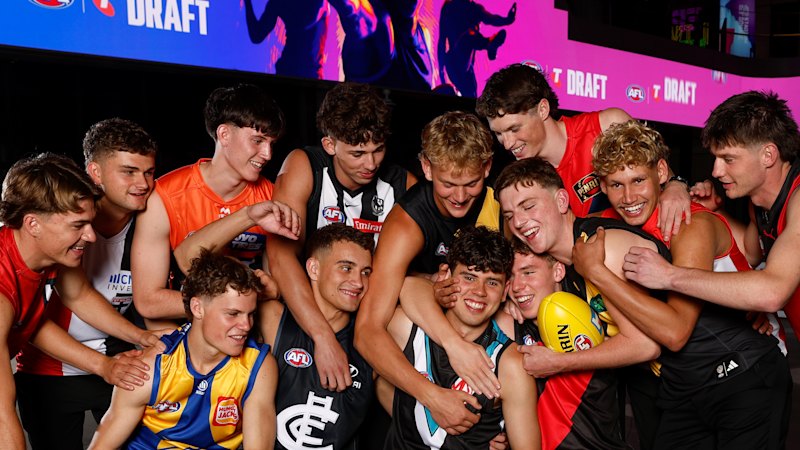
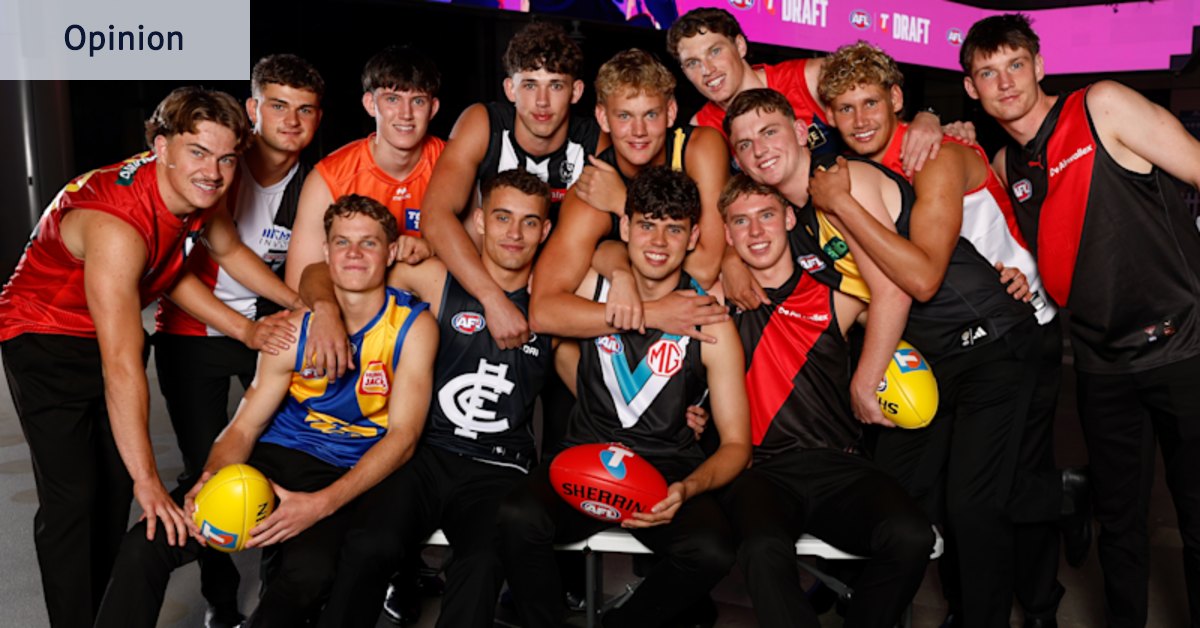
The majority of clubs were incredulous when the AFL Commission introduced a strange rule for this national draft, in a misguided attempt to compensate for the way father-sons and academy recruits had been gained, or gamed, for Dimmey’s prices.
The rule, which was layered on top of an arcane points system that seemed to have been devised by Stephen Hawking – it’s as comprehensible as black holes and quantum physics to many footy fans – further complicated an already messy draft, which had moved far from its original intention to equalise the competition and distribute players fairly.
The rule was really a response to the repeated success of the Brisbane Lions, and it followed St Kilda’s unrelenting campaign to force clubs to pay a fairer price for father son and academy players.
Seeing how Brisbane had gained a pair of Ashcrofts, plus Jaspa Fletcher and then academy recruit Daniel Annable when stationed in the top four, the league revamped the bidding system in two major changes.
They were mindful, too, that Collingwood and the Western Bulldogs had snared freakish talents in Nick Daicos and Sam Darcy for multiple picks that were well below the players’ genuine draft worth.
The first new rule has been met with widespread support, and has been proven to be fair in this national draft, as first Port Adelaide, then Carlton and Greater Western Sydney were forced to pay something close to market price for their academy and father-son players. The essence of it is that clubs can only use two picks to “pay” for a player, raising the price.
The Lions, meanwhile, missed on their academy prize, Caylen Murray , when the Swans made an unforeseen raid and snatched the kid. The bid, from north of the Murray, was just north of Brisbane’s draft hand.
That rule was endorsed even by Carlton, who were compelled to pay a higher price for Cody Walker, who was bid on at pick three by Richmond; the Blues felt that the rule was just but shouldn’t be introduced this year, as the draft was about to be gutted by the Tassie Devils. Essendon, who have Koby Bewick (Darren Bewick’s son) lined up next year, concurred.
The other rule, which is as popular as road tolls among clubs, is likewise impacting on the 2026 national draft, having delivered Essendon, Richmond and West Coast three extra early second-round picks and disadvantaged those clubs that did not finish in the bottom five (the 11-13th teams in particular).
For those who haven’t followed the rule, here’s the gist:
If you bid on a player inside the first five picks, and someone matches the bid – as with Port and Doug Cochrane at pick No.1 – the clubs in the bottom five all get an extra second-round selection, immediately after their “natural” second-round pick.
Port don’t get the extra pick because they’ve gained Cochrane, losing pick No.4 and their next choice.
North Melbourne (14th) didn’t get the bounty of another second-rounder, since they’d traded their pick No.5 for Nick Blakey.
So, after the first night of the draft, Essendon had pick 21, Richmond 22 and West Coast 24 as compensation for ...? Theoretically, for being deprived of a player by the matched Cochrane bid at No.1.
This is meant to protect the bottom teams from the innate unfairness of someone like Cochrane or Walker being inaccessible. In reality, it is another compromise to a draft that is meant to develop the game in the northern states, advance multicultural and Indigenous players (including those kids whose fathers who played AFL) and still be a levelling device like the NFL and NBA drafts.
The clubs I spoke with were mystified by the rule, which they know was imposed from above, by the AFL Commission (driven by one or two commissioners, several clubs think in response to St Kilda’s campaign). It was not the handiwork of the AFL football operations.
It is the worst kind of meddling, when those driving the change have little lived experience of how it will play out.
The club football people I consulted assert that the rule compels those bottom teams to bid on a player, even if they don’t want the player, so long as they’re sure the club in Carlton/Port/GWS’ boat will match. “The list manager would get sacked if they don’t,” said one list boss.
Far from making the draft fairer, these bottom five bids will create a market distortion. They have, as clubs argue, incentivised bids on players who are marginal for that draft position.
A hypothetical example. Cochrane is the consensus pick one. Walker was rated by most scouts from three to five.
Had Cochrane not been in the draft, Essendon would have been certain to bid on Walker at pick No.1. Not to stick it up the hated Blues and force them to pay a premium, but to ensure they get what is now pick 21.
One of several unintended consequences of this rule is that the AFL will no longer have genuine first picks each year; indeed, as one club football boss put it, “it’s the end of [real] pick ones”.
Cochrane, as it happens, was a genuine pick one. Next year, when the draft is the Devils’ own, Tasmania can’t bid for a father-son, such as Bewick or Louis Salopek at No.1 (since they’re not on the bottom). But if they were permitted, they surely would.
So, in addition to disadvantaging the AFL’s petite bourgeoisie – the lower middle strata – the rule will create an incentive for teams to bid on someone who isn’t really pick No.1, as Nick Riewoldt, Harley Reid, Luke Hodge, Jacob Weitering and, yes, even Jack Watts were deemed by the club with first choice.
The two-pick rule, which has near unanimous backing from clubs, was a case of the AFL listening to clubs and acting accordingly.
The other rule was more like a decree.
You have reached your maximum number of saved items.
Remove items from your saved list to add more.
You've used all of your gift articles. 3 more will become available on the 1st of every month.