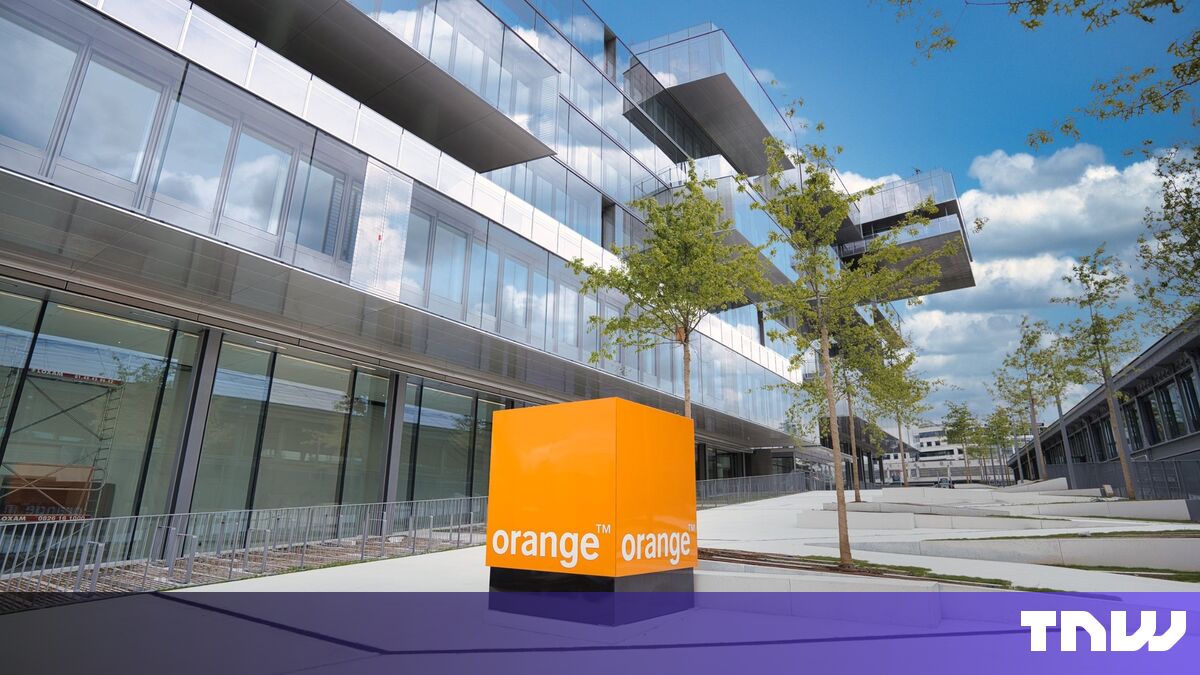
Orange has released five open-weight AI models that can understand and write Wolof, a language spoken by about 16 million people in West Africa. Orange fine-tuned them from Alibaba’s Qwen3, and anyone can use them free for non-commercial work on Hugging Face . Orange announced the release at its OpenTech event in Paris on Tuesday.
The five models range from 0.6bn to 14bn parameters. Orange trained them on public datasets automatically translated into Wolof, with no Orange corporate data. Commercial use may be possible under a separate agreement with Orange, the company said.
“The publication of these models is more than a technical milestone; it delivers on a promise to make a real difference to people’s lives,” said Ben Cheick Haidara, deputy CEO of Orange Middle East and Africa.
The release comes a year after Orange announced the project in November 2024. Back then, it planned to fine-tune Meta’s Llama text model and OpenAI’s Whisper speech model. Wolof and Pulaar would come first, in the first half of 2025.
“We chose Qwen because it offered the best performance for our language-modelling needs at the time. Whisper is a speech recognition model, not a language model, and therefore was not suitable,” an Orange spokesperson told TNW.
Alibaba releases Qwen as an open model family. On Monday, Alibaba launched its Qwen4-Max model without open weights.
Wolof-speaking annotators checked the quality of the training data and of the models’ answers, the spokesperson said. They ran blind, Arena-style comparisons across a range of tasks and rated accuracy and naturalness in Wolof separately.
Pulaar, announced alongside Wolof, belongs to Orange’s voice AI work rather than its text models, the spokesperson said. It is still on the roadmap. For now, Orange is putting voice support for other languages first: Darija, spoken in Morocco, and Dyula and Mossi, spoken in Burkina Faso.
Orange is also joining the AI language partnership that the Gates Foundation launched in September, the spokesperson confirmed. Its more than 60 partners aim to make AI available to 3.4 billion people in their own language and voice. Early signatories included the African AI firm Cassava . The foundation also said in September it would spend at least $1bn on AI access.
Get the most important tech news in your inbox each week.