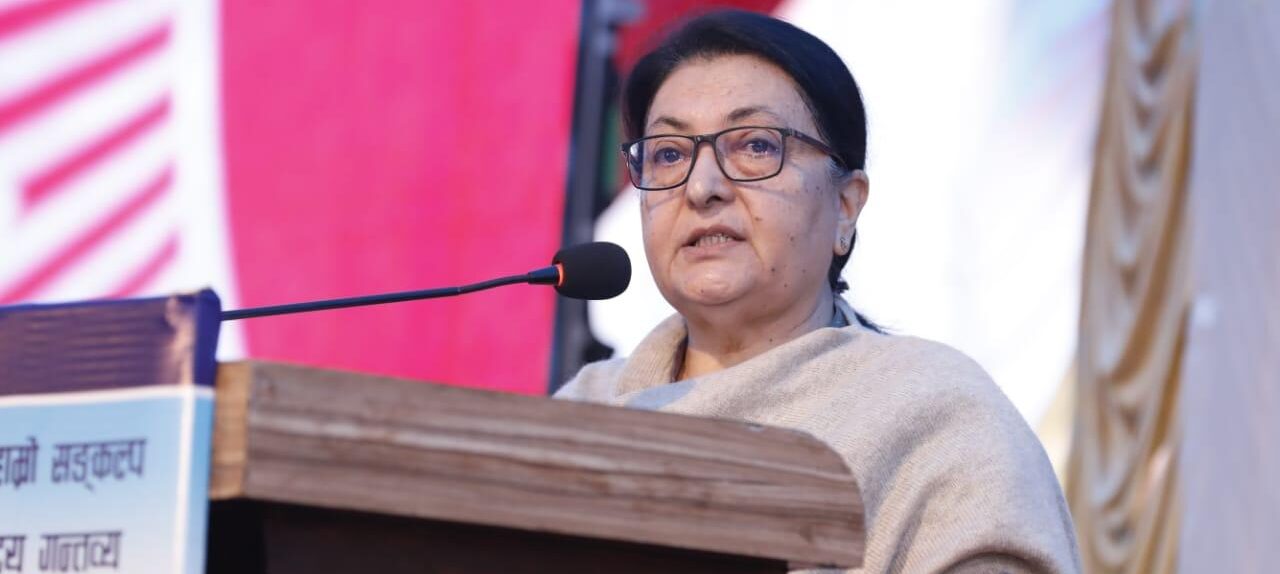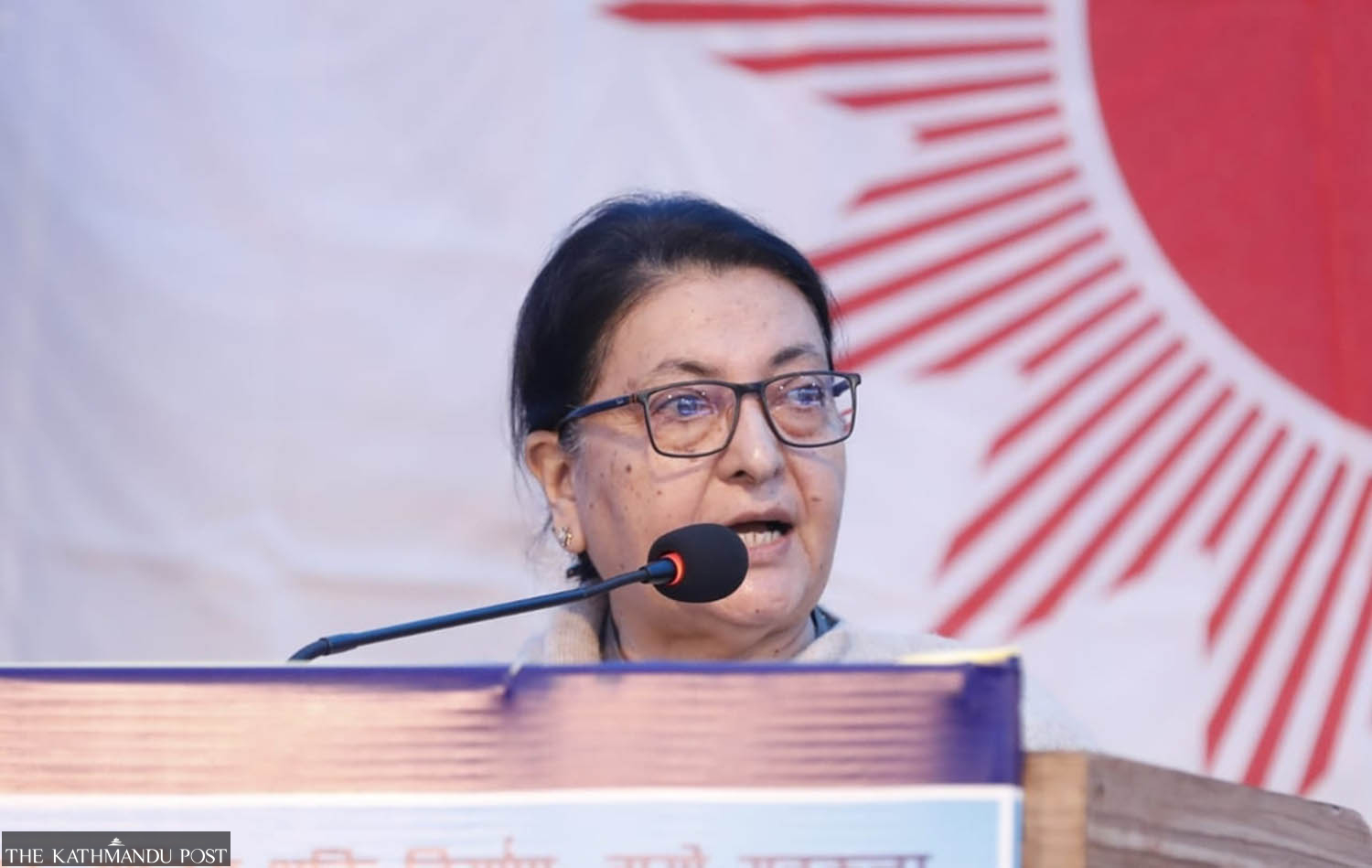
Former president and senior CPN-UML leader Bidya Devi Bhandari has accused the government of targeting political leaders, public figures and media organisations, saying its actions amount to political retaliation and undermine democratic norms.
Addressing the UML’s national gathering on Thursday, Bhandari said the government had targeted individuals and taken them into police custody without following due legal process. She also warned against attempts to curtail press freedom.
“Parliament, parliamentary procedures, the role of the opposition, and the independence and dignity of constitutional bodies must be respected in a democracy. No state institution can place itself above the constitution,” she said. “Government decisions and actions must remain within the bounds of the constitution, the law and democratic accountability. The UML will not accept authoritarianism, arbitrariness or disorder in any form.”
She said allegations of wrongdoing should be investigated impartially and resolved through judicial processes, rather than allowing the law to become an instrument of political revenge.
Bhandari also cautioned against actions that could undermine the morale of civil servants, security agencies and civil society. The right to criticise the government and express dissent was fundamental to democracy, she said, adding that a strong democratic system depended on press freedom, freedom of expression and respect for political competition.
“What the country needs now is not retaliation and exclusion, but dialogue, cooperation and national consensus,” she said.
Bhandari called on political parties to set aside minor differences and work together to defend the constitution and protect the country’s broader interests. She said Nepal was facing mounting economic, social and political challenges, including rising prices of essential goods that were squeezing low-income households, shrinking employment opportunities, a widening trade deficit due to the failure to replace imports with domestic production, and growing concerns over public security. Public dissatisfaction with the government was also increasing, she said.
She warned that recent political developments and government actions had raised serious questions about constitutional safeguards, democratic values and parliamentary practices. The balance of power among the executive, legislature and judiciary was also coming under strain, potentially damaging Nepal’s international standing.
Failure to address these concerns in time could push the country towards instability and uncertainty, she said. Bhandari urged the UML and other political parties, as well as individuals and groups committed to the country’s interests, to play a more active role in steering politics back towards the constitutional and legal framework.
Describing the constitution as the product of a long political struggle, consensus among political forces and popular aspirations, Bhandari said it had been promulgated by an elected Constituent Assembly through a democratic process.
Federal democratic republicanism, pluralism, multiparty competition, periodic elections, an independent judiciary, fundamental rights, inclusion and the rule of law were among its fundamental pillars, she said.
“These are not the achievements of any single political party or government, but the common gains of the Nepali people,” she said. “Protecting the constitution, secured through the sacrifices of countless people and martyrs, and enriching it to meet changing needs is our collective responsibility.”
Bhandari also called for renewed mobilisation to protect national sovereignty and pride, strengthen the federal democratic republic, build a self-reliant economy, advance social justice and improve people’s livelihoods.