Billions of kilometres from Earth, a recording of a song in Yolŋu Matha is hurtling into interstellar space.
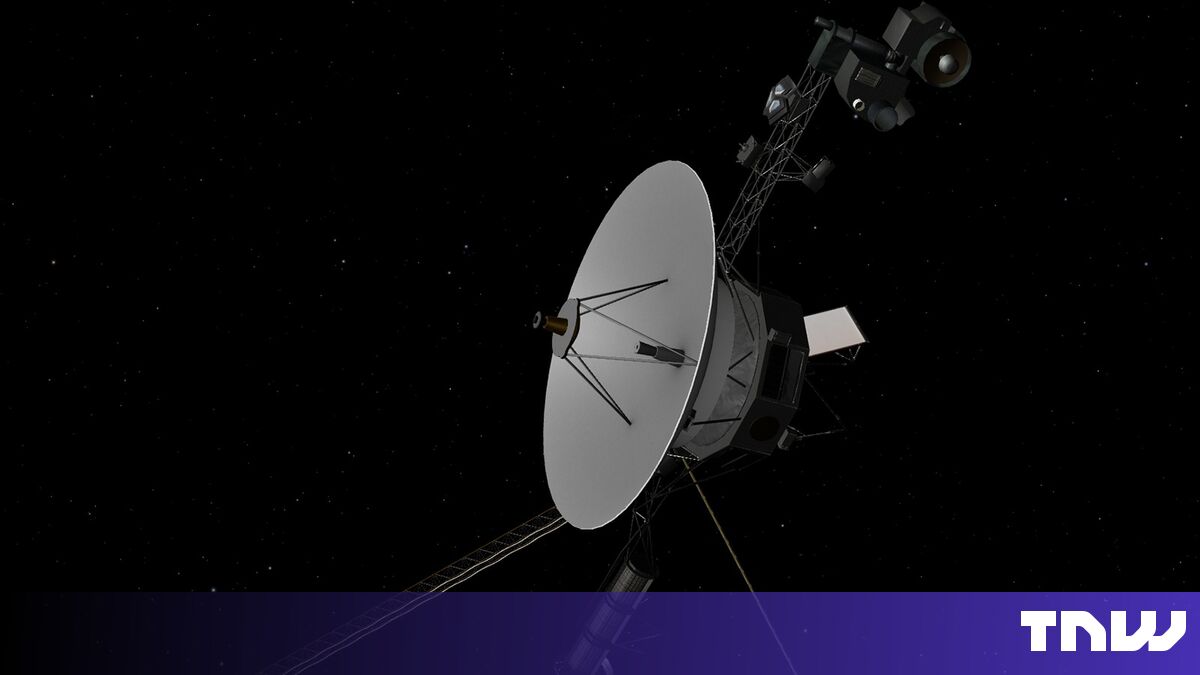
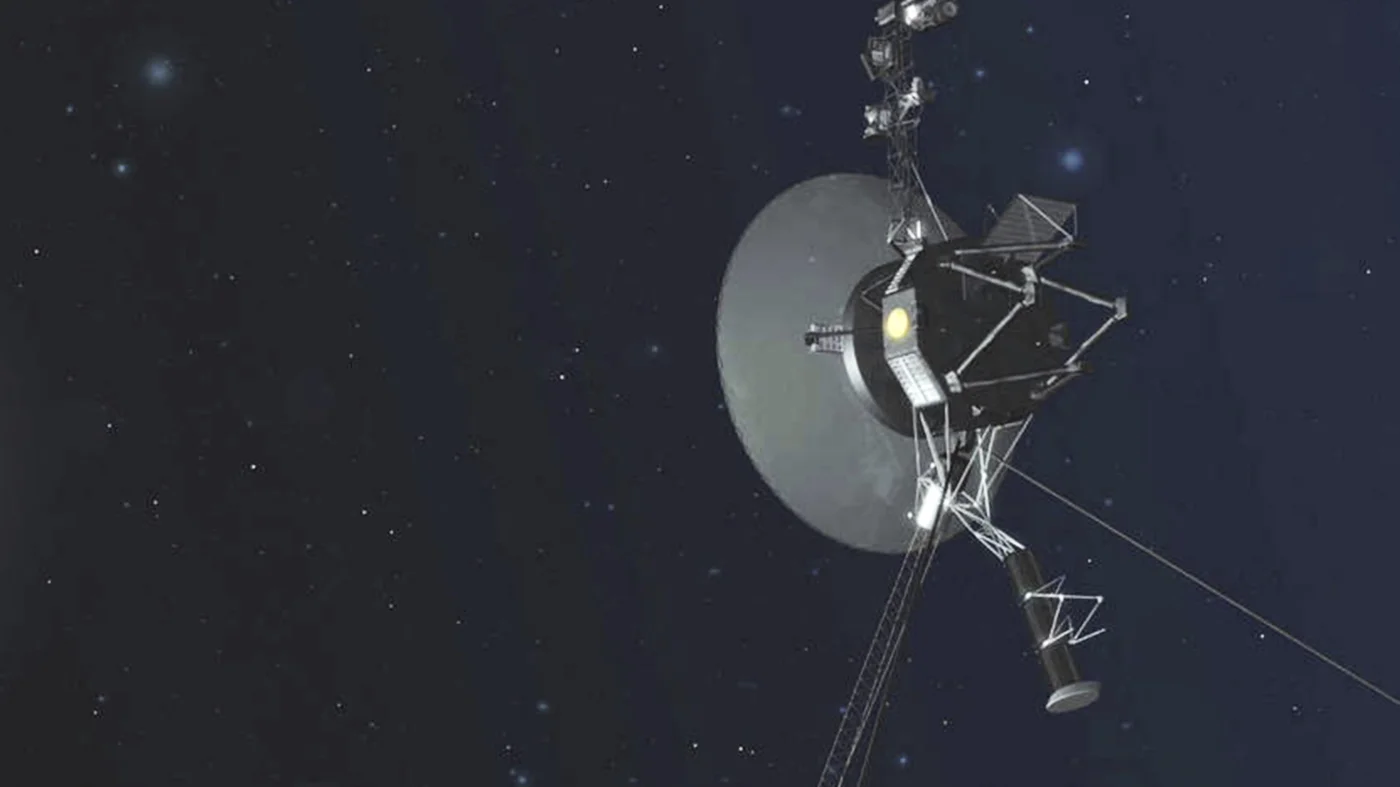
Back in 1977, the National Aeronautics and Space Administration (NASA) launched two spacecraft - Voyager 1 and Voyager 2 - to study planets in our solar system.
Voyager 1's original mission was to fly past Jupiter and Saturn, which it completed in 1979 and 1980 respectively, sending back unprecedented images of a stellar neighbours.
Following flybys of Uranus and Neptune on the outer edges of the solar system, its mission was simple: just keep going.
In 2012, after a 35-year journey, Voyager 1 entered interstellar space, becoming the first human-made object to leave our solar system.
For almost 50 years, it's been hurtling away from Earth at 61,100 kilometres (38,000 miles) per hour.
Today, Voyager 1 reached another huge milestone.
The small car-sized spacecraft is officially 1 light-day away from Earth - a distance of 25.9 billion kilometres from its home planet.
Voyager 1 is so far away from Earth that it takes a full 24 hours for a signal travelling at light speed (300,000 kilometres per second) to the distant spacecraft (and another day to receive an answer back).
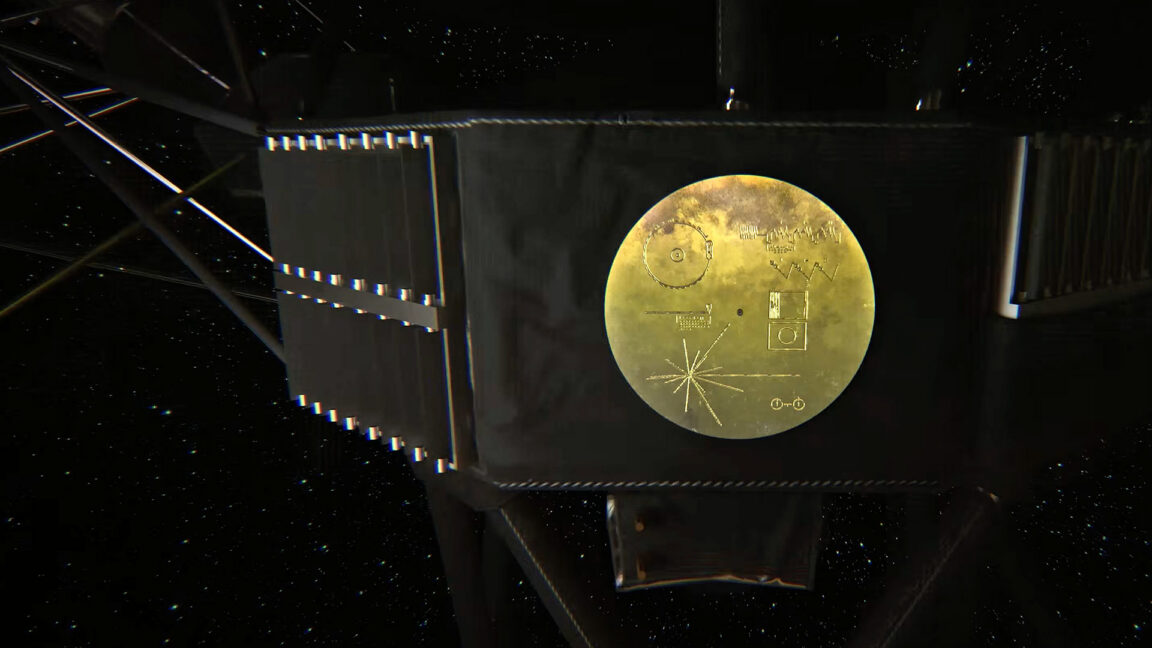
On both Voyager 1 and Voyager 2, is a golden record containing sounds, images and music from Earth compiled by the Voyager team, led by American astronomer Carl Sagan.
The 12-inch gold-plated copper disk contains content selected to portray the diversity of life and culture on Earth.
On that gold record is an Aboriginal song - in the language of Yolŋu Matha - about the ‘Morning Star’ recorded in 1962 on Milingimbi Island in Arnhem Land (NT) by Australian anthropologist and filmmaker Sandra Le Brun Holmes.
Sung by senior Yolŋu men Djäwa, Mudpo and Waliparu, it also features sounds of the yidaki (didjeridu) and bilma (clapsticks).
While recorded in 1962, it’s a traditional ancestral song – or manikay - that dates back to the creation of time.
We all know the morning star as Venus. For Yolŋu, the planet Venus is Barnumbirr.
The Yolŋu ‘Morning Star’ Ceremony tells how she as a creator spirit guided three ancestral beings - a male and his two sisters - who came across the sea from the east in the Dreaming, naming and creating animals and lands as they crossed the shoreline, and continued travelling westwards across the country.
Yolŋu people communicate with their ancestors in their final resting place, with the help of Barnumbirr thought song, art, dance and ceremony.
The ceremony starts at dusk and continues through the night, reaching a climax when Banumbirr rises a few hours before dawn. She is said to trail a faint rope behind her along which messages are sent with the aid of morning star poles.
It is this rope that prevents her from ever moving away from the Sun.
This faint line in the sky is caused by extraterrestrial dust in the plane of the solar system. Although difficult to see for most of us in our light-polluted skies, it is easily visible in the clear dark skies and low latitude of Arnhem Land.
The Morning Star ceremony of NE Arnhem Land tells us two important things.
One is that Yolŋu people had already observed that Venus never strays far from the Sun, which they explain in terms of the rope binding the two bodies together - a bond that Isaac Newton called "gravity".
The other is that the Morning Star ceremony has to be planned well in advance, since the first rising of Venus as the Morning Star, after it transitions from the Evening Star, occurs every 584 days.
The Yolŋu people tracked the complex motion of Venus well enough to predict when to hold the Morning Star ceremony.
The ultimate hope for those gold records on Voyager 1 and 2 is to communicate a story of our world to extra-terrestrial life through 115 images and a variety of natural sounds.
Each record is encased in a protective aluminium jacket, together with a cartridge and a needle.
Instructions, in symbolic language, explain the origin of the spacecraft and indicate how the record is to be played. The 115 images are encoded in analog form.
The remainder of the record is in audio, designed to be played at 16-2/3 revolutions per minute.
With a map of the spacecraft’s origin, the records are intended as an invitation to anyone who found it to visit Earth.
While the plutonium-powered spacecraft is slowly running out of energy, NASA hopes Voyager 1 will keep communicating with Earth into the early 2030s.
As it continues its journey across interstellar space, Voyager’s disc will continue to be an invitation or greeting for anyone to discover and visit planet Earth.
Part of that invitation is in an Aboriginal language from this continent that is tens of thousands of years old, travelling beyond our solar system, representing humanity and extending a greeting to the universe.
Now that’s a Welcome to Country that all Australians should celebrate.