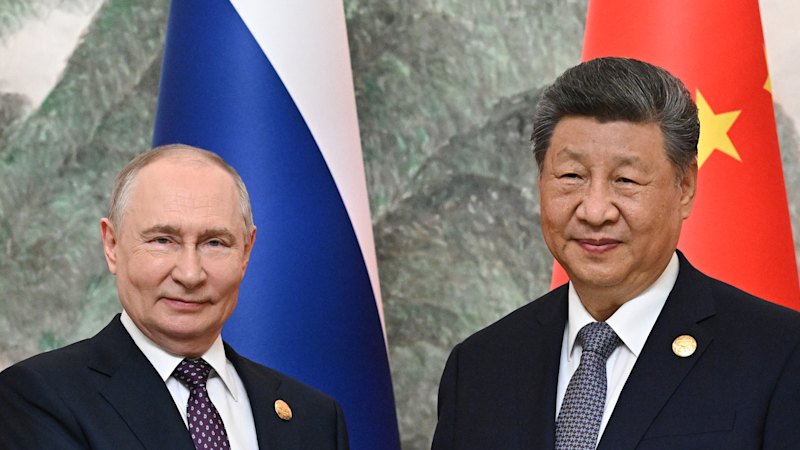
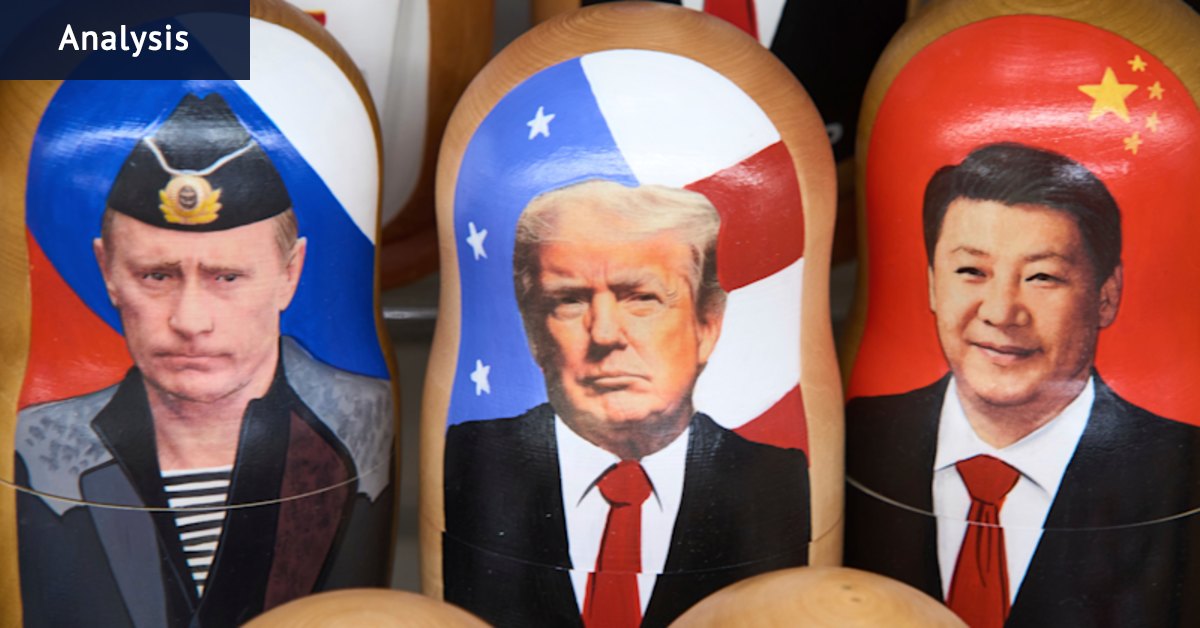
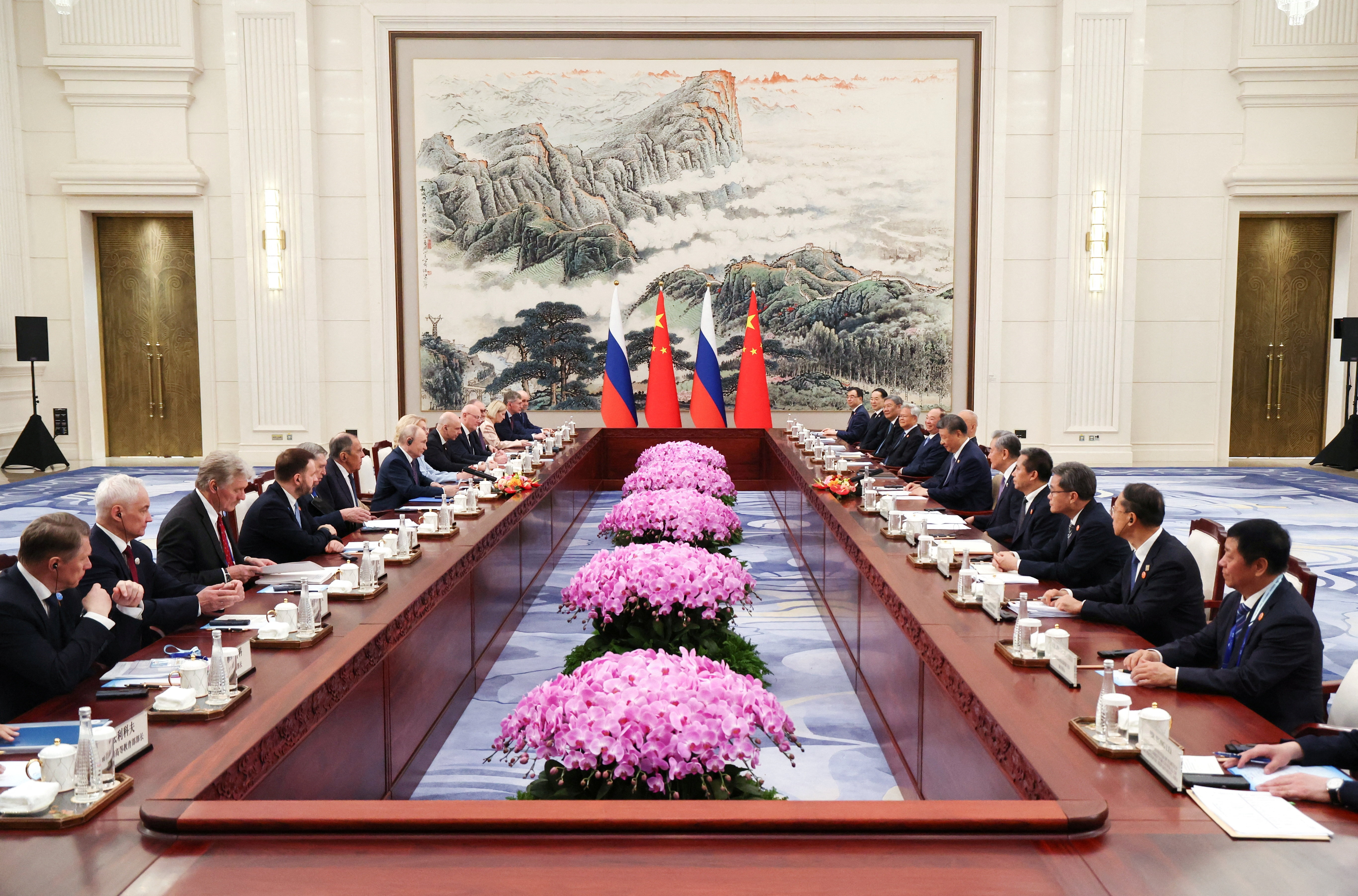
Thursday's meeting in Shenzhen between Donald Trump, Xi Jinping and Vladimir Putin could have implications far beyond great-power politics, but each leader has his own priorities.
For the U.S., there is an intention to prioritize discussions around nuclear non-proliferation and the Middle East conflict. Russia may push for advantages in the war in Ukraine, which the U.S. and China will likely want to avoid giving. As for the host, they'll be reluctant to discuss trilateral nuclear disarmament but could push for an end to the U.S.-Israeli war with Iran as it has hit Beijing's own energy supplies.
For the Middle East, the discussion boils down to two issues that increasingly define the region's future: conflict and artificial intelligence.
"I'm watching to see whether Trump can get Xi and Putin to lean harder on Tehran," Dan Murphy, anchor of CNBC's Access Middle East, said ahead of Thursday's meeting.
"China is Iran's biggest oil buyer, its economic lifeline and the biggest gap in Washington's sanctions campaign. Russia is Iran's strategic partner and one of the war's biggest winners, and Washington has even eased sanctions to let Russian diesel flow," Murphy added.
China would benefit from an end to the nine-month conflict. The Middle East provides roughly half of its crude oil imports, and months of disruption have forced Beijing to seek alternative supplies while navigating higher energy-security risks
Russia, meanwhile, has become one of Tehran's closest strategic partners. Their military cooperation has deepened since the Ukraine war, while Moscow has benefited from a Middle East distracted by multiple conflicts. Higher oil prices boost Russian export revenues, global attention shifts away from Ukraine, and Western diplomatic resources become stretched across multiple crises.
President Trump may have more leverage over Iran's two most important backers than previous administrations, but "the question is whether he is willing to use it," Murphy said.
If Xi and Putin calculate that regional stability is in their interests, particularly in energy security and economic growth, they could play a role in restraining Iran. If not, the status quo — stagnant conflict — is likely to continue.
Putin, whose country compares to the power of China and America in military might more so than economically, has a very close relationship with the UAE.
Abu Dhabi has flexed its diplomatic muscle in prisoner swaps between Moscow and Washington and last week, hosted trilateral talks between Russia, Ukraine and the U.S.
President Putin needs a strong ally regionally, and could be interested in helping their partner - the UAE - lobby for an end to the war, to help get their economy back on track.
Russian capital flows through the UAE via private wealth, investment vehicles, property and commodities. The UAE has become one of Russia's most important economic gateways since sanctions were imposed after the invasion of Ukraine in 2022.
A Trump-Xi meeting in Shenzhen may raise questions about advanced chips, export controls and technological competition between Washington and Beijing.
For Gulf nations like the UAE and Saudi Arabia, this matters as they try to position themselves as global AI hubs, building out massive compute power and data centers to rival the world's largest. Their plans depend on access to the world's most advanced chips, most of which are designed or controlled by American companies.
After Nvidia CEO Jensen Huang's exit last week, Riyadh and Abu Dhabi's access could change depending on who takes the helm of one of the world's most valuable companies.
There is, "a possibility that we are headed toward a sort of two world AI" Charles Kupchan, a former senior director for European affairs at the National Security Council and former special assistant to President Obama told CNBC's Murphy on "Access Middle East."
That might mean "an American system running on American chips with data centers that are paid for or built by American companies, and then a separate China-oriented, China-run China LLMs," Kupchan said.
"Jensen Huang was one of the Gulf's most important allies in Washington. He was the face of the region's AI chip deals and a vocal opponent of export curbs, at a time when Saudi Arabia and the UAE are betting billions on AI," Murphy said ahead of the meeting in Shenzhen.
"His exit, the looming congressional probes and new US restrictions on overseas data centers have Gulf leaders and investors asking whether their access to the most advanced American chips is about to get harder, just as their AI build-outs are scaling up," he added.
War and AI are interconnected, especially in the Middle East.
The Gulf's AI ambitions depend on capital (which comes from oil revenue, sovereign investment, tourism, diversification - most of which took a hit over the course of the war) and continued access to American technology.
China's dependence on Middle East oil means it has a direct interest in regional stability. This could push Xi to campaign for a swift end to the war.
Any Xi-Putin-Trump understanding would not just shape the future of conflict in the Middle East. It could also determine who gets access to chips. In a region betting on both stability and AI, that matters enormously.