Parlour’s analysis of annual Workplace Gender Equality Agency data points to the persistence of gender pay gaps in the industry, despite some signs of progress.
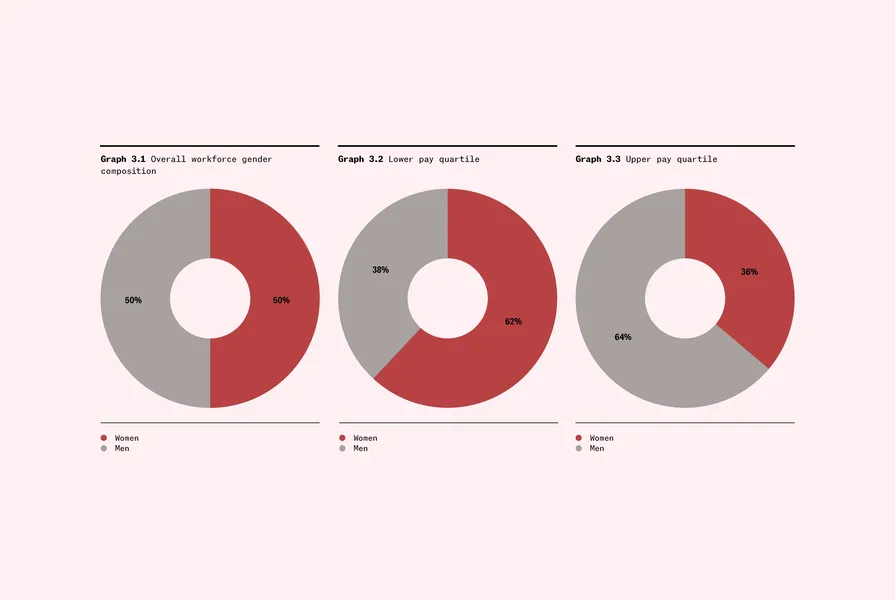
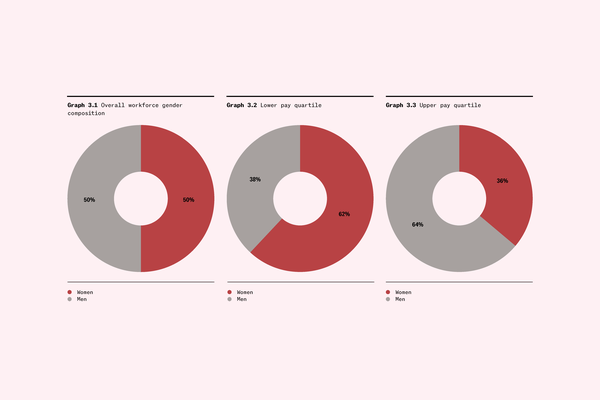
Graph 3.1: Overall workforce gender composition; Graph 3.2: Lower pay quartile; Graph 3.3: Upper pay quartile.
A series of industry studies released in 2026 paints a picture of changing practice and practitioners. From gender equity to sustainability, cost escalation to wellbeing, the numbers tell us about an architecture industry in flux. Read an analysis of the 2026 Workplace Gender Equality Agency data below.
Each year, data collected and released by the Workforce Gender Equality Agency (WGEA) provides a significant record of the workforce and working conditions in Australia’s largest businesses, including architecture practices. (Companies employing more than 100 people are obliged to report.)
The 2026 data, analysed here by Parlour, gives insight into 30 practices, employing 5,922 people in total, and offers a broad measure of equity within Australia’s largest practices. The headline data is the gender pay gap, complemented by a raft of information about workforce composition, policies, flexible work and employee support.
Gender pay gap midpoints for reporting practices increased across all four WGEA pay gap measures. The average total remuneration midpoint rose to 18.6 percent, up from 16.8 percent last year, while the median total pay gap increased to 18.3 percent, up from 16.1 percent.
Most practices report an equal remuneration policy or strategy, but stronger accountability and transparency measures remain limited.
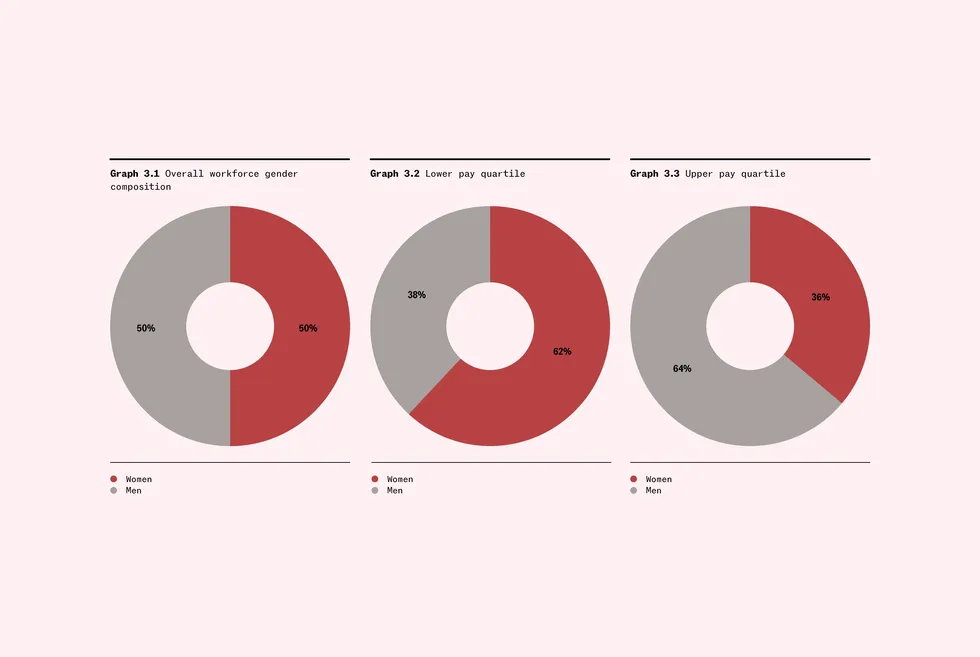
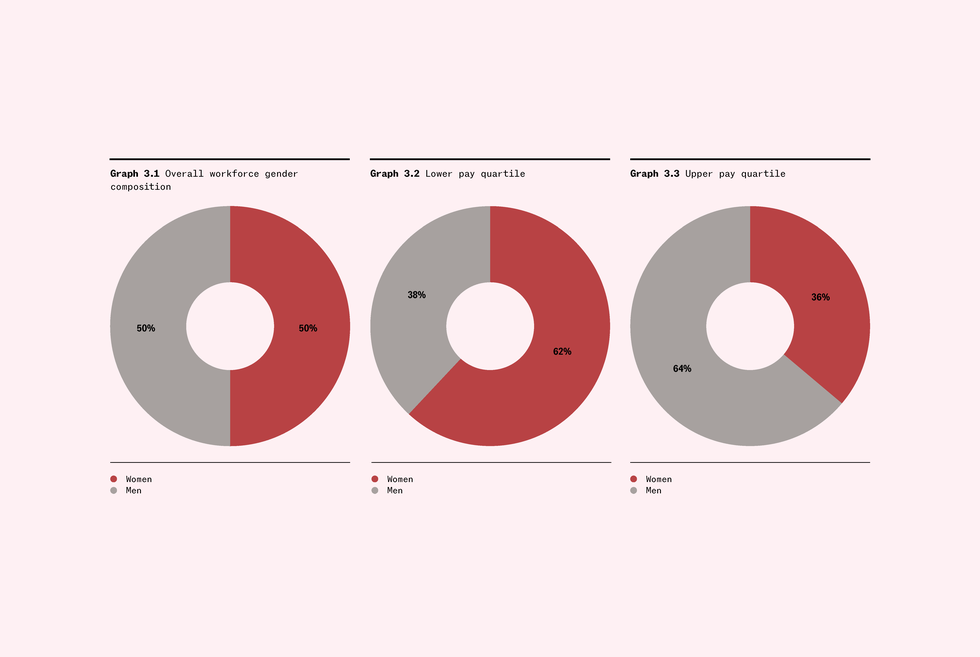
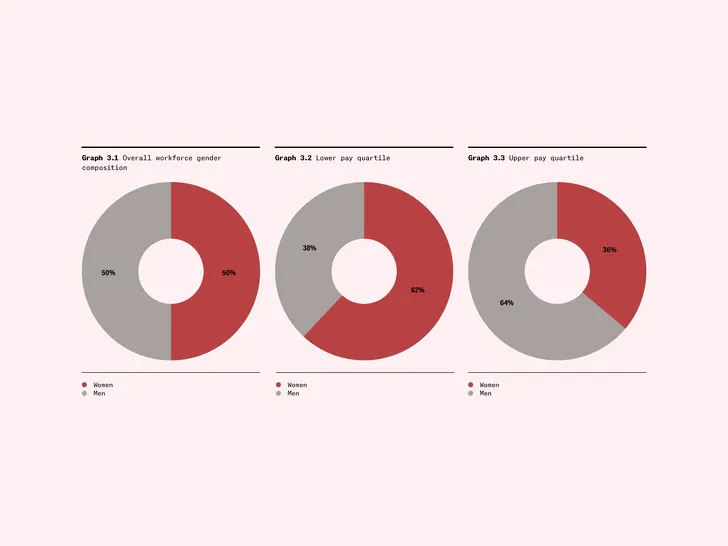
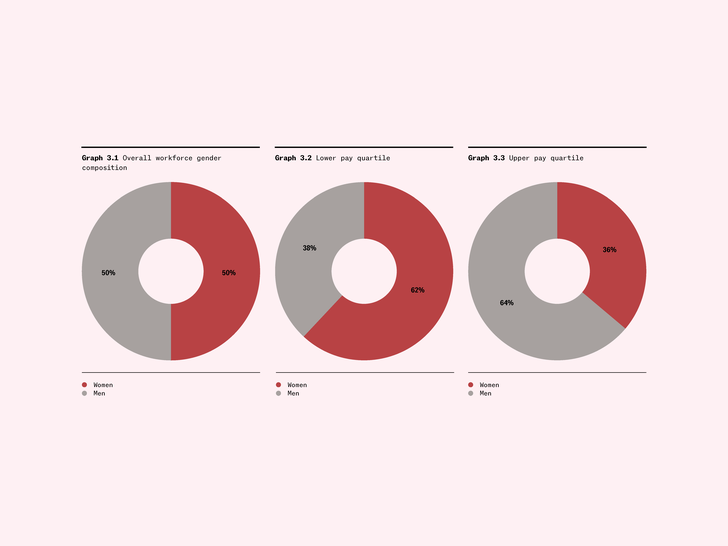
Women and men make up equal shares of practice workforces overall (Graph 3.1). However, women remain under-represented as managers and over-represented in clerical and administration jobs. Pay data reveals an inverse mirroring in pay quartiles: women make up 62 percent of lowest-paid quartile, while men make up 64 percent of the highest-paid (Graphs 3.2 and 3.3).
Graph 3.1: Overall workforce gender composition; Graph 3.2: Lower pay quartile; Graph 3.3: Upper pay quartile.
Image: Graphic by Mike Giesser
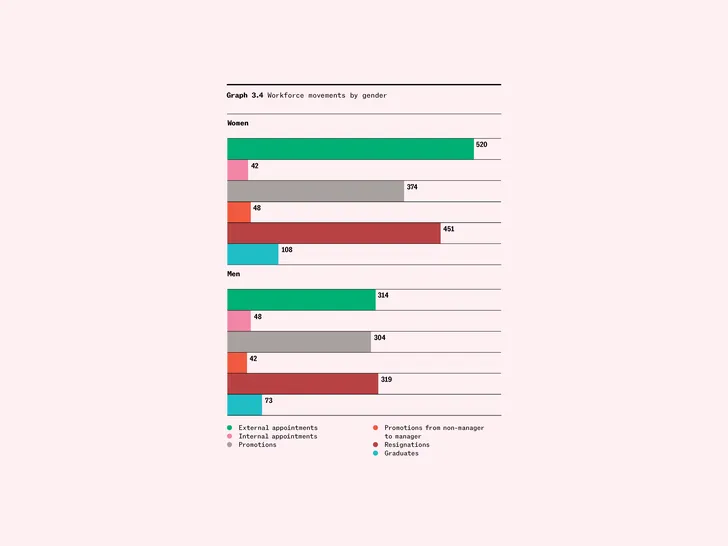
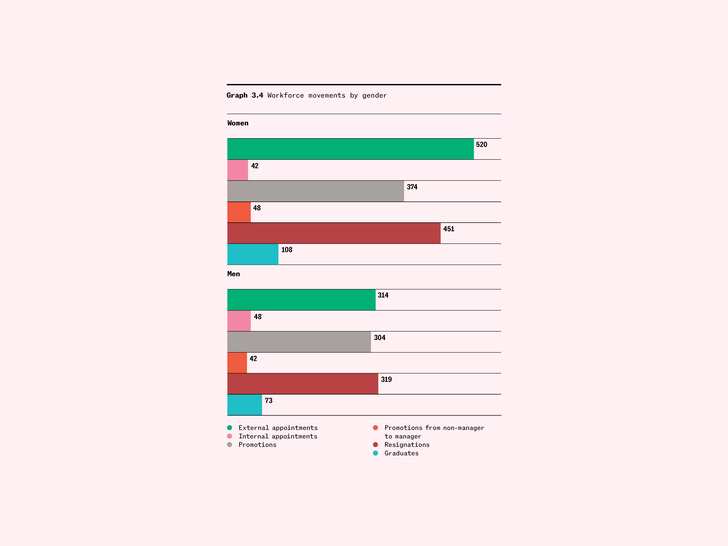
Few employees are progressing internally from non- management to management roles, and practices are reliant on external appointments to bring women in (Graph 3.4). This could point to practices attempting to address gender imbalances. However, the higher proportion of resignations among women risks eroding these gains.
Graph 3.4: Workforce movements by gender.
Image: Graphic by Mike Giesser
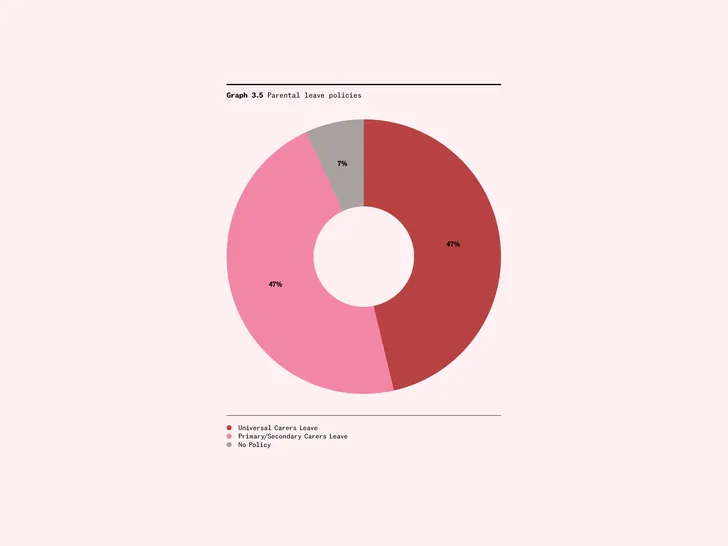
The number of practices offering universal parental leave entitlements has risen and now matches the number offering a primary/secondary carers leave system (both 47 percent; Graph 3.5). This represents a significant change from previous reporting periods, where primary/secondary carer policies dominated. Policy reform is accelerating, but leave uptake remains stubbornly gendered.
Graph 3.5: Parental leave policies.
Image: Graphic by Mike Giesser
All but two reporting practices have a broad gender equity policy or strategy, and 67 percent have some kind of target in place to address gender equality. Three quarters have a formal diversity and inclusion policy or strategy.
Many practices aim to improve gender equity through workplace, career progression and recruitment processes. However only 33 percent link managerial KPIs to gender equality. This accountability gap is repeated throughout the WGEA data in many ways.
Analysis by Alison McFadyen and Justine Clark, Parlour, based on 2026 WGEA data (2024–25 reporting period).
This article is the third in an Architecture Australia (Nov 2026) “industry in review” series that unpacks findings of several industry studies released in 2026. Read the results of the Association of Consulting Architects’ 2026 Pulse Check survey here and the results of the Commonwealth Association of Architects’ 2025 Survey of Architecture Students, Graduates and Early Career Professionals here , and s tay tuned for the next article on the Australian Institute of Architects’ 2026 national awards program data.
Published online: 18 Nov 2026 Words: Justine Clark , Alison McFadyen Images: Graphic by Mike Giesser
Architecture Australia, November 2026
Faced with the ever-increasing responsibilities of architectural practice, some students are hesitant to pick up a pencil. But doing nothing isn’t an option: it’s time …
The Commonwealth Association of Architects’ Survey of Architecture Students, Graduates and Early Career Professionals highlights the critical challenges facing the next generation of architects.