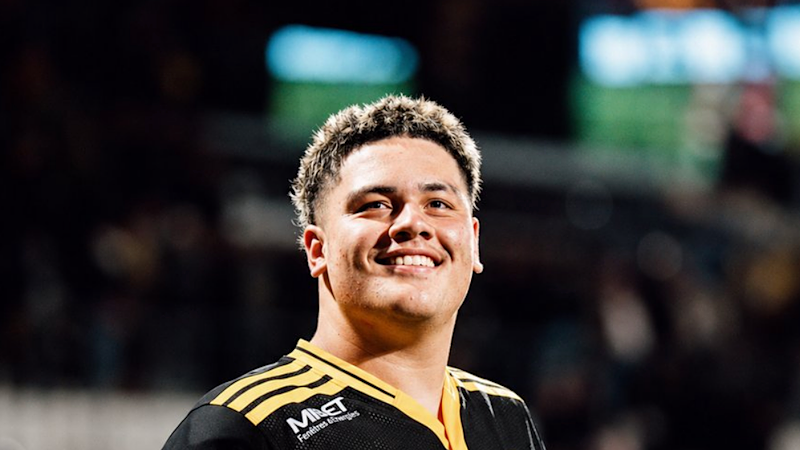
James Hollands was shot dead in a Bunnings car park in Willetton after he stabbed a stranger. ( ABC News: Tabarak Al Jrood )
A 16-year-old shot dead by police had viewed videos of beheadings, an inquest has heard.
James Leslie Hollands hunted strangers with a kitchen knife in 2024 after saying he was following "in the path of jihad".
But there was no indication he was planning a terrorist act, an expert said
A Perth teenager shot dead by police after he hunted strangers with a kitchen knife in a terrorist act was vulnerable to visually stimulating extremist material including videos of beheadings, a coronial inquest has heard.
However, there was no indication the 16-year-old was planning or preparing a terrorist act, an expert told the court.
WARNING: This story contains details and footage that may distress some readers.
James Leslie Hollands stabbed a stranger and attempted to attack others in May 2024 after professing he was following "in the path of jihad", before police intercepted and fatally shot him.
A coronial inquest is examining the circumstances of his death, and the support and assessments he received from the police-led Countering Violent Extremism (CVE) program.
James Hollands said he wanted to "kill all male people in the area" before he was shot dead by police. ( Supplied )
Consultant forensic psychiatrist Professor Natalie Pyszora, who played a part in James's risk assessment for the CVE program, told the court the boy "very much enjoyed" extremist content.
"He verbalised an interest in becoming a foreign fighter, and in addition he did disclose that he had violent extremist material, including beheading materials, and talking about that desensitised him to be able to undertake the same activity," she said.
"But in terms of an actual, what we would call a targeted attack … that was assessed as low risk at the time.
"There was no indication he was planning or preparing."
Professor Pyszora told the court there was no direct link between autism and Attention-Deficit Hyperactivity Disorder (ADHD), but James's diagnoses made him particularly vulnerable to extreme content which was visually stimulating.
"Those extremist organisations are very good at creating aesthetically pleasing videos for young people," she said.
"Converting to Islam is not a risk, but the concern was that when he first came into the program he was voicing support for violent extremism, namely violence in the context of an extremist ideology."
While James's risk profile fluctuated, the potential of him carrying out an ideologically motivated attack never elevated beyond a "low risk", Professor Pyszora told the court.
She said various incidents, including James assaulting a family member, experimenting with chemicals and explosives, and accessing violent extremist material, did not alter the risk of his engagement with violent extremism as he had consistently displayed those behaviours since joining the program.
"There weren't any new indicators, or any relevant indicators, consistent with known risk assessment tools," Professor Pyszora told the court.
The coronial inquest previously heard James's school found pamphlets with concerning material next to his computer, featuring an "inflammatory" speech and a picture of a man with a rifle, the day before he carried out his attack.
The material was sent to the anti-extremism program, but staff did not see the email as it was sent to a group inbox after-hours on a Friday afternoon, the court heard.
Speaking to media, WA Police Commissioner Col Blanch said the case highlighted the risks of online radicalisation.
"No one wants to see 16-year-old shot in the street by police," he said.
"But a lot led up to that outcome and I think that's where the focus should be — how are young people being so radicalised online that they want to take that anger and that hate and that harm out into our community?"