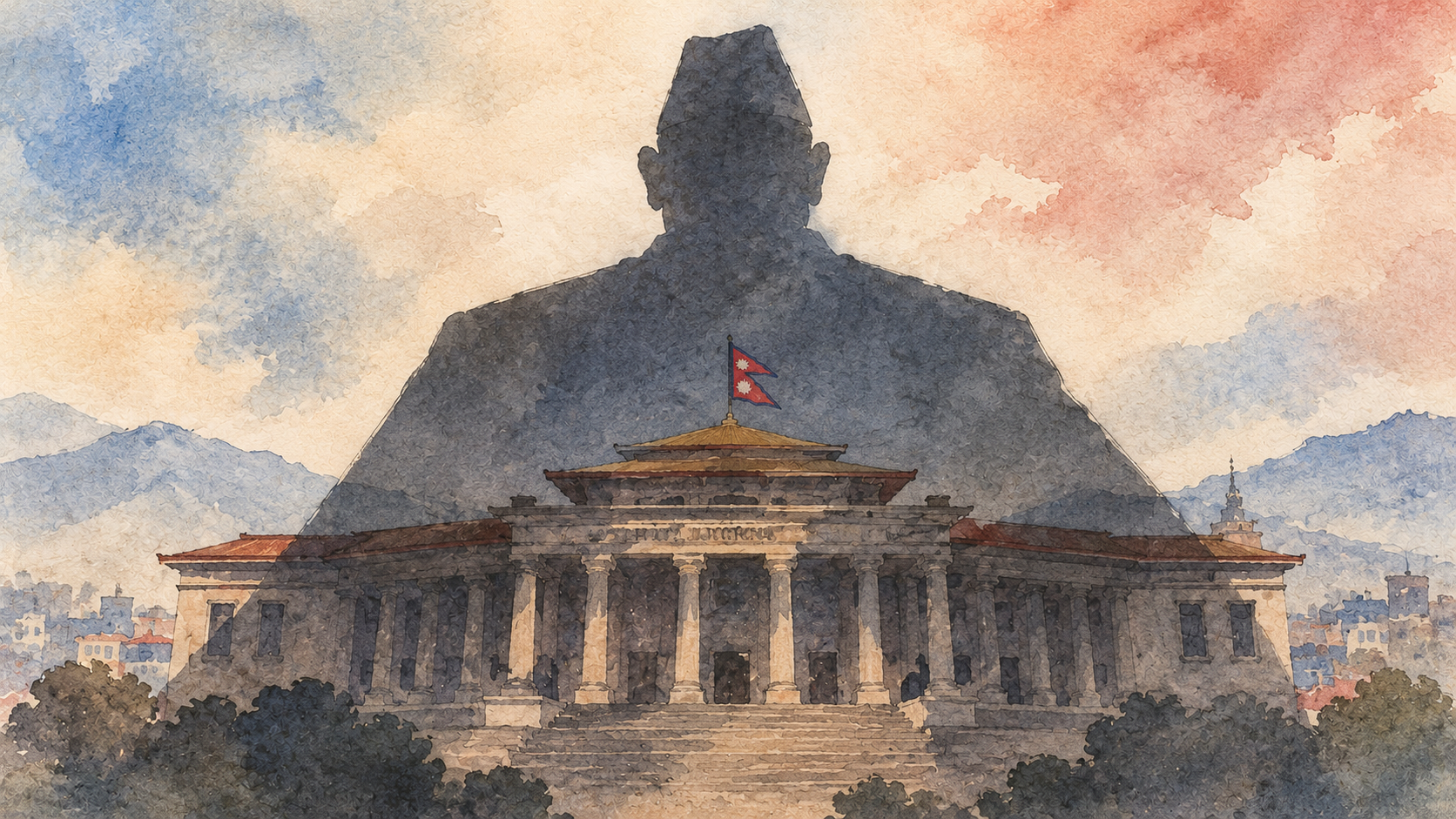
Nepalis, disappointed with the old parties’ working style, handed over power to Balendra Shah. They pinned high hopes on his government, expecting that it would not merely change faces and working style, but also strengthen ailing state institutions with foresight and prudence, make the administration accountable, and restore citizens’ trust in the democratic system.
But the past six months have dealt a deep blow to these hopes. Instead of reforming the system, the government is, in many cases, continuing the same old political culture with a new face. For instance, its penchant for running the government through ordinances, bypassing the parliament and the disregard for institutional processes is detrimental to democracy.
Its immediate effect is visible in the form of disappointment, confusion and declining trust in the government among people. Its long-term impact could be far more serious. Democracy is not strengthened merely by winning elections and securing a majority; its strength depends on autonomy and credibility of institutions such as parliament, judiciary, constitutional bodies, independent media, and administration. If governments weaken these institutions in the name of delivering quick results, it opens the way for even future governments to take arbitrary decisions. This can affect rule of law, balance of power and the federal system. Worse, citizens may begin to lose faith in democratic institutions and start hoping for miracles from a single powerful leader instead of institutional reform, thus making it easier for the ‘dopamine’ government to function its way. But we must note that this tendency is extremely harmful for democracy.
The government under Shah’s leadership can still correct its direction. It must understand that the alternative to the failures of previous governments is not merely taking quick decisions or removing old political faces. For real change, the development of institutional capacity, respect for constitutional limits, accountability to parliament, administrative impartiality and meaningful dialogue with federal units are essential. People didn’t hand over unlimited power to any one individual; rather, they entrusted it to better governance and a stronger democratic system. If the government, formed based on new hopes, succeeds in making institutions independent, capable and accountable instead of subordinating them, only then can its political mandate turn into historic change.
To make democracy sustainable, the autonomy of parliament, judiciary, election commission, universities, independent media, administrative institutions and civil society is essential. The balance of power among these institutions alone prevents democracy from becoming the private property of any one individual or party. In a democracy, institutions are not merely subordinate units of the government. Governments come and go, but the responsibility of institutions doesn’t end. The tenure of a government is limited, but the public responsibility of institutions goes beyond that. Elections determine a government's popularity, while institutions build credibility through conduct, impartiality and continuity. Autonomy without accountability can become a privilege, and accountability without autonomy can become an instrument of political control.
In Nepal’s political journey, this distinction seems even more important. Among the ruling political forces, the tendency to extract immediate political benefit from institutions has been more visible than efforts to make them independent, capable and inclusive. When the government changes, the approach towards institutions also changes. From appointments to decisions, from administration to public bodies, political loyalty begins to get priority over merit and institutional norms. As a result, institutions begin to be driven more by signals from power than by their own rules and procedures. Destruction in itself is not a philosophy of construction. It may be easy to bring down a system, but building a just and durable system is a far more difficult political task.
Reform means making institutions more accountable to their objectives, not moulding them to suit the new convenience of power. The concept of separation of powers in democracy emerged from this historical experience—if power is concentrated in one place, the possibility of arbitrariness increases. The legislature, executive and the judiciary have separate powers. This division is not meant to create mutual hostility but to keep power prudent and responsible. Disagreement among institutions is not a disease of democracy. Often this very disagreement is proof of its health. If every institution speaks only in accordance with the will of the executive, then what is the meaning of power balance? And if all decisions begin to come from a single political centre, what will happen to the institutional vision of the constitution?
No ruler, however popular, can run a democratic system alone. Neither the prime minister, nor the PM’s private secretariat, nor any political party. Democracy does not depend on an individual’s administrative efficiency. It is a collective political contract based on rules, procedures, accountability and institutional memory. The reconstruction of institutions does not happen merely by appointing new people. Institutions have their own memory, work culture, professional ethics and a history of earning public trust. It is easy to destroy institutional capacity built by the efforts of one generation, but it can take decades to regain it.
Political leadership operates within a five-year tenure, while institutions span many generations. Therefore, Nepal faces a dual challenge. First, institutions must be strengthened. They must be freed from corruption, favouritism, political capture and incompetence. Second, they must be protected from political revenge, arbitrary intervention and ill-considered dissolutions. Considering reform and protection as opposed to each other would be a mistake. The best way to protect institutions is to make them better.
That is why the constitution has prescribed well-considered processes for the formation, appointment, powers and accountability of institutions. These processes may sometimes seem slow. Politics wants quick results, while the constitution demands patience and balance. But the strength of democracy is precisely that it subordinates immediate political impatience to permanent constitutional principles.
The greatest irony of democracy is that the aspiration for change sometimes becomes a justification for weakening the very system that the people give a mandate to change. A majority certainly gives the right to govern but it is not a license to breach constitutional limits. In a democracy, the greatness of power lies not in how much it can do, but in how much it can restrain itself. State institutions, instead of fulfilling their constitutional role, begin to worry about their security, prestige and existence. When power weakens institutions, both institutions and the constitutional contract of trust between the state and the citizen become weak. In a democracy, people are not searching for a new saviour. They are looking for the reconstruction of such institutions that are accountable not to the convenience of power, but to the constitution.
The author is a veteran journalist.