Ghorepani has long been a popular destination for trekkers in western Nepal. But an increasing number of visitors are extending their journeys beyond the familiar tourist hub, taking village trails through Parbat to experience rural life, local food and traditional culture.
The villages of Lespar and Kyang in Modi Rural Municipality, and Shalija and Phalamedanda in Jaljala Rural Municipality, are seeing more visitors as trekkers choose to explore the settlements on their way back from Ghorepani.
While some tourists travel on to Beni and Baglung bazars, many are opting for the walking trails. Both Nepali and foreign visitors, who reach Ghorepani from Nayapul on foot or by road, are increasingly stopping in local villages to sample traditional food and experience community life, said Mohan Singh Chochangi Pun, a ward chairperson.
During the warmer months, many visitors head from Ghorepani to Poon Hill. As temperatures drop, however, more of them choose to explore nearby villages instead, Pun said. Their arrival has brought greater activity to Lespar, Kyang, Bhukatangle and other settlements in ward 4 of Modi Rural Municipality.
Many trekkers returning from Ghorepani take the route through Phalamedanda, Shalija, Hampal and Lespar before descending to Patichaur. The appeal lies in the scenic trails, home-cooked food and warm welcome they receive in the villages, Pun said.
“I chose to stay in Lespar because of its locally grown food,” a French visitor said.
Domestic tourists also visit in search of folk music and dancing. The trails linking the villages to Patichaur make it possible to spend the night in homestays, enjoy traditional meals and complete the journey on foot.
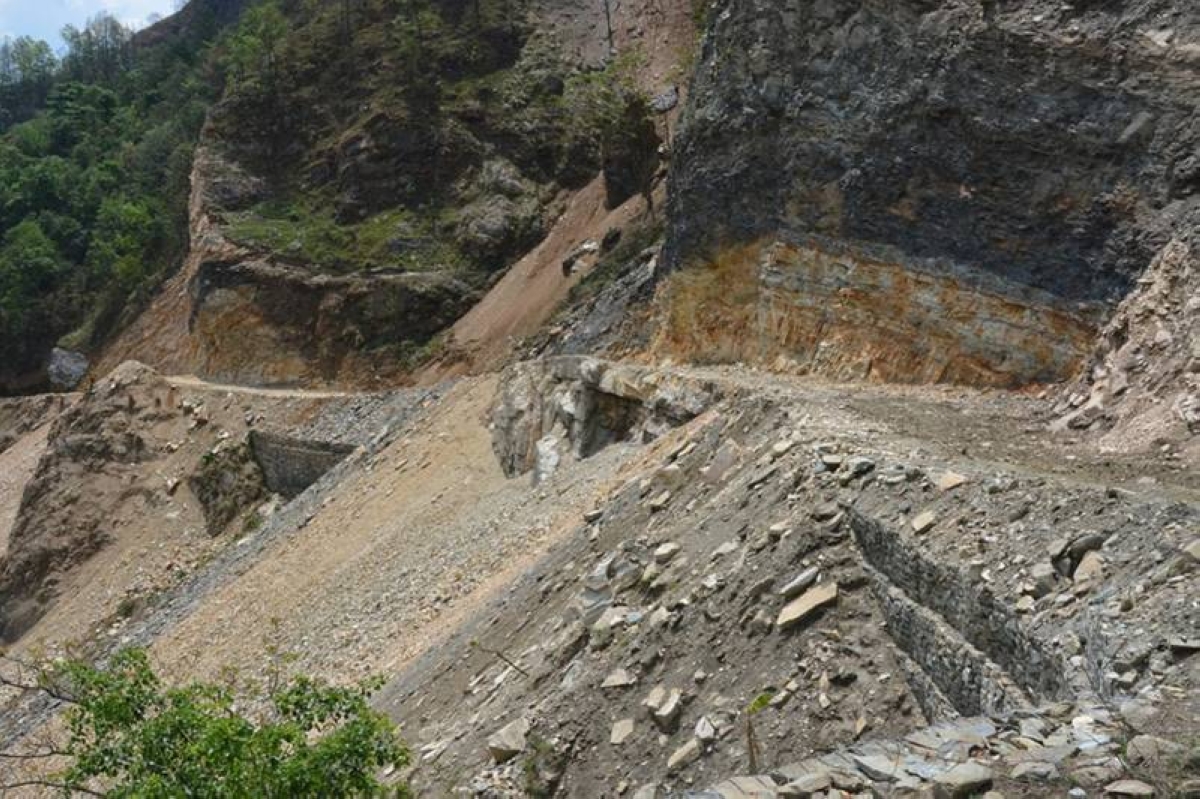
Some visitors take a vehicle back from the lower end of Lespar. Although the road is still under construction, the village can be reached by jeep from Patichaur in about an hour.
Homestays in both the upper and lower settlements of Lespar are attracting growing numbers of visitors, said resident Gyan Maya Pun. Most guests are domestic tourists, although some foreigners also visit.
“Foreign trekkers are coming with porters, while domestic visitors often call ahead before arriving,” she said.
Guests are welcomed with traditional food and flower garlands, she added.
A village that preserves its traditions
At an elevation of around 2,200 metres, Lespar is a compact settlement of about 250 houses clustered together. Its stone-roofed houses, clean lanes and matching paintwork give the village a distinctive appearance.
Residents collect household waste at designated points across the village to maintain cleanliness. Most households produce much of their own food, while rice is brought in from outside. Packaged and junk food are largely absent from village life.
Visitors are served traditional dishes made from millet, buckwheat and maize, including dhido, along with leafy greens, locally raised chicken and chutney made from perilla seeds. Local beans and soybeans are also part of the village’s food culture.
The community uses folk songs and music to introduce visitors to its traditions. Bottled liquor is not sold in the village.
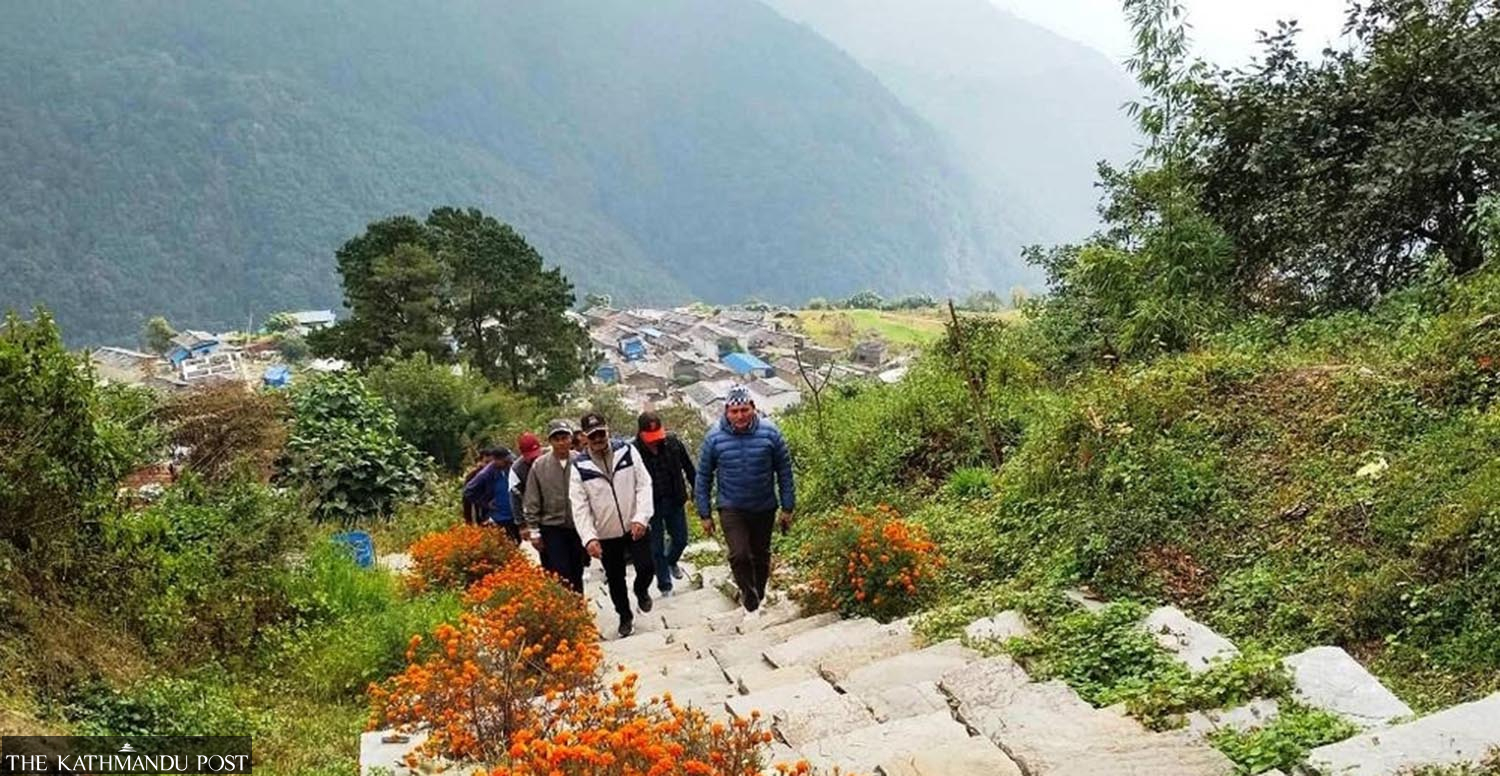
Local stone is used extensively in houses and pathways. Stone-paved lanes and stairways connect the settlement to trails leading towards Haljure Danda and Hampal. Residents have built resting places along the routes through collective and individual investments. Drinking water taps have been installed along the trails, with glasses and cups kept nearby for walkers.
A climb of about an hour and a half from the village takes visitors to Haljure, at an elevation of around 2,500 metres. A further uphill trek of roughly three hours leads to Hampal, which rises above 3,000 metres.
Hampal is regarded as a sacred mountain and is also known for its medicinal herbs.
The growing flow of visitors has encouraged residents to turn their homes into small businesses. Families have set up guest rooms, begun preparing meals for visitors and made arrangements to welcome them with flower garlands. The cool climate keeps marigolds and other flowers fresh well into the winter.
Local entrepreneurs also collect allo, a Himalayan nettle fibre, spin it into yarn and weave it into fabric. Visitors can watch the traditional craft being practised as part of their village experience.
“We gained much more than just a sightseeing experience,” said Badri Prasad Tiwari, a Nepali visitor. “We were happy to learn about the food, folk culture and traditions of a community that has continued to preserve its way of life.”
Locally sourced materials are used in the construction of houses, sheds and pathways, with cement and other imported materials largely absent. The village has used cement, however, to build a basketball court.
Growing tourism, limited infrastructure
Agriculture and livestock farming remain the mainstay of village life, allowing residents to produce most of their own food rather than depend on market supplies. As rice does not grow in the village, it is brought in from outside. Residents eat more dishes made from millet, maize, barley and buckwheat than rice, said resident Dil Bahadur Pun.
“We bring in rice mainly for guests who prefer to eat it. Most of the other food we serve comes from local farms,” he said. “Even the vegetables are not bought from the market.”
Guests are served locally grown radishes, potatoes, taro and leafy greens, he added.
Despite the growing number of visitors, the village does not yet maintain records of tourist arrivals. Nasingh Bahadur, a member of the Lespar Community Homestay, said the community was preparing to start keeping visitor records.
“We have improved our toilets and bathrooms and arranged hot water to meet guests’ needs,” he said. “We can attract more visitors if we preserve our village and its culture.”
He said greater government investment was needed to keep young people in the village and encourage them to take up tourism-related businesses.
Prakash Baral is the Baglung correspondent for Kantipur Publications.