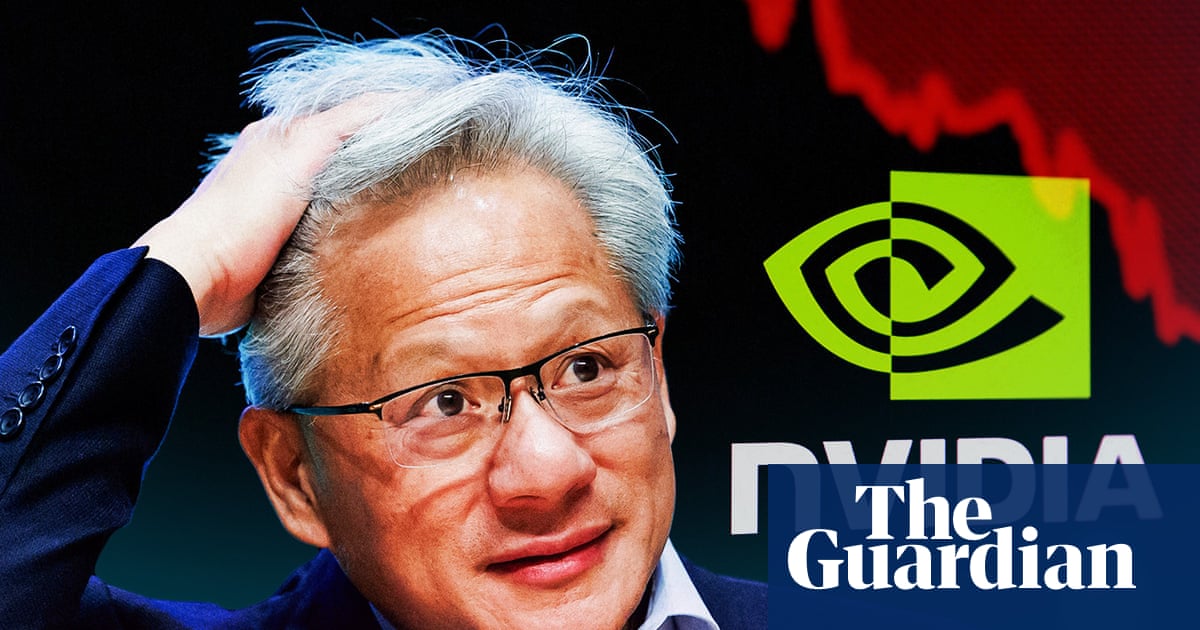
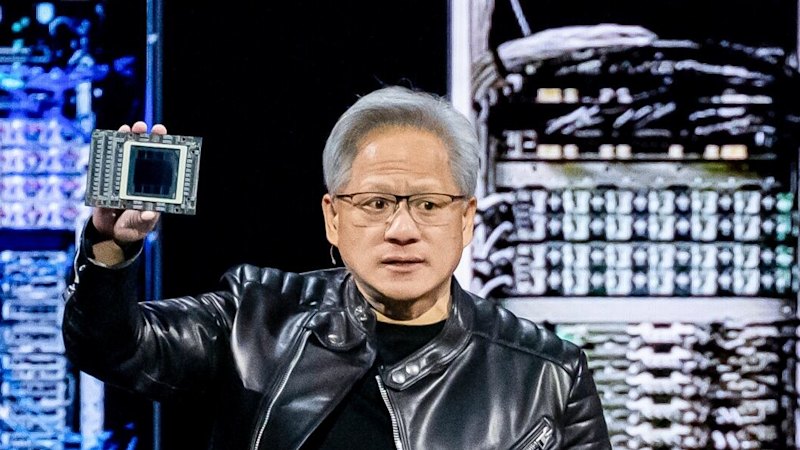
The departure of Nvidia CEO Jensen Huang, the 63-year-old cofounder and face of the chipmaking company which has become the backbone of the modern AI industry, has shaken the US’s Silicon Valley.
Nvidia, valued at nearly $4 trillion, is a critical pillar of the US economy where AI and tech companies make up some 40 percent of stock market valuations. The furore over Huang’s extramarital affairs, including one with a suspected Chinese spy, has wiped hundreds of billions of dollars from the company’s market value, dragging down the S&P 500 and Nasdaq.
While CFO Colette Kress has temporarily stepped into the top job at Nvidia, the search for cofounder Huang’s successor continues.
What happens next at one of the world’s most valuable companies will have repercussions far beyond Silicon Valley. So, what’s next for Nvidia?
On October 29, The New York Times reported that US intelligence agencies suspected a Chinese businesswoman and executive associated with Singapore-based AI infrastructure company Megaspeed International, Alice Huang, had been tapped by China’s Ministry of State Security to gather information from Nvidia’s Huang.
The newspaper reported that the two were involved in an intimate relationship, later confirmed by the cofounder of the company in an internal memo. Nvidia’s board launched an independent investigation into whether Huang had been targeted by a foreign intelligence operation.
“I was unfaithful to my wife. My actions hurt her and our children. There is no excuse for what I did. I am deeply sorry,” Huang wrote in an internal memo to Nvidia staff.
The business links go beyond just the affair, however, fuelling further concerns. Megaspeed purchased more than $4.8bn of Nvidia chips over roughly two years. Separately, The Information reported that Alice Huang facilitated at least $7.5bn in Nvidia chip shipments to Chinese firms, raising even more questions about skirting US export controls.
Then, on Wednesday, the NYT reported a second alleged affair between Jensen Huang and Kimberly Powell, Nvidia’s vice president of healthcare, who reported directly to him.
The next day, Huang was forced out of the company and off its board.
Hours later, Reuters reported that Huang had allegedly been involved in a third affair with another Nvidia employee, citing two people familiar with the matter.
In simple terms, if Nvidia sneezes, the AI industry and modern computing catch a cold.
Nvidia controls nearly 90 percent of the market for advanced AI chips which are used to train frontier AI models, giving it an extraordinary degree of influence over the global AI industry and the infrastructure powering it.
Observers say the company holds the keys to next-generation computing. Its customers include tech giants such as Microsoft, Google, Amazon and Meta, which rely on Nvidia hardware to build and operate their AI data centres.
That’s also why Washington has restricted Nvidia from selling chips to China.
Nvidia’s Huang has spent years lobbying in Washington against such restrictions, arguing that restricting sales would surrender a strategically important market to domestic Chinese competitors.
That puts him at odds with US lawmakers who view access to Nvidia’s advanced chips as a national security risk, particularly given their potential military applications.
A Chinese foreign ministry spokesperson said Beijing has “always opposed the abuse of export control measures”, as pressure gains momentum yet again in Washington. Beijing has rejected allegations that Alice Huang is a Chinese spy as “baseless”.
In China, investors have been selling shares in Chinese AI-linked companies over worries that recent developments at Nvidia could deepen the technological divide between Beijing and Washington.
On Friday, shares in Z.AI, one of China’s top AI model developers, tumbled more than 10 percent in Hong Kong while shares in rival MiniMax hit record lows.
A Reuters review identified more than $3bn in Chinese computing projects built around Nvidia’s restricted processors – despite the American chipmaker claiming that US export controls effectively shut it out of the AI data-centre market in the world’s second-biggest economy.
The examination shows projects stretching from China’s wealthy coastal technology hubs to remote western provinces, and underscores how deeply Nvidia’s technology remains embedded in China’s AI expansion.
Nvidia shares rose 1.8 percent in premarket trading on Friday after losing around 11 percent of their value this week up to Thursday, when Huang exited the company he built.
The company is on course for its longest streak of weekly losses since October 2012.
US President Donald Trump is scheduled to meet his Chinese counterpart, Xi Jinping, next week in Shenzhen at the APEC leaders’ summit.
Similarly, shares in Nvidia’s customers, such as South Korea’s Naver, fell more than 5 percent. Nasdaq futures and S&P 500 futures fell 0.4 percent and 0.15 percent, respectively.
“Jensen has obviously been a singular force in many ways so the impact will likely be felt far and wide,” UBS analyst Timothy Arcuri told Reuters.
“The company has become a key source of funds for a host of AI industry participants including neo-clouds, LLM developers, ecosystem partners, and suppliers, and we have always seen Jensen as a key driving force for this effort,” Arcuri said.
“Even if a new leader ultimately maintains a similar approach, there is likely to be some ‘pause’ in the company’s willingness and ability to continue pursuing these deals in the near term,” he added.
From washing dishes at a Denny’s to building a $4 trillion technology giant, Huang has led Nvidia for nearly 33 years – and made one of Silicon Valley’s defining entrepreneurial stories.
But the “cult-style” leaders at Silicon Valley – including Huang, Meta’s Mark Zuckerberg and Elon Musk – also reflect the concentration of market power that tech companies enjoy. Technology stocks now account for nearly 40 percent of the S&P 500’s total market value.
That is likely to rise when AI companies Anthropic and OpenAI also go public.
And in the absence of a clear succession plan, things could go awry, sending jitters among investors – a concern which Nvidia highlighted itself in its annual review for this year.
Under the risk factors dealing with its dependence on key personnel, Nvidia’s report noted that the company is “highly dependent on the services of our longstanding executive team”.
“Failure to ensure effective succession planning, transfer of knowledge, and smooth transitions involving executives and key employees could hinder our strategic planning, execution, and long-term success,” it said.
Nvidia’s board has begun searching for a permanent successor to Huang, tapping CFO Kress as interim CEO.
Meanwhile, President Trump, who has defended Huang as a “genius”, shared his two cents, too. He suggested former Apple chief executive Tim Cook could take over Nvidia. “A Legend replaces a Legend,” Trump wrote.
Nvidia has said it will consider candidates from both within and outside the company.