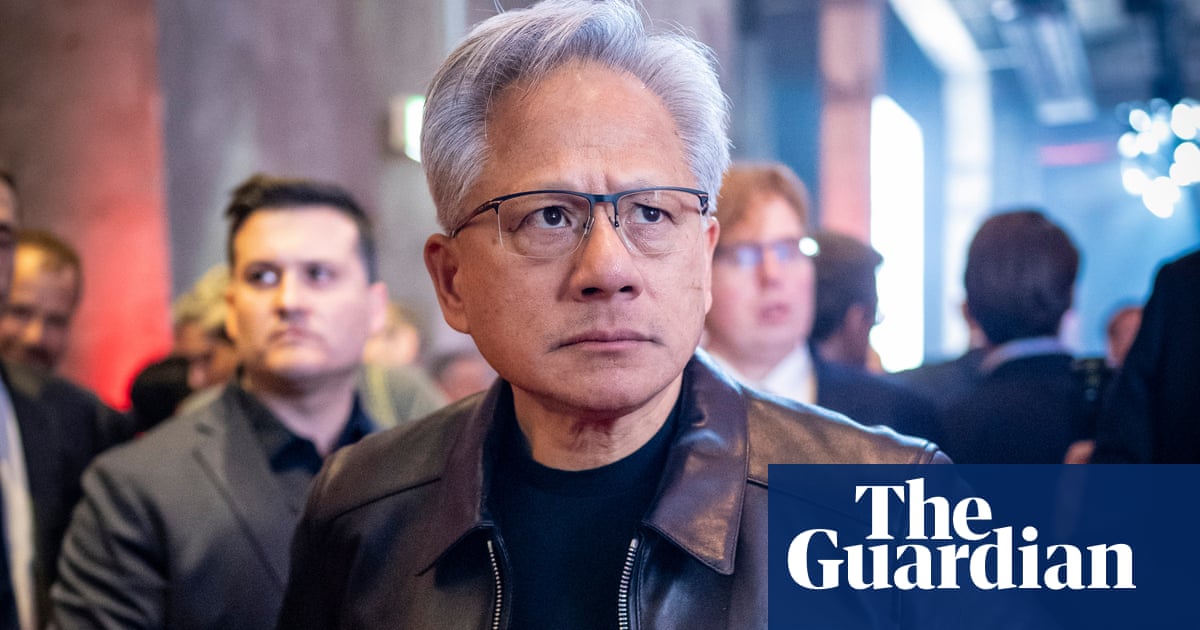
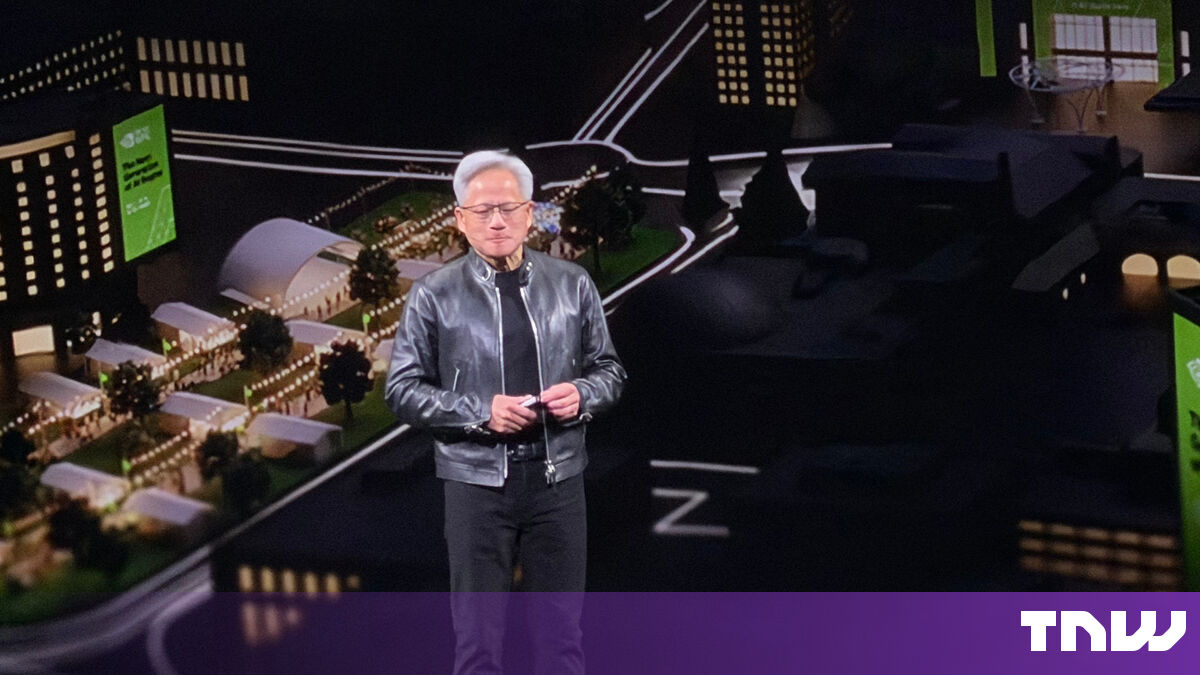
Jensen Huang’s resignation from Nvidia in scandal leaves the company without its visionary leader. It also leaves a major void for the AI industry, where Huang was kingmaker in inking deals to support the tech boom.
Under Huang’s leadership, Nvidia became more than a chipmaker: It guaranteed deals for data centers, invested heavily in AI startups and even backed the companies that bought its products.
Huang put Nvidia at the core of AI financing, and the CEO himself championed some of the industry’s biggest deals. His departure puts a spotlight on whether the ecosystem he crafted could fracture — and whether that would spell trouble for the AI boom that has helped prop up the US stock market and become a driving force of economic growth.
“It’s hard to overstate his personal role in all of this,” said Neil Wilson, a strategist at investment bank Saxo.
“Huang was key in Nvidia being the backer of last resort across the AI ecosystem, really underpinning a lot of the financing and infrastructure guarantees,” he said.
Nvidia backstopped deals, like committing $105 billion in August for an OpenAI data center. The company has a major equity stake in the neocloud CoreWeave, emerging as an important financial backer and confidence booster. Nvidia is expected to take a $10 billion stake in Anthropic’s initial public offering.
Nvidia makes the graphics processing units that power AI models like OpenAI’s ChatGPT and Anthropic’s Claude. But the company has also been “the central bank of AI,” Jay Goldberg, senior analyst at Seaport Research Partners, told CNN.
The company also functions like a venture capitalist, Goldberg noted, investing in companies to fuel their growth and help them get ahead in an industry that requires massive amounts of capital.
“Circular financing” has emerged as a term to describe Nvidia’s financial agreements, because the company is backing the companies that, in turn, buy its products. Goldberg said a more accurate term would be “very aggressive vendor financing.”
The company’s financial commitments in the AI boom have grown to the point that it had to address the associated risks in its latest quarterly earnings filing.
“Commitments, guarantees and other commercial arrangements expose us to financial, counterparty and execution risks and may not provide anticipated benefits,” Nvidia said in its most recent quarterly earnings report.
Huang’s sudden fall from grace puts that financing strategy in question. He resigned amid revelations extramarital affairs and a board investigation into whether he was the target of a “foreign intelligence effort.”
Just three months ago, after committing the $105 billion for the OpenAI data center, Huang brought together six major financial institutions — Apollo, BlackRock, Blackstone, Brookfield, Goldman Sachs and KKR — to agree to treat Nvidia’s AI infrastructure as an asset class to write debt against, with aims of mobilizing over $500 billion for the AI boom.
“That was all driven by [Huang],” Goldberg said, adding that the deal isn’t finalized, and he expects it will come under additional review (and could even fall through).
Jensen Huang is living proof that AI’s rockstar CEOs are also a hidden risk
Nvidia’s central role in AI financing is directly related to the so-called neoclouds, or companies that rent out compute to power the boom.
Nvidia, as the primary provider of technology to power AI, has reaped massive profits in recent years. The company has used its cash to invest in neoclouds like CoreWeave and also provide backstops by guaranteeing to step in and provide revenue if they can’t sell all the compute capacity from Nvidia’s GPUs.
If Nvidia loses its savvy as an AI financier, it muddies the outlook for the neocloud industry, which relies on Nvidia as a bedrock to help issue those guarantees that help companies lock in more affordable interest rates.
In October, when CoreWeave’s bond yields spiked, the situation only calmed after Huang stepped in and expressed confidence in the company’s future. “I’m optimistic,” Huang told Bloomberg News on October 15. CoreWeave stock rallied 6% that day, snapping a three-day slide.
“This just raises the pressure on some of the smaller neoclouds’ ability to raise capital,” Goldberg said.
“When we lose Jensen, we lose a lot of the animating force that’s been driving the industry,” Goldberg said. “So, the world just feels a little bit smaller without him.”
Huang’s financing strategy not only supports the growth of the AI boom, but effectively secured Nvidia’s status as the axis on which everything was connected.
The AI industry’s existing long-term agreements mean the near-term outlook likely stays the same, Goldberg said. But, over time, Nvidia’s ability to deploy the same creative financing strategies could become less certain and potentially slow the industry’s expansion.
While Nvidia announced Thursday that Colette Kress, the chief financial officer, would be interim CEO, potentially reassuring investors, replacing Huang’s dealmaking expertise will be a much bigger challenge.
“He was not only the chief technology architect … but he was also the capital allocator,” Ted Mortonson, tech strategist at Baird, told CNN.
“With him leaving, it leaves a huge void,” Mortonson said.
Nvidia also faces competition for its role as the core provider of compute, with other semiconductor companies like Advanced Micro Devices and Broadcom already building alternatives to the company’s GPUs.
Uncertainty over Nvidia’s role could put pressure on other tech companies, or the hyperscalers like Alphabet and Amazon, to step up as the capital allocator Nvidia has been. But it remains to be seen who can champion the industry and execute dealmaking like Huang.
Huang’s dual role as the man who understood the tech and the dealmaker who understood the financing was a unique combination that contributed to his star-status role, Mortonson said.
Huang gave Nvidia the clout and ability to dictate terms on pricing and deals, analysts said. Without Huang, that ability becomes less apparent.
“Jensen’s successor will not have the same latitude or deference to pursue circular deals and pursue aggressive sales tactics,” Mike O’Rourke, chief market strategist at JonesTrading, told CNN in an email.
“There’s the quantifiable and the unquantifiable,” said Michael Monaghan, portfolio manager of the Founders 100 ETF, a fund focused on founder-led companies.
“There are things you can’t put in a spreadsheet, right?,” Monaghan said. “He has that aura, plus all of that engineering knowledge, plus all of the 33 years of building all this stuff. You just can’t replace that.”
“Jensen knew where to put his own capital to help grow the ecosystem, and that walks out the door with him,” Monaghan said.
Demand for AI is robust. Anthropic’s revenue in the third quarter soared more than 1,000% year-over-year, a sign that people are adopting and paying for AI. Companies are likely to keep investing in infrastructure to meet the demand. But investors ultimately want to see those investment turn into profits, or may begin to question whether the massive spending is justified.
Huang’s departure shakes the foundation of the sprawling web of financing that has come to define the AI economy. A slowdown in dealmaking could exacerbate cost pressures, spell trouble for smaller companies and create added headwinds that could hamper the AI trade.
“The risk is less about chip demand than about the money,” David Rosenberg, president and founder at Rosenberg Research, wrote in a note. “Nvidia’s stakes, guarantees and backstops are what tie the AI trade together, so the weakest links are the borrowers who depend on Nvidia’s support.”