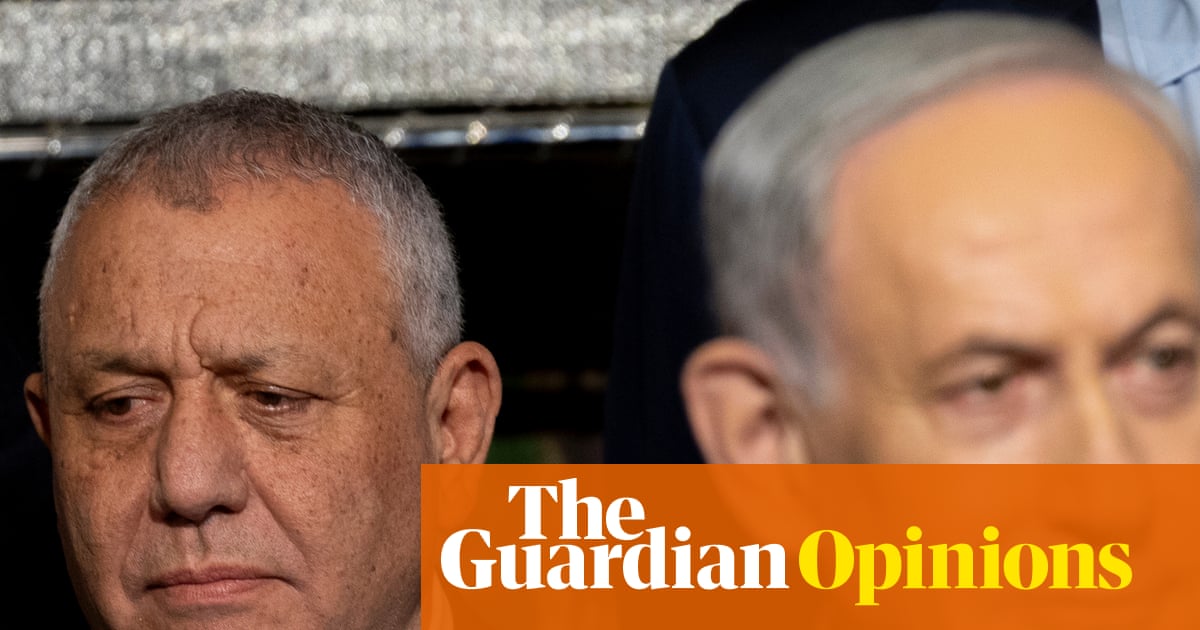
Israel faces potentially weeks of coalition negotiations after partial election results and exit polls showed neither Prime Minister Benjamin Netanyahu’s governing bloc nor the opposition led by Gadi Eisenkot securing enough seats to form a majority government.
With 50 percent of the votes counted, Israeli media projections put Netanyahu’s bloc on 55 seats in the 120-member Knesset, Israel’s parliament. Eisenkot’s opposition bloc is projected to win 49 seats, while Palestinian parties could secure 16, according to The Guardian’s October 28 election explainer . The projections remain provisional as counting continues.
A government needs the support of at least 61 lawmakers to command a majority in the Knesset. Netanyahu’s bloc is therefore nine seats short of the threshold, while Eisenkot’s grouping is 12 short. Neither side can govern with a majority unless it secures additional support.
Exit polls released by Israel’s major television networks on Tuesday evening initially projected a tie, putting Netanyahu’s governing bloc and Eisenkot’s opposition grouping on 51 seats each.
Earlier projections had given Eisenkot’s bloc a slight lead. The revised estimates, however, put the two sides on roughly equal footing, leaving the outcome uncertain.
Israeli exit polls are frequently revised and can differ from the final results by several seats. The initial projections should therefore not be treated as a definitive indication of which side will form the next government.
The emerging results also point to a significant increase in the representation of Palestinian parties in the Knesset, potentially giving them greater influence over coalition negotiations.
Why could Palestinian parties be decisive?
Palestinian parties are projected to win as many as 18 seats, up from 10 in the outgoing parliament. The current partial-count projections put them on 16 seats.
Their support could prove crucial if neither Netanyahu nor Eisenkot can assemble a majority through other political alliances.
Experts cited by The Guardian say Eisenkot could be compelled to negotiate with the Joint List and Ra’am if his opposition bloc falls short of a majority. Such negotiations could take weeks. The two groupings represent Palestinian political constituencies within Israel.
Eisenkot could also attempt to form a minority government, relying on informal agreements with other lawmakers to secure support on individual parliamentary votes. Such an arrangement would allow his government to operate without a formal majority, but its survival would depend on securing sufficient support on key issues.
Netanyahu has ruled out forming a government that relies on Palestinian parties. His position could further complicate coalition-building if his existing partners fail to deliver the numbers needed to govern.
What have Netanyahu and Eisenkot said?
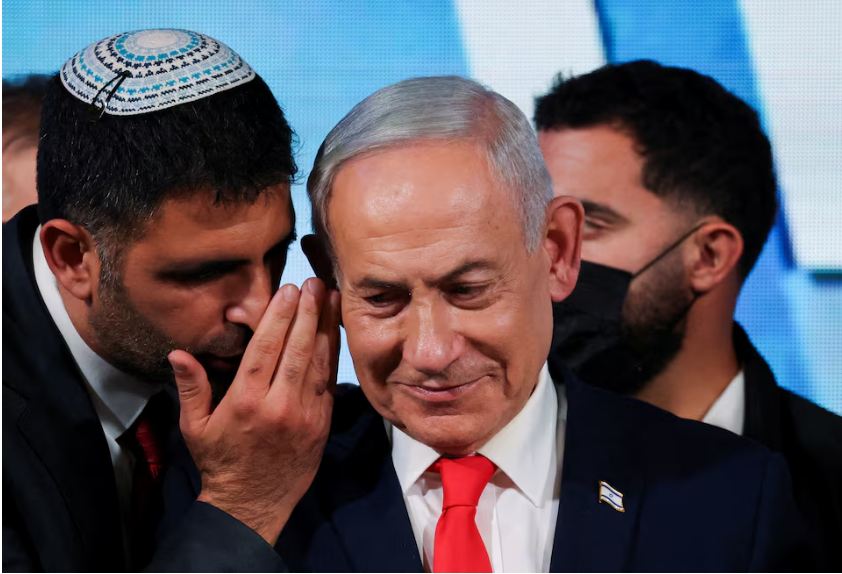
Netanyahu addressed supporters at a post-election rally in Jerusalem shortly after 3am on Wednesday. He said the final results would show that Likud was Israel’s largest party and called for a “strong, right-wing national government”.
He also rejected the prospect of a government dependent on Palestinian parties, urging Israel’s Jewish and Zionist political groups to unite behind a right-wing administration.
Eisenkot, speaking to cheering supporters in Tel Aviv, argued that voters had rejected Netanyahu’s continued tenure as prime minister. He said Netanyahu should have acknowledged the public’s lack of confidence and announced his retirement from politics.
Eisenkot also warned Netanyahu against using Israel’s security for political purposes. His remarks came amid concerns that the prime minister could use the period of political uncertainty as an opportunity to launch another attack on Iran.
The two leaders’ statements highlight the political divisions that could make it difficult to assemble a governing coalition, even after the final election results are announced.
Was there a dispute over the voting process?
The election was also marked by a dispute over polling hours.
The Guardian reported that Netanyahu and several other parties made a last-minute attempt to keep polling stations open beyond their 10pm closing deadline on Tuesday. The Central Elections Committee rejected the request.
Netanyahu subsequently suggested that the “left and Arabs” were attempting to steal the election. The committee rejected the allegation, saying it had found no evidence of systematic tampering.
The dispute added to tensions surrounding an election whose outcome remained uncertain even after the initial exit polls and a substantial portion of the votes had been counted.
The final distribution of seats will determine whether either side can assemble a viable governing coalition.
Netanyahu will seek to secure enough support from Likud, far-right factions and religious parties to form a government. Eisenkot faces a similar challenge and may have to consider negotiations with the Joint List and Ra’am, despite the political difficulties involved.
If neither bloc can secure a majority through formal alliances, a minority government supported through vote-by-vote agreements remains another possibility. The process could take weeks, and prolonged deadlock would leave Israel facing continued uncertainty over who will lead the next government.
For now, the central question is not simply which party emerges with the most seats, but whether either political camp can secure the support of at least 61 lawmakers in the Knesset.