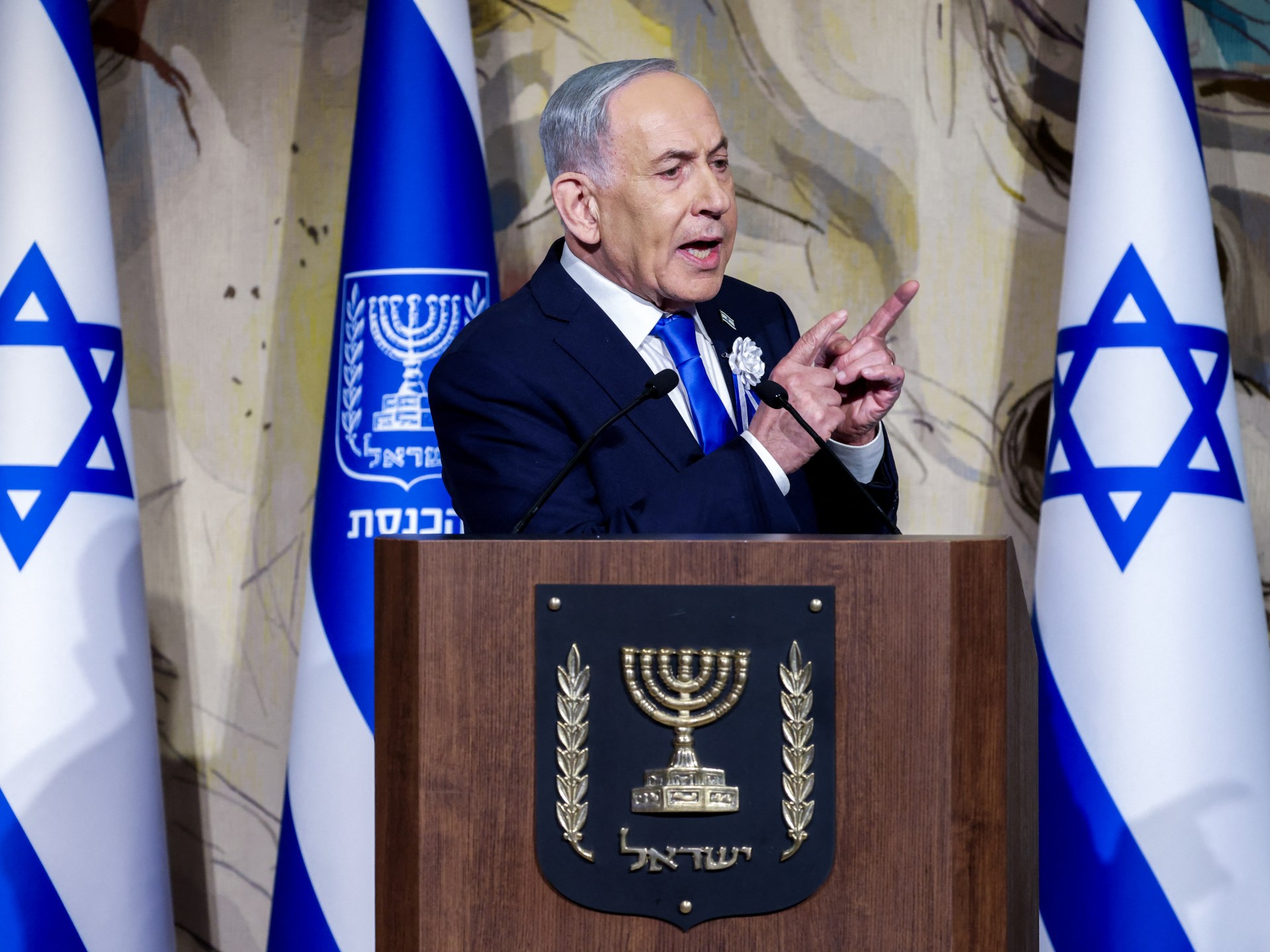
How Netanyahu reshaped Israel after 18 years in power
To his supporters, he is known as “King Bibi”; but to his opponents, he is the king of security failures and corruption.
Disputes over names aside, what is not in question is that Benjamin Netanyahu, Israel’s longest-serving prime minister, has left his mark on the country’s institutions, politics and social attitudes during a decades-long career that has been defined by Israel’s lurch to the right.
As he seeks re-election in Israel’s October 27 polls, analysts say his most enduring domestic legacy may be the right-wing, militaristic opposition that he has helped create and now faces.
Born in 1949, Netanyahu entered Israel’s central political stage in the early 1990s by fuelling anger at possible peace deals with the Palestinians and Syria.
Israeli political leaders have accused him of leading incitement that motivated the 1995 assassination of then-Prime Minister Yitzhak Rabin, who was leading negotiations with the Palestine Liberation Organization, by an ultranationalist Israeli. Netanyahu had led rallies in which participants depicted Rabin in a Nazi SS uniform and held signs of him in the crosshairs of a gun, while others shouted “traitor”.
The Likud Party leader denies any responsibility, but former security officials have said they warned Netanyahu before the assassination and asked him to dial down his rhetoric, only for him to refuse, according to Israeli media reports.
In 1996, Netanyahu’s populist tactics succeeded at the ballot box, making him Israel’s youngest prime minister. Netanyahu’s transactional leadership style gave prominence to extreme-right and religious parties that are now an indispensable part of his right-wing alliance.
Under him, religious courts have expanded powers, including over civil and business disputes. State institutions accommodate religious agendas and allocate record levels of funding to ultra-Orthodox schools and institutions.
Netanyahu inscribed his political ideology, especially on the identity of the state and the status of Palestinian citizens of Israel, into law. In 2018, the Knesset passed the so-called Nation-State Basic Law , which states – among other things – that Israel is the exclusive state of the Jewish people and also makes advancing illegal settlements a national priority.
Human rights organisations in Israel petitioned the High Court to stop the legislation from going into effect, but the petition was rejected. International experts and rights groups cite this law, among others, as evidence of Israel committing the crime of apartheid in its treatment of Palestinians.
Netanyahu also re-engineered state institutions, including Israel’s security structures, appointing loyalists and political allies to senior positions. He also clashed with security chiefs that he deemed antagonistic. And in the aftermath of the Hamas-led October 7, 2023 attack, which triggered Israel’s genocidal war against Palestinians in the Gaza Strip, Netanyahu deflected blame and responsibility on the security establishment, prompting Ronen Bar, who was the Shin Bet chief in 2023, to sue him for defamation.
A major change to Israeli institutions that was spearheaded by Netanyahu during his 19 on-and-off years in power affected the judiciary, which is examining lingering corruption charges that could see him serve time in prison if he is convicted. Netanyahu, who is up against three separate cases of corruption filed in 2019, denies any wrongdoing.
Under his leadership, the Knesset adopted legislation that changed the composition of the Judicial Selection Committee to ensure greater political influence for the governing coalition.
Netanyahu called it “judicial reform” to stop what he often calls a “judicial dictatorship” ruling over elected officials.
Opponents called it a “coup” that sparked wide-scale protests : a push to curtail the independence of the High Court and give politicians influence over the courts and ministerial legal advisers.
In line with his efforts to subvert independent oversight, Netanyahu tried repeatedly, but unsuccessfully, to fire the attorney general.
But he succeeded in dismissing the military’s advocate general for leaking a video of Israeli soldiers gang-raping a Palestinian detainee. The soldiers were also released and cleared of charges.
At the same time, Netanyahu is dogged by corruption cases dating back to 2019, which could see him serve time in prison if convicted
The prime minister, who is wanted by the International Criminal Court on charges of war crimes in Gaza, says his work is not over. He promises his supporters he will complete the overhaul of judicial review and press on with other highly controversial policies.
Netanyahu’s supporters and allies view him as a leader who delivers, and one who achieved what others could not. His opponents pledge to undo the damage Netanyahu caused over the past decades, pointing to corruption, social divisions and increasing international isolation as outcomes of his rule.
But undoing such formative changes, many of which are now law, may be easier said than done.