FILE - Faithful wait for the start of Pope Leo XIV Angelus prayer St. Peter's Square at the Vatican, Aug. 2, 2026. Gregorio Borgia/AP hide caption
October 23, 2026 • Blistering record heat in Europe this summer helped kill more than 50,000 people, with nearly two-thirds of that death toll blamed on human-caused climate change, a new study found.
Dried grass in Greenwich Park, London, Aug. 11 during the UK's hottest summer on record. Two-thirds of England fell into drought, with water restrictions affecting 27 million people. Dan Kitwood/Getty Images Europe hide caption
October 21, 2026 • As climate change fuels hotter summers, some Britons are moving north in search of cooler weather. Could a similar shift be on the horizon in the United States?
The Jeffrey Energy Center coal-fired power plant as seen in January 2026 in Topeka, Kan. Burning coal contributed to a significant increase in greenhouse gas emissions by the United States last year, according to a new United Nations report. Charlie Riedel/AP hide caption
October 21, 2026 • The U.S. is the only major economy where planet-warming pollution dramatically increased last year. The United Nations warns the planet is on track for catastrophic warming.
Coastally trapped Kelvin waves moving along the West Coast. The dark red represents higher than normal sea levels. Dillon J. Amaya/North Carolina State University hide caption
October 19, 2026 • A large underwater wave moved up the West Coast, raising sea levels. Scientists say it's driven by El Niño and it's going to happen again.
October 16, 2026 • As our climate crisis continues to unfold, who gets to keep the lights on?
At Palmyra Atoll in the remote Pacific Ocean, wildlife refuge manager Paige Mino observes red-footed boobies. Scientists have found a surprising link between the seabirds and the health of the surrounding ocean. Claire Harbage/NPR hide caption
October 13, 2026 • Coral reefs are facing increasing threats around the globe. But on a remote Pacific island, scientists have found that reefs can get help from a surprising ally: seabirds.
Vehicles pass a utility pole brought down by the effects of Isaias on Saturday, Oct. 10, 2026, in East Milton, Fla. Octavio Jones/AP hide caption
October 9, 2026 • Hurricane Isaias landed Friday night on the Florida Gulf Coast. The storm was expected to bring life-threatening storm surge, damaging winds, flooding and the possibility of tornados.
Hurricane Isaias is heading toward the northern Gulf Coast, as seen in this satellite image captured at sunrise Thursday morning. Forecasters say the storm could make landfall late Friday or early Saturday. National Oceanic and Atmospheric Administration/National Oceanic and Atmospheric hide caption
October 8, 2026 • Tropical Storm Isaias is now the first Atlantic hurricane of 2026 — and it's spinning toward the southeastern U.S.
Louie Delaware walks through an open area near his rebuilt home in Louisville, Colo. The landscape includes areas where homes destroyed in the Marshall Fire have not been rebuilt. The costs of adapting to climate-related impacts are part of Boulder County's claims against ExxonMobil and Suncor Energy. Jimena Peck for NPR hide caption
October 5, 2026 • The case centers on whether local governments can hold giant energy companies accountable for the local harms of climate change, but it has repercussions beyond climate.
In June 2026, Pacific Ocean sea surface temperatures around the equator were already abnormally warm, an indicator of a developing El Niño. Since then, they've only increased. NOAA Satellites hide caption
October 5, 2026 • This year, federal forecasters say the planet could see the strongest El Niño event on record. Here's what you need to know.
During the last strong El Niño in 2015, South Carolina experienced catastrophic flooding, driven by record-breaking rain. Forecasters say the super El Niño now developing is likely to be even stronger. Sean Rayford/Getty Images hide caption
October 1, 2026 • A powerful El Niño is already influencing extreme weather around the planet. During the last strong El Niño, federal agencies ramped up research in the hope of improving weather forecasts. This year, they won't be matching that effort.
A Swiss glacier shows the effects of years of ice loss, with exposed rock replacing ice that once covered the landscape. Swiss Academy of Natural Sciences hide caption
September 30, 2026 • Switzerland's glaciers are disappearing at a record pace. More than 5% of their ice has vanished this year alone — threatening water supplies, ecosystems and communities across Europe.
In an aerial view, an electric vehicle charges at an EVgo electric charger on March 30, 2026, in Monrovia, California. Justin Sullivan/Getty Images North America hide caption
September 30, 2026 • Congress got rid of a $7,500 federal tax credit for new electric vehicle buyers. One year later, are people still buying EVs?
A man carries items through floodwater past downed electric lines after the passing of Hurricane Polo in Puerto San Carlos, Baja California Sur state, Mexico, Tuesday, Sept. 29, 2026. Eduardo Verdugo/AP hide caption
September 30, 2026 • The storm's remnants battered the U.S. Southwest, flooding roadways and forcing residents in small New Mexico towns to evacuate over concerns about a dam failing.
Traffic moves along the 405 Freeway on Feb. 13 in Los Angeles. Apu Gomes/Getty Images hide caption
September 28, 2026 • The Trump administration says easing these standards will make cars more affordable. Critics say it's not so simple and could be costly for the environment.
Fire Captain Lui Sales of the Hawaii Fire Department looks for residents to help as rainwater from nearby Hurricane Nolo flood a section of Mamalahoa highway Saturday, Sept. 26, 2026, near Naalehu, Hawaii. Gregory Bull/AP hide caption
September 28, 2026 • Hurricane Nolo edged further away from the Hawaiian Islands on Sunday as major Hurricane Polo bore down on Mexico's Baja California peninsula with a threat of storm surge, high winds and heavy rains.
This satellite image from the National Oceanic and Atmospheric Administration shows three storms in the Pacific Ocean on Thursday, Sept. 24, 2026. Tropical Storm Nolo, left, is south of Hawaii. Hurricane Polo, right, is off the coast of Mexico. Hurricane Odalys is in the middle. NOAA via AP/NOAA hide caption
September 25, 2026 • The Pacific Ocean has had an unusual number of storms this year, while the Atlantic hasn't recorded a single full-blown hurricane. Scientists point to an exceptionally strong El Niño.
Hayden Cheek cleans debris out of the North Toe River in Western North Carolina nearly two years after Hurricane Helene hit the area. Juan Diego Reyes for NPR hide caption
September 25, 2026 • Across the country, lost-and-found networks seek to reunite objects with disaster survivors. The work can take years. In some cases, it's impossible to pick up all the pieces.
In an aerial view, the Strategic Petroleum Reserve storage at the Bryan Mound site is seen on October 19, 2022 in Freeport, Texas. Brandon Bell/Getty Images North America hide caption
September 25, 2026 • The U.S. has tapped into its strategic oil reserve to help drive down rising gasoline prices in the wake of the war with Iran. Can oil from Venezuela help fill it back up?
This photo provided by NOAA shows Hurricane Polo strengthening in the Pacific Ocean off the coast of Mexico on Tuesday, Sept. 22, 2026. NOAA via AP hide caption
September 23, 2026 • Southwestern Mexico braced for heavy rain and mudslides after Polo became a major hurricane. Forecasters warned another system headed for Hawaii could cause catastrophic flooding later in the week.
The Nepali Army conducts a search-and-rescue operation on Sept. 10 inside the Chilime Hydropower Station tunnel days after the deadly flash floods and mudslides in Nepal's Rasuwa district in August. In the wake of the disaster, concerns are being raised about the impact of the construction of hydropower plants and dams in the Himalayas. Skanda Gautam/AFP/via Getty Images hide caption
September 23, 2026 • Building dams and hydropower plants in the Himalayas holds great promise for providing electricity. In the wake of the Nepal disaster, experts are asking about the risks of such construction.
The coral reefs at Palmyra Atoll in the remote Pacific Ocean are some of the healthiest in the world, helping researchers understand the vital aspects of reef recovery and how it can apply to reef restoration worldwide. Claire Harbage/NPR hide caption
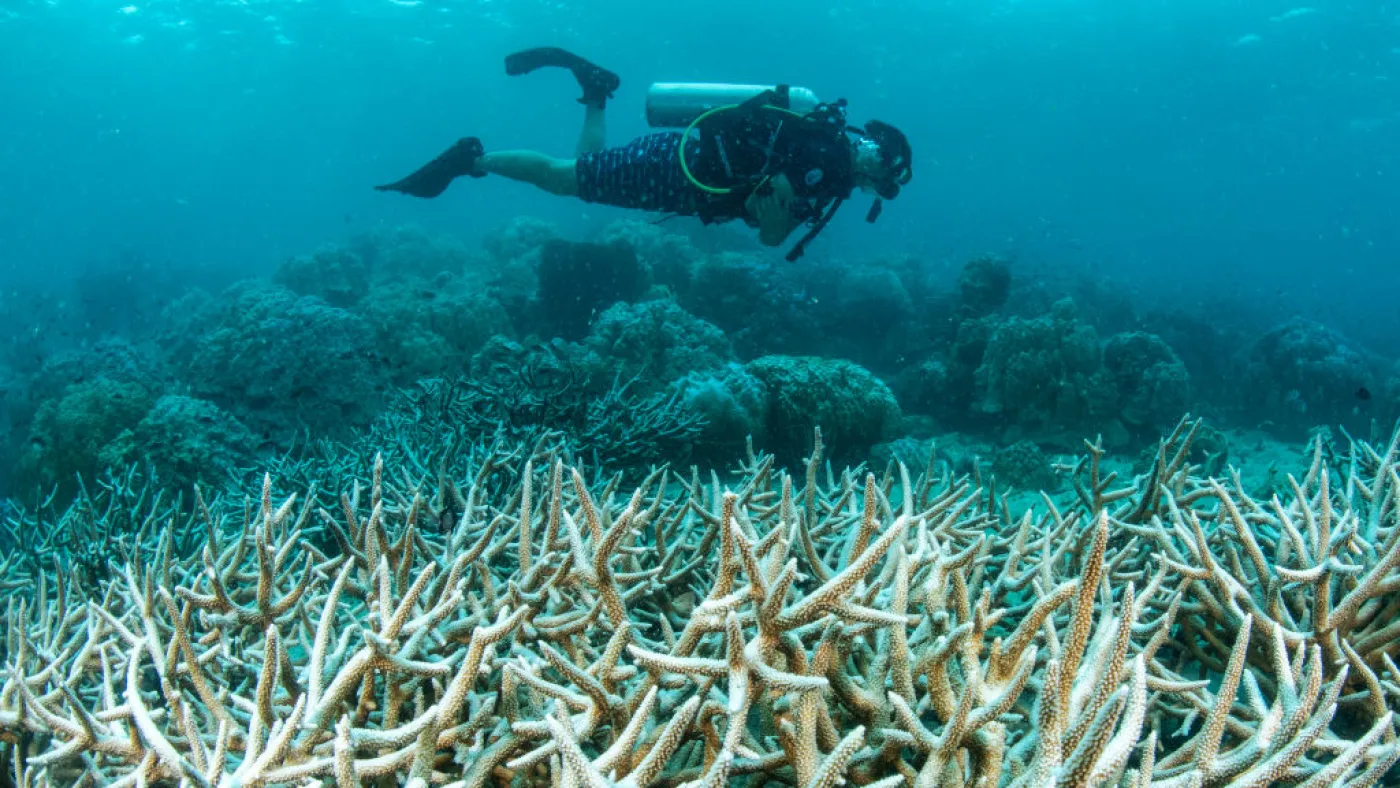
September 23, 2026 • Coral reefs are under threat right now due to abnormally warm ocean temperatures. Scientists are studying the healthiest reefs in the world in search of ways to help all reefs with climate change.
This photo provided by NOAA shows Hurricane Polo intensifying in the Pacific Ocean off the coast of Mexico on Monday, Sept. 21, 2026. NOAA via AP hide caption
September 23, 2026 • Hurricane Polo has grown into one of the most powerful Pacific cyclones in decades, and it was expected to skirt Mexico's southwestern coast as a Category 5 storm.
Tanner Faaborg poses for a photo at his farm in central Iowa. The Faaborg family grows specialty mushrooms at 1100 Farm in central Iowa. Madeleine Charis King/Iowa Public Radio hide caption
September 21, 2026 • The U.S. gets nearly a third of its pork from Iowa. One family is making the switch from pigs to more sustainable specialty mushrooms and trying to show other pig farmers how they did it.