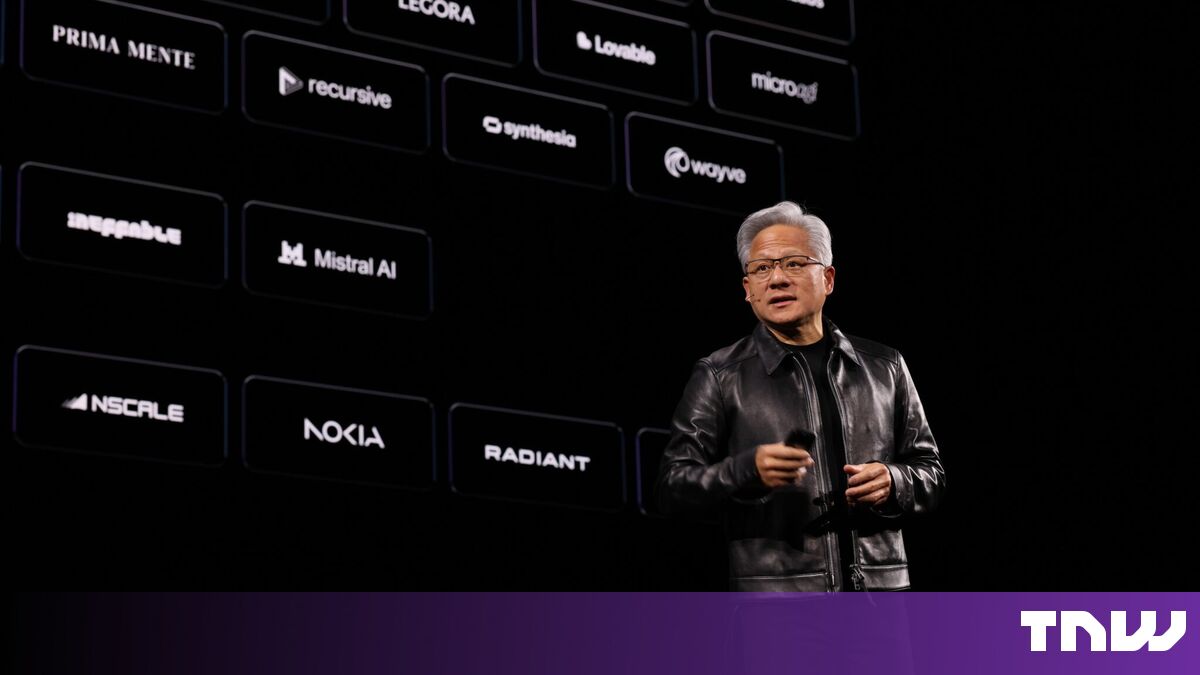
The extreme market gyrations and the drama surrounding Nvidia this past week have highlighted the dilemma facing Federal Reserve Chairman Kevin Warsh .
On Friday, as stocks sold off, market-based probabilities that the Fed would raise interest rates declined. On Monday, with Jensen Huang back in office , a powerful rally restored market confidence that two more rate hikes are coming.
On one level, ignoring daily market vicissitudes and focusing on the long term is at the heart of one of the key changes Warsh wants to push through at the Fed. On another, he has been explicit that markets do a better job of forecasting and he wants to use market indicators more than forecasts to guide policy.
But those indicators can be subject to extreme volatility.
Take the benchmark Goldman Sachs Financial Conditions Index. Last week, the market decline and widening of credit spreads had sent a signal for the Fed to ease back on at least some of its plans to tighten policy. Some Fed commentators called for rate hikes to be taken off the table entirely. On Monday, the index eased by 22 basis points, reversing nearly half of the prior week's tightening, and both December and January hikes were back on the table.
Warsh's message, in words and deeds, is for markets to look beyond that volatility. He traveled to San Francisco last week and patiently presided for three hours over a conference on the outlook for artificial intelligence and its potential economic impact , peppering economists and tech leaders with questions about the dangers and potential upside of AI for the economy. The meeting was part of the AI task force he has convened that, in turn, is one of five to study different areas of Fed policymaking.
In his opening remarks , he said, "These groups are a way of broadening our thinking, of inviting robust discussions that take us far deeper... than fleeting data points [or] daily market moves. Our task forces are an intellectual investment to help better equip us for the next policy conjuncture and beyond."
Compare that desire for intellectual investment to Warsh's press conferences after Fed meetings. He has cut them down to a half hour, and he routinely spends much of the time parrying reporter questions about what the next Fed move will be, part of his general aversion to forward guidance. At the June press conference, he paraphrased former Secretary of State George Schultz saying, "Press conferences are useful. But when you have one, you want to make sure you have something important to say." In a regime where Warsh does not want to provide forward guidance, there is far less to say than there once was.
Here's what is known of what Warsh seems to believe about monetary policy:
In a sense, it seems, Warsh wants to make monetary policy the way he did his old job at the Duquesne Family office working for legendary investor Stan Druckenmiller. There, he evaluated startup companies, many of them with the wisp of an idea in the mind of a tech geek, for the possibility of profit many years down the road. Marked to market, those investments would show big negative numbers on the day's profit and loss statement. Down the road, some would go bankrupt and others would offer handsome returns.
Warsh's focus on AI highlights his dilemma in wanting to do policy in a different, more forward-looking and market-based way. The outlook for AI, as the chairman himself has admitted, is moving rapidly and is deeply uncertain. Markets may already be rethinking the potential earnings upside and the amount that will be spent on the AI buildout. The adoption rate of the technology is uncertain, and so are the economic effects on inflation and growth.
Warsh in San Francisco showed a particular interest in the potential for a "China Shock" to hit jobs in the U.S. service sector, a reference to how Chinese imports devastated the U.S. manufacturing sector earlier this century. If that happened, widespread unemployment could lead the Fed to lower rates over time, while the frenzied AI buildout looks now to be sparking inflation and pressuring rates upward. So there are different messages for the Fed chairman being sent from the same economic development.
It is established in the monetary policy literature that the current rate level affects the economy with what are known as "long and variable lags." Those lags mean that where policy is set today will influence the economy sometime next year. The objective is to set policy for where one thinks the economy will be next year.
Wide error bands surround most economic forecasts, including those from the Fed. But there are similarly wide error bands on market pricing. The question is, which market signals are worth watching, and for how long do they need to persist to guide policy? The Nvidia situation shows markets can be very short-term about the long-term signals they send.