• Within hours: The US Army plans to blow up nearly 5 tons of unstable bomb-making chemicals at an Iowa plant at around 10 a.m. ET. Federal officials say this controlled detonation is needed because the material is degraded and chilling temperatures could cause an uncontrolled explosion, as could any attempt to open the containers to chemically neutralize it.
• Feds overcame court challenge: A federal court had postponed the controlled blast, initially scheduled for last week, amid concern that clouds of lead dust could cause health and environmental problems. But the court on Monday reinstated a permit for the blast.
• Spread of lead dust : The detonation could spread toxic lead dust — unhealthy at any level and especially dangerous to children — over parts of rural Iowa and northeastern Missouri, environmental groups said. Here’s how residents are being told to prepare.
The US Army on Wednesday said personnel on site in Middletown, Iowa, have been working “around the clock to mitigate the impacts” of the detonation.
“This includes a water wall filled with more than 100,000 gallons of water, earth berms, sand-filled blocks, expert dispersion modeling, and temperature-regulating tarps,” the Army said in a social media post .
The post included video of soldiers preparing for the planned detonation.
Ahead of the detonation, some residents within 5 miles southwest of the ammunition plant may be evacuated, and people within 5 to 20 miles are encouraged to stay indoors with their windows closed, an emergency alert from the Federal Emergency Management Agency said .
The Army is also advising residents nearby who live outside the evacuation area to shelter in place. Those residents are encouraged to close windows and doors, set heating and cooling systems to recirculate, turn off all fans that bring in outside air and keep small children and pets indoors.
After the Army determines the exposure has ended, residents in affected areas should “ wet-clean surfaces that may be contacted by infants or children, including outdoor play equipment, toys, tables and chairs, handrails, patios, decks, exterior windowsills, and other high-contact surfaces,” the Army said .
The Iowa Department of Health and Human Services recommends residents wash outdoor surfaces when they see dust using soap and water. Residents are also advised to wash their hands before eating and drinking, and to take off their shoes at the entrance of homes to minimize tracking anything inside.
The Army has shared information on how to submit a claim for property damage during the detonation, but didn’t specify what would be considered damage.
People who live in the affected area can have their property tested for lead contamination, an EPA official said.
Some people around Middletown, Iowa are concerned over potential health consequences in the aftermath of the Army’s plan for a controlled detonation of hazardous, degraded lead azide at the Iowa Army Ammunition Plant. CNN’s Julia Vargas Jones reports.
Some people around Middletown, Iowa are concerned over potential health consequences in the aftermath of the Army’s plan for a controlled detonation of hazardous, degraded lead azide at the Iowa Army Ammunition Plant. CNN’s Julia Vargas Jones reports.
The US Army, in coordination with the US Environmental Protection Agency, on Wednesday plans to destroy nearly 70 drums containing lead azide, a compound used to detonate munitions, as Iowans, environmental advocates and politicians worry the plume from the detonation could spread toxic lead dust in their communities.
Lead is toxic to the brain and exposure is known to cause serious harm to children’s health, resulting in slowed growth and development, as well as problems with learning, behavior, hearing and speech, according to the US Centers for Disease Control and Prevention .
The hope for the detonation is that if the lead azide spreads over a wider area, it won’t stay in high-level concentrations, Patrick O’Shaughnessy, a University of Iowa professor and environmental health expert, said.
However, there is no safe level of lead in the body, Dr. Sameer Vohra, director of the Illinois Department of Public Health, said in a statement . “(And) when inhaled or swallowed, it can pose serious health risks.”
There is potential for exposure through the air during the initial plume or through touch after it has settled, O’Shaughnessy said. Neither exposure is worse than the other, as the lead will still build up in your body both ways, he said.
Environmental advocates also warn the incident may worsen health for residents in Iowa overall. The state has the second-highest rate of cancer of any US state and is one of only three states where the cancer rate is rising.
CNN’s Eduardo Cuevas, Taylor Romine and Julia Vargas Jones contributed to this report.
The US Army in March during “ routine stockpile surveillance” discovered lead azide, a compound used to detonate munitions, had been degrading inside bunkers at the Iowa Army Ammunition Plant in Middletown, Iowa, Acting Army Secretary Adam Telle has said.
The lead azide’s degraded status left it “extremely unstable and sensitive to even slight friction or movement,” according to an FAQ the Army distributed locally last month. The degraded, crystallized material will explode on its own if the crystals break, which can happen more easily in freezing temperatures, federal officials said in court filings. That is a growing concern as wintry weather sets in.
Officials considered using a chemical agent to neutralize it, but that was untenable because the crystallization was such that the barrels of lead azide couldn’t be safely moved, Army Col. Aaron Teller told reporters Tuesday.
“You can’t even open the lids to treat it,” Teller said.
After coordinating with the Environmental Protection Agency, experts and the community, officials “determined that a controlled detonation was the option that posed the lowest risk to the public in the immediate and surrounding area,” Telle wrote Thursday.
CNN’s Eduardo Cuevas, Taylor Romine and Julia Vargas Jones contributed to this reporting.
Lead azide is an explosive chemical compound of lead, mainly used by the military to detonate munitions.
Usually in the form of needles or a white powder, it is highly sensitive, and can explode from shock, heat, flame or friction when dry.
It is produced continuously by the reaction of lead nitrate or acetate with sodium azide, according to the National Center for Biotechnology Information .
The United States started using lead azide as a primary explosive almost 100 years ago, according to Robert Cekada, director of the Bureau of Alcohol, Tobacco, Firearms and Explosives, but due to its sensitivity has began moving away from its use over the last 15 years.
The lead azide at the Iowa Army Ammunition Plant was stored as an emergency stockpile if the military needed it for battle, and some of it is already more than 60 years old, Cekada said.
The Army informed the EPA — which will have more than 300 personnel on the ground today to collect samples and conduct monitoring — that the lead azide at the Iowa plant had recrystallized, creating a risk of spontaneous explosion.
“We noted significant crystallization on the exterior of the barrels, the exterior of the barrels, and the the lids and the viewports,” Cekada said.
The Army says the stockpile must be detonated at the ammunitions plant, because it is too dangerous to transport.
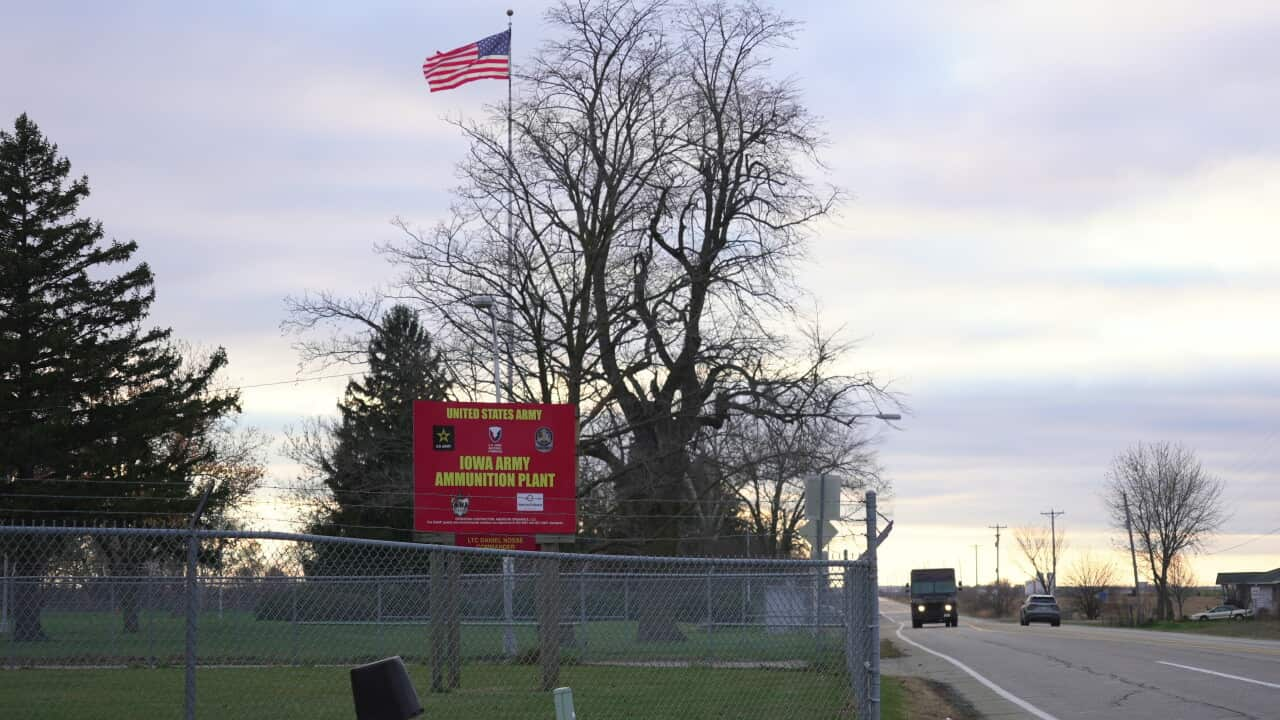
The US Army intends to detonate nearly 5 tons of material containing lead azide at the Iowa Army Ammunition Plant in Middletown on Wednesday, after a permit from the Environmental Protection Agency was reinstated by a federal appeals court Monday .
The detonation is scheduled for around 9 a.m. local time (10 a.m. ET).
Army officials have argued the stockpile of lead azide, a material used to initiate munition detonations, needs to be blown up in a controlled way now because it has degraded – and could spontaneously explode – after being stored long-term. The material has crystalized, and will explode if the crystals break – and that can happen more easily in freezing temperatures , which is a growing concern as wintry weather sets in, federal officials said in court filings.
Environmental groups, which filed suit last week to pause a permit allowing the detonation, said they worried the action risks fouling air, contaminating water and harming residents’ health.
The Environmental Protection Agency said it will have more than 300 personnel in the area today to help with sampling, monitoring and any environmental remediation that may be needed. Ahead of the blast, the EPA collected more than 1,200 samples from soil, dust, water and the air, the agency said.
The detonation, originally scheduled for last week, was moved to Monday, and then Tuesday, before being moved to Wednesday.