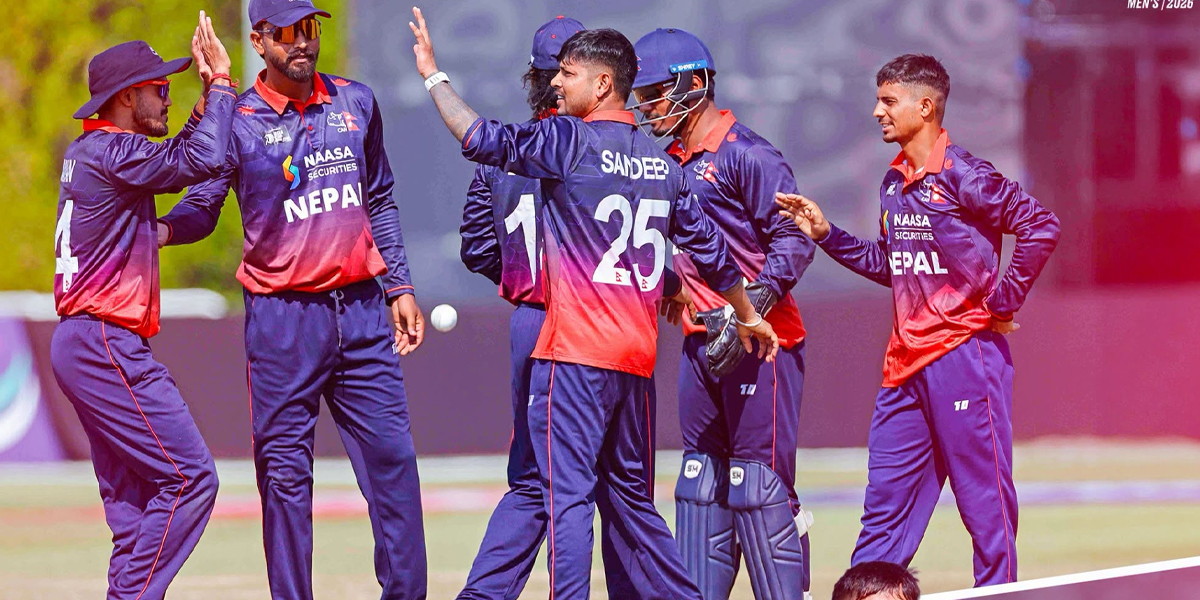
On May 16, 2018, Sandeep Lamichhane, the current ODI skipper of the Nepali national team, talked about Lord’s, the ‘Home of Cricket’, in effusive terms.
“What can I say about Lord’s, it’s the Home of Cricket, it’s a complete history of cricket and a dream venue for any cricketer,” he posted on his Facebook that day, after replacing Shakib Al Hasan in the World XI squad that was facing the West Indies, in the Hurricane Relief T20 Challenge match . “To play there in 2016 was a memorable occasion, which I look forward to reliving later this month. Really excited for this game.”
Lord’s is a pilgrimage for those growing up as a cricketer. It is where a professional cricketer wants to play at least once. And the Nepal national men’s team is heading there for a historic match—a T20I against Bangladesh—on June 3 next year.
The fixture, which is also historic for Bangladesh, is part of Nepal’s tour to England, which is being hosted by the Marylebone Cricket Club (MCC), the most active cricket club in the world, the owner of the Lord’s Ground, and the guardian of the Laws of the Game.
MCC was founded in 1787. The laws initiated by the MCC—such as the wickets’ distance should be 22 yards—were later adopted throughout the game, and the club, for long, has been the ‘ custodian and arbiter of Laws relating to cricket around the world’.
There are 18,350 Full and 6,000 Associate Members of MCC, which plays over 600 matches per year in the UK.
MCC also plays around 20-30 overseas fixtures annually to spread and develop the game globally. It was how MCC toured Nepal for the first time in March 2003 and the two sides established an enduring relationship. The MCC came back to Nepal in November 2015—for a two-day match and a T20 .
A year later, on July 19, 2016, Nepal debuted at Lord’s in a 50-over match against MCC. Nepal won that match, which was organised on the occasion of the 200-year relationship between Nepal and the United Kingdom, by 41 runs. Nepal returned to the Home of Cricket in July 2018 for a tri-series comprising MCC and the Netherlands. The last time MCC played Nepal was when they toured the mountainous nation in November 2019 .
Seven years have passed and Nepal and MCC have not come face to face again, but the cooperation between the two sides have not stopped. The MCC Foundation (MCCF) has been working in Nepal since 2019—supporting cricket projects across the Koshi and Madhesh provinces, with over 45,000 attending the projects last year alone. Several of those participants have been called up to the Nepali youth national teams. The upcoming England tour is another example.
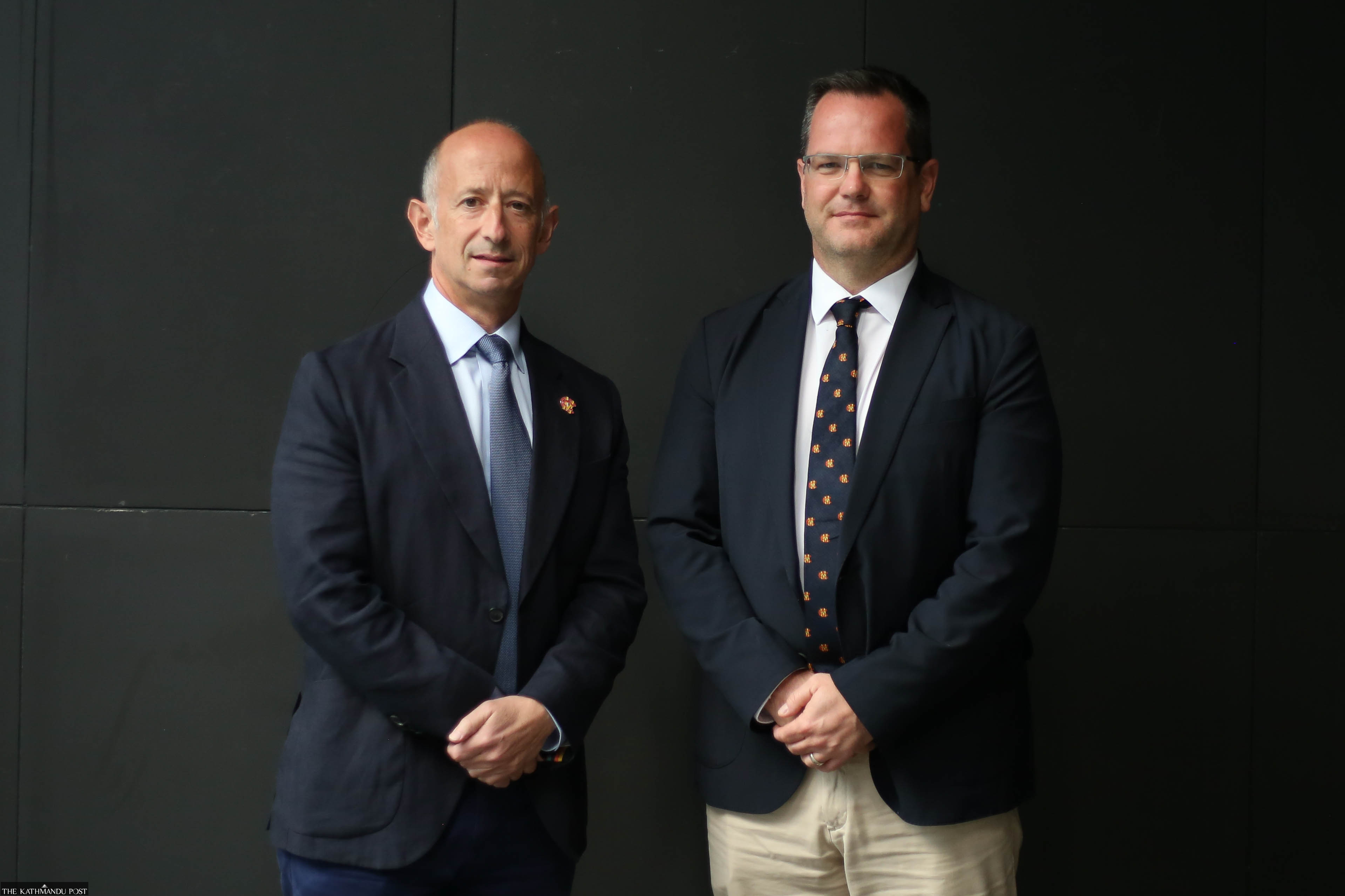
When Kantipur’s Nayak Paudel , Binod Pandey and Himesh Ratna Bajracharya spoke to two of the senior officials of MCC— Robert Lawson , chief executive and secretary; and Rob Lynch , director of cricket and operations—on Friday, a day after the duo announced Nepal’s England tour from TU Ground, they said that everything is on the table regarding support for Nepali cricket.
Lynch, a former cricketer himself, joined MCC as a director in April 2024. Lawson was appointed as chief executive and secretary in December 2024. But the two have already become fond of Nepal cricket and want to help this young cricketing nation reach greater heights through MCC.
This conversation has been edited and condensed for clarity.
What do you think about Nepal’s passion for cricket?
Lawson: It was my first time in Nepal. I was really surprised how much noise and emotion there was [at TU Ground during the NPL Qualifier 2 fixture between Sudurpaschim Royals and Chitwan Rhinos on November 19]. And obviously the quality of cricket is great. It is a real spectacle. Great to see that!
Lynch: Andrew Leonard, whom I have known for a long time, had been encouraging me to come and see cricket in Nepal and last year it happened. We found a way to do that through associating the ‘Spirit of Cricket’ with the NPL. And as Rob says, I too was just blown away… the fandom and craze of cricket fans. Seeing the crowd, the noise, and the passion for the game, which is still very young here. It was an opportunity we thought we might be able to help with.
Did Nepal’s performance against England at this year’s T20 World Cup prove to MCC that Nepal deserves a match against a full member at Lord’s?
Lynch: I think cricket in Nepal has been on the mind of a few people like Rob and me for a few years. I think what that game did was open a lot more eyes to the quality of some of Nepal’s players. Nepal were so close to what would have been a famous victory. But I suppose it was a victory in itself anyways—getting the attention of England and other major nations as well. We needed ECB’s support to enable us to bring Nepal to the United Kingdom and host these matches, and they were extremely supportive.
Is there a chance of Nepal playing England at Lord’s in the near future? And what about MCC touring Nepal again?
Lawson: There is always a chance. Nothing is in the pipeline at the moment and we will have to see how things develop. Nepali cricket is rising and at MCC our mission is to do everything we can for the good of the game. For any country that is really getting behind cricket, that’s a great thing and we want to encourage it for the England and Wales Cricket Board, which decides who England play in the opposition. Obviously, we want to see first-class cricket, and a lot of it, at Lord’s. We also look forward to bringing a MCC team to Nepal again in due course.
Nothing is off the table here. We do not want to commit to anything, as we have got a limited amount of resources. At the moment, we think the biggest impact on that progress is to bring Nepal to our country and to play at Lord’s. We will focus on that and do that right, and then see where we go from there. It is just the start, we will open up more opportunities—I can’t tell you what they are. We are really thrilled that we can have a great impact in Nepal.
It has not been long since you two joined MCC in the respective roles. How is it going?
Lawson: I have been in this role for nearly two years now. I came from a career in the energy industry, which is a different environment. The thing to remember about MCC is that we are a cricket club that plays around 600 matches a year, but we are also a 30,000-seater Home of Cricket, which needs looking after and needs to be maintained. We play a very important role in terms of influencing the world of cricket and working for the good of the game. It is different from a corporate environment because there are a number of different things that need to be looked after. So, to work in that role for me is a huge privilege and an honour. It is also very enjoyable.
Lynch: I was a little boy who grew up in Auckland, New Zealand, and got a phone call one day asking if I wanted to go to Lord’s and play cricket. So, I am very blessed. This is now my third role and every time I go to Lord’s I feel privileged. But it is also a big responsibility we have and we don’t take that for granted at all. The game is changing at a rapid rate and we—MCC and our venue—need to change with the game, which is an additional reason why we are here in this wonderful country.
You say that the game is changing. How does this affect emerging countries like Nepal, who have not yet even played a Test match?
Lynch: It is a very good question. Everyone within the game at any position— administration or fans—is talking about the same thing: the future of Test cricket and what it looks like is a question in everyone’s lips. I think it’s ambitious for Associate countries who simply don’t have the domestic infrastructures to play red ball cricket over four days. And the women’s game is mainly focused on white ball. The current system the ICC has for Test-playing nations may need to be looked at in the future.
There is now a big group of countries like Nepal that are rising up and it is great for the game. Everyone—ICC colleagues, domestic colleagues and colleagues all around the world—is grappling with this question. For us at MCC, it is not our decision-making authority, we just like to collaborate and help where we can. We all love Test cricket and we call Test cricket for a reason. Speaking to Paras [Khadka] and other players who are an inspiration in Nepal, I think Nepal should consolidate with white ball and see where it goes from there.
It is not a simple question as you all know.
Does MCC have plans for Nepal’s women’s cricket? We can see how Rachana Kumari Chaudhary, who was supported by the MCC Foundation, made it to the national team.
Lynch: The development of the women’s game globally is one of the biggest opportunities. We are seeing some fantastic women’s cricket now—the Hundred in England and Wales has been a great promotional vehicle for the women’s game, of which we are very supportive. Last year, we had the most women’s cricket ever played at Lord’s.
We were in discussions about potentially looking at how we can bring both teams overs, and it is something we will talk with CAN in due course. But if resources and finances weren’t an issue, we probably would be doing it. We did it for the first time—Nepal’s match against Bangladesh at Lord’s—through the men’s avenue. And again I stress, if we get it right, it is only going to open more opportunities for the female players. And we are happy with how the MCC Foundation is finding its rhythm in Nepal.
Lawson: We all love Lord’s. We have the privilege of working there everyday, and it still brings out goosebumps because it is a magical place to look at. And on match days, there is a thing we call the Lord’s hum, which is the noise you hear inside the ground. We think the atmosphere around the place is great and then there is the heritage, traditions and stories that have happened over 200 years at Lord’s. It is a magnificent venue and we think that’s magical. What we love to do is to invite people to come and play. Again, it is a privilege that we are able to invite Nepal and Bangladesh to come and play this fixture.
What are your expectations for the Nepal-Bangladesh fixture at Lord’s?
Lawson: We are hoping it will be a full venue and we get to sell out and celebrate both countries that have a huge fan base in the diaspora. The match will also be played at a perfect time so that viewers from Nepal and Bangladesh can watch it live on TV.
Hopefully, whoever can make it to the venue can experience what we feel as ‘magical’ at Lord’s.
Lynch: We are only focused on the Lord’s game—Nepal vs Bangladesh. But there are five other games against Scotland and Ireland in Wormsley and Beckenham. Both are fantastic grounds. It will be a unique kind of experience not only for the players but hopefully for the thousands of fans who will come to watch their heroes play.
Nayak Paudel covers sports for The Kathmandu Post. He previously worked at the Post (2018–19) and spent over five years at The Rising Nepal. His reporting spans crime, health, education, and social issues.
Binod Pandey is a sports reporter for the Kantipur Publications.