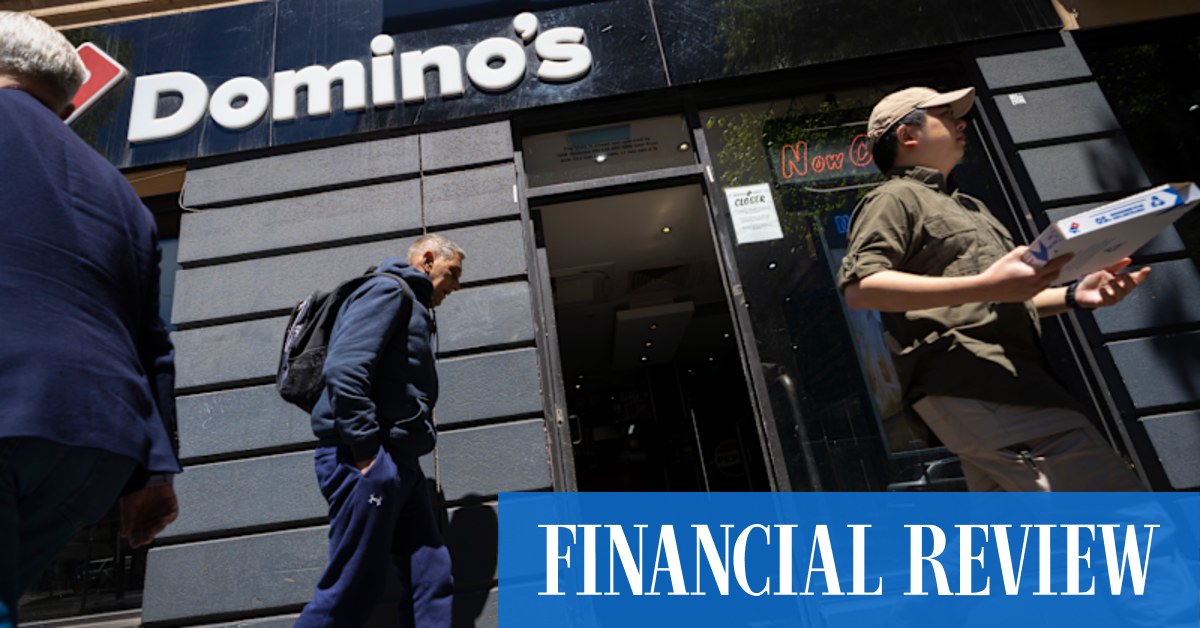
Big pizza chains are struggling as weaker consumer spending, a wider variety of dining options and the rise of GLP-1 medications weigh on their sales.
The pandemic was a boom time for Domino's Pizza , Papa Johns , Little Caesars and Pizza Hut. But since dining rooms reopened, the biggest U.S. pizza chains have faced an uphill battle to retain their customers.
These days, consumers are watching their discretionary spending but have more delivery and takeout options when they do decide to order, thanks to the accessibility of third-party platforms. Plus, food quality and the customer experience have become more important to diners who are looking for value when they order from restaurants.
As a result of pizza fatigue and challenges facing the broader restaurant industry, the number of U.S. pizza restaurants has tumbled. Since pizza locations hit a peak of 83,035 nationwide in August 2019, more than 9,600 pizzerias had closed their doors as of July 2026, according to data from Datassential.
In 2025, sales at U.S. pizza restaurants fell 0.3%, according to Technomic data. Sales at independent pizzerias slipped 0.4%. Chains, which account for about two-thirds of the domestic pizza category sales, saw revenue shrink 0.3%.
Papa Johns reported that North American same-store sales declined 2.5% in 2025. Pizza Hut's U.S. same-store sales fell 5%. Among the three pizza chains that were publicly traded last year, only Domino's posted annual same-store sales growth at its U.S. restaurants, with an increase of 3%.
It isn't just diners who have lost their appetite for pizza. Since March 2020, Papa Johns stock has lost about two-thirds of its value. Even shares of Domino's, which dominates the category, have seen gains of only about 2% in that time. For comparison, the S&P 500 has climbed about 150% over the same period.
And Yum Brands sold Pizza Hut this year, offloading the laggard of its portfolio to LongRange Capital and Yum China after about two decades of stagnating sales.
"Pizza Hut has been a detractor for YUM ... Going forward, YUM won't be tripped up by pizza category dynamics (discounting, etc.), translating to stronger growth and higher concentration in higher growth industry segments and markets," Wells Fargo analyst Zachary Fadem wrote in a research note in September.
Pizza chains now have significantly more competition for diners' dollars than they did in 2020. Third-party delivery platforms, which grew in popularity during the pandemic, offer a wide variety of cuisines beyond the traditional pizza and Chinese. As a result, Domino's and Papa John's have to compete with other fast-food chains, like McDonald's and Chick-fil-A, for DoorDash and Uber Eats orders.
As pizza has grown more expensive, a pie seems less appealing to budget-conscious diners. The average large cheese pizza is now almost $17, according to the 2026 Pizza Power Report from PMQ Pizza, a trade publication.
Plus, frozen pizza is another convenient option, with a lower price tag. Retail sales of single- and multi-serve frozen pizza rose 2.9% in the 52 weeks ended Nov. 7 compared with the same period in 2022, according to NielsenIQ data.
"When the American consumer is focused on the least expensive eating occasion, the items that are in my pantry, my refrigerator and my freezer win every single time," said David Portalatin, a food and food service industry advisor for Circana.
Convenience stores like Casey's General Stores have also won over customers with pizza at a low price point.
"We believe that [Casey's] has an advantage over [quick-service restaurants] and dollar stores, which have fewer options to navigate the persistent inflationary environment, while [Casey's] can offset food pressures with margins," Bank of America Securities analyst Sara Senatore wrote in a research note published in June.
She added that geographic overlap of locations suggests that Casey's is stealing share from Pizza Hut.
The biggest pizza chains have also been slow to adapt to shifting consumer attitudes toward nutrition. For example, of the four biggest chains, Papa Johns is the only one to even test a pizza crust with added protein as more diners prioritize it in their diets. And the test was only in one Atlanta restaurant — for a single day.
Pizza's nutritional content more broadly is another drag for the category. Its carbohydrate and fat content, from its dough and cheese, respectively, can make it less appealing for consumers on GLP-1 drugs, which have skyrocketed in use over the last several years.
Spending on pizza quick-service restaurants has fallen 22.2% per GLP-1 household after six to eight months using the medications, according to a 2026 survey published by PwC.
To be sure, pizza's recent struggles do not mean an existential crisis for the category. Total pizza servings are down only about 1% this year, Circana's Portalatin said.
And chains are trying to reverse that downturn in servings. In August, Domino's launched the Domino, a customizable Detroit-style personal pizza to attract solo diners. In November, Papa Johns unveiled a new turnaround plan focusing on improving food consistency and restaurant operations. And Pizza Hut is running a holiday-themed meal deal.
"Pizza's not going anywhere," Portalatin said. "The American consumer loves pizza."