
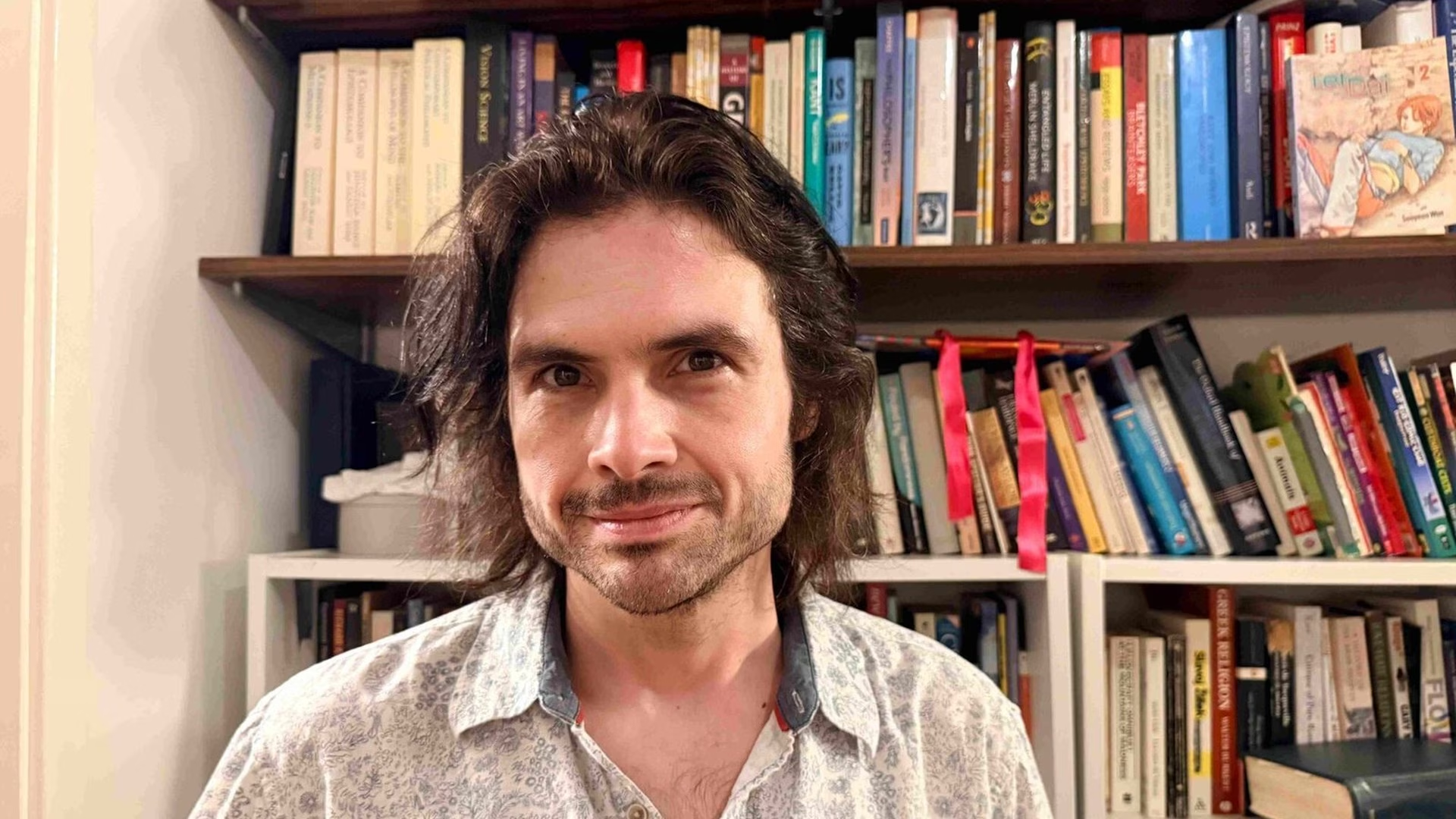

Levent Alpöge, a mathematician at Anthropic, says he has proved the Riemann hypothesis with the company’s AI model Claude. It is the most famous open problem in mathematics. He posted the claim in a four-page note on his website on Friday. The proof itself is out only as code for Lean, a program that checks every logical step.
Bernhard Riemann proposed the hypothesis in 1859. It is about how the prime numbers are spread along the number line. It is also one of the Clay Mathematics Institute’s Millennium Prize Problems, each worth $1m. Alpöge says his method also proves the Generalized Riemann Hypothesis, a much wider version.
“I believe I have, working with Claude, discovered a proof of the Riemann Hypothesis,” Alpöge wrote.
There is no paper for people to read. A human-readable version would be enormous, Alpöge wrote. A footnote says his own draft passed 250,000 pages. Posting that would be a “travesty of ‘slop’”, so he released only the Lean code.
He admits he has not yet mastered all the mathematics around the argument. He credits Claude with the final steps. A timeline in the note, which he says Claude compiled, runs from 6 October to 16 November.
“Claude far outpaced me near the finish line. No, Claude flew, and danced, and sparkled near that finish line,” he wrote.
He says he will try to understand the argument, simplify it and write it up properly.
Andrew Sutherland, a mathematician at MIT, compiled the Lean proof independently on Friday, Scientific American reported .
“Honestly the chance that anything is fishy here is approximately zero,” Sutherland told Scientific American.
One automated check, a comparator run, was still pending. It confirms that the code proves the Riemann hypothesis as stated, and not a subtly different claim. James Maynard of the University of Oxford was “98 or 99 percent” certain, he told The New York Times .
Terence Tao, the UCLA mathematician, wrote on his blog that understanding the proof will take time. Early analysis suggests it uses the full power of modern number theory, he added.
The claim came one day after Anthropic’s record stock market debut . Alpöge wrote that the breakthrough came late on Sunday night. He then messaged chief executive Dario Amodei to ask about announcing it. There was “a constraint to respect”, he wrote.
“There is an obvious cynical view, to do with the timing, but it is false,” he wrote.
Anthropic’s shares fell on Friday as the AI sell-off spread.
Brian Conrad, a Stanford mathematician, criticised the release. Putting out a proof that Alpöge does not fully understand was “frankly completely outrageous”, he told the NYT.
The same day, AMS president Ravi Vakil posted a separate proposed proof by the mathematician Alessandro Masullo. Vakil said it was all human, with no AI, and that Conrad had been checking it for months. About eight hours later he added that several people had reported problems in it, found with AI models.
Alpöge first made headlines in July, when he posted a Claude-found counterexample to the Jacobian conjecture. On Friday he and NYU’s Tristan Buckmaster also claimed that the Navier-Stokes equations can blow up unforced .
Get the most important tech news in your inbox each week.