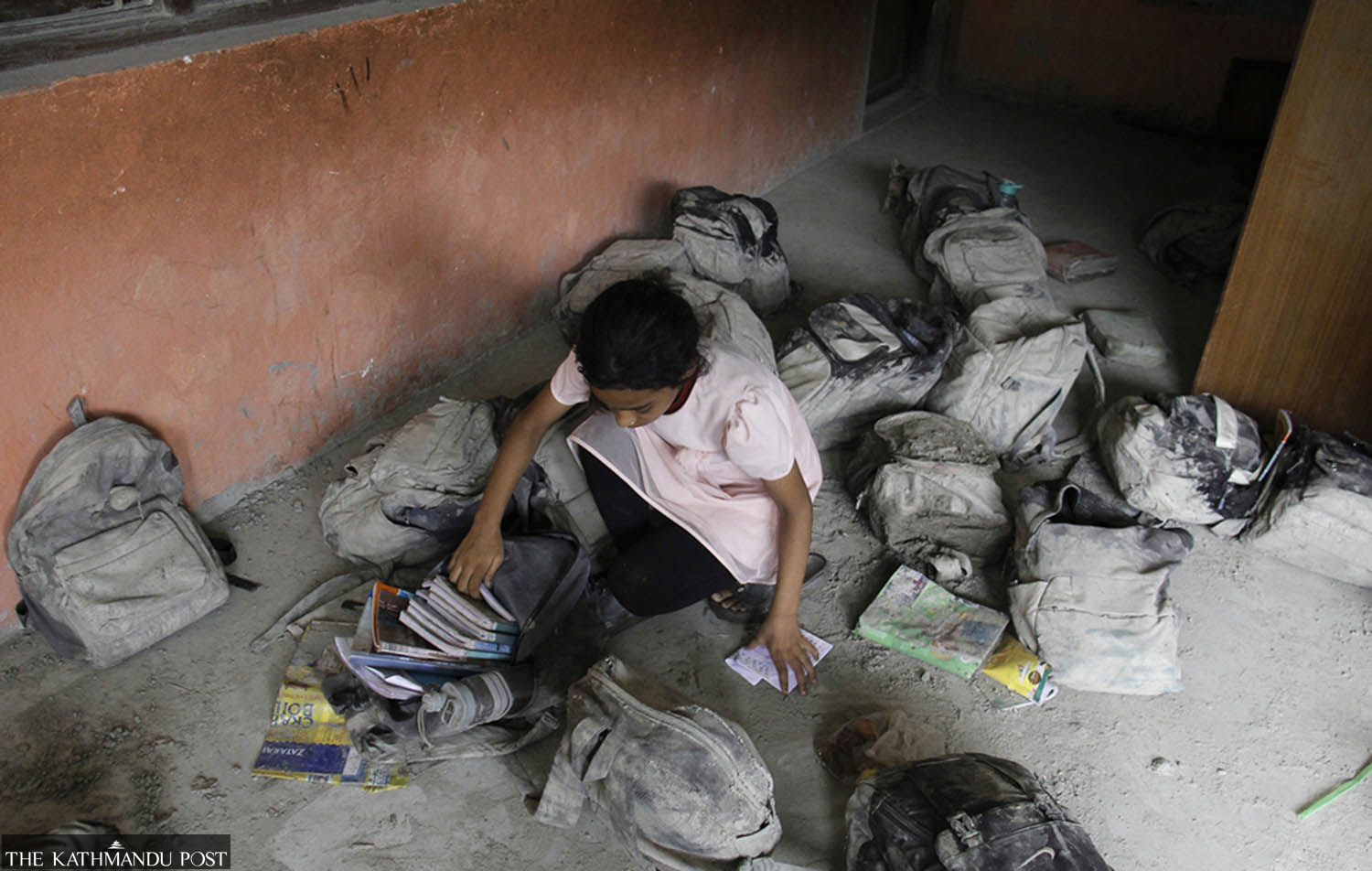
Nearly three months after the Bhotekoshi flood disrupted lives across several districts, many children affected by the disaster are still waiting for help to return to their studies. The government has introduced a scholarship scheme to keep them in school, but a lack of verified records has left authorities struggling to identify those eligible for support.
The scheme offers full and partial scholarships, including accommodation, to students whose education has been disrupted by floods, landslides, and other natural disasters.
Under the Secure Future Scholarship Scheme Implementation Directive, 2026, issued by the Ministry of Education and Sports, the government has approved scholarships for an initial 27 students from families who lost members in the Bhotekoshi flood on August 26. The initial group includes children of government employees who died in the disaster.
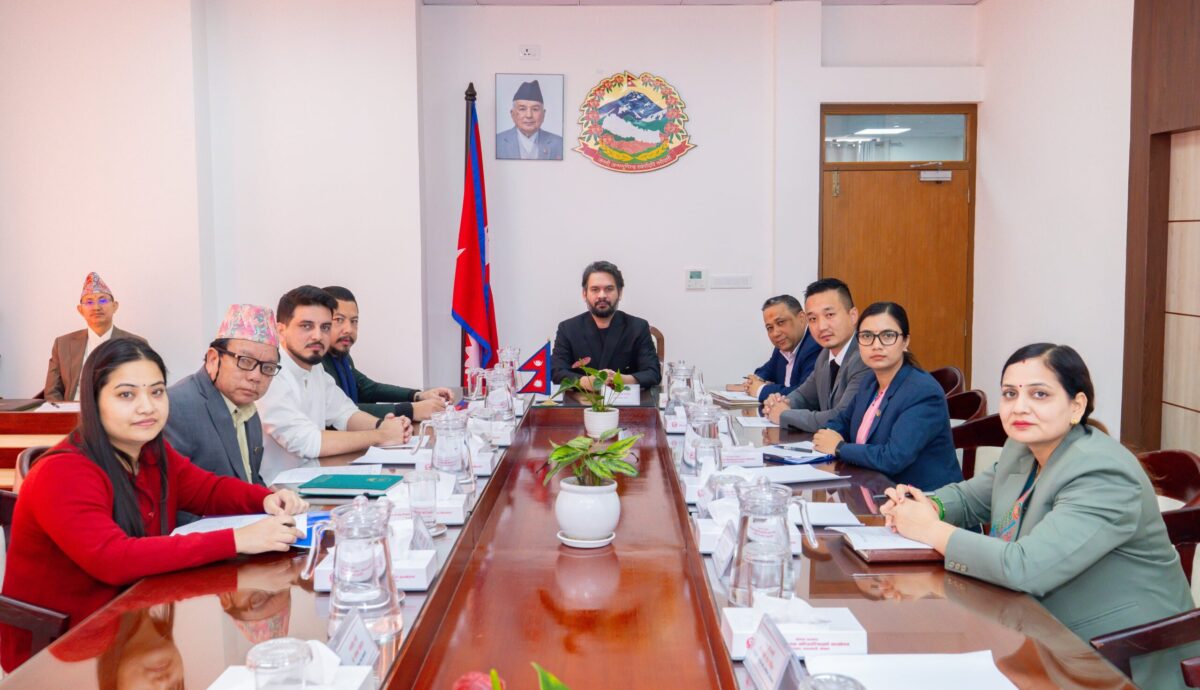
Education Minister Sasmit Pokharel said more children would be brought under the programme as authorities identified those affected by the disaster.
According to the National Child Rights Council, 269 children lost their parents in the flood. These figures, however, cover only Rasuwa and Nuwakot districts. People from several other districts remain missing following the disaster.
The directive provides for three types of scholarships based on the losses children have suffered and their individual needs. Children who have lost their parents will receive free residential scholarships. Those whose homes and land were destroyed but whose parents are alive will be eligible for full scholarships, while children whose parents have lost their source of income will receive partial scholarships.
The support may also include books, notebooks, uniforms, and other educational materials, as well as assistance based on individual needs.
An official at the education ministry said the government had yet to obtain verified figures for children in other districts who lost parents or property in the flood.
“In the first phase, the Department of Customs sent us a letter seeking scholarships for the children of employees at Rasuwa Customs Office. We provided support on that basis,” the official said. “We have not been able to collect information on other affected children.”
The National Disaster Risk Reduction and Management Authority has reported 5,130 people missing. Authorities have yet to determine how many of them were parents whose children have consequently been affected.
The ministry said it could extend scholarships only after receiving verified details from district administration offices, local units, and the National Child Rights Council. Schooling for children in the affected areas has been disrupted for nearly three months since the flood.
The directive also sets out arrangements for students enrolled in private and community schools. The Centre for Education and Human Resource Development will maintain records of affected students in private schools and write to the relevant umbrella organisations and local units. For students in community schools, it will coordinate directly with the respective local units.
Five organisations representing private schools have pledged to establish a Rs1 billion scholarship fund for 1,000 children affected by the floods. The Higher Institutions and Secondary Schools’ Association Nepal (HISSAN), Private and Boarding Schools’ Organisation Nepal (PABSON), National Private and Boarding Schools’ Association Nepal (N-PABSON), Association of Private Health Institution of Nepal (APHIN), and Montessori Association Nepal have said they will bring the fund under the ministry’s scholarship programme.
The Bagmati provincial government has also decided to take responsibility for the education and accommodation of children who lost their parents in the flood, up to Grade 12.
For students already pursuing higher education, Minister Pokharel has directed universities and colleges to accommodate them by expanding their existing scholarship quotas. The ministry will coordinate the arrangements through the University Grants Commission.
Under the decision, children who lost parents or whose parents remain missing in the Bhotekoshi flood will be able to pursue higher education free of charge, regardless of what they choose to study.
The government plans to coordinate scholarship support through a unified system to prevent duplication and ensure that assistance reaches those who need it most. Under agreements with the ministry, non-governmental organisations, private-school associations and development partners will have their assistance recorded in a single digital database.
Organisations will not be allowed to distribute scholarships through separate parallel programmes without prior approval from the ministry.
Affected students will be identified and verified through joint recommendations from local units, ward offices and schools. The directive gives priority to children who have lost their parents and those whose homes have been destroyed.
Meanwhile, the National Child Rights Council has invited proposals from organisations willing to support the long-term protection, care and welfare of children affected by the Bhotekoshi flood.