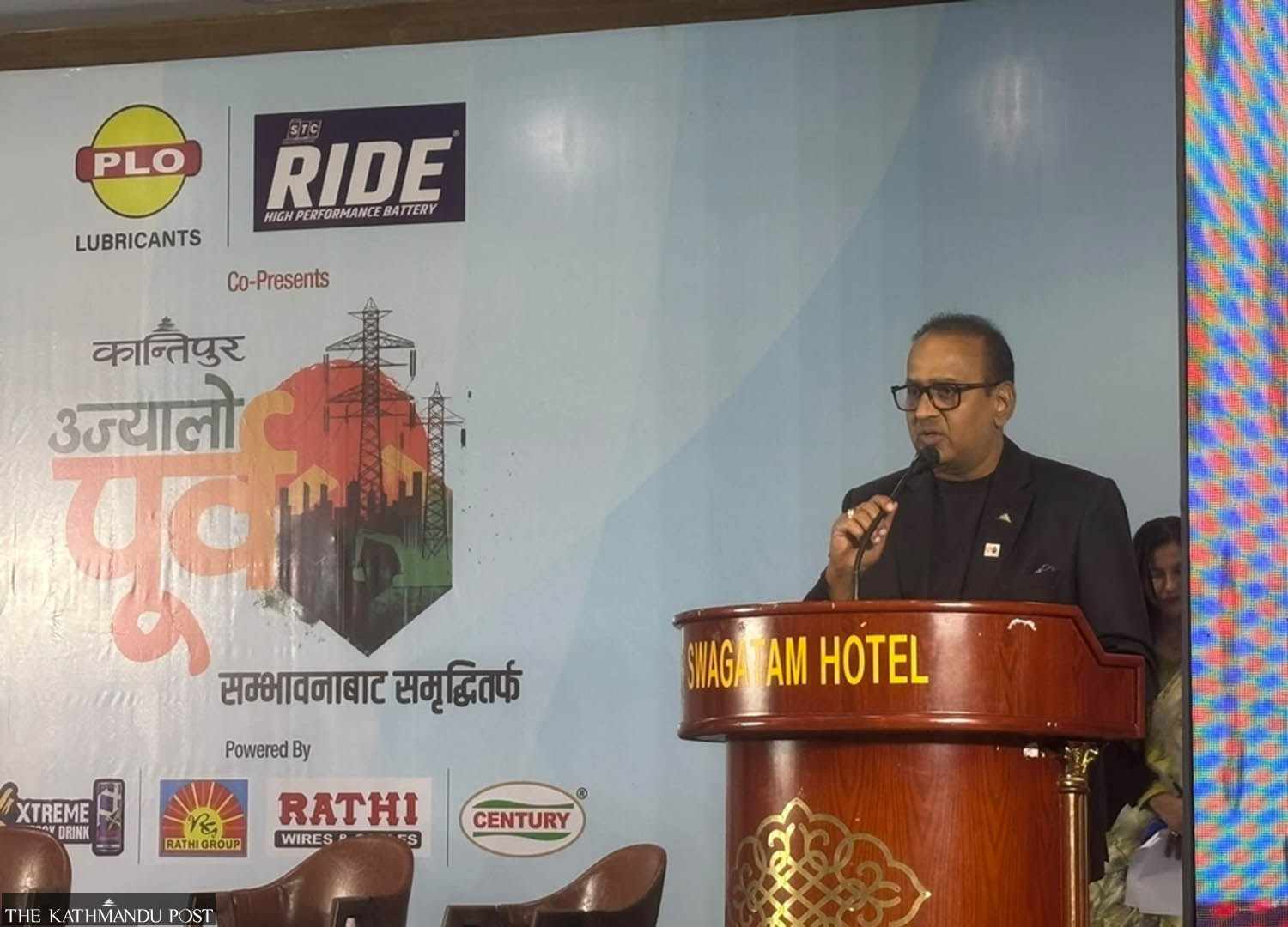
Kantipur Media Group chair Kailash Sirohiya has urged the government to restore business confidence, ensure policy stability and create a predictable environment for investment, saying these are essential to accelerating Nepal’s economic growth.
Speaking at the ‘Ujyalo Purba: From Potential to Prosperity’ programme organised by Kantipur Media Group in Biratnagar, Koshi Province, on Friday, Sirohiya said he hoped the government would step up the pace of economic reforms.
He said the programme was not simply an event named after a geographical region, but an expression of confidence in its economic potential and a commitment to economic transformation, entrepreneurship and the promotion of the private sector.
“It is also a platform for a broader discussion on what needs to be done to turn Koshi Province’s potential into prosperity,” Sirohiya said.
Describing Nepal as being at a critical economic and political juncture, he said frustration among young people remained high. Thousands continue to leave the country in search of jobs, while policy uncertainty, bureaucratic hurdles and a weak investment climate have prevented the private sector from operating with confidence.
“Economic expansion depends on the confidence of the private sector. Without confidence in the future, entrepreneurs will not invest, industries will not expand, and jobs will not be created,” he said.
He stressed that restoring business confidence, ensuring policy stability and building a reliable investment climate were among the government’s most pressing priorities.
Sirohiya said Koshi Province had considerable potential to become a major driver of Nepal’s economic development. But having potential and turning it into tangible economic gains were two different things, he added.
“We have talked enough about potential. Now we must translate it into production, productivity, competitiveness, exports and employment,” he said. “Koshi must look beyond its domestic market and aim to take its products to the global marketplace. That will require more than relying on traditional industries and businesses.”
He said businesses needed fresh ideas, new technologies and innovative models to compete in a changing global economy. Through the Ujyalo Purba programme, Kantipur Media Group was seeking to advance precisely this debate, he added.
Sirohiya said economic prosperity could not be achieved through speeches and announcements alone. It required investment, entrepreneurship, production, competitiveness and, above all, confidence in the future.
“Most importantly, business confidence must remain high,” he said.
He also called for greater support for entrepreneurship and faster industrial expansion, arguing that Nepal needed to create an environment in which businesses could make full use of available opportunities.
“It is not encouraging that around 2,000 young people leave the country every day in search of work. More sustained efforts towards industrialisation could create employment opportunities at home,” he said.
Noting that the current government was approaching eight months in office, Sirohiya said several economic indicators were favourable. Banks were holding substantial funds, but entrepreneurs needed to be encouraged to access and invest that capital.
“The money is there in the banking system. Entrepreneurs must be encouraged to borrow and put it to productive use,” he said.


