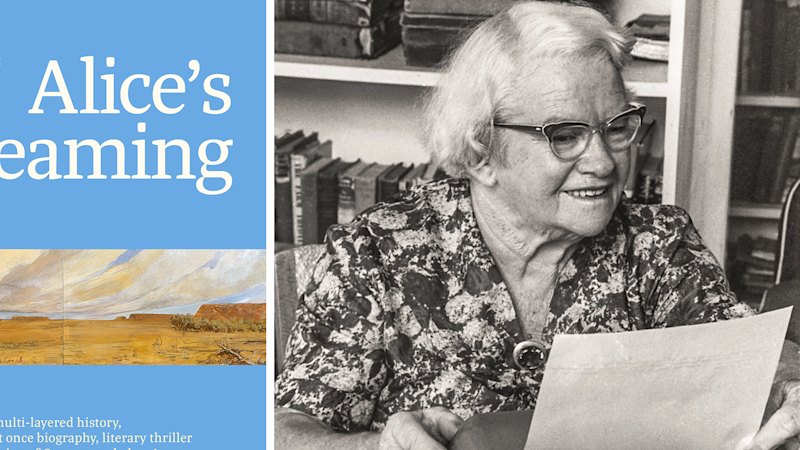
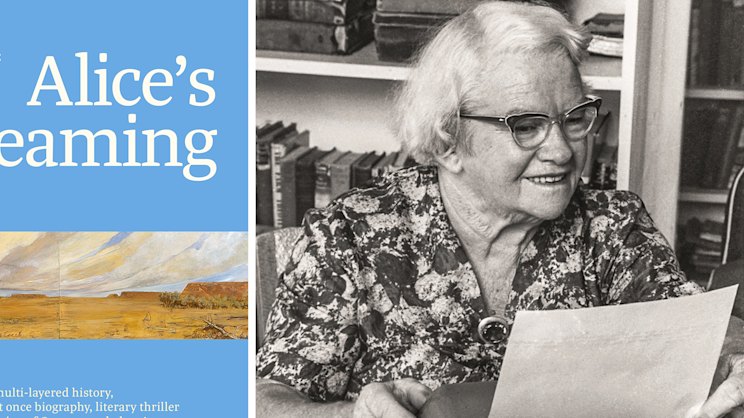
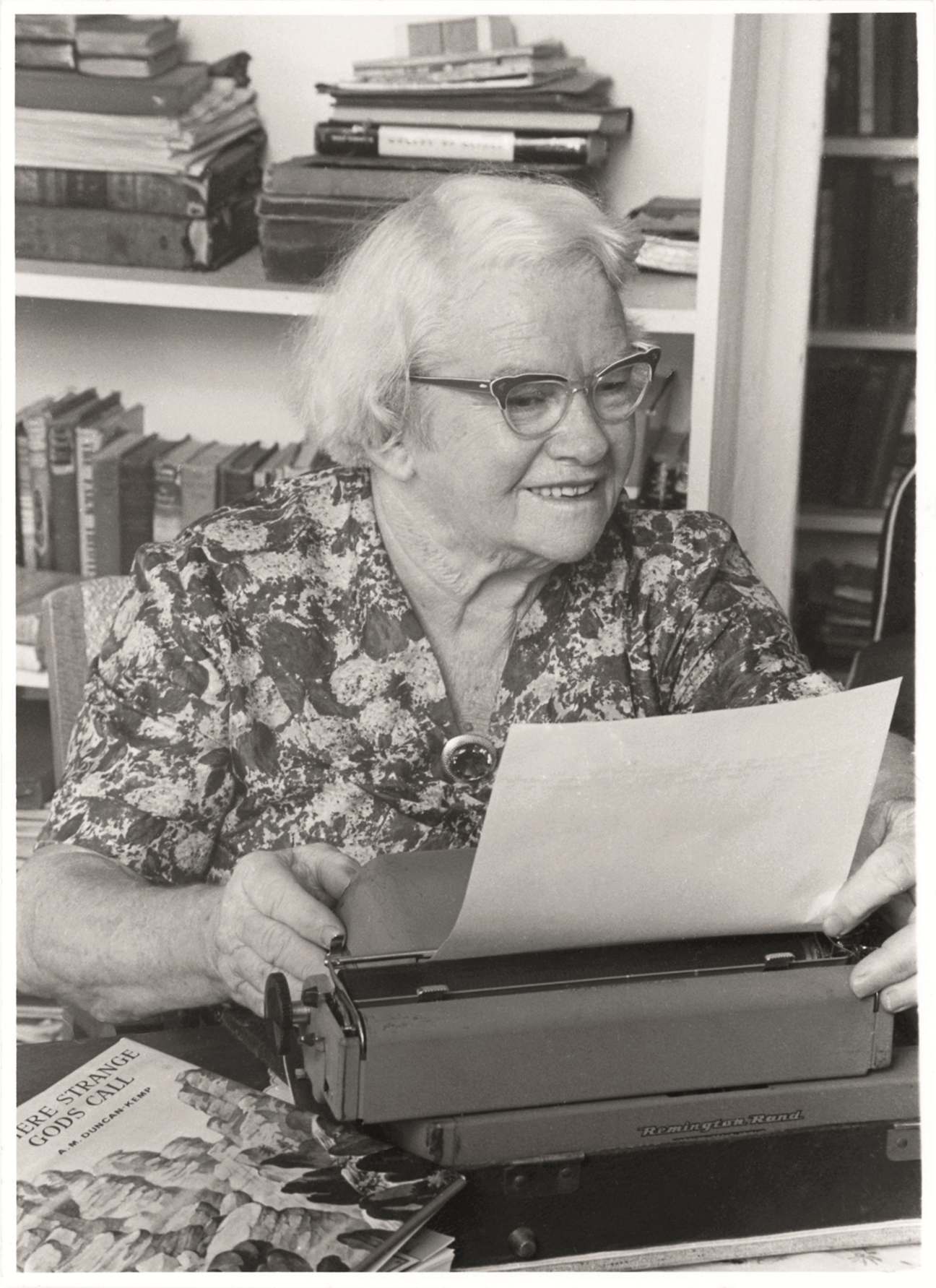
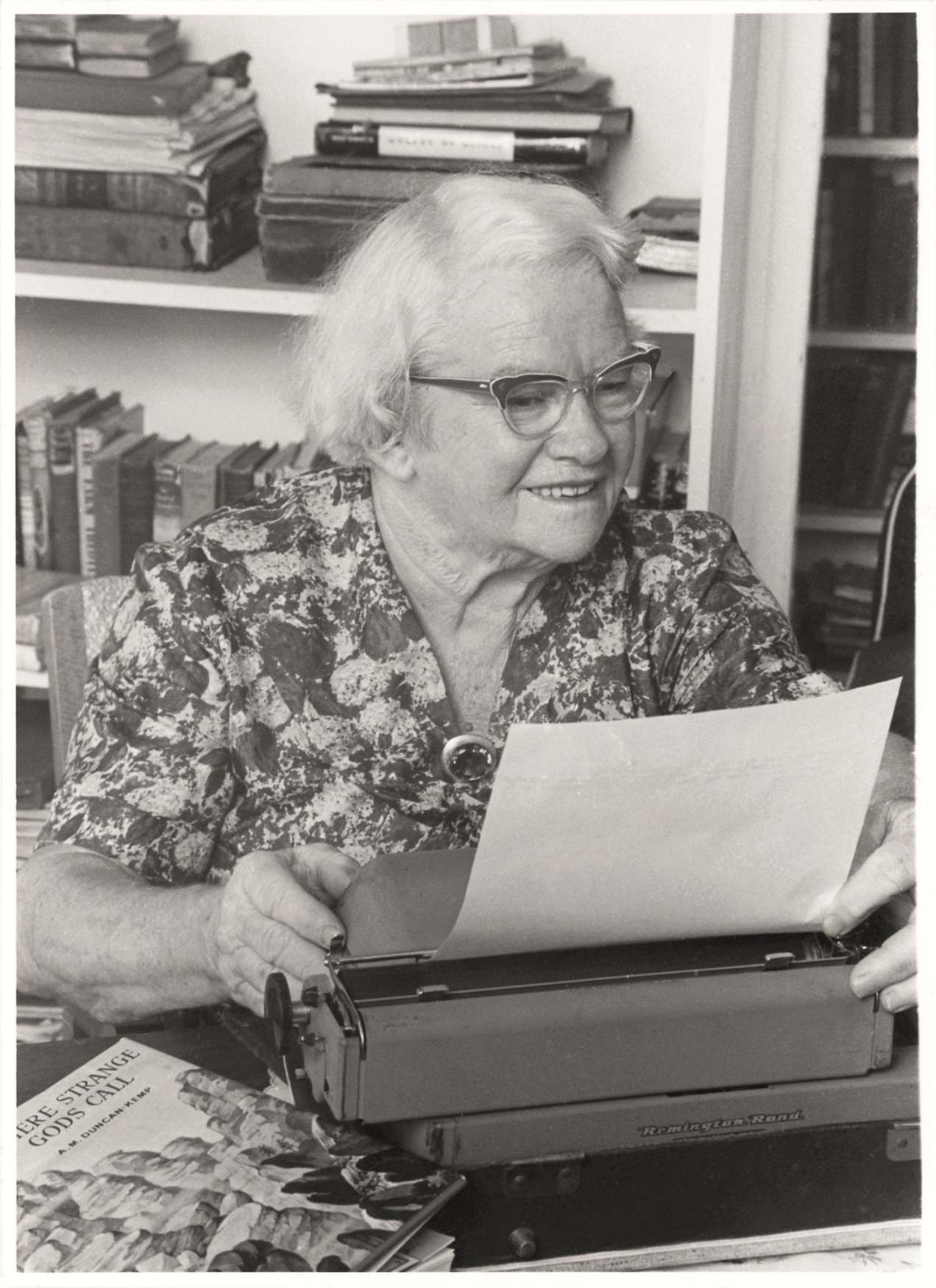
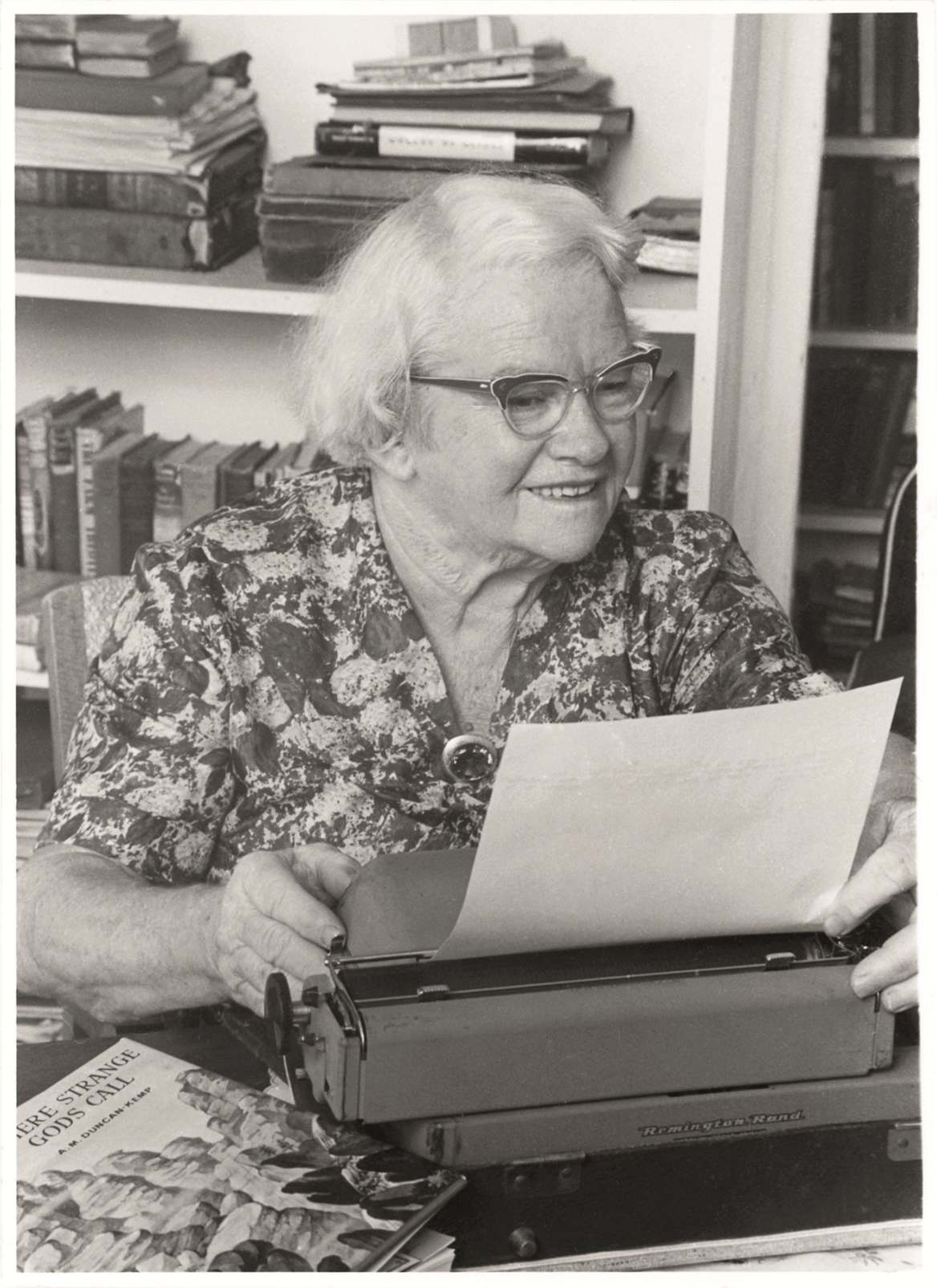
Historians can speak to us from a wide range of vantage points. One is concerned with the broad sweep of an era (the Great Depression, say, or the Vietnam War) or with a nation’s history. Another pivots on the exploits of men and women whose legacies reverberate across the ages (Marie Curie, Robert Menzies). Then there are those that are filtered through the experiences of ordinary people, like Alice Duncan-Kemp (1901–1988), whose writings are the subject of Tom Griffiths’ wonderful book. Which also happens to be about Australia’s troubled history.
Griffiths is an emeritus professor of history at the Australian National University whose previous work includes Beechworth , a study of the town in rural Victoria, Forests of Ash , an ecological history of the mountain ash forests in Victoria’s Central Highlands, and The Art of Time Travel: A Study of Historians and Their Craft . The last, with its focus on how writers have influenced the way Australians think about themselves, is especially pertinent to Alice’s dreaming .
Alice was the eldest daughter of pastoral settlers in Channel Country, a remote area of south-west Queensland. Her childhood memoirs and other writings draw on her firsthand experiences of the place and the time, offering an evocative and revealing account of the region and the Indigenous people she encountered there.
The lower-case “d” in his book’s title is Griffiths’ respectful (albeit otherwise undeclared) way of distinguishing between two kinds of dreaming. One is the “dreaming state” that connected Alice with her past as she went about her writing; the other is the First Peoples’ Dreaming that serves as their way of understanding the world and its workings.
Griffiths’ empathetic study proposes that Alice’s project grew out of her emotional connection to the Mithaka teachers who introduced her to their “wonderland”, in particular Mary Ann Coomindah, with whom she and her sisters used to go walking, and Moses Yoolpee, a stockman who would regularly take them out mustering. And, as Griffiths sees it, her departure as a young adult from her family home was a significant turning point in her life.
“Her writing became her way of returning to those people and that place,” he observes, adding that it was also a way for her to honour her liberal-minded father, William, who died when she was only six. Griffiths cites her description of him in Where Strange Gods Call , her fourth book, as a man who “believed the Aborigines to be a race of wise and dignified people” and who recognised their civilisation as comparable to his own.
A myth-exploding flashback chapter details events that occurred before Alice’s birth, but with which she was familiar via the accounts of others who were present. Here the waves of dispossession suffered by First Nations peoples are recorded: murder on a vast scale, forcible removal from the lands they know as Country, and the subsequent “tsunami of white history commissioned by government”. The whitewash.
“By bureaucratic magic,” Griffiths writes of the invaders’ desecration of a way of life, “Country was transformed into property.” The pastoralists’ cattle also served as “the shock troops of empire”. The Debney Peace of 1889 was a truce “unofficially” brokered between the Indigenous owners of the land and the invaders but then discredited and broken in the interests of colonial expansion.
Brought to life by Griffiths in a language that successfully maintains the poetic colouring of Alice’s frequently cited prose, this is both an unconventional history and a deeply moving story about a person born into the ideology of one culture and having her eyes opened by another. Through Alice’s memories, Griffiths enables invaluable insights into how First Nations peoples’ attachment to Country is inseparable from their sense of their place in the cosmos. At the same time, and perhaps inevitably, controversy has swirled around Alice’s work, primarily to do with accusations of plagiarism of particular passages, and Griffiths’ response is exemplary in its open-mindedness.
Alice’s dreaming is an enormously rewarding introduction to First Nations culture for those of us unfamiliar with its customs, beliefs and understandings. It thoughtfully probes a history that some of the invaders’ descendants have attempted to repress. And destructively continue to do so. But it also points to the important role played by Alice’s memoirs in the construction of any authentic account of Australia’s past. “[T]he tendrils of truth are tough,” Griffiths insists. “As irrepressible as weeds, they push through cracks in the smooth paving of legend.”
Alice’s dreaming by Tom Griffiths is published by Black Inc. ($37).
The Booklist is a weekly newsletter for book lovers from Jason Steger. Get it delivered every Friday .
You have reached your maximum number of saved items.
Remove items from your saved list to add more.
You've used all of your gift articles. 3 more will become available on the 1st of every month.


