
You have reached your maximum number of saved items.
Remove items from your saved list to add more.
You've used all of your gift articles. 3 more will become available on the 1st of every month.
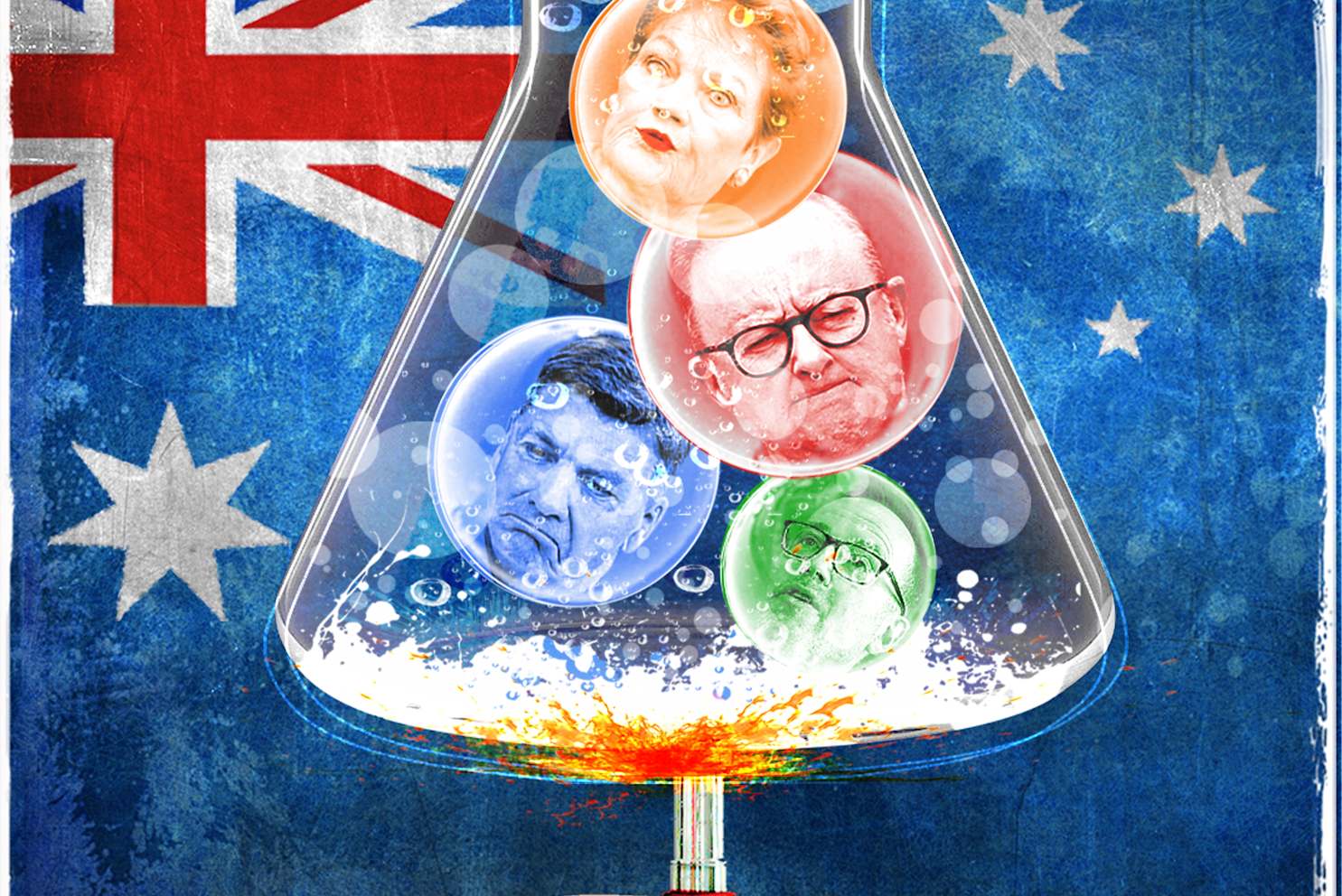
There are no prizes for predicting Labor is about to be swept from office in Victoria. Even in Labor circles now that seems a foregone conclusion, avertable only by a miracle. Now the questions are whether the premier will lose his seat; whether the Coalition form majority government; what role One Nation will end up playing. That is, in several ways the Victorian political landscape could hardly be more different from the federal one. But it is precisely for that reason it has so much to tell us about federal politics. And especially about the meaning of the One Nation surge.
Across the country, we’ve spent a year teasing out what’s behind that surge. Broadly, there are two theories. One ties this overwhelmingly to cost-of-living pressure finally causing the political system to snap. One Nation’s support took off in about October last year, just as this latest series of interest-rate rises got under way. It’s worth remembering this followed a series of rate cuts, and a general sense that inflation had been tamed. The return of rate rises revealed this to be false dawn, converting the cost-of-living crisis from a moment to an era, from something to be endured to a new way of being. What disappeared in that moment was hope. And what appeared in its place was a verdict that the whole system, embodied by the major parties, had failed.
But a second theory says the key fact is the sorry state of the Coalition. So crushing was its defeat in 2025 that the very structure of Australian politics was crushed along with it. The Coalition went from being in opposition, to being unviable: an unviability the Coalition parties advertised to the world by divorcing each other twice. What disappeared in that moment was hope – specifically in the possibility of a conservative government. And what appeared in its place was conservative voter flight to the only alternative. A verdict, if you like, that the Coalition needed to be replaced.
I think these theories are best taken together. The second helps explain why One Nation’s support has come overwhelmingly from the Coalition vote. It explains why, in this anti-establishment age, the Greens have made no progress at the federal level. Put simply, 94 seats in the federal parliament make Labor ragingly viable, so there’s no reason for progressive voters to decamp to an alternative. But it doesn’t explain very well why the One Nation surge took so long to arrive. It didn’t start the moment the 2025 election results rolled in. It didn’t even start when the first Coalition split showed the depth of the rot. Only some five months later did voters begin to shift. And it took until well after the Bondi terrorist attack for One Nation to surpass the Coalition’s numbers. The first theory fits those facts a little better.
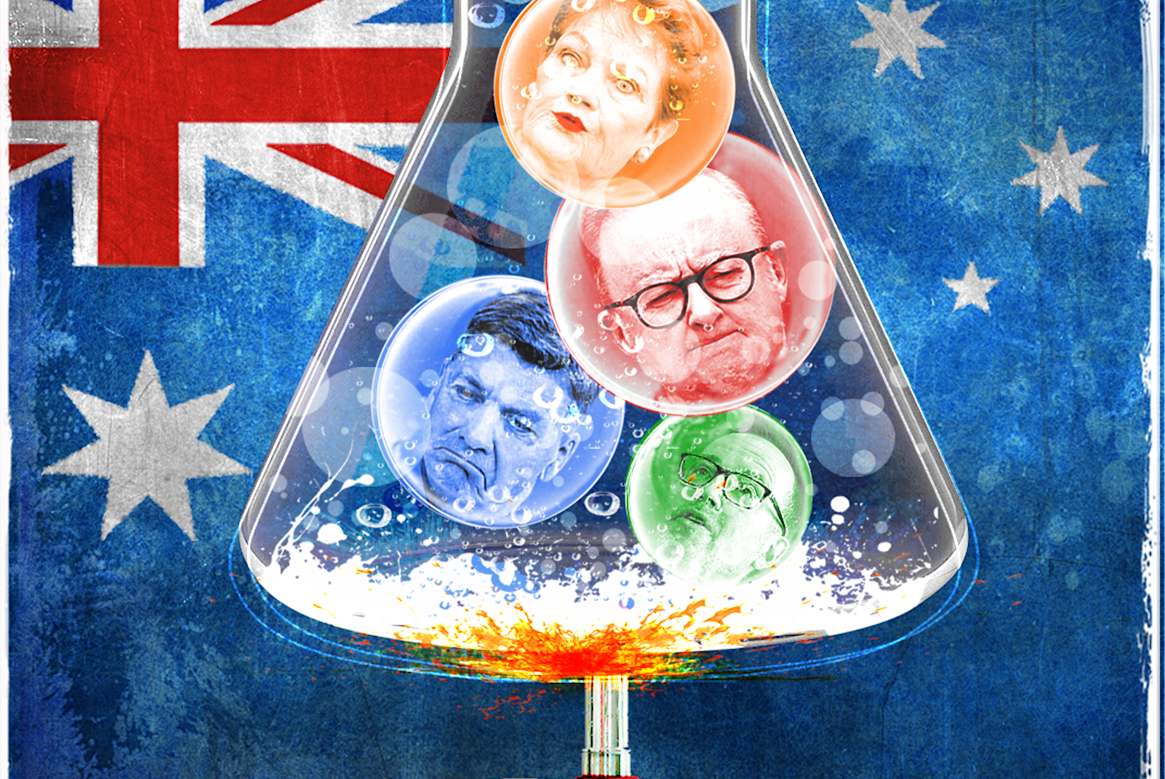
All of which makes Victoria an invaluable political laboratory. Until now, we’ve never had a situation that allows us to tease these theories out. South Australia, for instance, pitted an unviable Liberal Party against a Labor government whose victory was all but guaranteed. Farrer was a byelection in which government was not at stake, at a time of peak Coalition disarray, in a seat in which Labor is never competitive and did not run. The Secret Harbour byelection saw One Nation take a Labor seat, and was significant for that fact, but the Western Australian Coalition has been unviable for this whole decade. To date, only Victoria lets us see what happens in a situation where the Coalition is not only viable, but likely to win.
If the One Nation vote greatly underwhelms, it will prove the viability theory overwhelmingly correct, because it will have collapsed the moment the Coalition recovered. More likely, it might land at around 20 per cent, showing that it can take votes from an unpopular Labor Party, and signalling a new political arrangement in which One Nation is a fixture, even if this doesn’t translate into lower house seats. And if One Nation’s vote comes at a meaningful cost to the Coalition, it will probably mean the Liberal and National parties are doomed, unable to revive itself even under the most favourable circumstances.
Meanwhile, if Labor suffers a truly crushing defeat, viability theory says a Green wave is on its way, as progressive voters write Labor off. And there is already an observable Greens swell in Victoria – far more so than elsewhere. One especially dire poll for Labor has the parties almost level. If that is realised on election night, the next four years might involve the Greens becoming the second party, and Labor fourth. All of which would suggest that David Shoebridge’s best chance of achieving his aim of replacing Labor at the federal level would come after the Albanese government crashes, not before.
On the Coalition side, the Victorian and federal stories bear some uncanny similarities. Both lost power by a relatively slim margin, only to watch it expand to landslide proportions at the next election, in precisely the way things are not meant to happen. Both lost heartland seats along the way – in Victoria’s case the seat of Hawthorn, which sat within the federal seat of Kooyong. Both then succumbed to dysfunction, in-fighting, in a word unviability. But the Victorian Liberals were fortunate enough to do this when One Nation was nowhere to be seen. Their votes ultimately bled to Labor, which preserved the system’s two-party logic while the Victorian Coalition spent a decade in the wilderness. Their federal colleagues never had that luxury. If they take a decade to reconstitute themselves, they will scarcely exist.
It’s urgent, really. Our time is one of politics on warp speed, where a single election can deliver swings that usually would have taken three. The Albanese government, once impregnable, is in a rut, under more sustained pressure than it has ever been. It’s nowhere near as dire as for Victorian Labor, but even so, the opening for a viable federal opposition might hurry onto us. Imagine the depth of regret if the federal Coalition finds itself unready to take it.
Waleed Aly is a broadcaster, author, academic and regular columnist.
The Opinion newsletter is a weekly wrap of views that will challenge, champion and inform your own. Sign up here .
You have reached your maximum number of saved items.
Remove items from your saved list to add more.
You've used all of your gift articles. 3 more will become available on the 1st of every month.