





You have reached your maximum number of saved items.
Remove items from your saved list to add more.
You've used all of your gift articles. 3 more will become available on the 1st of every month.
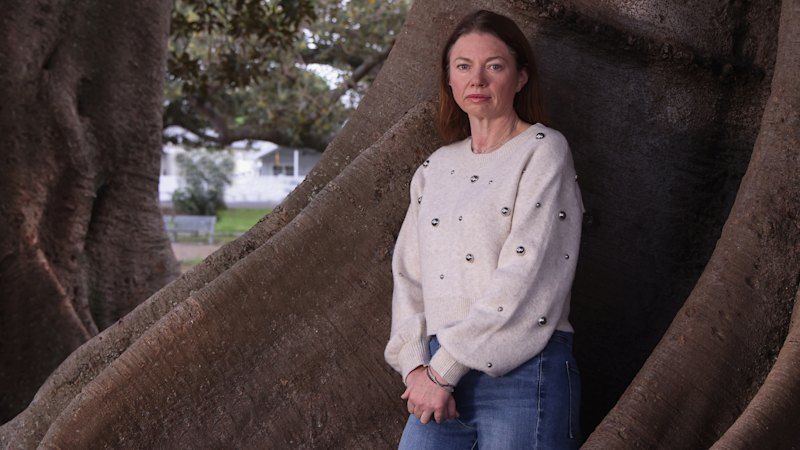
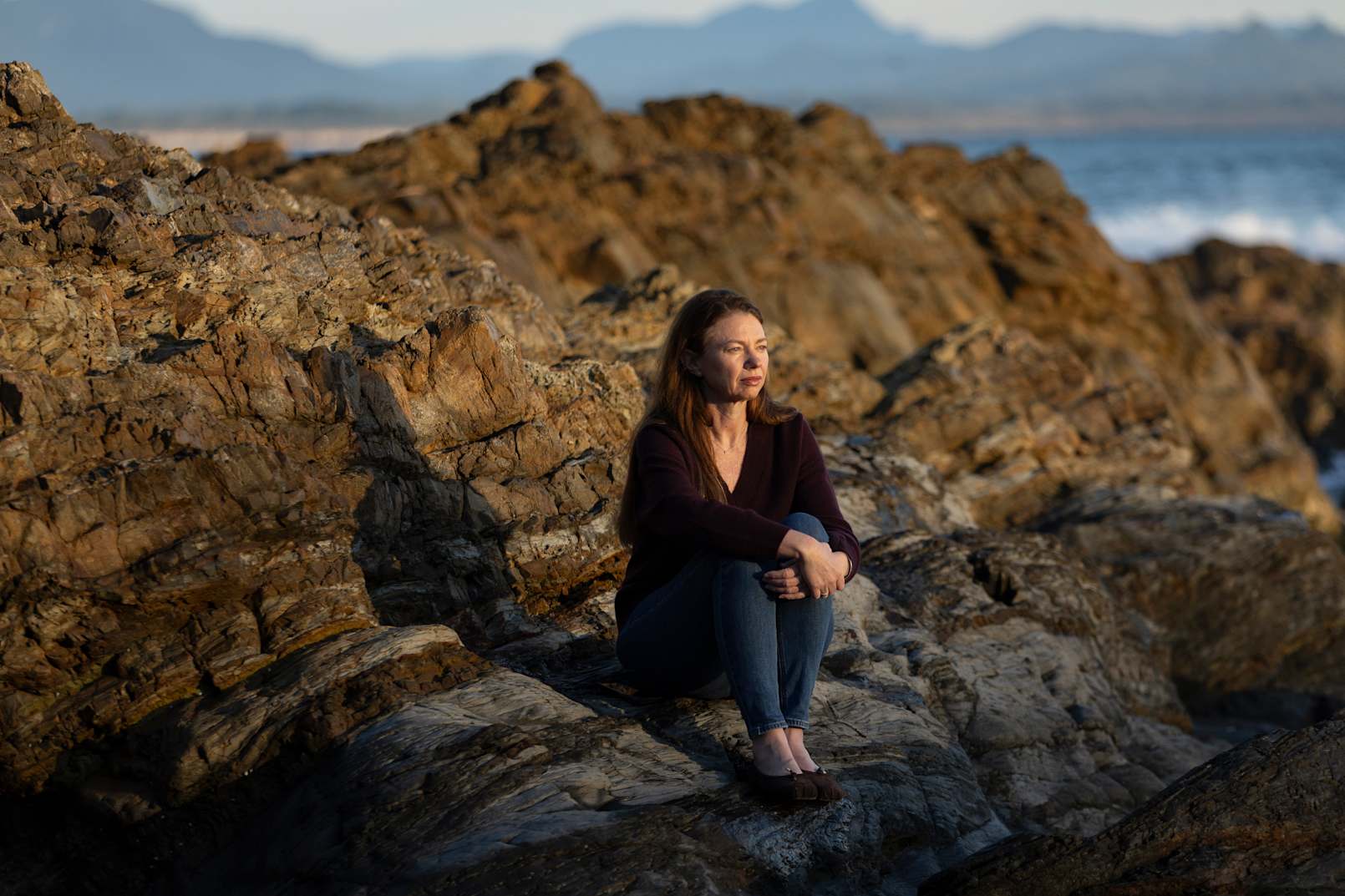
By the time Tabitha Acret sat down in her lounge room on a Sunday afternoon in spring, she’d done the grocery shopping and a few loads of washing, taken the dog for a walk on the beach, and hosted a playdate. She checked her work schedule for the week, then opened Instagram on her phone.
Someone had sent her a private message: “I called the police two hours ago, he’s breaching the AVO, no one’s come, what should I do?” As Acret’s two boys played with their black Labrador in their Newcastle backyard, she quickly punched in her reply: “Put the kids in the car. You need to drive to the police station.”
This is far from the first plea for help Acret has received. The 48-year-old dental hygienist and academic receives messages from women living in fear almost daily. And not just from her local area. Women reach out from all over the world. “Last week, I had someone from Italy, someone from America, and someone from Germany,” she says. “I say to them, ‘If you’ve got enough money, run. Not just leave the home. Leave the state. Start a whole new life. Get off social media. Run.’ I really hate that I give that advice but … that will be what saves your life.”
We’re sitting at Acret’s kitchen table the Monday morning after she received that message. It’s late September, and it’s been another horror weekend of domestic violence, with three women allegedly murdered in NSW alone in separate incidents, including a 23-year-old woman, a 90-year-old grandmother, and a 70-year-old woman. According to the nationwide register kept by Australian Femicide Watch , 61 women have been killed this year.
Acret didn’t need to read any of those statistics or headlines to know the deadly cost of domestic violence in this country. Her daughter, Mackenzie Anderson, was stabbed 78 times by her former partner, just 16 days after he was released on parole in 2022. Mackenzie, who loved to dance and was studying to become a yoga teacher, was just 21 years old.
A neighbour who heard her screams rescued Mackenzie’s 23-month-old son from what police later described as a “horrendous scene”. Three years later, a judge sentenced Tyrone Thompson to 22 years and six months in prison, with a non-parole period of 15 years and six months, meaning he could be free before he turns 40. When Acret heard the sentence , she ran from the packed courtroom and collapsed.
“I was shaking … They said, ‘We’re calling you an ambulance’ because I had lost feeling in my legs and hands and couldn’t get up … I was like, ‘I’m not leaving this place in an ambulance.’ And then they were like, ‘We’re going to police-escort you home.’ ”
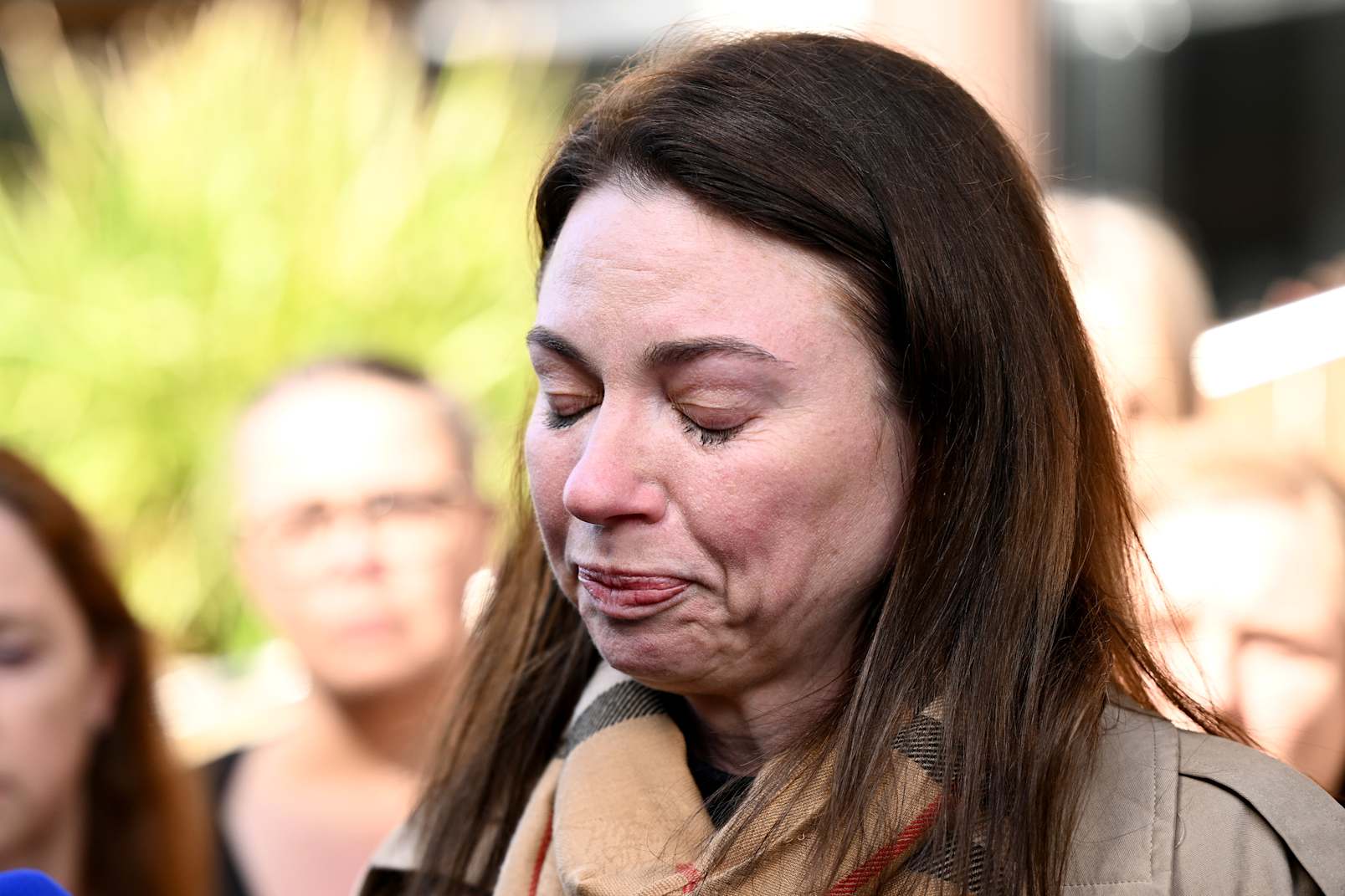
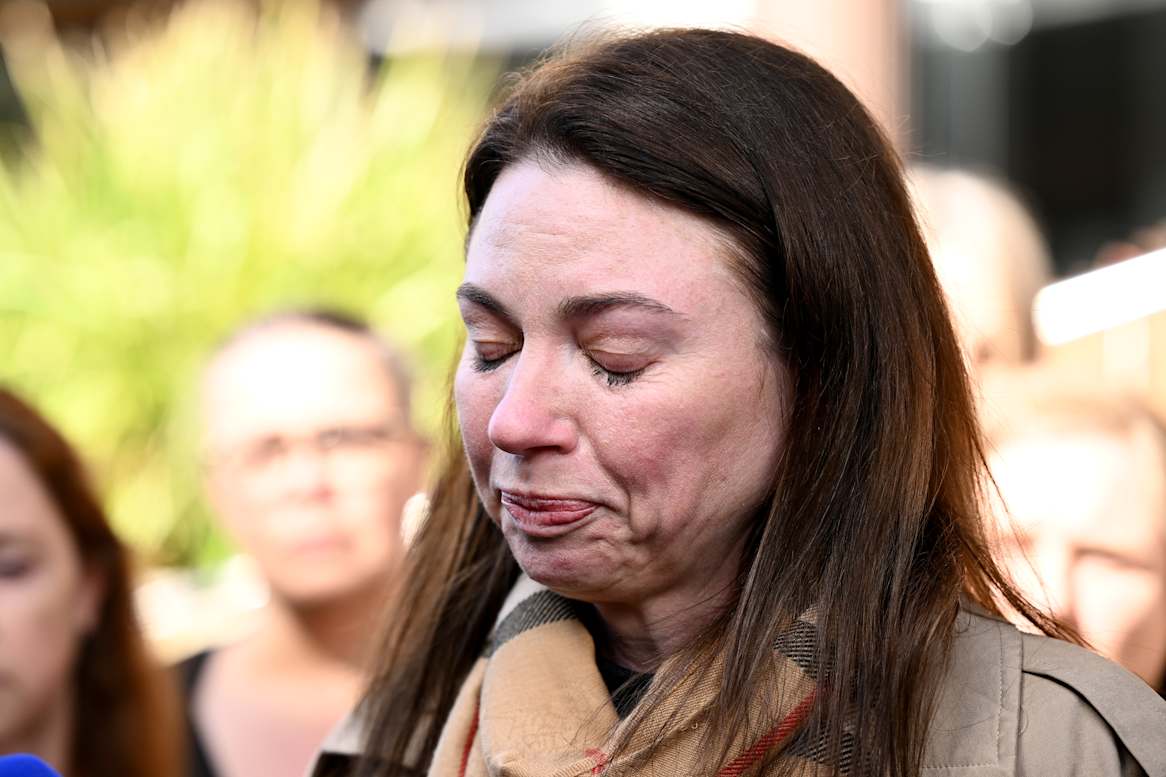
Acret refused. Instead, she walked out onto the front steps of the courthouse and made a promise. “We’re in the midst of an epidemic of gender-based violence where women are being killed at an alarming rate and the only acceptable number is zero,” she told reporters, vowing to fight for change in honour of Mackenzie. “Her voice was taken from her, but mine will not be silenced. I will continue to speak, to push for change, and to stand up for every woman who has ever felt unsafe, unheard or unseen. Mackenzie’s legacy will be one of action, of justice and of hope.”
She has not stopped fighting since.
Now raising her grandson alongside Mackenzie’s 13-year-old brother, Acret has thrown herself into a relentless mission to protect women from dangerous perpetrators and give victims and their families a louder voice in the criminal justice system. Nominated for NSW Australian of the Year this month, she has convinced politicians to introduce tougher sentencing for domestic violence murderers, become a sought-after public speaker, and grown accustomed to fronting the television cameras.
But what you don’t see is the woman sitting up until the early hours of the morning, reviewing the files of violent offenders, then rising at dawn to drive two hours for a meeting to discuss whether they should be released from prison. You don’t see the woman ferrying her grandson, who turned two a fortnight after his mother was killed, between therapy appointments. And you don’t see the abuse she cops online for having the audacity to speak out when yet another woman is murdered.
The way Acret sees things, she’s got two choices. “I can be silent, or I can get up and I can turn it into purpose,” she says. “It’s about channelling that grief into something else.”
Four years after her daughter lost her life in the most horrific circumstances, Acret has lost none of her urgency, because, she says, “If we look at the numbers, we’re not getting any better.”
On the night of March 25, 2022, Tabitha Acret was in a Cairns hotel room with her then-eight-year-old son. It had been her birthday the previous day, and they’d been snorkelling on the Great Barrier Reef to celebrate. It was about 2am when her husband phoned. Police officers had come to their Newcastle home to deliver the shocking news that her daughter, Mackenzie, had been killed.
As her son slept, Acret booked a 6am flight, packed their bags, and made the decision to get him home before letting him know that his sister was gone. “I think you just go into survival mode,” she says. “It’s like, there’s other people that need me … so that’s what has to be the No.1 thing right now.”
Only later would she learn the details of what happened that night . How Tyrone Thompson had broken into her daughter’s home. How a neighbour had seen her terrified face pressed up against a window. How Thompson had stabbed Mackenzie with kitchen knives that Acret had given her daughter for Christmas.
Mackenzie had known she was in danger when her ex-boyfriend was released from prison after serving time for assaulting her. She contacted domestic violence organisations, asking for help to install security cameras and doors, and an apprehended domestic violence order was issued.
Acret had asked Mackenzie to move in with her and her husband, Mackenzie’s stepfather, but adds that she did not realise the full extent of the threat, and that Mackenzie had hidden much of the abuse from her. It was only after she died that Acret realised the danger she’d been in. “She reported eight times that he’d breached the AVO,” she says.
T he first month after her daughter was killed passed in a blur. There were meetings with police, funeral arrangements to be made, and Acret and her husband were now caring for their grandson. She says he didn’t sleep for days after police brought him to their house.
After a few months, Acret began working from home but didn’t return to clinical dental work for more than a year because, she says, she didn’t have the strength to care for patients. She gained 30 kilograms as an eating disorder she had long struggled with flared.
Outraged by the sentence given to her daughter’s killer, she clung to the hope that his sentence would be increased on appeal. She felt the initial sentence just didn’t fit the grievous nature of the crime. “That just wasn’t what we were expecting,” she says.
When the appeal failed in August 2025, Acret went home devastated, and that night, began writing what would become a 200-page document that she would eventually deliver to NSW Premier Chris Minns, making the case for why tougher sentencing for domestic violence murders was urgently needed.
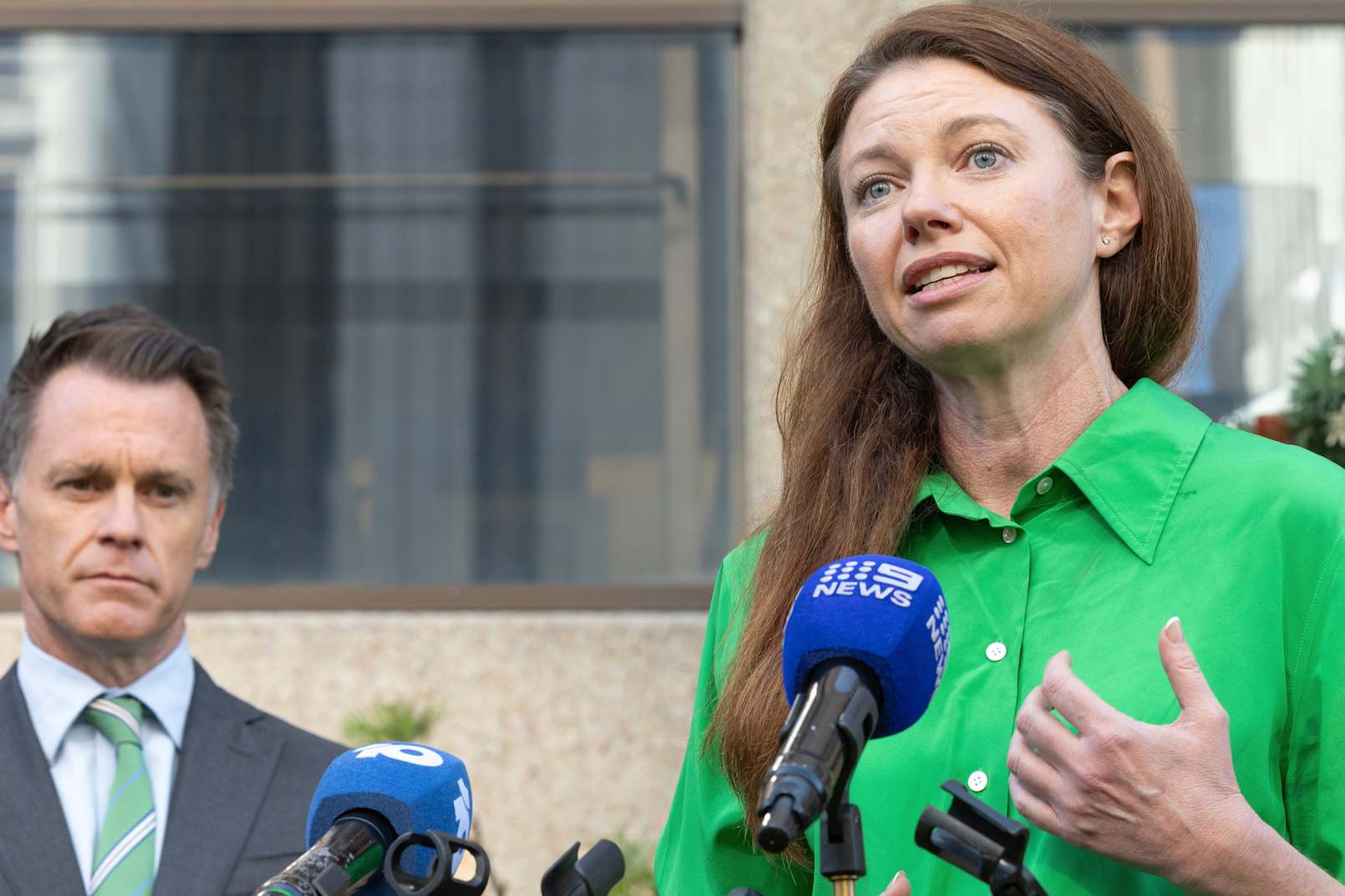
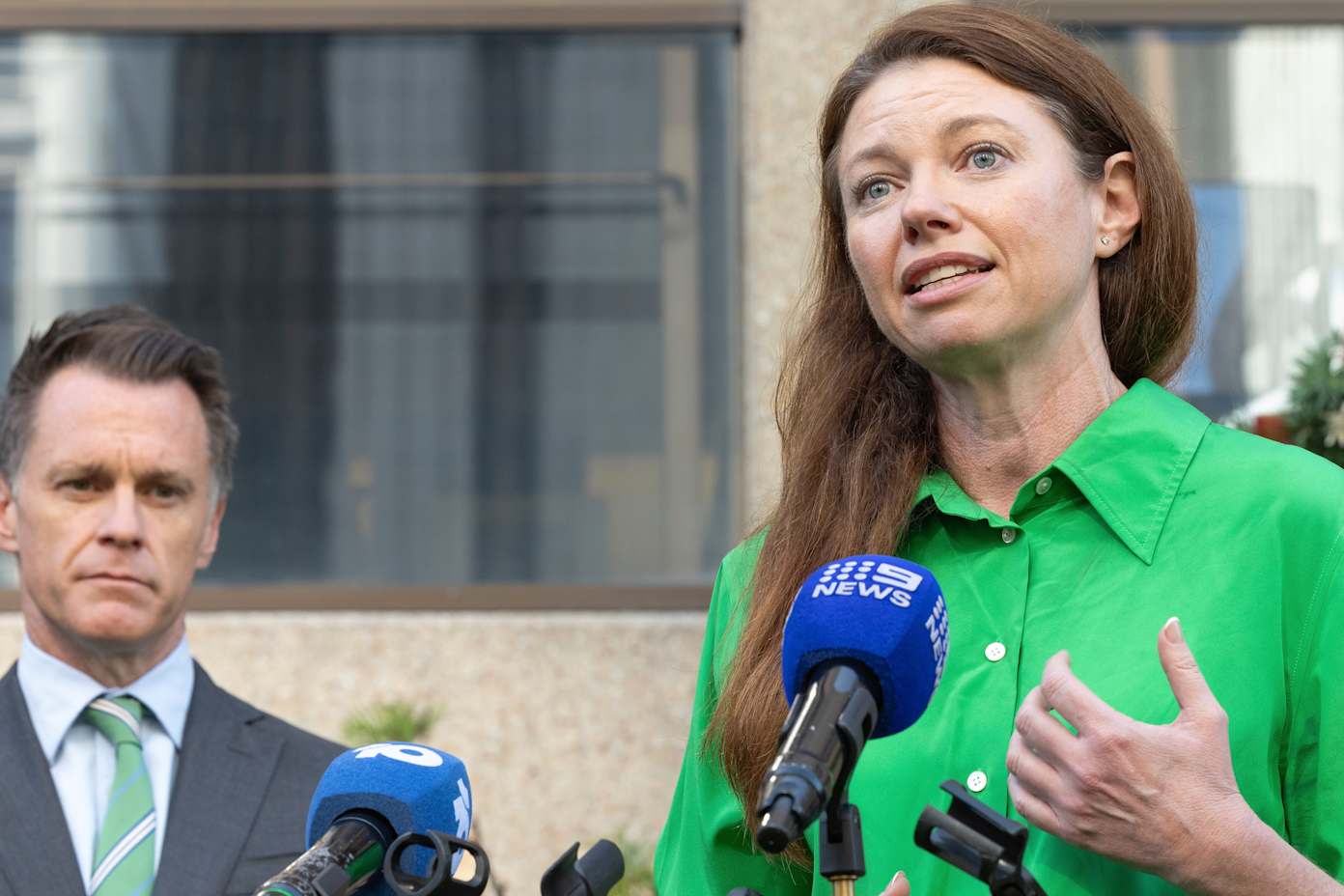
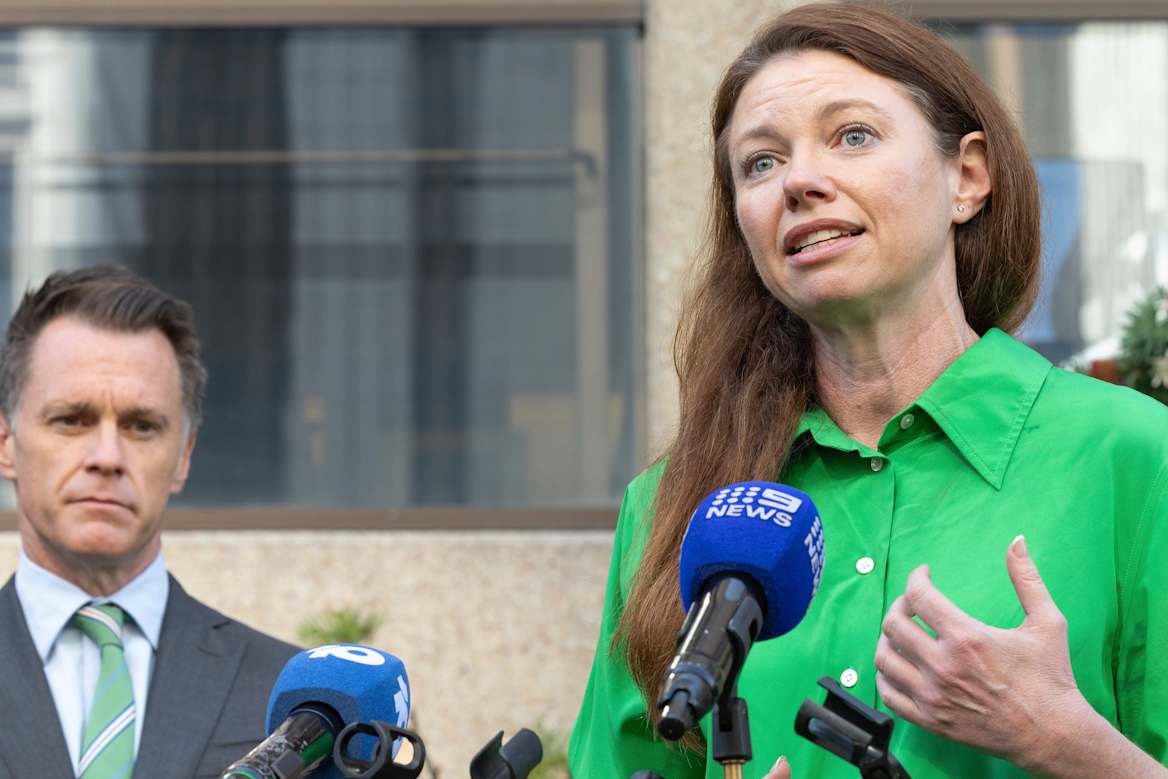
It worked. In October 2025, the NSW government introduced legislation to enshrine a standard non-parole period of 25 years in prison for anyone convicted of the murder of a current or former partner, giving the state the toughest sentencing laws in the country. “She spoke passionately and very sincerely about the very low sentence that her daughter’s killer got,” Minns tells Good Weekend . “It was incredibly convincing. It certainly convinced me that we needed change.”
In May, Minns went further, appointing Acret to the Serious Offenders Review Council, which advises authorities on whether prisoners should be released back into the community on parole or work release. Acret also serves on an advisory group where people with lived experience of domestic and sexual violence help inform government policies and services. “We need to get the perspective of victims’ families,” says Minns, describing Acret as a “fiercely intelligent” and inspiring advocate, whom he met in “terrible circumstances”, when she was dealing with both a crushing loss, and navigating the justice system. “I’d never met anybody like her. She is a remarkable person.”
All this advocacy work takes time, of course, and for Acret it’s squeezed in between running her own dental education business (she has spoken at seven overseas conferences this year), working in a Newcastle dental surgery, and her role as an academic at the University of Sydney, where she created a course teaching dental students how to spot signs of domestic violence, in the hope that they might be able to offer support to patients. “That’s the glamour of doing advocacy work,” she says. “Most victim advocates are working full-time jobs. Most of the stuff has to happen after the kids go to bed.”
I arrive at Acret’s Newcastle home not long after dawn on a recent Tuesday, and she slips out her front door in a grey pantsuit and black heels, leaving her husband and two boys sleeping inside. She checks that she’s got her Corrective Services NSW security ID card before we set off through the quiet suburbs. Winding around the cobalt-blue expanse of Lake Macquarie before joining the parade of commuters on the freeway to Sydney, Acret sips from a large travel cup that rattles when she picks it up. “It’s ice and Diet Coke,” she confesses. “Don’t tell my dental professional friends ... but Diet Coke is my vice in life.”
Two hours later, she walks into a Department of Communities and Justice office in Parramatta for a meeting to review the cases of 21 prisoners – all men bar one – who have been convicted of serious crimes. In the past six months, she’s reviewed the files of dozens of murderers, terrorists, rapists and child abusers. “Lots of DV murders,” she says. “It’s like, ‘There’s another one, there’s another one.’ It’s upsetting to know that there’s that many there.”
Most people would probably forgive Acret if she wanted to lock up perpetrators and throw away the key, but that’s not what she wants. “Putting them in jail, as much as I am for punishments, isn’t going to solve the problem. We need to rehabilitate them in some way. If we really want to prevent violence,” she says, “making them better people is actually the answer.”
Acret, who constantly reads the latest research on domestic violence from around the world, believes offenders should undergo intense counselling and be more closely monitored when released from prison. Prolific on social media, she posts almost daily about the issue, with the aim of raising awareness and driving change.
Back at her kitchen table, she shows me just how far we have to go. Scrolling through posts on her phone, she points to unsettling comments people have made about Mackenzie’s death, blaming her daughter for her own murder. One reads: “Should of done the dishes”. Another writes: “The government needs to run a education campaign for women. How not to antagonise a man until he has to send you back to the lord.”
Acret hasn’t been shocked by the misogynistic hate she encounters online. Comments like these only prove her point, she says, that dangerous attitudes towards women are more prevalent than we care to admit. She says she knows she shouldn’t engage, but sometimes can’t help herself.
“One, it upsets me, ‘Oh my god, like, she’s dead. Can you not leave her alone?’ And two, it upsets me that … it’s not just an attack on Mackenzie. It’s an attack on us as women. It’s a culture that’s so toxic towards us that people look for how to blame the victim more than they look to blame the perpetrator, and that makes me angry and upset,” she says. “I suppose when your mental health’s a little bit lower, those kinds of comments really can get to you. And then there’s other times where I’m like, ‘Thank you, that’s the fuel that I needed today.’ ”
Already a seasoned public speaker after years spent addressing conference halls full of dental professionals, Acret is inundated with requests to speak at charity and corporate events. Next Wednesday, she’ll deliver a keynote address in Newcastle to mark the start of the 16 Days of Activism Against Gender-based Violence global campaign.
I wonder what it’s like to retell the story of her daughter’s murder over and over again, but she says describing the trauma to countless strangers isn’t actually the most difficult part. “What I find more draining is afterwards. Everyone wants to come up and speak to you and often they cry and you’re consoling their grief,” she says. “It’s very emotionally draining … I never really know what I’m meant to say.”
Some people, mostly women, question her grief online, she says, and want to know, “Why aren’t you crying? If this was me, I couldn’t get out of bed and do this.”
“Well, what choice do I have?” she says, frustrated. “If I cried on national television non-stop and couldn’t get any words out … no one can hear my message. I don’t have the luxury. I totally understand that some people don’t have the capacity to do it and there’s no judgment for it, but I do have the capacity to do it, so you should just do it.”
It’s clear that Acret doesn’t have much time to care what people think. Her focus is on looking after Mackenzie’s brother and son. The latter often pulls her childhood photo album out from under the television and asks whether he looks like his mum. Now six and just finishing kindergarten, he has also asked whether the man who killed his mother will come to their house when he is released from jail.
Most Tuesdays, Acret collects her grandson from school after lunch to take him to therapy. On a recent afternoon, he hopped in the car carrying a well-loved stuffed rabbit, telling Acret that he played in the sandpit at lunchtime. Acret is angry that this little boy, who has been diagnosed with complex PTSD, was never officially recognised as a victim.
Determined to ensure all children receive the support they need, in September she launched a petition calling on Australian federal and state governments to legally recognise children who witness domestic violence as victims, and provide them with full access to victim support, trauma-informed counselling and compensation schemes. More than 28,000 people have so far signed her petition, with some leaving comments describing how their children were present while they were assaulted. It shouldn’t be surprising. Research shows that four in 10 Australians have been exposed to domestic violence as children.
The man who killed Acret’s daughter had an abusive upbringing, she points out, and this was noted by the judge in sentencing. While emphasising that not all people who witness violence go on to commit offences, she says supporting child victims is vital if we are to break the cycle.
She also wants people to know how the devastating impact of her daughter’s murder extends far beyond her own family, to Mackenzie’s neighbours and friends – some of whom now struggle with their own mental health – and strangers who never knew her in life but have been exposed to the trauma of her death. She often thinks of the police officers and paramedics who responded after Mackenzie phoned triple-0 that night, and the court staff who had tears in their eyes listening to the graphic details of her murder.
“The butterfly effect from this stuff that hits the community, we’ve never really looked at what the cost of that is, but … if we looked at how many people were affected from one murder … I think we’d find that it’s massive.”
She also worries for the people working on the frontlines of this incessant crisis, such as those struggling to find beds for women in packed refuges. “Imagine working in that space and turning people away,” Acret says. “Imagine the toll that it puts on them.”
I ask about the toll it takes on her, receiving message after message from women desperate to ask how they can escape violence. The woman who contacted her on that September day told Acret she eventually went to the police station, but often Acret doesn’t find out what happens to those who message her.
Cheryl Dey, who has known Acret for almost 25 years, worries that her friend takes on too much. “I often say, ‘You can take a break,’ but I don’t think she can take a break,” says Dey. “I think that she needs to keep moving forward. I think having too much downtime is not a good thing for her and it’s one of her coping mechanisms, staying engaged and staying busy and keeping moving, keeping things happening.”
Dey describes her friend as a “ball of energy”. “She doesn’t sleep. That’s her secret weapon. She’s very goal-oriented and she sets those goals and does whatever it takes to make them happen.”
Conversation with Acret moves quickly, mirroring the hectic pace of her life. One moment we’re swapping notes on the interminable joys of making school lunches. The next, she’s critiquing the criminal justice system. She chats freely and she’s funny, often making jokes at her own expense. Laughter, warm and genuine, comes frequently.
But, her friend Dey notes, there are plenty of dark moments. “She has those moments, but then she knows that she needs to get up and keep moving and she doesn’t stay down for long, even though that darkness will never fully go away.”
Acret has undergone counselling, and says exercise helps. She’d never been a runner, but signed up for the 2024 New York marathon the day after listening to a podcast about how running can help with grief. After clocking up her first 42 kilometres through the streets of New York, she was hooked. She then set her sights on tackling the eight world marathon majors. She says she doesn’t train as much as she should, but she’s already ticked off Berlin, Sydney and Chicago. Next on her list is Tokyo in March. “I think it was important to show the kids that life has to go on,” she says. “We have to keep achieving things.”
One of Acret’s next goals is to convince authorities to hold a coronial inquest into Mackenzie’s murder to investigate whether systemic failings contributed to her death. “We can’t make a difference if we’re not looking at where we went wrong,” she says, and it’s not just the criminal justice system that she believes needs to change. She argues that perpetrators’ records should be more publicly available, and that women have a right to know exactly who they’re connecting with on dating apps.
The media, too, must lift its game, she argues. While Indigenous women are more likely to be victims of domestic violence , Acret points out that their deaths – along with those of women of different ethnic backgrounds and older women – typically receive much less attention than that given to victims who look like her blonde-haired, blue-eyed daughter. “If you’re young and … white, let’s be honest, then you get a lot of media coverage,” she says. “If you’re a woman of colour, we don’t see that much coverage.”
Tara Hunter, deputy CEO of Full Stop Australia, an organisation that supports people affected by sexual and domestic violence, met Acret about a year after her daughter was murdered.
“I think advocacy in this space is really challenging,” Hunter says, “and you do have to, at times … be courageous and actually say the things that people don’t always want to hear, and create a sense of discomfort because of your lived experience, and I have seen Tabitha do that in ways that are incredibly authentic, but also she’s very strategic.”
Victim-survivors and their families shouldn’t have to share their experiences to create change, says Hunter, but in doing so, Acret has put a “human face to this issue. She’s challenged that notion that people are just a number because, I think, she’s shared her story, but also kept the story of who Mackenzie was alive, rather than just making her a statistic.”
As Mackenzie’s son and brother grow older, Tabitha Acret is determined to make sure the boys remember her for more than just the brutal way in which she was stolen from them. Every July, they travel to Byron Bay to celebrate Mackenzie’s birthday. Acret says her daughter had wanted to move there and teach yoga. It’s where her ashes were scattered and where they had their last family holiday together.
Acret buys the boys a present she thinks Mackenzie would have bought them, and they share a cake. Mackenzie was big on birthdays, she says, showing me a photograph taken on her son’s second birthday. Acret took the photo, but it was Mackenzie who picked out the sky-blue cake, decorated with Toy Story characters. “That was the cake Kenzie ordered him,” says Acret, “before she died.”
The bakery delivered the cake to Acret’s house and refused to let her pay for it. Such kindnesses – from messages to birthday gifts – were common in the aftermath of her daughter’s death. “As much as you see this awful side of life, this other side of life comes in abundance,” she says. “There are really kind people out there that want to help for no reason.”
The day after his birthday, Acret dressed her grandson in clothes she thought Mackenzie would like, and they headed to a surf club for her funeral. After Acret spoke, she asked people to dance, because she wanted to celebrate the things her daughter loved. She is not consumed with vengefulness but driven by a desire to stop other women from suffering the way her daughter did, to prevent other families from the searing pain of losing a loved one to the scourge of domestic violence.
“You can sit around and say things have got to change, but if you really want things to change, you’ve got to get up and do it.” And now, she says, she knows that she has the ability to just keep getting up. “You don’t know what you can do until you have to.”
Support is available from the National Sexual Assault, Domestic Family Violence Counselling Service 1800RESPECT (1800 737 732).
Read more from Good Weekend magazine: