As Victoria heads to a state election on Saturday 28 November 2026, Australia’s first and only Treaty with its First Peoples is under threat.
Brought into being in November last year, the Victorian Statewide Treaty’s future will now be determined by the political fortunes of a single election.
Click here to read an explainer on Victoria's Treaty, how it works and where it came from.
For many Aboriginal Victorians, the fear is that the historic agreement - secured through generations of advocacy and negotiation - will be dismantled as quickly as the political winds change.
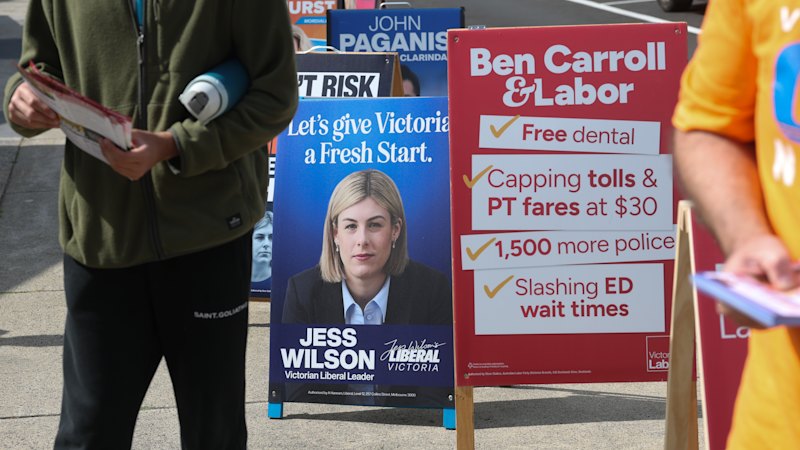
Victoria’s Opposition Leader Jess Wilson, ahead in the latest election polling, has pledged that a Liberal Nationals government will repeal Victoria’s First Peoples Treaty within its first 100 days in office if elected at the November 2026 state election.
Despite originally supporting the Treaty negotiation framework in the state, the Victorian Opposition abandoned their support of it in January 2024.
Wilson now argues that the Treaty model threatens existing governance structures, creates parallel systems of government, and slows down legislative processes.
Using similar rhetoric and language used by the ‘No campaign’ in the 2023 Voice to Parliament Referendum, the Liberals have characterised the Treaty as “divisive”.
The Coalition says it will abolish the Treaty and replace the independent representative body Gellung Warl with ‘First Nations Victoria’ - a new government department overseen by a single Minister and a separate advisory body that it says ‘will work directly with Indigenous communities.’
However, no details have been announced on its funding, authority, accountability and ability to deliver any measurable improvements.
One Nation has made abolishing Victoria’s First Nations Treaty a core pillar of its 2026 Victorian state election campaign, pledging that scrapping the agreement would be its primary demand in any potential minority or Coalition government negotiations.
One Nation has conflated the outcome of the Voice referendum with Victoria’s Treaty process, using the national referendum result to suggest Victorians do not support their state Treaty.
“Treaty: Victorians already voted on this. In 2023, Australians decisively rejected the Federal Voice to Parliament,” their policy document notes.
But the two are distinct initiatives, and the rejection of the Voice at a national referendum does not, in itself, establish public opposition to Treaty in Victoria.
One Nation appears to be banking on voters failing to recognise the distinction: the Voice referendum proposed constitutional change at the national level, while Victoria’s Treaty is a state-based agreement-making framework.
One Nation in Victoria says scrapping the Treaty and dismantling Gellung Warl will help fund its full suite of policies.
The Victorian Greens strongly support Victoria’s Statewide Treaty, viewing it as a historic and necessary step toward self-determination, truth-telling, and justice for First Nations peoples and have pledged to defend any legislation to repeal the Treaty.
Public polling indicates that support for the Treaty is highest among Greens voters, with approximately 82 per cent backing the initiative.
Labor : have made no indication they intend to walk back their work with First Nations communities to establish the Victorian Treaty.
Liberal and Nationals : have pledged to repeal the Treaty within the first 100 days of government and replace Gellung Warl with a government department, First Nations Victoria, and an advisory body.
One Nation : Has made abolishing the Treaty a core election policy and says it would be its primary demand in any minority government negotiations.
Greens : Support the Treaty and have pledged to defend it against any repeal legislation.
For many Aboriginal Victorians, organisations and their allies, there’s a rising fear that decades of advocacy, sacrifice and determination will be undone with the stroke of a pen.
If the Victorian Statewide Treaty is scrapped – Australia will once again hold the title as the largest Commonwealth nation that does not have a treaty - federal or state - with its First Nations peoples.
Back in December 2025, thousands of Victorians gathered at Melbourne’s John Cain Arena to celebrate the official commencement of Australia’s first Statewide Treaty with its First Peoples.
Headlining the public concert was Yothu Yindi, whose iconic song Treaty became a defining moment of the evening.
Originally written in response to the failure to deliver on Bob Hawke’s promise of a national Treaty, the song took on a new meaning: celebrating a historic milestone in Victoria.
But that moment of celebration has now given way to uncertainty. The outcome of November’s state election will determine the future of the Victorian Statewide Treaty.
For Aboriginal Victorians and their allies, the stakes could hardly be higher.
What was celebrated as a historic commitment to First Peoples risks becoming another broken promise, a reminder that political change can threaten even the most hard-won achievements.
And if the Treaty is torn up, Yothu Yindi’s lyrics will carry a familiar and bitter meaning once again: “But promises can disappear. Just like writing in the sand.”