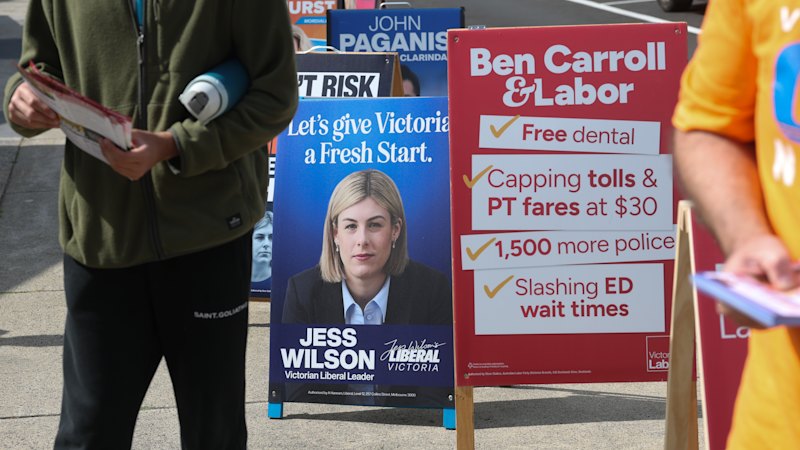
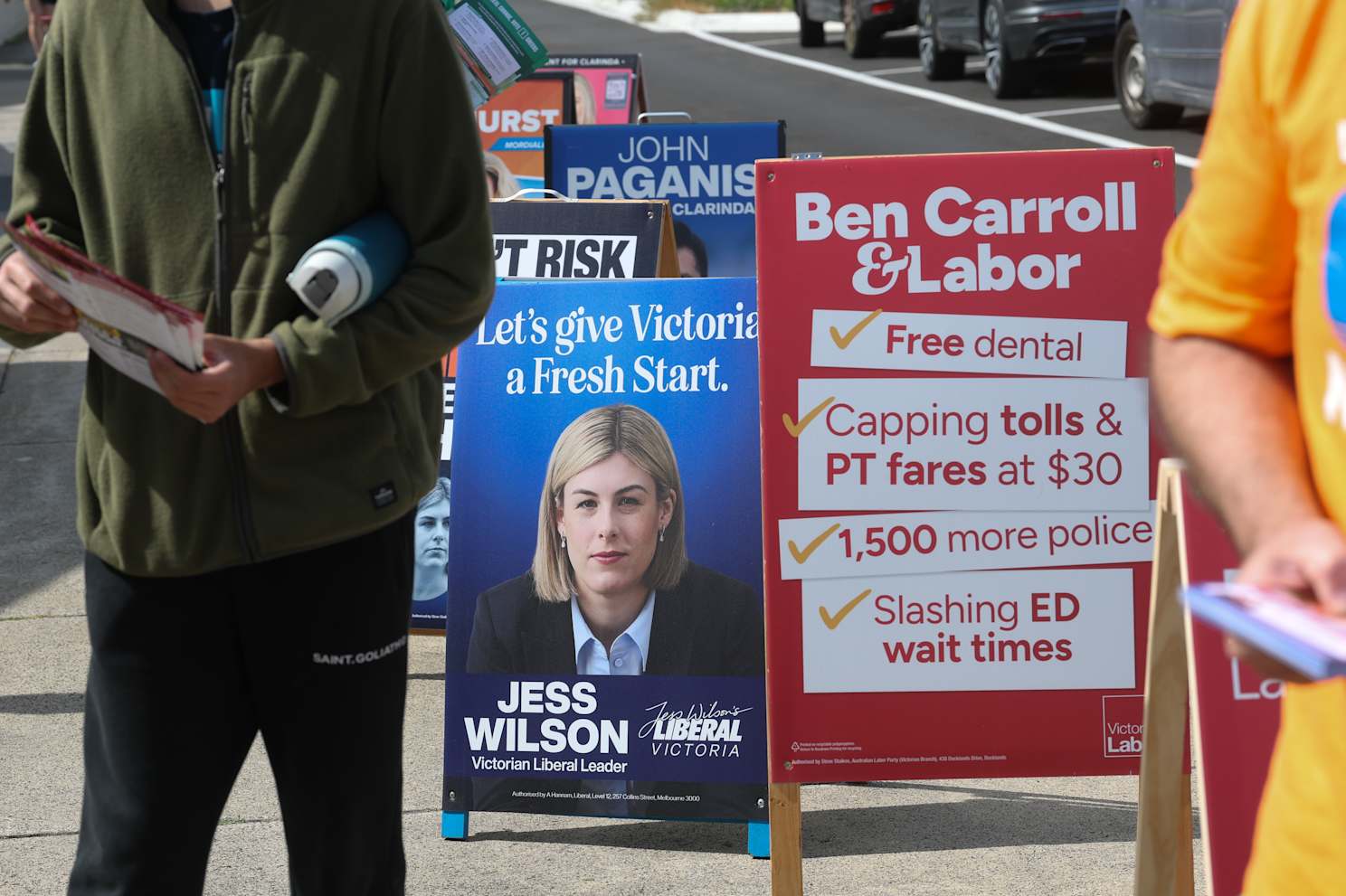
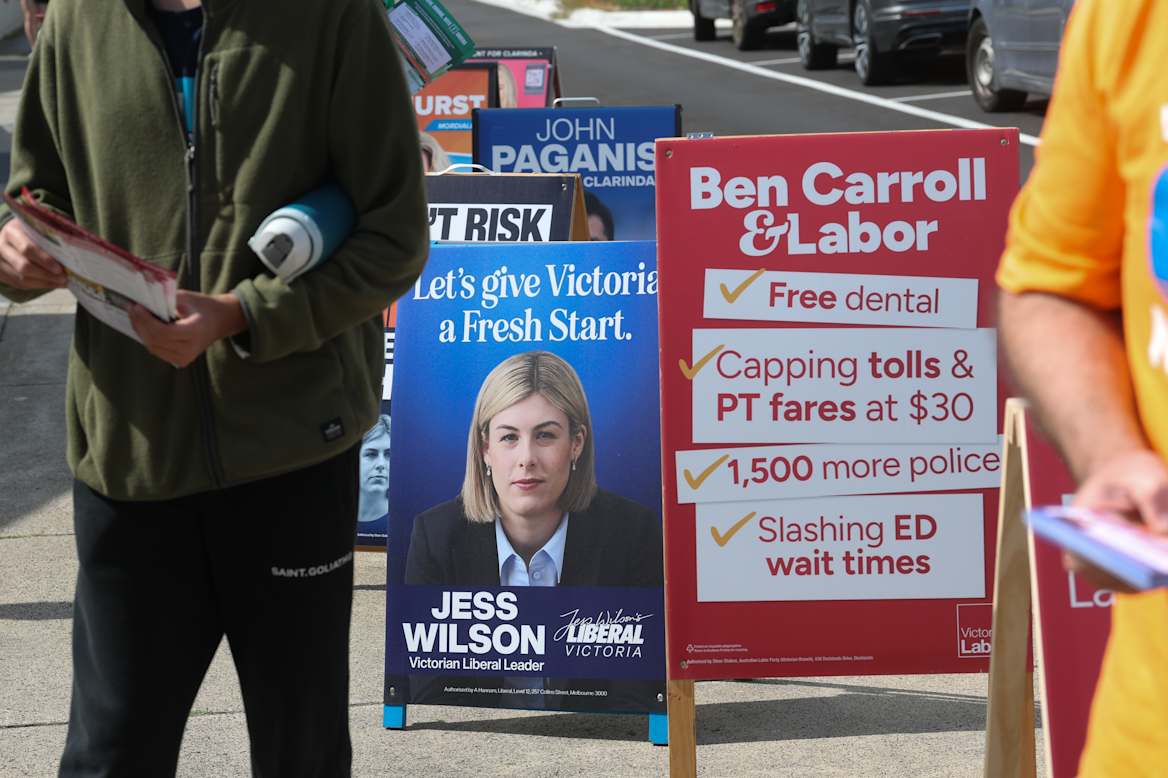
More Victorian seats will probably be decided by preferences than ever, with the collapse of primary support for the major parties and One Nation’s reshaping of the political landscape setting up three-way contests in battleground seats.
Voters on Wednesday began casting their votes ahead of the November 28 election, and which parties the voters rank second, third, or even last on their ballot paper could alter the make-up of the next parliament.
In three-cornered contests between Labor, the Liberals and One Nation – seats such as Bass, Hastings and Pakenham – the candidate who finishes third and has their preferences distributed will be critical in crowning the winner, election analyst Antony Green said.
“There’s going to be a lot more seats where there’s three candidates in contention ... and that makes it more likely that preferences will matter,” the former ABC analyst said.
Last week, parties and independents began publishing their how-to-vote cards, with One Nation and the Coalition preferencing each other favourably by default, and Labor putting One Nation last statewide.
This indicates that in contests where the Liberals are in the final two – against either Labor or One Nation – preferences will give a boost to the Liberals, assuming voters follow how-to-vote cards.
“If Labor finishes third, it would assist the Liberals. If Liberals finish third, it will help One Nation. If One Nation finishes third, it will help the Liberals,” Green said.
Psephologist Kevin Bonham said in many seats voters were abandoning Labor for the Liberals and One Nation, which means “even if Labor is picking up a substantial boost [via preferences] from the Greens it won’t be enough” to win.
The results at the Nepean byelection in May could prove instructive for the November election, if viewing the performance of independent Tracee Hutchison as a stand-in for Labor, given the party didn’t run a candidate in Nepean.
Liberal candidate Anthony Marsh received 38.7 per cent of the primary vote, with One Nation’s Darren Hercus trailing on 24.5 per cent, and independent Tracee Hutchison on 21 per cent.
After preference distributions, Hutchison polled 36.8 per cent of the vote – overtaking One Nation in second place after receiving a major boost from the Greens. Anthony Marsh won with 63.2 per cent, benefiting from three-quarters of One Nation’s preferences.
Bonham said in recent elections, about 75 per cent of One Nation preferences had flowed to the Coalition and “there’s some thought this could even increase further”. Historically, it was more complex, Bonham said, among some working class One Nation voters who viewed the Liberals as capitalist and a “class enemy”.
The latest polling by the Resolve Political Monitor , conducted for The Age, suggests 77 per cent of Labor preferences will flow through to the Coalition, and 75 per cent of One Nation preferences will do the same.
There is a view among some Liberals that in contests where One Nation and Labor are the final two, a significant portion of Liberal preferences from voters reluctant to support One Nation may help Labor win.
The increased role of preferences will complicate vote counting by the Victorian Electoral Commission, and means results in tight races may not be known until well into December.
After voting closes at 6pm on November 28, volunteers will begin a first-preference count and two-candidate-preferred count. The two-candidate-preferred count compares the two frontrunners – who are predicted before polling day using expert electoral knowledge, political science and data science techniques – and gives an early indication as to the likely winner.
Lower house vote counting will continue through until it is completed, probably by December 11.
The rise of One Nation and voter fatigue for major parties played out in the regional electorate of Finniss at this year’s South Australian election. Independent Lou Nicholson received about 18 per cent of the primary vote – finishing fourth behind the Liberals, One Nation and Labor – but won the seat on a two-candidate-preferred vote of about 55 per cent, after benefiting massively from preference flows.
Green said this level of uncertainty made it challenging to predict how contests would play out in electorates like Essendon – considered by some a five-way race – or Footscray, where 15 candidates are on the ballot paper.
The Greens’ prospects at the election have also taken a hit in the past week, with the Liberals preferencing them below Labor. In 2022, the Liberals preferenced Labor last which gave the Greens a boost in some head-to-head clashes with Labor.
Labor is also running an open ticket in Prahran – a rare Liberal-Greens contest. The Greens won it in 2022 but lost it to the Liberals in a 2025 byelection. Labor no longer preferencing the Greens in Prahran will likely hurt the party’s chances of reclaiming the seat.
You have reached your maximum number of saved items.
Remove items from your saved list to add more.
You've used all of your gift articles. 3 more will become available on the 1st of every month.